Table of Contents >> Show >> Hide
- What Is a Bicycle Wheel Trellis?
- Why Gardeners Love Bicycle Wheel Trellises
- Planning Your Bicycle Wheel Trellis
- How to Build a Fence-Mounted Bicycle Wheel Trellis
- Free-Standing Bicycle Wheel Trellis Ideas
- Design Ideas Inspired by Hometalk & Upcycling Communities
- Care, Maintenance, and Safety Tips
- Troubleshooting Common Trellis Problems
- Real-Life Experiences with Bicycle Wheel Trellises
- Final Thoughts
Got a rusty old bike leaning against the shed, silently judging you every time you walk past?
Good news: its riding days might be over, but its wheels are just getting started. A bicycle wheel
trellis is one of those DIY projects that looks wildly creative, costs almost nothing, and instantly
makes your garden look like it belongs in a cleverly curated Hometalk feed.
By repurposing old bicycle wheels into a vertical trellis, you get a sturdy support system for peas,
beans, cucumbers, and flowering vines and a piece of garden art with serious personality.
Think of it as functional sculpture: part recycling win, part Pinterest-worthy design, all garden
magic.
What Is a Bicycle Wheel Trellis?
A bicycle wheel trellis is exactly what it sounds like: one or more bike wheels mounted vertically
and used as a support structure for climbing plants. The spokes act like built-in “rungs” or a
ready-made web for vines to grab, and the circular shape adds a sculptural element you don’t get
from basic wooden stakes or wire panels.
The concept became popular on DIY and gardening communities like Hometalk, where people shared
photos of bike wheels mounted to fences, stacked on posts, or arranged into arches and domes. The
idea quickly spread across gardening blogs, upcycling sites, and social feeds because it checks
so many boxes at once: it’s eco-friendly, budget friendly, and surprisingly easy to build.
Why Gardeners Love Bicycle Wheel Trellises
1. Upcycling with real impact
Old bikes are notoriously awkward to get rid of. You can’t just toss a whole frame into the trash
guilt-free. By reusing the wheels as a trellis, you keep metal out of the landfill and turn “junk”
into something beautiful and useful. It’s the kind of project that makes you feel very smug in the
best way every time you glance at it.
2. Built-in structure for climbing plants
Those spokes aren’t just decorative they’re perfectly spaced supports. Peas, pole beans, sweet peas,
black-eyed Susan vine, and other climbers naturally weave themselves through the spokes as they grow.
You can add extra string or twine if you like, but you won’t need a complex net system.
3. Vertical gardening without bulky lumber
If you have a small garden or patio, vertical gardening is a lifesaver. A bicycle wheel trellis uses
minimal floor space while giving your plants lots of room to climb. Instead of bulky wooden frames,
you get airy circles that don’t block light or make your space feel cramped.
4. Instant whimsy and curb appeal
A circular trellis made from bike wheels has a playful, slightly quirky look that standard trellises
just don’t deliver. Leave the wheels metal for a minimalist, industrial vibe, or spray paint them in
bold colors for a fun cottage-garden feel. Either way, your trellis becomes a focal point, not just
a background support.
Planning Your Bicycle Wheel Trellis
Choosing the right bike wheels
- Size: Standard adult bike wheels (26–29 inches) give you the most dramatic look and plenty of support area.
- Condition: A little rust is fine; crumbling metal is not. Make sure the rim is intact and the spokes are reasonably tight.
- Tires on or off? Most people remove tires and tubes so the rim and spokes are exposed. It looks cleaner and gives plants more room to climb.
Picking the perfect location
Your bicycle wheel trellis works best where your plants want to be anyway:
- Full sun: 6–8 hours per day is ideal for peas, beans, cucumbers, and many flowering vines.
- Good drainage: Avoid low, soggy spots where posts might rot or metal will sit in pooled water.
- Access: You’ll need to harvest, prune, and tie up vines don’t tuck it so far into a corner that you can’t reach it without acrobatics.
Great plants for a bicycle wheel trellis
Your wheel trellis will happily host:
- Snap peas, snow peas, and shelling peas
- Pole beans and runner beans
- Mini cucumbers or gherkins
- Morning glories and sweet peas
- Hyacinth bean, black-eyed Susan vine, or purple bell vine
- Small-flowered climbing roses or clematis (with extra support and careful pruning)
How to Build a Fence-Mounted Bicycle Wheel Trellis
One of the easiest and most popular setups, often seen in Hometalk-style projects, is a line of bike
wheels mounted on an existing fence. You get height and stability without digging big post holes,
and the fence becomes an art wall.
Materials
- 2–5 old bicycle wheels (all similar size looks neat, but mismatched can be charming)
- Exterior-grade carriage bolts or lag screws (one per wheel)
- Large washers and nuts to hold each wheel on the bolt
- Drill with appropriate bits for wood or masonry
- Measuring tape and level
- Optional: exterior spray paint, primer, and clear sealer
- Optional: jute twine or garden string for extra support lines
Step-by-step instructions
-
Clean and prep the wheels.
Remove the tires and tubes, wipe off dirt and grease, and lightly sand any flaking rust. If you plan
to paint them, do that now primer first, then your color, then a clear coat if you want extra
protection from the elements. -
Plan your layout.
Hold the wheels up against your fence to test arrangements. A simple horizontal row is classic,
but you can also stagger them like bubbles or stack them vertically. Mark the center point of each
wheel on the fence with a pencil. -
Install the mounting bolts.
Drill a pilot hole at each mark and drive your carriage bolt or lag screw through from the back side
so it sticks out toward the garden. Add a washer if needed so the head doesn’t pull through the wood.
You want enough length sticking out to accommodate the wheel hub plus a washer and nut. -
Hang the wheels.
Slide each hub onto its bolt, then add a washer and nut. Tighten until the wheel is snug against
the fence. You can allow it to spin slightly if you like the kinetic look, or tighten firmly so it
stays put. -
Add extra support lines (optional).
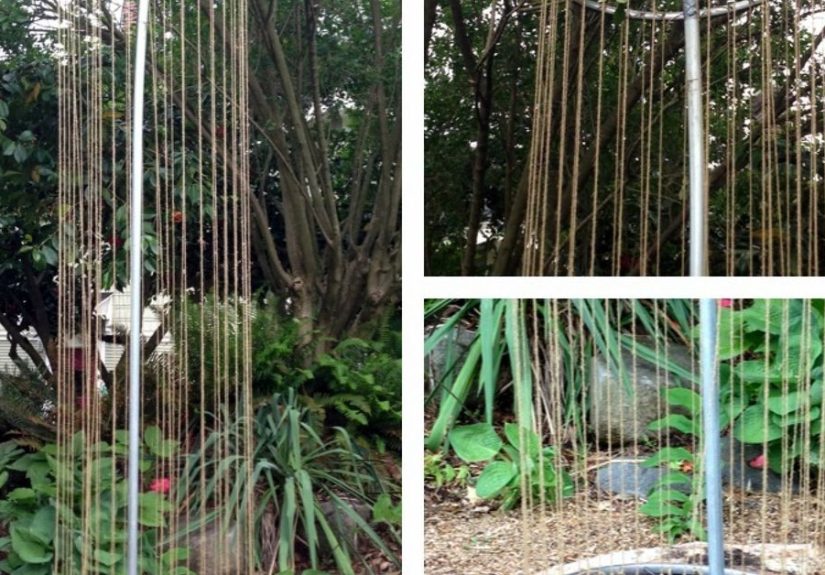
If you’re growing heavier vines, tie jute twine from the bottom of the fence up through the spokes
and to the top of the fence or an overhead wire. This gives plants more vertical “rungs” to climb. -
Plant and train your climbers.
Plant seeds or seedlings at the base of the fence, under each wheel. As vines sprout, gently tuck
tendrils through the spokes or tie stems loosely with twine. Within a few weeks, the bare wheels
will start to transform into green living circles.
Free-Standing Bicycle Wheel Trellis Ideas
No fence? No problem. Gardeners also build free-standing structures using bike wheels and posts or
metal rods. A few popular options:
-
Wheel-on-post trellis: Mount a single wheel or a vertical stack of wheels on a sturdy
wooden post set in concrete or compacted soil. Run strings from the wheel down to ground stakes,
creating a cone or fan shape for vines. -
Two-post “ladder” trellis: Set two posts and connect them with all-thread rods or
strong pipe, sliding multiple wheels onto the rods so they float between the posts. The result looks
like a row of circular windows filled with greenery. -
Garden arch or tunnel: More advanced but spectacular secure wheels along an arching
frame made from metal conduit or heavy branches, creating a tunnel covered in beans, gourds, or flowering vines.
With free-standing builds, stability is everything. Set posts deeply enough (usually 18–24 inches for
most backyard projects), tamp the soil or use concrete, and double-check that the structure doesn’t
wobble before you plant.
Design Ideas Inspired by Hometalk & Upcycling Communities
If you’ve ever scrolled through a Hometalk project page or a DIY garden Pinterest board, you know
people can’t resist decorating these trellises. A few popular styling ideas:
-
Painted “flower” wheels: Spray paint rims bright yellow, red, or turquoise and plant
green vines behind them so it looks like huge blooms hovering above your garden bed. -
Mixed-metal chic: Leave some wheels rusty, polish others a bit, and combine silver,
bronze, and oxidized tones for an industrial-meets-cottage look. -
String-art spokes: Wrap colorful twine or thin rope between spokes before planting so
the trellis looks like a mandala or dreamcatcher until the vines take over. -
Garden gallery wall: Mount wheels alongside other upcycled items old rakes, vintage
hand tools, enamel signs to turn a plain fence into a full-on garden art installation.
Care, Maintenance, and Safety Tips
Once your bicycle wheel trellis is up and plants are climbing, it doesn’t need much attention, but a
few habits will keep it safe and beautiful:
-
Check fasteners annually. Tighten any loose nuts, bolts, or screws, especially after
a storm or freeze-thaw cycles. -
Watch for sharp edges. File down sharp metal, cover cut ends with caps or outdoor-rated
tape, and keep the structure kid- and pet-friendly. -
Touch up paint. If you painted the wheels, expect some fading and chipping over time.
A quick annual touch-up keeps colors bright and helps prevent rust. -
Prune and guide vines. Don’t let plants become one giant tangled mass. Trim, thin, and
redirect stems so air can circulate and the trellis doesn’t become overloaded.
Troubleshooting Common Trellis Problems
“My vines won’t climb the wheels.”
Some plants need more encouragement. Use soft ties or twine to gently loop stems through the spokes.
Start them young, and within a week or two they’ll usually figure it out and do the rest themselves.
“The wheels look bare at the bottom.”
This is normal early in the season. To fill in the lower area, interplant with shorter flowers like
marigolds or nasturtiums, or add a low row of string between the wheel and soil to give vines more
footholds closer to the ground.
“The trellis is leaning.”
If your wheels are fence-mounted, check the fence itself sometimes the problem is the support, not
the trellis. For free-standing builds, reinforce posts with additional braces or reset them deeper in
the ground with compacted soil or concrete.
Real-Life Experiences with Bicycle Wheel Trellises
Projects like the classic Hometalk bicycle wheel trellis didn’t go viral just because they’re cute
in photos. They stuck around because everyday gardeners discovered that these things actually work,
season after season. If you talk to people who’ve tried it (or scroll through comment sections long
enough), a few consistent themes pop up.
First, most folks are surprised by how sturdy the structure feels once it’s up. A bike wheel
is built to hold a human plus road impact, so letting a few pounds of pea vines climb it is nothing.
Gardeners report that their wheels handled windy spring storms and top-heavy bean vines better than
bargain-bin wire cages. The key is anchoring: once the fence or posts are solid, the rest is easy.
Second, there’s the “conversation starter” factor. People love to tell the story of their trellis:
whose old bike it was, where they found the wheels, how the idea came from a random photo on a DIY
site. Neighbors who never commented on the garden before suddenly stop and ask questions. One gardener
joked that her peas were “shy” until the trellis arrived; after that, she had more garden visitors
than pea harvest some days.
Third, many gardeners discover they actually enjoy training vines more when the structure is pretty.
It’s strangely satisfying to weave tender stems through the spokes, like lacing shoes or threading a
loom. Over time you start experimenting: maybe one wheel hosts purple hyacinth bean, the next is all
sugar snap peas, and a third gets taken over by sunny yellow black-eyed Susan vines. Each circle becomes
its own little world.
There are lessons learned, too. People who used very thin, cheaply made wheels sometimes saw spokes
loosen or rims bend under heavy, wet vines. The fix is simple: either reinforce with extra twine or
use better-quality wheels next time. Others realized that brightly colored paint looks amazing the
first year but may need touch-ups in harsh climates. A few gardeners even reported that birds liked
to perch on the rims, treating the trellis as a combination vine support and bird playground which
is charming unless they’re snacking on your seedlings.
Perhaps the biggest “aha” moment people share is how easily the idea scales. Start with one or two
wheels, and the following year it’s suddenly a whole row, or a dome in the middle of a raised bed,
or a playful mix of wheels and old metal hoops. Once you see how much vertical impact you can create
with such simple materials, you start eyeing every abandoned bike in the neighborhood like a potential
garden upgrade.
In the end, that’s what makes a bicycle wheel trellis feel so Hometalk-worthy: it isn’t just a craft
project, it’s a mindset. You start to look at everyday objects bike wheels, mattress springs, even
old ladders and ask, “Could this grow something?” A few bolts, a bit of twine, and a handful of seeds
later, the answer is usually yes.
Final Thoughts
A bicycle wheel trellis is one of those rare DIY ideas that looks artsy, works hard, and doesn’t
require a contractor’s license or a winning lottery ticket. With a couple of salvaged wheels, a few
basic hardware pieces, and a free afternoon, you can create a vertical garden feature that supports
peas, beans, and blooms while showing off your creativity.
Whether you’re recreating the classic Hometalk look or riffing on it with your own colors and shapes,
this project proves that the best garden upgrades don’t always come from the store. Sometimes they’re
leaning in the shed, waiting for a second life.