Table of Contents >> Show >> Hide
- What Was Black Thursday?
- Quick Facts About Black Thursday 1929
- What Caused Black Thursday in 1929?
- What Happened During Black Thursday?
- The Effects of Black Thursday and the 1929 Crash
- Did Black Thursday Cause the Great Depression?
- How Black Thursday Changed American Finance
- Why Black Thursday Still Matters Today
- Experience, Memory, and the Human Side of Black Thursday
- Conclusion
On October 24, 1929, Wall Street learned a lesson it had been avoiding like a dentist appointment: markets do not go up forever. That day, later known as Black Thursday, became one of the most famous moments in American financial history. Investors panicked, prices tumbled, and a roaring decade of easy optimism suddenly sounded more like a fire alarm.
Black Thursday did not, by itself, create every problem of the Great Depression. But it did expose just how fragile the late-1920s economy really was. Underneath the jazz, the new cars, and the belief that prosperity had moved in permanently, there were cracks everywhere: wild speculation, shaky credit, uneven wealth, weak agriculture, and a financial system that looked sturdy until people started leaning on it.
So what exactly happened on Black Thursday in 1929? Why did the market crack? And how did one terrifying week on Wall Street reshape American finance, government policy, and the lives of ordinary families? Let’s walk through the facts, causes, and effects without turning this into a dusty economics lecture wearing a bow tie.
What Was Black Thursday?
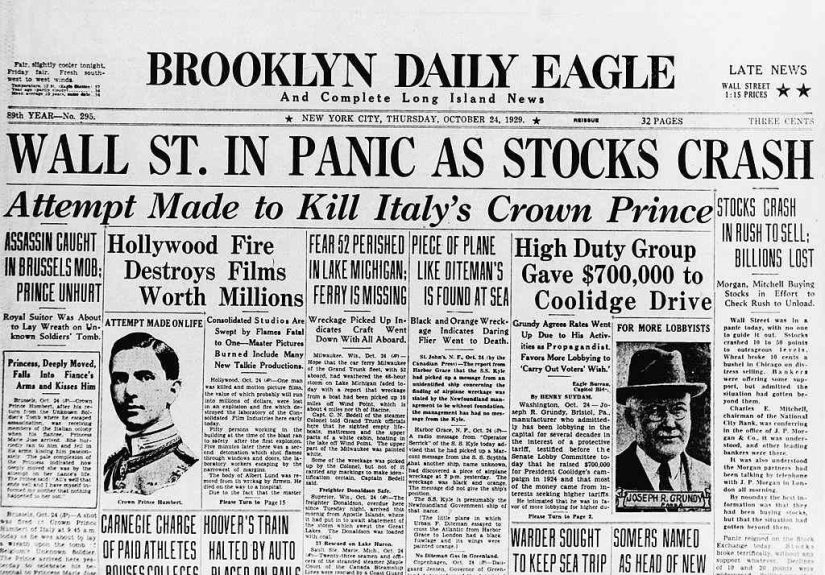
Black Thursday refers to October 24, 1929, the day panic selling slammed the New York Stock Exchange. A record number of shares changed hands as investors rushed to unload stock before prices fell further. The volume was so heavy that the ticker tape lagged badly, leaving many traders and ordinary investors effectively blind while prices were moving under their feet. That is not ideal when your savings are doing acrobatics without a net.
By the time the dust started swirling, the mood on Wall Street had shifted from swagger to survival. A group of major bankers stepped in and bought large blocks of stock in an effort to calm the market. For a brief moment, it worked. The panic slowed, and some people hoped the worst had passed.
It had not.
Black Thursday was the opening act, not the finale. The market continued to wobble, then plunged again on Black Monday and even more dramatically on Black Tuesday, October 29. That is why the stock market crash of 1929 is not just one day, but a sequence of blows that shattered confidence and sent the American economy into a deeper crisis.
Quick Facts About Black Thursday 1929
The date and the panic
Black Thursday happened on October 24, 1929. It is remembered as the first great day of panic in the Wall Street crash, when fear spread faster than useful information.
Record trading volume
Roughly 12.9 million shares were traded that day, a huge number for the era. In practical terms, it meant investors were stampeding for the exits while the building was still deciding where the doors were.
It followed a long bull market
The market had climbed for years during the 1920s. Stock prices soared, and many Americans came to believe the good times were not just good, but eternal. History tends to punish that sentence.
Black Thursday was not the only crash day
After Black Thursday came Black Monday on October 28 and Black Tuesday on October 29, when selling resumed with brutal force.
The crash kept unfolding
The Dow Jones Industrial Average had peaked in early September 1929. It would continue falling until mid-1932, by which point it had lost nearly 89 percent of its value from that peak.
What Caused Black Thursday in 1929?
There was no single cartoon villain twirling a mustache behind the crash. Black Thursday resulted from a dangerous combination of market speculation, structural weaknesses, and a culture that treated risk like a party trick.
1. Speculation ran wild
During the late 1920s, millions of Americans poured money into stocks. Some were experienced investors. Many were not. Buying stocks became part of the national mood. If someone owned shares, they felt smart. If they did not, they felt late. That is never a stable recipe for rational decision-making.
Speculation drove prices higher and higher, sometimes well beyond what companies’ actual earnings could justify. Investors were buying because prices had gone up, and prices were going up because investors were buying. It was a loop powered by confidence, excitement, and the ancient human tradition of assuming the music will never stop.
2. Margin buying made the market extra fragile
One of the biggest causes of the Wall Street crash was buying on margin. This meant investors purchased stocks with borrowed money. In a rising market, margin looked brilliant. People could control more stock with less cash. In a falling market, it became financial quicksand.
When prices dropped, brokers demanded more money from investors to cover those loans. If investors could not pay, brokers sold the shares. Those forced sales pushed prices down even more, triggering even more margin calls. It was a chain reaction, like knocking over the first domino and realizing the rest of the room is also dominoes.
3. The economy had hidden weaknesses
The 1920s were prosperous for many Americans, but not for all of them. Agriculture had been struggling for years. Income was unevenly distributed. Many consumers were carrying debt. Some major industries, including construction and automobiles, were beginning to soften before the crash.
In other words, the stock market was celebrating in a tuxedo while parts of the real economy were already quietly taking off their shoes and rubbing their temples.
4. Banking and financial oversight were weak
The financial system of the late 1920s lacked the safeguards people now take for granted. Investor protections were limited. Disclosure standards were weaker. Banking practices were often riskier. There was no SEC yet to police securities markets the way modern investors would expect.
That mattered because once confidence cracked, the system had fewer shock absorbers. Panic did not just hit stock prices; it spread into banks, businesses, and households.
5. Confidence collapsed faster than policy could respond
Markets can survive bad news. What they struggle to survive is a sudden belief that nobody knows where the floor is. Black Thursday was a crisis of confidence as much as a crisis of price. Once investors began to fear that the boom had been built on hope and borrowed money, selling accelerated.
What Happened During Black Thursday?
The day opened in chaos. Sell orders flooded the exchange. Traders faced a tidal wave of activity, and the sheer volume overwhelmed normal operations. Reports of plunging prices spread quickly, but because ticker updates lagged, many people received market information late. Imagine trying to escape a storm using yesterday’s weather app.
As panic mounted, leading bankers met and attempted to stabilize the market by purchasing major stocks. Their intervention helped slow the fall by the end of the day, and some newspapers initially suggested disaster had been avoided.
That optimism aged poorly.
The next few trading days proved that the deeper problem had not been solved. On October 28 and 29, stock prices sank again. Trading volume surged. Confidence evaporated. By then, the crash had become a national trauma, not just a bad day in the financial district.
The Effects of Black Thursday and the 1929 Crash
The immediate effect of Black Thursday was obvious: investors lost money, sometimes staggering amounts of it. But the bigger story is what happened after the headlines faded. The crash damaged wealth, confidence, spending, lending, and the public’s faith in financial institutions.
1. Household wealth was wiped out
People who had borrowed to invest were hit especially hard. Many middle-class families saw savings vanish. Some wealthy investors survived, but many ordinary Americans learned the difference between “paper gains” and “actual money” in the worst possible way.
2. Consumer spending fell
When people lose wealth or fear they might, they pull back. Families delayed purchases. Businesses postponed expansion. Demand weakened. A modern economy runs partly on confidence, and after the crash, confidence had all the energy of a punctured bicycle tire.
3. Bank failures worsened the crisis
The crash did not instantly cause every bank failure, but it helped deepen a financial environment already under stress. As the economy weakened, more banks failed, credit tightened, and depositors panicked. Between 1930 and 1933, thousands of banks collapsed. That turned an awful downturn into a much more devastating national emergency.
4. Unemployment soared
As businesses cut production and investment, workers lost jobs. By 1933, unemployment in the United States reached about 25 percent. That statistic is cold on paper, but in real life it meant missed meals, lost homes, postponed marriages, shuttered stores, and families improvising survival one week at a time.
5. The Great Depression deepened
The Great Depression was not caused only by Black Thursday, but the crash became its defining symbol and major accelerant. Real GDP plunged, prices fell, production dropped, and the economic pain spread far beyond Wall Street. Farmers, factory workers, shop owners, and bankers all felt the shock in different ways.
Did Black Thursday Cause the Great Depression?
The best answer is: not by itself.
Black Thursday and the broader 1929 stock market crash were major turning points, but historians and economists generally treat them as part of a larger chain. The Depression became so severe because the crash was followed by banking failures, shrinking money supply, falling spending, weak global trade, policy mistakes, and deep structural weaknesses already present in the economy.
So yes, Black Thursday mattered enormously. But it was less like a lone lightning bolt and more like the spark that hit a room already full of gas fumes.
How Black Thursday Changed American Finance
If there is one silver lining to a historic disaster, it is that governments sometimes decide catastrophe is not a great long-term business model.
New market rules
In the years after the crash, Congress passed the Securities Act of 1933 and the Securities Exchange Act of 1934. These laws expanded disclosure requirements and aimed to reduce fraud and market manipulation.
The SEC was created
The 1934 act created the Securities and Exchange Commission, giving the federal government a central role in overseeing securities markets. Investors were no longer expected to wander into the marketplace with crossed fingers and blind faith.
Banking reform followed
Public outrage over financial abuses also helped build momentum for reforms associated with the New Deal era, including banking changes that separated some commercial and investment activities and sought to restore trust in the financial system.
These reforms did not erase the pain of the crash, but they changed the rules of American capitalism in lasting ways. Black Thursday was a disaster. It was also a turning point.
Why Black Thursday Still Matters Today
The story of Black Thursday 1929 still matters because the ingredients of financial bubbles are timeless. A hot market. Easy borrowing. A belief that “this time is different.” A crowd convinced risk has retired. Then reality shows up with a folding chair.
Modern markets have more safeguards than they did in 1929, but human nature has not been updated nearly as often as trading systems. Investors still chase momentum. People still borrow too aggressively. Confidence still turns into panic with shocking speed when the story changes.
That is why Black Thursday remains such a powerful historical warning. It was not only about one crash. It was about the danger of building prosperity on leverage, speculation, weak oversight, and wishful thinking.
Experience, Memory, and the Human Side of Black Thursday
To really understand Black Thursday, it helps to move beyond numbers and imagine the lived experience around them. Financial history can sound abstract when reduced to percentages, index levels, and policy reforms. But for people in 1929 and the years that followed, the crash was not a chart. It was a feeling: confusion in the morning, dread by lunch, and a completely altered future by the time the week ended.
Think about the small investor who had entered the market during the late 1920s boom. He may not have been reckless in his own mind. He may have believed he was simply joining modern prosperity. Everyone seemed to say the market was the road to wealth. Newspapers covered finance with excitement. Friends compared tips. Brokers made participation sound sophisticated and normal. Then Black Thursday arrived, and what had felt like ambition suddenly felt like exposure.
Now picture the family experience. A parent who had borrowed to invest might not only lose savings, but also confidence, credibility, and peace of mind. Kitchen-table conversations changed. Spending habits changed. Plans for college, a home, or a business expansion could vanish almost overnight. The emotional effect of the crash was not just fear of poverty. It was the humiliation of watching certainty turn into error in public view.
There was also the experience of workers with no stock portfolio at all. Many Americans were not active investors, yet they still absorbed the shock. As the economy weakened, factories slowed, stores struggled, and jobs became less secure. For them, Black Thursday may not have looked like men shouting on an exchange floor. It looked like fewer shifts, thinner pay envelopes, and a boss suddenly using the phrase “temporary cutback” with a face that suggested it was not temporary at all.
Bank customers lived their own version of the crisis. In an era before modern federal protections were fully developed, trust mattered enormously. If a bank looked shaky, depositors worried. If neighbors worried, panic spread. The experience of lining up outside a bank to retrieve savings was not just financial behavior. It was social contagion powered by fear. When trust collapses, people do not wait politely for a textbook explanation.
Black Thursday also left a long memory. Families who lived through the crash and the Depression often carried those habits for decades. They saved string. They hated waste. They distrusted debt. They viewed stock speculation the way one might view a raccoon in the attic: interesting from a distance, but absolutely not welcome in the house. Those experiences shaped a generation’s attitudes toward money, security, and risk.
That may be the most enduring lesson of Black Thursday: economic events do not stay on Wall Street. They migrate into households, habits, politics, and culture. A crash begins as a market story, but it becomes a human story very quickly. And that is why people still study 1929. Not because they enjoy old panic, but because every generation likes to believe it is too clever to repeat it. History, meanwhile, keeps clearing its throat.
Conclusion
Black Thursday 1929 was not just a dramatic trading day. It was a historic rupture in American confidence. It exposed the weaknesses hidden beneath the prosperity of the Roaring Twenties and helped trigger a wider crisis that became the Great Depression. The causes included rampant speculation, margin buying, weak oversight, and a vulnerable economy. The effects reached far beyond the stock exchange, touching banks, jobs, families, and public policy.
Its legacy still matters. Black Thursday reminds us that markets can magnify hope on the way up and fear on the way down. It also reminds us that strong rules, clear information, and healthy skepticism are not obstacles to prosperity. They are part of what keeps prosperity from sprinting directly into a wall.