Table of Contents >> Show >> Hide
- What Exactly Is a Charleston Single House?
- Why This House Type Was Built to Last
- From Colonial Survival to Architectural Icon
- The Beauty Comes With a Harder History
- Disaster, Repair, and the Charleston Refusal to Quit
- What Modern Homeowners and Designers Can Learn
- Experience: What It Feels Like to Spend Time With a Charleston Single House
- Conclusion
- SEO Tags
Some houses are beautiful. Some houses are practical. And then there is the Charleston single house, which somehow manages to be both while looking like it invented Southern swagger before breakfast. At first glance, it can seem oddly turned sideways, as if the builder got distracted by humidity and never corrected course. But that “sideways” look is exactly the point. The Charleston single house is one of America’s smartest residential forms: narrow to the street, long on the lot, shaded by piazzas, and designed to work with coastal weather instead of picking a fight with it.
That is a big reason this house type still matters. The Charleston single house was not built to be trendy. It was built to function in a hot, humid port city shaped by narrow lots, sea breezes, storms, fire risk, and the daily realities of urban life. It also lived through the kind of history that would make a lesser building type pack a suitcase and leave town: wars, hurricanes, earthquakes, changing wealth, changing labor systems, and changing tastes. Yet it survives in grand mansions, modest dwellings, museum houses, and preserved streetscapes that still define Charleston’s identity.
So when we say the Charleston single house was built to last, we do not just mean the materials held up. We mean the idea held up. The layout worked. The climate logic worked. The urban planning logic worked. And thanks to a deeply rooted preservation culture, the city kept choosing repair over erasure. That combination of smart design and stubborn stewardship is why the Charleston single house is not just an old Southern house type. It is a master class in durable architecture with excellent porch game.
What Exactly Is a Charleston Single House?
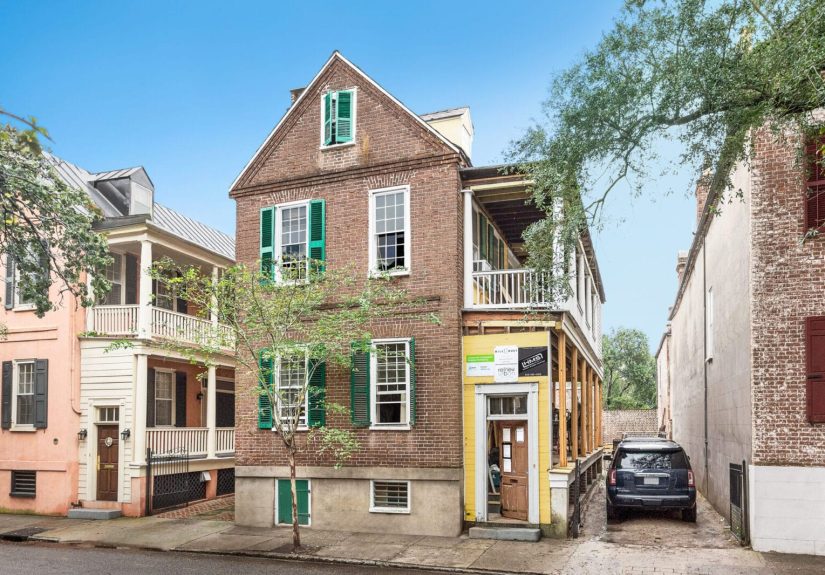
The Charleston single house is the city’s signature residential form, recognizable by one simple move: it addresses the street with its narrow side rather than its long side. In plain English, the house looks “skinny” from the road, even when it stretches deep into the property. That shape was not a gimmick. Charleston’s early lots were laid out in long, narrow strips, and homeowners adjusted the building form to fit the land instead of pretending the land would adjust to them. Practicality: 1. Architectural drama: also 1.
The layout created a house that was typically one room wide at the street face, with living space running back along the lot. Many examples opened into a longer side elevation where piazzas stretched along the house and shaded the main living areas. Behind the main residence, detached work buildings such as kitchens, carriage houses, and service spaces often occupied the rear of the lot. In other words, the Charleston single house was not just a building. It was a full site strategy.
The Piazza Is Not Just a Porch Wearing a Fancy Hat
Charlestonians still use the word piazza, a local term with old roots, and in the single house it is the feature that pulls everything together. These long side porches were more than decorative trim for a postcard. They were outdoor rooms, circulation space, cooling devices, and social stages all at once. Before air conditioning turned everybody into thermostat philosophers, the piazza made hot-weather living bearable by offering shade and catching breezes.
That is why the single house is so often admired by architects, preservationists, and anyone who has ever been personally offended by August. The form is simple, but the comfort strategy is sophisticated. Narrow street frontage reduces exposure, while side piazzas help create a layered transition between public street and private interior. The house does not bark its whole life story at the sidewalk. It reveals itself gradually, and with excellent manners.
Why This House Type Was Built to Last
It Works With the Lowcountry Climate
Charleston is warm, damp, bright, salty, and fully committed to making your shirt regret its life choices by midmorning. The single house responds to that climate with remarkable intelligence. South- and west-facing piazzas reduce solar load, channel breezes, and shade the long side of the building. That means the most exposed surfaces are protected, and the spaces people use most can stay cooler and more livable. This is climate adaptation without any marketing brochure attached.
In a time before sealed-glass boxes and mechanical cooling, this mattered enormously. The piazza became a place to sit, talk, rest, work, and sometimes even sleep during brutal weather. The house form encouraged airflow while creating a buffer between blazing sun and interior rooms. Modern designers love to talk about passive performance as though they just discovered buried treasure. Charleston’s single house would like a quiet word.
It Respects the City’s Narrow Lots
The original Charleston town plan and later urban development patterns gave homeowners a very specific challenge: deep, narrow parcels in a dense historic city. The single house answers that challenge elegantly. Instead of forcing a broad-front house onto a skinny lot, the building turns, stretches, and leaves room for side access, gardens, and service space. The result is a streetscape that feels intimate without feeling crushed.
That narrow face to the street also contributes to Charleston’s visual charm. Walk through historic neighborhoods and you do not just see rows of fronts. You glimpse gardens, gates, layered porches, and varied depths. The city breathes through those spaces. The single house helps create a lively urban rhythm where buildings feel connected to one another but not welded into monotony.
It Was Built as a Whole Property, Not a Floating Box
Another reason the single house endured is that it was rarely conceived as a lonely object in the middle of a lawn. It belonged to a full working property. Rear lots could include detached kitchens, carriage houses, yards, and service buildings. Some front rooms even served professional or business purposes, especially in prosperous urban Charleston, where residential and commercial life often overlapped. This gave the form flexibility. It could support elite households, professional families, and more modest versions of urban living while maintaining the same essential DNA.
That adaptability matters. Houses last longer when they can absorb change without losing themselves. The Charleston single house proved remarkably good at evolving while still looking unmistakably like itself.
From Colonial Survival to Architectural Icon
The Charleston single house did not appear as a single frozen style. It developed across generations and absorbed the tastes of different eras. Surviving examples range from early eighteenth-century houses to later Federal and nineteenth-century forms, while the type itself remained recognizable. That means you can see a Charleston single house dressed in brick, stucco, clapboard, elegant ornament, restrained detailing, or more modest finishes and still understand the family resemblance immediately.
The Robert Brewton House, built in 1730, is the earliest accurately datable surviving Charleston single house. That fact alone is a reminder that this is not some Victorian novelty or tourist-era invention. It is an old, durable urban form with deep roots in the city’s history. Later houses continued to refine and enlarge the model. The William Aiken House, for instance, represents the single-house tradition in brick and in a more elite early nineteenth-century setting. On Church Street, variations of the type from 1759 to 1807 show how the form could evolve while maintaining its core logic.
And that is part of the Charleston single house’s genius: it is a type more than a costume. Styles changed. Ornament changed. Family size, wealth, and technology changed. But the underlying response to lot shape, climate, and urban life stayed useful. That is how a building form becomes a local institution rather than a passing fashion.
English and Caribbean Echoes, Charleston Result
Historians often note English and Caribbean influence in Charleston’s built environment, and the single house sits right in that conversation. The point is not that Charleston copied one source perfectly and called it a day. The point is that the city absorbed outside influences and reworked them into something distinctly local. Charleston took the realities of a port city, a subtropical climate, and a narrow-lot street plan and turned them into architecture with its own unmistakable character.
That local adaptation is what makes the single house so compelling. It is not imported scenery. It is architecture that belongs to place.
The Beauty Comes With a Harder History
It would be easy to write about Charleston houses as though they sprang from the earth fully polished, trailing jasmine and good lighting. Real history is never that polite. Many of the city’s grand single houses were built, maintained, and enriched through the labor of enslaved people. Historic Charleston Foundation’s interpretation of places like the Nathaniel Russell House and Aiken-Rhett House makes clear that these properties were not simply elegant homes. They were working urban estates shaped by wealth, hierarchy, and forced labor.
That fuller story matters because durability is not only about brick and timber. It is also about the human systems behind buildings: who built them, who kept them functioning, who cooked in detached kitchens, who moved through service yards, and who had power over whom. A mature understanding of the Charleston single house holds both truths at once. Yes, it is brilliant architecture. Yes, it is tied to a deeply unequal society.
Ignoring that harder history would flatten the house into a pretty shell. Understanding it makes the architecture more real, not less beautiful. In fact, it deepens the story. A preserved house is never just a preserved façade. It is preserved evidence.
Disaster, Repair, and the Charleston Refusal to Quit
If the Charleston single house feels tough, that is because it has had to be. Charleston has endured fires, wars, hurricanes, moisture damage, economic swings, and the devastating 1886 earthquake, one of the largest historical earthquakes in the eastern United States. The quake damaged or destroyed many buildings in the old city and caused loss of life. Yet the single-house type remained central to Charleston’s streetscape. That says something powerful: these homes survived not because nothing happened to them, but because people kept repairing, adapting, and preserving them.
Some houses lost piazzas. Some were altered badly. Some slipped into neglect. Some came close to demolition. But the basic form proved resilient enough to be restored again and again. Preservationists still fight for that today. In one notable preservation case, advocates argued that a badly deteriorated nineteenth-century house should not be erased because it still retained its characteristic single-house form and significant historic material. That is the built-to-last story in a nutshell. Endurance is not magic. It is maintenance with a backbone.
Charleston’s civic preservation culture also helped turn survival into policy. In 1931, the city established the nation’s first local historic district preservation ordinance and created the Board of Architectural Review. That move changed everything. Instead of hoping historic buildings might survive if people felt sentimental enough, Charleston created a formal mechanism to protect them. Today the preservation framework covers thousands of historic structures, helping ensure that houses with real architectural value are not casually stripped, mangled, or tossed aside for something forgettable and aggressively beige.
Even the piazza, arguably the most beloved feature of the Charleston single house, is protected as a character-defining feature. City guidance emphasizes preserving piazzas and making changes in reversible ways when possible. That approach is smart. A house type survives longest when preservation focuses not only on ornament, but on the core features that give the building its identity and performance.
What Modern Homeowners and Designers Can Learn
The Charleston single house is not just a historic curiosity for architecture tours and wistful photos. It offers practical lessons for contemporary design.
Lesson One: Build for the Climate You Actually Have
The single house does not pretend Charleston is dry, mild, and cloud-covered. It assumes heat, glare, humidity, and breezes. Then it turns those conditions into design inputs. That mindset is more relevant now than ever. Climate-responsive architecture is not a luxury. It is basic intelligence.
Lesson Two: Let the Site Shape the House
Too much new construction begins with a generic building idea and then bludgeons the site into submission. The single house does the opposite. It respects lot shape, neighboring structures, access patterns, and outdoor living space. The result is urbanism with grace.
Lesson Three: Longevity Comes From Adaptability
The single house has served grand households, modest homes, office uses, museum interpretation, and preservation case studies. It has survived because it could change without becoming unrecognizable. That is a hallmark of durable architecture. A rigid building can be impressive for a moment. A flexible building earns centuries.
Lesson Four: Preservation Is a Sustainability Strategy
Charleston’s historic houses are proof that the greenest building is often the one already standing and worth caring for. Repair, reuse, and sensitive adaptation keep cultural value, material value, and urban identity in circulation. That is not nostalgia. That is resourcefulness with better columns.
Experience: What It Feels Like to Spend Time With a Charleston Single House
To understand why the Charleston single house has lasted, facts help. But experience helps more. The moment you stand in front of one, the house starts teaching you without giving a lecture. From the street, it appears narrow and composed, almost modest. Then you realize the building is playing a long game. It is not trying to dominate the block with width. It is drawing you sideways, toward the piazza, the shadows, the layers, the slow reveal.
That first shift in perception is part of the magic. Many American houses introduce themselves by throwing the whole front at you in one confident gesture. The Charleston single house is more subtle. It says, “You may approach, but with a little curiosity, please.” You move through a gate or along a side approach, and suddenly the building opens up. The long porch catches light differently. The air changes. The street noise softens. The house begins to feel less like an object and more like a sequence of spaces designed for living at human speed.
On a hot day, the piazza makes the point immediately. Even before you step inside, the shade feels like a design decision with emotional intelligence. The light is filtered. The temperature drops just enough to notice. The breeze, when it shows up, feels invited rather than accidental. You start to understand why these porches were not ornamental extras. They were survival tools, social rooms, summer refuges, and daily living spaces wrapped into one. Suddenly the architecture is not abstract anymore. It is physical, practical, and deeply generous.
Then there is the soundscape. Charleston’s historic neighborhoods have their own rhythm: footsteps on sidewalks, the creak of wood under humidity, distant carriage tours, leaves flicking in the wind, maybe a church bell reminding everyone that time is real and also somehow irrelevant. A single house seems to hold those sounds differently. Because of the side orientation and layered outdoor spaces, noise feels screened rather than erased. The house participates in city life without surrendering to it. That balance is one of its great pleasures.
Spend more time with one, and the details start to matter. The proportions make sense. The relationship between porch, garden, and wall feels intentional. Even the narrow street face begins to look less unusual and more inevitable, as though any other arrangement would have been the truly strange one. That is usually the moment people stop seeing the Charleston single house as a quaint local oddity and start seeing it as a highly refined answer to a very specific place.
There is also a quiet emotional effect to these houses when they are well preserved. You feel continuity. Not in a syrupy, movie-set way, but in a real urban way. This house has seen weather, changing ownership, changing fortunes, repaired trim, worn thresholds, and probably a few arguments strong enough to shake the shutters. Yet it remains. It has been cared for, altered, sometimes misunderstood, and still carried forward. That endurance creates a kind of architectural gravity. You do not just admire the house. You sense the accumulated effort it took to keep it here.
And if you walk a Charleston street lined with single houses, the experience becomes collective. The form repeats without becoming repetitive. Each house riffs on the type differently. One is grand, one restrained, one painted softly, one brick and stern, one polished, one a little rumpled in a way that somehow adds charm. Together they create a streetscape that feels coherent but alive. That may be the best experience of all: realizing that the single house is not merely a beautiful individual building, but a city-building idea. It helps make Charleston feel like Charleston.
That is why the house lingers in memory. Not because it is old. Plenty of old buildings are forgettable. The Charleston single house stays with you because it turns climate, lot shape, privacy, beauty, and daily life into one elegant solution. It is architecture with manners, grit, and a side porch that deserves its own fan club.
Conclusion
The Charleston single house was built to last because it was built to make sense. It made sense for narrow lots. It made sense for heat and humidity. It made sense for urban living in a busy port city. And when time, disaster, and neglect threatened it, Charleston’s preservation culture helped keep that good sense alive. The result is one of America’s most distinctive house types and one of its most persuasive arguments for building with place in mind.
In the end, the Charleston single house is more than a historic form with lovely piazzas and enviable posture. It is proof that architecture can be practical without being dull, beautiful without being fragile, and local without being limited. Three centuries later, that is still a lesson worth borrowing.