Table of Contents >> Show >> Hide
- Who Is Ebba Thott, and Why Does Her Work Matter?
- A Notting Hill Flat With a Passport Stamped in Every Corner
- The Entry Sequence: A Lesson in First Impressions
- Color, Mood, and the Magic of Restraint
- Past and Present, Properly Introduced
- Storage That Deserves a Round of Applause
- Bedrooms With Backbone
- The Bathroom: Where Poetry Sneaks In
- Why This Interior Still Feels Fresh
- Design Lessons to Borrow From Ebba Thott
- What It Feels Like to Experience a Home Like This
Some homes whisper. Others perform a full one-woman monologue the moment you walk in. The Notting Hill flat designed by Ebba Thott of Sigmar does something much harder: it quietly convinces you that every object belongs, every color has a reason, and every room has learned excellent manners. It is elegant without acting smug, collected without looking cluttered, and polished without drifting into that scary museum territory where you’re afraid to breathe near the coffee table.
That balance is part of what makes Thott’s work so compelling. The Swedish-born designer, who lived in New York before building her career in London, has long been known for interiors that blend discipline with warmth. Through Sigmar, the design practice and gallery she co-founded with Nina Hertig, she has built a reputation for spaces that draw on Scandinavian modernism, Central European design, English character, and a sharp understanding of how people actually live. In the Notting Hill project, those influences come together with unusual clarity. The result feels worldly, welcoming, and wonderfully unfussy.
Who Is Ebba Thott, and Why Does Her Work Matter?
Ebba Thott is not the sort of designer who seems interested in decorating a room into submission. Her work is more intelligent than that. At Sigmar, the studio she co-founded in London in 2005, the emphasis has always been on a holistic approach to interiors: good architecture, strong furniture, craftsmanship, useful storage, beautiful materials, and rooms that make sense for the people living in them.
That philosophy helps explain why her interiors feel so calm. Thott has spoken about design as an act of observation rather than judgment. Instead of imposing a style and hoping the homeowner develops matching habits, she studies how people move through a space, how they sit, what they need close at hand, and what makes them relax. It sounds simple, but in a design world that sometimes worships drama over daily life, it is a quietly radical idea.
Sigmar’s broader aesthetic deepens that approach. The studio is known for its expertise in modernist furniture from Scandinavia and Central Europe, along with an eye for contemporary pieces made with equal integrity. That means the rooms rarely feel trend-driven. They feel edited, layered, and mature. Old and new sit together without an awkward introduction. Function and beauty share the same address. And craftsmanship is not treated like a footnote.
A Notting Hill Flat With a Passport Stamped in Every Corner
The Notting Hill flat that brought Thott so much attention is a Victorian home designed for an American client living in London. That alone sets up an interesting design conversation. The client’s identity is transatlantic. Thott’s background is Scandinavian and New York-inflected. The home itself is resolutely London. Rather than flatten those influences into one bland “international style,” Thott lets them mingle.
The interior is often described as a blend of Scandinavian modernism and English eclecticism, and that description is accurate, but it does not quite capture the mood. This home also carries hints of old New York apartment buildings, a little prewar gravitas, and a touch of Central European refinement. Some coverage of the project has noted the feeling of 1930s Vienna, which makes perfect sense once you see the palette, the dark woodwork, the tailored built-ins, and the restraint in the furnishings. This is not a loud version of luxury. It is the kind that clears its throat softly and lets the walnut speak.
The Entry Sequence: A Lesson in First Impressions
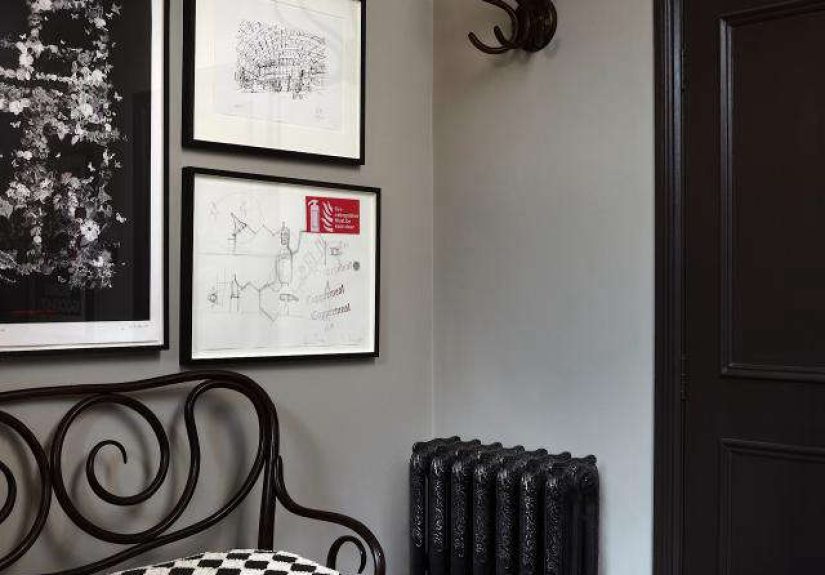
One of the smartest details in the flat is the entrance hall. Designers love to talk about “arrival moments,” but here the idea is handled with real finesse. Thott uses a change in materials underfoot to signal transition. Stone is inset into the floor at the entry, edged by oak planks that continue through the rest of the apartment. It is practical, yes, but also atmospheric. The texture shift tells your brain that you’ve crossed a threshold before your brain has had time to finish checking its phone.
The entry also sets the tone stylistically. A traditional Thonet bench introduces a note of Old World charm and immediately pushes the apartment away from sterile minimalism. This is a recurring move in Thott’s work: use one well-chosen vintage piece to puncture the slickness that can creep into contemporary interiors. The result is more human, more memorable, and much harder to copy badly.
Color, Mood, and the Magic of Restraint
If you are hoping for neon lacquer and a chandelier that looks like it came from a sci-fi opera, this is not your apartment. Thott’s palette in the Notting Hill flat is disciplined, tonal, and beautifully moody. Various grays form the backbone of the scheme, while dark woodwork provides definition and gravity. The effect is refined rather than gloomy because the materials do so much of the emotional work. Reclaimed oak floors add warmth. Soft upholstery diffuses the deeper architectural tones. Light moves across the rooms in a way that keeps the darker trim from feeling heavy.
What makes the palette especially effective is the use of accents. A pea green on a lampshade and cushion, along with moments of red, picks up on colors in the client’s contemporary art collection. That means the brighter tones do not read like random decorating decisions tossed in at the last minute. They feel earned. This is one of the enduring lessons in good interior design: color works best when it has a job.
Past and Present, Properly Introduced
Thott’s interiors are often praised for mixing vintage and current pieces, and this apartment shows why the approach works. The old pieces bring depth, patina, and story. The newer insertions provide clarity and ease. Together, they keep the flat from sliding into period pastiche or showroom slickness. It is a difficult balance, but Sigmar has made it something of a signature.
In later projects, this same instinct shows up again and again. In a Fifth Avenue family apartment, Thott mixed antiques and twentieth-century silhouettes with practical custom storage. In other London homes, she has paired modernist furniture with original architectural bones to create spaces that feel soulful rather than staged. The Notting Hill flat is an early, distilled expression of that formula: furniture that looks settled, architecture that feels respected, and rooms that are polished without becoming precious.
Storage That Deserves a Round of Applause
Design lovers will happily discuss lamps for hours, but storage is where true character is revealed. In the Notting Hill flat, one of the standout features is the custom bookshelf and ladder. It was designed to house the client’s substantial book collection while also working around existing radiators. That may not sound glamorous, but it is the sort of practical intelligence that separates beautiful rooms from merely photogenic ones.
The bookshelf does more than store books. It frames the room, adds architectural rhythm, and supports the apartment’s quietly scholarly mood. The ladder, meanwhile, gives the scheme a touch of romance. It suggests a person who reads, collects, climbs, and has not surrendered entirely to streaming services. It also proves that utility can be gorgeous when handled by someone who understands proportion.
Bedrooms With Backbone
Bedrooms are often where otherwise brave interiors go to become beige and apologetic. Not here. Thott allows the private rooms to soften slightly, but not to lose their point of view. In some of the bedrooms, the heavy dark woodwork gives way to more traditional white, which lightens the mood without severing the apartment’s visual continuity. The result is restful rather than flat.
A steel four-poster bed introduces a modern edge in one bedroom, while wallpaper brings pattern and intimacy. One shelving detail hovers lightly against hand-blocked wallpaper, creating that pleasing tension between structure and decoration that well-resolved rooms often have. These spaces do not shout “designer bedroom.” They simply make you want to cancel your plans and read for six hours.
The Bathroom: Where Poetry Sneaks In
Even the bathroom gets a moment of artistic flair. One of the most memorable details in the flat is the installation of Blueware tiles featuring cyanotype-like botanical imagery made from pressed weeds collected from London streets. It is a wonderful example of how Thott uses craft and materiality to add emotion without cluttering a room. The tiles bring a note of nature into the space, but in a graphic, almost archival way. Think less cottage garden, more botanical memory.
This is another hallmark of the Sigmar sensibility. Beauty is rarely applied like frosting. It is embedded in surfaces, woven into practical choices, or revealed through texture and provenance. That gives the apartment depth. You notice one thing at first, then another later, and then a week after that you’re still thinking about the bathroom tiles. That is the mark of a strong interior: it lingers.
Why This Interior Still Feels Fresh
Design trends have done several dramatic costume changes since this apartment first drew attention. We have lived through hyper-minimalism, maximalist resurgence, beige-on-beige “quiet luxury,” and enough boucle to upholster a small moon. Yet Thott’s Notting Hill flat still feels current. Why? Because it was never chasing a moment in the first place.
The apartment works because it is anchored in principles that age well: proportion, material honesty, layered history, functional planning, and restraint with personality. Thott knows that a room does not need endless objects if the objects it has are good. She understands that color can be subtle and still emotionally rich. She trusts vintage pieces to bring authenticity, but not at the expense of comfort. And she never lets practicality become boring.
That combination has become even more appealing in today’s design climate, where homeowners increasingly want spaces that feel personal, calm, and enduring. The Sigmar look offers a persuasive alternative to trend-chasing: buy less, choose better, honor craft, and make sure the room actually helps you live.
Design Lessons to Borrow From Ebba Thott
1. Let the architecture lead.
In the Notting Hill flat, Victorian bones are not erased; they are refined. Good design starts by listening to the structure that is already there.
2. Mix old and new with intention.
A vintage bench or rare modernist piece works best when it has a conversation partner nearby, whether that is custom cabinetry, a contemporary lamp, or crisp paintwork.
3. Use color like punctuation, not confetti.
The best accent shades in the apartment are tied back to the owner’s art and the overall mood of the rooms. Nothing feels random.
4. Invest in custom storage.
The bookshelf-and-ladder solution is proof that built-ins can solve practical problems while adding drama and elegance.
5. Think about texture as much as color.
Stone, oak, metal, upholstery, wallpaper, and tile all work together here. Texture is what makes a muted palette feel alive.
What It Feels Like to Experience a Home Like This
Imagine arriving on a gray London afternoon, the kind that makes every taxi window look cinematic. You step into the entry hall and immediately understand that this apartment was not assembled by algorithm. The stone underfoot is cool and grounding. The oak beyond it softens the mood. There is a bench that seems to have been waiting for you since 1934, except it also looks perfectly happy in the present tense. A coat hook is not just a coat hook; it is part of a composition.
You move farther in and the apartment begins to reveal its rhythms. The grays are not flat. They shift with the light, becoming silvery in one room, almost smoky in another. Dark woodwork outlines the architecture with real confidence, like eyeliner applied by someone with a steady hand and absolutely no interest in trends from social media. Books fill the custom shelving, and the ladder suggests a household where curiosity has permanent residence. The art collection punctuates the mood with green and red, not enough to break the calm, just enough to keep it from becoming solemn.
Then comes the emotional trick Thott seems especially good at: the apartment feels formal enough to be memorable and relaxed enough to be lived in. You can picture a dinner party here, with candlelight bouncing off glass and dark trim, but you can also picture someone eating toast while standing barefoot in the kitchen, trying to remember where they left their keys. That duality is powerful. It means the design is doing real work.
The bedrooms continue the story but lower the volume. The atmosphere becomes quieter, softer, more private. Nothing is trying too hard. Even the patterned surfaces feel measured. There is no decorative panic, no last-minute pile of trendy throw pillows begging for validation. Just calm, proportion, and enough detail to keep the eye interested.
And then, because a great home always keeps one small surprise in reserve, you notice the bathroom tiles. Pressed botanical forms, translated into blue-toned ceramic, bring in a sense of memory and process. It is a poetic detail, but not a showy one. You do not gasp. You smile. That may be the most Sigmar reaction possible.
By the time you leave, the apartment has done something rare. It has not dazzled you into submission. It has persuaded you. It makes a case for slower choices, better materials, deeper attention, and rooms that improve daily life without announcing themselves like a parade float. In a world of interiors designed to be photographed once and forgotten quickly, Ebba Thott’s Notting Hill flat remains memorable because it understands a more difficult ambition: how to be beautiful every single day.