Table of Contents >> Show >> Hide
- What Is Versa, Exactly?
- Why Did Versa Spark Backlash Online?
- Why Disney Became the Perfect Target
- What the Controversy Really Says About Online Culture
- The Human Themes Inside Versa Matter More Than the Meme
- Specific Examples of Why the Reaction Took Off
- Experience Lens: What This Kind of Backlash Feels Like in Real Life
- Final Take
Every few months, the internet rediscovers one of its favorite hobbies: watching a still image, inventing a whole plot around it, and then starting a small digital bonfire. Disney’s Versa became the latest target. Headlines called it a “new Disney film,” social feeds called it “hetero propaganda,” and comment sections did what comment sections do best: sprinted straight past nuance and into chaos wearing clown shoes.
But the real story is far more interesting than the outrage bait. Versa is not just another glossy animation release tossed into the content volcano. It is an emotional Disney short tied to grief, healing, love, and the complicated symbolism of family. The online backlash surrounding it says as much about internet culture as it does about Disney itself. In fact, the debate around Versa reveals how quickly a deeply personal piece of art can be flattened into a meme, weaponized in cultural arguments, and misunderstood before many viewers even know what it actually is.
If you are trying to understand why Versa sparked backlash online, why some people called it “breeding propaganda,” and what the conversation really means, let’s untangle the mess without losing our sanity, our sense of humor, or our browser tabs.
What Is Versa, Exactly?
First, accuracy matters. Despite splashy headlines, Versa is a Disney short film, not a full-length theatrical feature. That distinction matters because shorts often rely on mood, symbolism, and distilled storytelling rather than plot-heavy world-building. In other words, a single image from a short can be especially misleading when ripped from context and launched into the social-media gladiator arena.
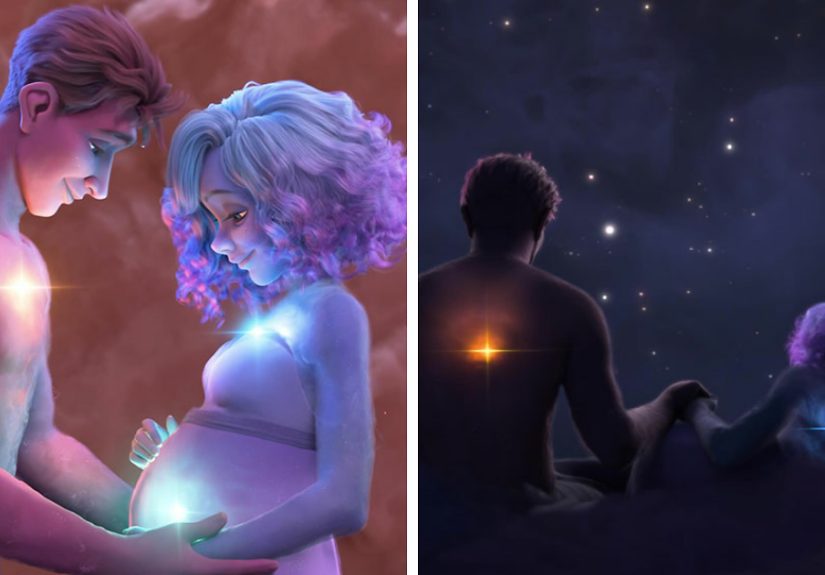
Versa centers on a young couple moving through love, loss, and eventual hope. The film has been described as ethereal, emotional, and visually symbolic, using cosmic imagery to communicate life-changing feelings that are hard to capture in ordinary dialogue. That already places it in a very different category from the internet’s hot take version of the movie, which treated it as if Disney had rolled out a two-hour lecture on traditional family values with a side of sparkles.
The short’s deeper emotional core also matters. Rather than functioning as a blunt ideological statement, Versa appears to be rooted in a story of grief and healing. That makes the online framing around it even more revealing: many people were not reacting to the film itself, but to a symbolic image they believed represented a cultural position.
Why Did Versa Spark Backlash Online?
The backlash was driven largely by imagery. Online, screenshots and stills circulated showing a man and a woman in a glowing, celestial setting, with pregnancy imagery strongly implied. That was enough to trigger an avalanche of reactions. Some posters said Disney was suddenly promoting heterosexuality as a norm. Others joked that children were being exposed to scandalous male-female romance. And many people piled on not because they had watched the short, but because they understood the joke format immediately.
That last point is crucial. A meaningful portion of the backlash did not read like straightforward moral panic. It read like satirical role reversal. People were parodying the kind of language historically used against LGBTQ+ representation in entertainment. Instead of saying queer stories were being “pushed” on audiences, they jokingly applied that rhetoric to a visibly heterosexual couple in a Disney short. The result was part criticism, part meme, part social commentary, and part internet performance art created by people with too much Wi-Fi and not enough fresh air.
A Single Image Became the Whole Debate
This is the first lesson of the Versa controversy: online audiences often react to symbols faster than stories. One glowing still can become a cultural Rorschach test. To some viewers, the image signaled tenderness and family. To others, it suggested a coded celebration of traditional reproduction. To still others, it was simply irresistible meme fuel.
In a culture where screenshots travel faster than context, stories do not arrive whole. They arrive as fragments. And fragments are easy to misread. The internet does not merely watch art anymore; it speed-runs interpretation before the opening credits finish tying their shoes.
The Backlash Was Not Entirely Literal
This is where the conversation gets more complicated and more interesting. Some of the loudest “backlash” posts appeared to be deliberately ironic. They mocked old-school panic over children seeing supposedly inappropriate identity representation by pretending that a man and woman in love were the new dangerous agenda.
That means the controversy around Versa was not simply left versus right, progressive versus conservative, or family values versus inclusivity. It was also about the internet’s love of inversion. People were not just reacting to Disney; they were reacting to years of culture-war discourse and flipping the script in public.
Why Disney Became the Perfect Target
Disney occupies a strange place in the American cultural imagination. It is simultaneously a family entertainment giant, a nostalgia machine, a political lightning rod, and an easy brand to drag online for engagement. Because Disney has spent years at the center of representation debates, nearly any new release can be reframed as ideological evidence by someone, somewhere, with a phone and a grievance.
That made Versa especially combustible. It touched on romance, parenthood, and visual symbolism linked to pregnancy. Those are already emotionally charged themes. Add Disney’s cultural weight, and suddenly a tender animated short becomes a stand-in for a much larger fight over who gets represented, how family is portrayed, and whether art can exist online without being forced to choose a side in an argument it never volunteered for.
The irony is almost too perfect. A short film reportedly built around love and loss got transformed into a proxy battle over ideology, branding, and internet tribalism. That is the 2026 digital experience in one sentence: feel something, post too quickly, and let strangers decide what you meant.
What the Controversy Really Says About Online Culture
The Versa backlash is really a case study in how online discourse works now. It moves through four predictable stages.
1. Context disappears
A still image, headline, or short clip breaks away from the original work. People respond to the fragment, not the full piece.
2. Meaning gets assigned
Viewers project politics, motives, and cultural signals onto the image. Sometimes they are thoughtful. Sometimes they are just bored at lunch.
3. Performance overtakes sincerity
Some users are genuinely upset. Others are joking. Others are joking about the people who are upset. Soon nobody can tell who is serious, and chaos begins wearing a name tag.
4. The discourse becomes the product
At that point, the real story is no longer the film. It is the reaction. Headlines, reposts, and quote tweets build a second life around the controversy, often bigger than the original release.
That is exactly what happened with Versa. Instead of a quiet conversation about grief, healing, and animated storytelling, the short was pulled into a digital carnival where the loudest booth won.
The Human Themes Inside Versa Matter More Than the Meme
Lost in the noise is the fact that Versa appears to be about profoundly human themes. Love. Grief. Recovery. Hope. The emotional complexity of building a life with someone and surviving the moments that threaten to break that life apart. Those are not shallow ideas, and they certainly are not reducible to “propaganda.”
That does not mean viewers are required to like the film. Criticism is fair game. Some people may find the symbolism too obvious, the emotional language too abstract, or the imagery too sentimental. Others may legitimately question how Disney packages intimate experiences for mass audiences. Those are reasonable critiques. But those critiques are far more useful than pretending the existence of a heterosexual couple automatically constitutes some sinister agenda.
The phrase that exploded around Versa is catchy, outrageous, and perfect for virality. It is also a reminder that social media rewards exaggeration over understanding. In a healthier media environment, the conversation would have centered on the short’s artistic ambition and emotional content. Online, however, the weirdest framing often gets the loudest applause.
Specific Examples of Why the Reaction Took Off
Several kinds of posts helped the controversy spread. Some mocked the very idea that children could be scandalized by a man and woman loving each other. Some framed the imagery as Disney pushing a traditional family narrative after years of cultural battles over representation. Others simply used the moment as a vehicle to joke about how every Disney release now seems destined to trigger at least one tiny culture-war thunderstorm.
The reactions were not uniform, which is exactly why the story traveled so far. There was irony, sincerity, support, mockery, confusion, and a lot of people who probably just liked the pretty colors and wondered why the internet had once again chosen madness before breakfast.
That blend of emotional sincerity and performative outrage is what made the conversation so sticky. It let everyone join in for different reasons. Disney critics saw confirmation. Disney defenders saw absurdity. Meme accounts saw opportunity. Journalists saw a trend story. And regular viewers saw proof that nothing on the internet stays normal for more than six minutes.
Experience Lens: What This Kind of Backlash Feels Like in Real Life
To really understand the Versa debate, it helps to imagine the lived experience around it. Not just the posts, but the people scrolling through them.
Imagine a casual Disney fan opening social media after dinner. They have not watched Versa. They do not know the director’s backstory. They see a glowing image of a couple, a shocking headline, and a flood of comments arguing over whether Disney has gone too traditional, too political, too sentimental, or too online. Within seconds, the fan is no longer learning about a short film. They are entering a culture-war escape room with no obvious exit.
Now picture a parent who watches Disney content with their kids and has spent years hearing people complain about representation from every angle imaginable. That parent may read the backlash and instantly recognize the sarcasm. The “hetero propaganda” line lands not as a literal complaint, but as a parody of older arguments that framed other kinds of families or identities as dangerous to children. For that reader, the controversy feels less like genuine offense and more like social commentary with glitter on top.
Then there is another viewer, one whose life includes grief, fertility struggles, miscarriage, infant loss, or the emotional complexity of building a family. For that person, the whole discourse may feel exhausting. A story that seems intended to process pain and hope gets swallowed by the internet’s appetite for slogans. The experience is not just annoying; it can feel flattening. It turns something tender into something transactional. The algorithm wants a fight, not a feeling.
There is also the experience of queer viewers who have watched years of outrage over LGBTQ+ visibility in film and television. Some may see the jokes around Versa as cathartic satire, a way of exposing how absurd those old panic scripts always sounded. By applying the same language to a heterosexual romance, the joke reveals the original logic as flimsy, theatrical, and often ridiculous. In that sense, the backlash is not merely backlash. It is commentary on backlash itself.
And finally, there is the experience shared by almost everyone online now: emotional whiplash. One minute, you are reading about a heartfelt Disney short. The next, you are in a thread where strangers are arguing about ideology, family, children, morality, and corporate storytelling with the confidence of people who definitely did not watch the full thing. That feeling is familiar because it is the modern internet in miniature. Every story arrives preloaded with debate, and every debate arrives before the story is understood.
That is why the Versa moment resonated beyond one short film. It captured a broader experience of cultural overload. It showed how people encounter art today: not quietly, not linearly, and rarely on its own terms. They meet it through headlines, screenshots, discourse, irony, and emotional projection. By the time they reach the original work, they are already carrying a thousand borrowed opinions.
So yes, the Versa backlash is about Disney. It is also about us: how we scroll, how we react, how we signal identity through taste, and how quickly we turn a piece of art into evidence for a bigger argument. That is the real experience surrounding this controversy. It is not just that the internet got loud. It is that the internet once again proved it would rather debate a symbol than sit quietly with a feeling.
Final Take
Versa sparks backlash online because it sits at the intersection of Disney, symbolism, family imagery, and a social-media culture that treats every release as either validation or provocation. But beneath the noise, the short appears to be something more intimate: a visual meditation on loss, love, and hope. The loudest phrase attached to it may be excellent clickbait, but it tells only part of the story.
The smarter takeaway is not that Disney has suddenly become a megaphone for “heterosexual breeding propaganda,” nor that every critic is arguing in good faith. It is that online culture has become incredibly skilled at turning art into ammunition. Versa did not just spark backlash. It exposed the machinery of backlash itself.
And that may be the most Disney thing of all: a short film about emotion accidentally teaching a master class on projection.