Table of Contents >> Show >> Hide
- What Diversification Actually Does (And What It Definitely Doesn’t)
- The Three Layers of Diversification (Because One Layer Is a Thin Jacket)
- Why Diversification Is “Almost” Undefeated
- “Diworsification”: When More Holdings Don’t Mean More Safety
- A Practical Diversification Playbook (No Cape Required)
- Diversification Beyond the U.S.: The Case for Not Putting Your Entire World in One Country
- Alternative Diversifiers: Helpful Tools, Not Magic Spices
- The Sneaky Benefit: Diversification Helps You Stay Invested
- Conclusion: Diversification Wins by Not Needing to Be Perfect
- Experiences from the Diversification Trenches ( of Real-Life Flavor)
If investing had a cheat code, it wouldn’t be “buy low, sell high” (because humans are spectacularly bad at doing that on purpose). It would be diversificationthe unglamorous, grown-up strategy that rarely makes you feel like a genius, but often keeps you from feeling like a tragic backstory on a finance podcast.
Diversification is the financial version of packing both sunscreen and a rain jacket. You might not need both. But the day you do, you’ll feel personally thanked by past-you. And while diversification isn’t magichence the “(Almost)” in the title it’s one of the most reliable ways to manage risk without needing a crystal ball, a PhD in econometrics, or an emotional support spreadsheet.
What Diversification Actually Does (And What It Definitely Doesn’t)
Let’s define the job description. Diversification’s core mission is to reduce the damage caused by unsystematic risk: the company/sector-specific stuff that can crater one investment while the rest of the world keeps eating lunch. Think: an accounting scandal, a product recall, a competitor dropping a better gadget, or your favorite “can’t miss” stock missing so hard it becomes a cautionary tale.
Diversification works because different investments don’t always move in sync. In finance-speak, that relationship is called correlation. When you combine assets that zig and zag at different times, your portfolio’s ride can be smoother. Not always smoother every daybut smoother in the “less likely to cause you to stress-bake banana bread at 2 a.m.” sense.
Here’s what diversification does not do: it doesn’t eliminate systematic riskthe market-wide, economy-wide, everybody’s-in-this-together kind of risk. When markets fall broadly, diversified portfolios can still drop. Diversification is a seatbelt, not a force field.
The Three Layers of Diversification (Because One Layer Is a Thin Jacket)
1) Diversify between asset classes: the “big buckets”
The most powerful diversification usually starts with asset allocationhow you split money among stocks, bonds, cash, and possibly other assets. Stocks can offer growth but come with bigger swings. Bonds may provide income and often behave differently than stocks. Cash is stability with a side of “don’t expect it to do cartwheels.”
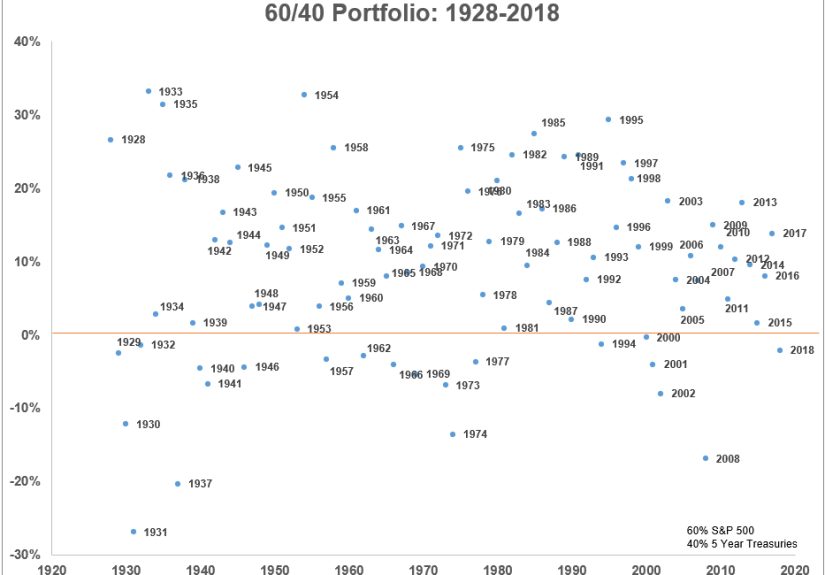
A classic example is mixing stocks and bonds, because they have often (not always) moved differently. Even when that relationship changes for a periodas it canstarting with multiple buckets is still the foundation of risk management for most long-term investors.
2) Diversify within each asset class: the “don’t marry one stock” rule
Owning “stocks” isn’t automatically diversified if those stocks are all in the same sector, country, or hype cycle. Buying five electric-vehicle stocks is not diversificationit’s a themed party.
Within equities, diversification can mean spreading across:
- Sectors (technology, healthcare, consumer staples, industrials, etc.)
- Company size (large-cap, mid-cap, small-cap)
- Style (growth vs. value)
- Geography (U.S. and international)
Within bonds, diversification can mean mixing:
- Issuer type (Treasuries, municipal bonds, investment-grade corporates)
- Maturity (short, intermediate, long duration)
- Credit quality (higher quality vs. higher yieldcarefully)
3) Diversify across time: the “don’t bet your entire paycheck on Tuesday” approach
Even a beautifully diversified portfolio can get bullied by bad timing. Investing graduallyoften via automatic contributions can reduce the risk of dumping a lump sum into the market five minutes before a correction decides to show up uninvited. Time diversification doesn’t remove risk, but it can reduce the drama.
Why Diversification Is “Almost” Undefeated
The “almost” matters because markets have a fun habit of becoming highly correlated during crises. When fear spikes, investors sometimes sell anything that isn’t nailed downsometimes including things that historically held up better. Translation: diversification can feel less effective exactly when you want it to feel like a superhero.
Also, different regimes happen. There have been periods when both stocks and bonds struggled at the same time. That doesn’t mean diversification is broken; it means real life doesn’t always follow the neat version of finance found in textbooks and motivational posters.
Still, diversification shines in the situations that quietly wreck people: single-stock blowups, sector collapses, and style whiplash. A diversified investor might have a bad year. A concentrated investor can have a “start over from scratch” year.
“Diworsification”: When More Holdings Don’t Mean More Safety
There’s a point where diversification stops being helpful and starts being… a hobby you didn’t ask for. If your portfolio has 14 funds that all own the same mega-cap stocks, you don’t have diversificationyou have duplication with extra steps.
Here are common ways investors accidentally trip into “diworsification”:
- Overlapping funds (different labels, same underlying holdings)
- Collecting “hot” themes that move together when the theme cools off
- Complexity creep that makes rebalancing and monitoring a chore
- Cost creep (more funds can mean more fees and tax inefficiency)
A simple guideline some advisors use: avoid letting any single stock or concentrated position dominate your portfolio. Whether you use a strict rule (like a max percentage per holding) or a looser “tolerance band,” the goal is the same: one idea shouldn’t be able to sink the ship.
A Practical Diversification Playbook (No Cape Required)
Step 1: Choose an asset allocation you can live with
Asset allocation is personal. It depends on your time horizon, goals, and how you react when markets are ugly. If you can’t sleep when your portfolio drops, the “optimal” allocation isn’t optimalit’s a stress test you’re failing nightly. Many investors start with a stock/bond mix and adjust based on age, income stability, and risk tolerance.
Step 2: Use broad, low-cost building blocks
For many people, the easiest way to diversify is through broad index funds or ETFs that spread exposure across hundreds or thousands of securities. You get instant “within-asset-class” diversification without needing to research the CEO’s favorite pen brand.
A common “core” might include:
- A total U.S. stock fund/ETF
- A total international stock fund/ETF
- A broad bond fund/ETF (or a mix that matches your risk needs)
From there, you can add “satellites” sparinglylike small-cap, value, REITs, or other diversifiersif you understand what role they play. The key is having a reason beyond “it was trending.”
Step 3: Rebalance so your portfolio doesn’t quietly become a different portfolio
Rebalancing is simply bringing your portfolio back to your intended mix after markets move it around. If stocks surge, they can become a larger percentage of your portfolio than you plannedmeaning you’re taking more risk than you signed up for. Rebalancing puts you back in control, instead of letting the market dictate your risk level.
Two popular rebalancing styles:
- Calendar-based: check once or twice a year
- Threshold-based: rebalance when allocations drift beyond set bands (e.g., 5% off target)
Bonus: rebalancing can turn volatility into a feature, not just a bug. You’re systematically trimming what grew and adding to what laggedwithout needing to predict the future. (It’s the closest investing gets to “disciplined, low-drama adulting.”)
Diversification Beyond the U.S.: The Case for Not Putting Your Entire World in One Country
The U.S. market has been a powerhouse for long stretches, but diversification isn’t about guessing which region wins next. It’s about admitting you don’t knowand building a portfolio that doesn’t require perfect guesses.
International diversification can help reduce reliance on a single economy, currency, or political environment. Sometimes U.S. stocks lead; sometimes international markets catch up or outperform. The point is not to predict the baton pass. The point is to own more than one runner.
Alternative Diversifiers: Helpful Tools, Not Magic Spices
Investors sometimes look beyond stocks and bonds to things like real estate, commodities, or private assets. These can diversify a portfolio in certain conditions, but they also introduce trade-offs: higher fees, less liquidity, more complexity, and sometimes risks that don’t show up until they show up loudly.
If you add alternatives, treat them like ingredients with a purposenot like you’re tossing everything in the pantry into a single pot and calling it “stew.”
The Sneaky Benefit: Diversification Helps You Stay Invested
A big part of investing success isn’t picking the perfect portfolioit’s sticking with a good-enough portfolio. Diversification can reduce the emotional intensity of drawdowns, which can help investors avoid panic-selling at the worst possible time. In other words: diversification doesn’t just manage market risk; it manages human risk.
Conclusion: Diversification Wins by Not Needing to Be Perfect
Diversification is “almost” undefeated because it doesn’t rely on hero moments. It relies on humility, math, and consistency. It won’t make every year feel great. But it can make the bad years less catastrophic and the good years easier to keep.
Build a sensible asset allocation, diversify broadly within those buckets, and rebalance with discipline. You’re not trying to win the internet. You’re trying to win your financial life.
Experiences from the Diversification Trenches ( of Real-Life Flavor)
Because diversification sounds boring until you watch what happens without it, here are a few “this feels oddly familiar” experiences that investors commonly run into. These aren’t endorsements or guaranteesjust patterns that show up so often they might as well have name tags.
The “I Only Need One Great Stock” Phase
This usually starts with a win. Someone buys a single company they love, the price jumps, and suddenly they’re the family’s unofficial Chief Investment Officer. Group chats light up. Confidence skyrockets. The portfolio becomes 60% that one stock, because why not ride the genius wave?
Then the plot twist arrives: earnings miss, regulation changes, a competitor appears, or the entire sector cools off. The investor doesn’t just lose moneythey lose options. A concentrated position can turn a temporary downturn into a life-interrupting event: delaying a home purchase, pausing retirement contributions, or selling at the worst moment because the stress becomes unbearable.
The lesson isn’t “never buy individual stocks.” It’s that concentration amplifies the consequences of being wrong (or even just unlucky). Diversification keeps any single story from becoming the whole story.
The “I Diversified… with 12 Funds” Phase
This investor genuinely tries to do the right thing. They add a U.S. large-cap fund, a tech fund “for growth,” a dividend fund “for safety,” a mid-cap fund “for balance,” and a healthcare fund “because people always get sick.” Then they toss in two ESG funds, an innovation ETF, and something with the word “strategic” in the name because that sounds responsible.
The result? Overlap. Lots of it. The top holdings look suspiciously similar across most funds, and performance starts to feel like a slightly remixed version of the same market exposure. Rebalancing becomes a weekend project. Taxes get messy. And the investor can’t confidently explain what role each holding playsmeaning they’re more likely to abandon the plan during stress.
The lesson: real diversification isn’t about the number of tickers. It’s about owning different sources of risk and return. Simple can be sophisticated.
The “Boring Portfolio, Impressive Results” Phase
This investor builds a straightforward portfolio: broad U.S. stocks, international stocks, and high-quality bonds (or a bond mix aligned with their needs). They automate contributions. Once or twice a year, they rebalance. That’s it.
In bull markets, they sometimes feel FOMO when a friend’s single stock doubles. In rough markets, they’re not immune to losses, but the drawdowns are more manageableand that’s the point. They stay invested. They keep buying. They don’t need perfect timing because the system does the heavy lifting.
The lesson: diversification is often “quietly correct.” It doesn’t always win headlines, but it frequently wins outcomes. And if you’re building wealth over decades, outcomes are the only scoreboard that matters.