Table of Contents >> Show >> Hide
- Why DIY Bulletin Board Wall Art Is Worth Making
- Best Places to Use Bulletin Board Wall Art
- Materials You Need for a DIY Bulletin Board
- How to Make DIY Bulletin Board Wall Art
- Creative DIY Bulletin Board Wall Art Ideas
- Design Tips for a Board That Looks Stylish, Not Messy
- Common Mistakes to Avoid
- Budget-Friendly Ways to Upgrade Your Bulletin Board
- How to Keep Your Bulletin Board Organized
- Personal Experience: What DIY Bulletin Board Wall Art Teaches You
- Conclusion
A bulletin board used to be the quiet background character of home organization: brown, square, slightly dusty, and usually covered in one expired coupon, three mystery pushpins, and a calendar from a year everyone would rather forget. But the modern DIY bulletin board has had a serious glow-up. Today, it can be a stylish piece of wall art, a family command center, a mood board, a homework station, a creative studio wall, or the one spot in your home where tiny papers finally stop migrating like confused little birds.
DIY bulletin board wall art is the perfect project because it combines beauty and usefulness. It lets you display photos, postcards, reminders, kids’ artwork, fabric swatches, travel plans, school schedules, recipes, inspirational quotes, and the occasional “do not forget your lunch” note. Even better, you can customize it to match your space instead of settling for a plain cork board that looks like it came straight from a 1997 office supply closet.
Whether you want a fabric-covered cork board for a bedroom, a large cork wall for a home office, a framed bulletin board for an entryway, or a decorative memo board that doubles as wall decor, this guide walks you through materials, design ideas, step-by-step instructions, styling tips, and real-life experience from the wonderfully messy world of DIY.
Why DIY Bulletin Board Wall Art Is Worth Making
The biggest reason to make your own bulletin board wall art is simple: store-bought options often look either too plain or too expensive. A DIY version gives you control over the size, color, frame, fabric, layout, and function. You can make it minimalist and modern, cozy and farmhouse-inspired, bold and colorful, or soft and neutral.
A custom board also solves a real home problem. Paper clutter loves flat surfaces. Kitchen counters, desks, nightstands, and entry tables become landing zones for permission slips, bills, invitations, appointment cards, and random sticky notes. A bulletin board gives those items a vertical home, which makes the room feel cleaner almost instantly.
It also adds personality. A well-designed board can display your life in a polished way: favorite photos, small art prints, seasonal cards, travel memories, shopping lists, project ideas, and meaningful quotes. In other words, it is organization with a little soul. A filing cabinet may be practical, but it has never made anyone say, “Wow, that really ties the room together.”
Best Places to Use Bulletin Board Wall Art
Home Office
A DIY cork board above a desk is ideal for calendars, deadlines, project notes, color palettes, business cards, and visual inspiration. If you work from home, a bulletin board can help separate active tasks from digital chaos. Instead of opening seventeen browser tabs to remember one idea, pin it where you can see it.
Kitchen or Entryway
A kitchen or entryway bulletin board works beautifully as a family command center. Use it for school schedules, grocery lists, meal plans, keys, coupons, mail reminders, and weekly events. Add small clips or envelopes for paperwork, and suddenly your household has a central information station instead of a scavenger hunt.
Bedroom or Dorm Room
In bedrooms and dorms, bulletin boards become personal galleries. Cover the board with fabric, add photos, concert tickets, postcards, notes from friends, and small prints. It is like social media, but with tape, texture, and no algorithm trying to sell you socks.
Kids’ Room or Homework Area
For kids, a bulletin board can hold artwork, spelling lists, reading charts, chore reminders, and school notices. Choose cheerful fabric or paint and let the board grow with them. The trick is to keep the layout simple so it encourages use instead of becoming another chaotic wall monster.
Materials You Need for a DIY Bulletin Board
The exact supplies depend on your design, but most DIY bulletin board wall art projects use a similar foundation. Start with cork board, cork tiles, cork roll, foam board, plywood, canvas board, or an old framed bulletin board. Cork is the most practical choice because pushpins work well and it has a warm, natural texture.
You may also need decorative fabric, batting, spray adhesive, hot glue, staple gun, scissors, utility knife, ruler, painter’s tape, trim, frame molding, paint, wall anchors, screws, sawtooth hangers, or picture-hanging hardware. If you want a softer, upholstered look, add thin quilt batting under the fabric before wrapping the board.
For a renter-friendly version, use a lightweight cork board and removable hanging strips rated for the board’s weight. For larger or heavier boards, mount into wall studs when possible or use properly rated drywall anchors. Safety is not the glamorous part of DIY, but neither is explaining why your beautiful cork board slid down the wall at 2 a.m. like a haunted pancake.
How to Make DIY Bulletin Board Wall Art
Step 1: Choose the Size and Location
Before buying supplies, decide where the bulletin board will hang. Measure the wall and think about how you will use the board. A small 16-by-24-inch board works well near a desk or dorm bed. A 24-by-36-inch board is better for a family command center. A full cork wall or large panel makes sense in a studio, craft room, or busy home office.
Leave breathing room around the board so it looks intentional. If it will hang above a desk, center it over the work surface. If it will sit in an entryway, place it near hooks, a bench, or a mail station. Good placement makes the board useful; bad placement turns it into wall decor you ignore.
Step 2: Pick a Style Direction
Decide whether you want the board to blend in or stand out. For a modern look, choose linen, canvas, black trim, white paint, or geometric designs. For farmhouse style, try burlap, wood frames, warm neutrals, or vintage clips. For a colorful creative room, use patterned fabric, painted cork tiles, bright ribbon, or decorative pushpins.
If the room already has lots of pattern, keep the bulletin board simple. If the room is neutral, the board can be your chance to add color. A good rule: choose one main texture, one main color, and one accent detail. That keeps the final design from looking like a craft store sneezed on your wall.
Step 3: Prepare the Board
If you are using an old cork board, remove dust, loose paper, stickers, and worn hardware. Lightly wipe the frame and cork surface. If the frame is scratched but sturdy, paint it instead of replacing it. Black, white, soft gray, warm wood stain, gold, or muted green can make a basic board look much more expensive.
If you are building from scratch, attach cork tiles or cork roll to a backing board such as plywood or hardboard. Use adhesive suitable for cork and the backing material. Press the cork firmly and let it cure according to the adhesive instructions. For large boards, a roller helps smooth the cork and reduce bubbles.
Step 4: Add Fabric or Paint
Fabric is one of the easiest ways to transform a bulletin board into wall art. Lay the fabric face down, place the board on top, and cut around it with a few extra inches on all sides. If you want a padded look, add batting between the cork and fabric. Pull the fabric tight, fold it over the back, and secure it with staples or hot glue.
Work from the center of each side outward, alternating sides so the fabric stays smooth. Fold the corners like wrapping a present. If the first corner looks bad, congratulations: you are officially doing DIY. Unfold it and try again. Corners are where patience goes to be tested.
If you prefer paint, use painter’s tape to create stripes, blocks, arches, borders, or geometric shapes. Light coats work better than one heavy coat. Let the paint dry fully before adding pins or paper.
Step 5: Frame It for a Finished Look
A frame instantly makes a bulletin board feel like intentional wall art. You can reuse an old picture frame, attach simple wood trim, or buy a ready-made framed cork board and customize the insert. For a high-end look, choose a frame color that repeats another finish in the room, such as black metal, natural oak, white, brass, or walnut.
If your board is large, framing also helps protect the edges from peeling or chipping. It gives the piece structure and makes it easier to mount securely.
Step 6: Add Functional Details
Once the base is finished, add practical accessories. Try mini clothespins, binder clips, small envelopes, label holders, ribbon strips, calendar pages, acrylic pockets, or a narrow ledge for pens. Keep the extras lightweight and useful. The goal is to help the board function, not turn it into a junk drawer with vertical ambition.
You can also create zones: one area for appointments, one for inspiration, one for current papers, and one for photos. Zoning keeps the board from becoming visual clutter.
Step 7: Hang It Safely
For lightweight boards, standard picture-hanging hardware may be enough. For larger bulletin boards, use screws into studs when possible. If studs are not available, choose wall anchors rated for the board’s weight. Always check the hanging hardware and avoid relying on weak adhesive hooks for heavy or irreplaceable pieces.
Use a level before final mounting. A crooked bulletin board will quietly bother you every day until you fix it. DIY peace begins with straight lines.
Creative DIY Bulletin Board Wall Art Ideas
Fabric-Covered Bulletin Board
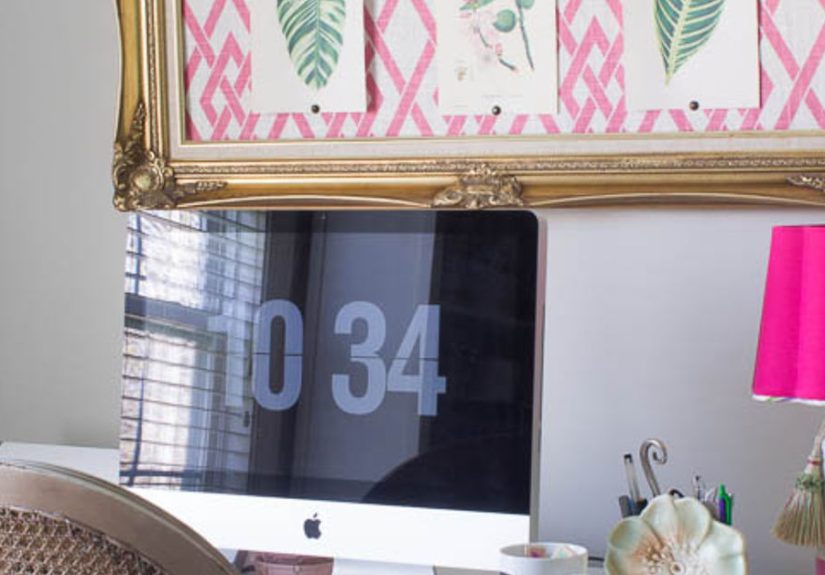
This is the classic upgrade. Choose linen for a calm office, velvet for a dramatic bedroom, ticking stripe for farmhouse style, or a playful print for a dorm room. Fabric softens the look of cork and helps the board coordinate with curtains, bedding, pillows, or rugs.
Geometric Painted Cork Board
Use painter’s tape to divide the cork into triangles, arches, or diagonal blocks. Paint a few sections and leave some natural cork visible. This works especially well in modern spaces because it turns the surface itself into art, even before you pin anything to it.
Full Cork Wall
A cork wall creates a dramatic and practical feature in a home office, craft room, or kids’ study area. It can hold large plans, design samples, schedules, art, and rotating inspiration. For best results, install cork over a smooth backing and use careful measurements so seams look clean.
Framed Vintage Bulletin Board
Find a thrifted frame, remove the glass, and fit cork or foam board inside. Cover it with fabric or paper, then add decorative pins. This is a great way to create custom wall art on a budget while giving an old frame a second life.
Ribbon Memo Board
Add crisscrossed ribbon over a fabric-covered board to tuck in photos, cards, and notes without using pins. This style is especially nice for bedrooms, nurseries, and gift projects. Use upholstery tacks or decorative brads at the ribbon intersections for a polished look.
Command Center Board
Combine cork with a calendar, chalkboard section, dry-erase area, hooks, or wall pockets. This design is perfect for busy households. Keep the color palette cohesive so the board looks organized even when life is not.
Design Tips for a Board That Looks Stylish, Not Messy
The secret to attractive bulletin board wall art is editing. Do not pin every paper you own. Choose what deserves to be visible. Use matching pushpins, consistent clips, or a limited color palette. Leave some blank space so the board can breathe.
Layer items by size. Put larger pieces in the back, medium notes in the middle, and small photos or labels on top. Mix practical items with pretty ones. A weekly schedule looks less bossy when it is next to a favorite photo or small art print.
Refresh the board regularly. At the beginning of each month, remove outdated papers and rearrange what remains. A bulletin board should feel alive, not like a paper museum.
Common Mistakes to Avoid
One common mistake is choosing fabric that is too thick for pushpins. Heavy upholstery fabric can look beautiful, but if it is too dense, pins may not hold well. Test a small area first. Another mistake is using weak backing. Thin cork alone may crumble or flex, so larger boards usually need a sturdier base.
Do not ignore scale. A tiny board on a large wall can look accidental, while an oversized board in a narrow hallway can feel overwhelming. Match the board to the space and purpose.
Also, avoid overcrowding. A bulletin board covered edge to edge with papers becomes visual noise. If everything is important, nothing stands out. Give your eyes a little vacation.
Budget-Friendly Ways to Upgrade Your Bulletin Board
You do not need expensive supplies to make a beautiful board. Use leftover fabric, wrapping paper, peel-and-stick wallpaper, old frames, scrap wood, or thrifted cork boards. Paint can transform a frame in under an hour. Decorative pushpins can be made by gluing buttons, beads, small wooden shapes, or flat ornaments onto plain thumbtacks.
For a polished look on a small budget, spend money where it shows most: fabric and frame finish. A simple cork board with a good fabric and clean frame can look surprisingly custom. Nobody needs to know it started life as a bargain-bin office board. That secret can live between you and your hot glue gun.
How to Keep Your Bulletin Board Organized
Once your DIY bulletin board wall art is finished, give it a system. Create categories such as “This Week,” “Important,” “Inspiration,” “School,” “Work,” or “Family.” Use labels if needed. Keep urgent items at eye level and decorative items around the edges.
Use clips for papers you change often and pushpins for items that stay longer. Add a small envelope for receipts, stamps, coupons, or appointment cards. If the board is for kids, keep the lower section accessible so they can add their own artwork or reminders.
The best bulletin board is not just pretty on day one. It stays useful because it is easy to update. If maintaining it feels complicated, simplify the layout.
Personal Experience: What DIY Bulletin Board Wall Art Teaches You
After making and using DIY bulletin boards in different spaces, one lesson becomes clear: the best design is the one you will actually use. A board can be magazine-worthy, color-coordinated, and perfectly styled, but if it does not fit your daily habits, it becomes decoration with pushpins.
For example, a beautiful fabric-covered board above a desk works wonderfully for project ideas, mood boards, and creative planning. But if your main problem is school paperwork or family schedules, the board belongs near the kitchen, entryway, or wherever people naturally drop things. Location matters more than perfection.
Another experience-based tip: choose a background that hides pinholes and everyday wear. Plain white fabric looks crisp at first, but it can show marks quickly. Linen, burlap, tweed, canvas, small patterns, and textured neutrals are more forgiving. They also make the board feel warmer and more layered.
Frames make a bigger difference than most people expect. A basic cork board can look temporary, but once it is framed, it feels like part of the room. Even simple painted trim can make the board look custom. If the frame matches other elements in the space, such as desk legs, curtain rods, shelves, or cabinet hardware, the entire wall feels more intentional.
It is also worth thinking about how often you change the display. If you swap papers daily, use clips instead of pushpins in high-traffic zones. If the board is mostly decorative, pushpins are fine. For a vision board or art display, mix clips and pins so you can rearrange items without damaging special photos or prints.
One of the most satisfying parts of DIY bulletin board wall art is that it makes ordinary life look curated. A grocery list, a postcard, a child’s drawing, and a calendar page can look charming when they are arranged with care. The board becomes a small portrait of what is happening in your home right now.
Of course, the project can get messy. Fabric may wrinkle. Corners may look bulky. Spray adhesive may behave like it has personal issues. The first layout may feel too crowded. That is normal. DIY projects usually improve through adjusting, trimming, smoothing, repainting, and occasionally staring at the wall while holding scissors like a confused art director.
The good news is that bulletin boards are forgiving. If you dislike the fabric, recover it. If the frame color feels wrong, repaint it. If the layout gets chaotic, clear it and start again. Unlike major home projects, this one does not require demolition, plumbing, or a dramatic phone call to a contractor named Gary.
Over time, a DIY bulletin board can become one of the most useful pieces in a room. It catches reminders before they disappear. It displays memories before they get buried in drawers. It turns blank wall space into a living, changing surface. Most importantly, it gives your ideas a place to land.
That is the real charm of DIY bulletin board wall art. It is not just about cork, fabric, and frames. It is about making your home work better while still feeling like you. And if it also keeps your desk from being swallowed by sticky notes, that is not just decor. That is a tiny domestic miracle.
Conclusion
DIY bulletin board wall art is one of the easiest ways to combine organization, creativity, and home decor in a single project. With cork, fabric, paint, trim, and a little planning, you can create a custom piece that fits your room and your routine. Use it as a family command center, a home office organizer, a dorm room photo board, a kids’ art display, or a rotating inspiration wall.
The best version is practical, personal, and easy to refresh. Choose materials that match your style, mount the board securely, and keep the layout simple enough to maintain. A great bulletin board does not just hold paper; it helps your home feel calmer, smarter, and more lived-inin the best possible way.