Table of Contents >> Show >> Hide
- Why Choose a Distressed Sliding Barn Door?
- Best Places to Use a DIY Distressed Sliding Barn Door
- Planning the Project Before You Buy Lumber
- Materials and Tools You May Need
- Choosing the Right Wood for a Distressed Look
- Simple Barn Door Design Options
- How to Build a DIY Distressed Sliding Barn Door
- How to Distress a Sliding Barn Door
- Finishing the Door for Daily Use
- Installing the Sliding Barn Door Hardware
- Common Mistakes to Avoid
- Design Ideas for a DIY Distressed Sliding Barn Door
- Budget Tips
- Real-World Experience: What DIYers Learn the Hard Way
- Conclusion
A DIY distressed sliding barn door is the home-improvement version of wearing broken-in jeans with a nice blazer: relaxed, stylish, and somehow more interesting because it looks like it has survived a few stories. Whether you want to dress up a pantry, divide a laundry room, hide a closet, or give a plain hallway a little “well, look at me” energy, a sliding barn door can transform a space without demanding a full remodel.
The best part? You do not need an actual barn, a suspiciously photogenic farmhouse, or a collection of antique milk cans. With basic lumber, a reliable barn door hardware kit, careful measuring, and a layered distressed finish, you can build a door that looks rustic but works smoothly. The secret is balancing charm with function. A door can look beautifully aged, but it still needs to hang level, slide safely, and avoid making your wall sound like a haunted wagon every time you open it.
This guide walks through planning, materials, building, distressing, finishing, and installing a sliding barn door with a weathered, custom look. We will keep it practical, beginner-friendly, and honestbecause nothing humbles a DIYer faster than realizing the door is gorgeous but two inches too short.
Why Choose a Distressed Sliding Barn Door?
A sliding barn door is popular for two big reasons: it saves swing space and adds instant character. Traditional hinged doors need room to open, which can be annoying in narrow hallways, small bedrooms, bathrooms, pantries, and laundry rooms. A barn door slides along the wall, making it a smart choice when floor space is limited.
The distressed finish adds another layer of appeal. Instead of looking factory-perfect, the door gets depth, texture, and personality. Sanded edges, layered stain, soft paint rub-through, and darker grooves can make new wood resemble reclaimed barn wood. It is a great way to get that aged look without hunting down expensive salvage boards or explaining to your family why you brought home “perfectly good old wood” from a curb pile.
Best Places to Use a DIY Distressed Sliding Barn Door
A distressed sliding barn door works especially well where style and practicality meet. It can be used for a pantry, home office, closet, mudroom, laundry nook, craft room, basement storage area, or primary bedroom entrance. It can also serve as a decorative room divider in open layouts.
However, barn doors are not perfect for every spot. Because they sit slightly off the wall, they usually do not seal as tightly as traditional doors. That means they may not block sound, light, smells, or steam as well. For bathrooms and bedrooms, you may want a wider door overlap, a quality handle, soft-close hardware, or extra privacy trim. For a pantry or laundry area, the small side gaps are usually no big dealunless your snacks are trying to escape.
Planning the Project Before You Buy Lumber
Measure the Opening
Start by measuring the height and width of the doorway or opening. For good coverage, the barn door should usually be wider than the opening by at least a couple of inches on each side. This helps hide gaps when the door is closed. The door should also be tall enough to cover the opening while leaving enough clearance at the floor and enough space above for the track and rollers.
Do not guess. Measure the opening width at the top, middle, and bottom. Measure the height on both sides. Houses are charming, but walls are often not perfectly square. Your tape measure is the friend who tells you the truth before the lumber receipt does.
Check Wall Space
A sliding barn door needs open wall space beside the doorway so it can slide fully out of the way. The track must be long enough for the door to clear the opening. Before choosing your design, check for light switches, outlets, artwork, vents, trim, thermostats, or furniture that could block the door’s travel.
Locate the Studs
The track carries the weight of the door, so it must be attached securely. In many installations, a solid header board or mounting board is installed into wall studs first, then the metal track is attached to that board. This helps distribute weight and gives the hardware a strong base. Drywall alone is not enough. Drywall is excellent at being a wall. It is not excellent at holding a heavy wooden door over your toes.
Materials and Tools You May Need
Your exact shopping list depends on the size and design of the door, but most DIY distressed sliding barn door projects use common materials.
- 1×6, 1×8, or similar boards for the main door panel
- 1×4 or 1×6 boards for rails, stiles, and cross braces
- Wood glue
- Wood screws or brad nails
- Barn door hardware kit with track, rollers, spacers, stops, anti-jump blocks, and floor guide
- Header board or mounting board if needed
- Wood stain, paint, glaze, wax, or weathered wood finish
- Clear protective topcoat
- Sandpaper in coarse, medium, and fine grits
- Drill, level, tape measure, clamps, stud finder, saw, and safety gear
For safety, wear eye protection and a dust mask or respirator when cutting and sanding. Use ventilation when staining or sealing. If your home was built before 1978 and you plan to disturb existing painted surfaces nearby, take lead-safe precautions and consider professional help. Also, anyone under 18 should work with a responsible adult when cutting, drilling, or hanging the door.
Choosing the Right Wood for a Distressed Look
Pine is a favorite for DIY barn doors because it is affordable, easy to cut, and takes distressing well. It dents easily, which sounds like a flaw until you realize dents are basically the guest stars of rustic style. Poplar can also work if you want a smoother painted finish. Cedar brings natural texture and warmth, although it can cost more. Plywood with trim boards is another budget-friendly option for a lighter door.
If you want the most authentic distressed sliding barn door, choose boards with visible grain, knots, and minor imperfections. Avoid badly warped lumber, deep splits, or boards that twist like they are auditioning for a magic trick. Lay boards on the store floor or sight down the edge before buying.
Simple Barn Door Design Options
Classic Plank Door
This is the easiest style. Several vertical boards are joined together, then framed with horizontal rails and vertical stiles. It is clean, sturdy, and perfect for a distressed finish.
Z-Brace Barn Door
A Z-brace design adds diagonal character. It looks traditional and helps visually reinforce the door. Make sure the diagonal brace is measured carefully so the layout feels intentional, not like the door got dressed in a hurry.
X-Brace Barn Door
An X-brace adds symmetry and farmhouse drama. It is a little more cutting, but the finished look is bold and decorative. This style works especially well for closets, dining rooms, and wide pantry openings.
Modern Rustic Panel Door
If you prefer a cleaner look, build a flat panel door with simple trim and use the distressed finish more subtly. Think warm, worn, and stylishnot “rescued from a thunderstorm.”
How to Build a DIY Distressed Sliding Barn Door
Step 1: Cut and Dry-Fit the Boards
Cut your main boards to the desired height. Lay them flat on a work surface and arrange them until the grain and knots look balanced. If one board has a dramatic knot, place it where it feels like a feature, not a random wooden eyeball staring from the corner.
Step 2: Assemble the Door Panel
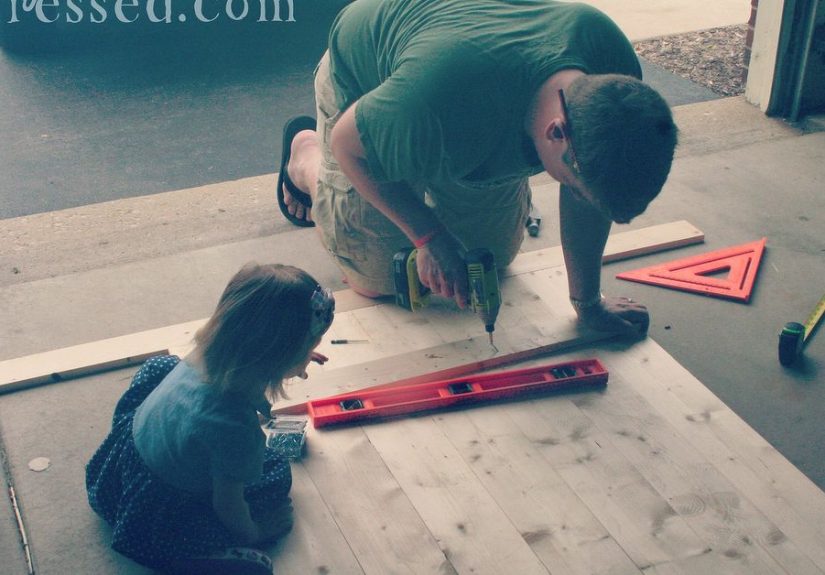
Apply wood glue along the edges where boards meet. Clamp the boards together and keep the panel flat. Depending on your design, you can secure the boards from the back with horizontal supports or attach trim pieces to the front. Use screws that are long enough to hold but not so long they poke through the face of the door.
Step 3: Add Rails, Stiles, and Bracing
Attach the top and bottom rails, then add side stiles if your design includes them. For a Z-brace or X-brace, measure carefully, mark your angles, cut slowly, and test-fit before attaching. Wood glue plus screws or brad nails creates a strong bond.
Step 4: Sand the Door
Sand the entire door to remove sharp edges and smooth rough spots. Start with medium-grit sandpaper, then move to finer grit. Since the goal is distressed wood, you do not need a piano-smooth finish. In fact, a little texture is welcome. Just remove splinters, saw marks, and anything that would snag clothing or collect dust like it is building a tiny sweater.
How to Distress a Sliding Barn Door
Distressing is where the door gets its personality. The trick is making wear look natural. Real age happens around edges, corners, handles, raised trim, and places people touch. Random scratches in the middle of a panel can look fake if overdone.
Use Sanding for Soft Wear
After staining or painting, lightly sand corners, edges, and raised areas. This creates the look of years of use. Start gently. You can always distress more, but undoing aggressive sanding is like trying to put toothpaste back in the tube.
Add Dents and Marks Carefully
For a rustic reclaimed look, you can add small dents with a chain, screw head, hammer edge, or wire brush. Keep marks irregular and subtle. Concentrate on areas that would naturally get bumped. Avoid deep damage near screw locations or structural joints.
Layer Stain and Paint
One beautiful method is to apply a dark stain first, then add a thin coat of paint, then sand back selected areas so the darker tone shows through. Gray, white, black, navy, sage, and warm cream are popular top colors. For a more natural barn wood effect, use weathered gray or rustic brown stain and finish with a matte clear coat.
Try a Weathered Wood Finish
Weathered wood accelerators and aged wood products can react with bare wood to create gray, brown, or charred-looking tones. Results vary by wood species, so test on a scrap board first. Pine, oak, cedar, and poplar can all take finish differently. A sample board saves you from discovering too late that your “soft weathered gray” has become “mysterious swamp plank.”
Finishing the Door for Daily Use
Once you love the distressed look, protect it. A clear matte or satin polyurethane, polycrylic, or water-based topcoat helps guard against fingerprints, scuffs, moisture, and dust. Matte finishes usually look more authentic on distressed wood because they avoid the shiny, plastic-coated effect.
Apply thin coats and sand lightly between coats if the product instructions recommend it. Let the finish cure fully before installing hardware. Rushing the cure time can leave marks from rollers, straps, or handles. Patience is not glamorous, but neither is a thumbprint permanently fossilized in your topcoat.
Installing the Sliding Barn Door Hardware
Mount the Header Board
If your hardware requires a header board, cut it to the proper length, level it, and fasten it securely into studs. Paint or stain it to match the wall, the door, or the track. A matching header can disappear visually, while a contrasting stained board can become part of the rustic design.
Attach the Track
Use a level to mark the track position. Pre-drill holes where required, then attach the track with the spacers and bolts included in the kit. Follow the manufacturer’s instructions closely because hardware kits vary. The track should be level, secure, and properly spaced from the wall so the door clears baseboards and trim.
Install Rollers and Hang the Door
Attach the roller straps to the door according to the hardware template or measurements. With a helper, lift the door onto the track. Do not do this alone. Barn doors are awkward, heavy, and surprisingly committed to gravity.
Add Stops, Anti-Jump Blocks, and Floor Guide
Door stops keep the rollers from sliding off the ends of the track. Anti-jump blocks help prevent the door from lifting off the rail. A floor guide keeps the bottom of the door from swinging in and out. These pieces may look small, but they are important for safe, smooth operation.
Common Mistakes to Avoid
The first mistake is building the door before confirming the hardware requirements. Some roller kits need specific door thickness, top clearance, or track placement. Always read the hardware instructions early.
The second mistake is ignoring wall trim. If your baseboards or casing are thick, the door may rub unless the track is spaced correctly. A header board can help create clearance.
The third mistake is over-distressing. Rustic should look collected, not attacked. Sand edges, highlight grain, and add small imperfections. Then stop before the door starts looking like it lost a fight with a toolbox.
The fourth mistake is skipping the floor guide. Without it, the door may swing, wobble, or scrape the wall. A good sliding barn door should move with confidence, not with the nervous energy of a shopping cart with one bad wheel.
Design Ideas for a DIY Distressed Sliding Barn Door
For a bright farmhouse look, use white paint over a medium brown stain and sand the edges until the stain peeks through. Pair it with black hardware for contrast.
For an industrial rustic style, use dark walnut stain, a matte topcoat, and flat black steel hardware. Keep distressing subtle and let the wood grain do the talking.
For a coastal cottage look, try weathered gray stain with a whitewash layer. Sand lightly and use brushed nickel or black hardware depending on the room.
For a warm modern home, use a soft greige, taupe, or muted green paint, then distress only the corners. This keeps the project from feeling too themed while still adding texture.
Budget Tips
A DIY distressed sliding barn door can be affordable if you shop smart. Basic pine boards are usually cheaper than prebuilt doors. Reusing leftover stain or paint can also save money. If the door is for a closet or pantry, you may not need premium hardwood. Spend where it matters: sturdy hardware, secure fasteners, and a reliable topcoat.
Check the full hardware kit before buying. A kit that includes the track, rollers, stops, spacers, anti-jump blocks, floor guide, and handle may be easier than piecing everything together. Compatibility matters, especially with door thickness and weight rating.
Real-World Experience: What DIYers Learn the Hard Way
The biggest lesson with a DIY distressed sliding barn door is that rustic does not mean careless. A distressed finish can be relaxed, but the measurements need to be serious. Many first-time builders focus on the pretty front of the door and forget about practical details like clearance above the opening, wall space beside the frame, and whether the rollers will hit crown molding or trim. Before cutting wood, tape the door size onto the wall with painter’s tape. Slide an imaginary door open and closed. It sounds silly, but it reveals problems fast.
Another experience worth sharing: test every finish on scrap wood. The same stain can look honey-gold on pine, gray-brown on oak, and slightly dramatic on poplar. Paint also changes once sanded. A crisp white topcoat over dark stain can look beautifully aged, but if you sand too much, it may turn patchy. The best distressed doors usually come from layers: a base stain, a dry-brushed paint coat, selective sanding, a touch of glaze in grooves, and a matte topcoat. Work slowly and step back often. Your eyes need a reset, especially after staring at wood grain for an hour like it owes you money.
Clamps are also more important than many beginners expect. When boards are glued without enough pressure or support, the panel can dry unevenly. Even a slight bow can become annoying after installation because the door may rub the wall or drift away from the floor guide. Lay the boards on a flat surface, use clamps across the width, and check the panel as it dries. If your workspace floor is uneven, use a sturdy table or temporary supports.
Hardware installation is the point where confidence should slow down. Use a level more than once. Mark studs carefully. Pre-drill when instructions call for it. Have a helper when lifting the door. A finished barn door can be heavier than it looks, especially after rails, braces, and hardware are attached. This is not the moment to prove independence. This is the moment to say, “Please hold this before it becomes modern art on the floor.”
Finally, expect small adjustments. The first time the door hangs, it may need roller tweaking, stop repositioning, or floor guide alignment. That is normal. Open and close it several times. Listen for scraping. Watch the gap along the wall. Check that the door covers the opening fully when closed and clears the trim when open. Once adjusted, a distressed sliding barn door feels incredibly satisfying: custom, useful, and full of character. It is one of those projects that makes guests ask where you bought it, which gives you the rare and wonderful chance to casually say, “Oh, I made it.” Try not to grin too hard. You earned it.
Conclusion
A DIY distressed sliding barn door is more than a decorative upgrade. It is a practical space-saving solution, a weekend woodworking project, and a chance to create a custom feature that looks like it has historyeven if its actual history begins in your garage next to a half-empty coffee cup.
Plan carefully, measure twice, build square, distress with restraint, and install the hardware securely. The finished door should slide smoothly, cover the opening well, and bring texture to the room without feeling forced. Whether your style leans farmhouse, industrial, cottage, or modern rustic, a distressed barn door can add warmth and personality in a way few store-bought doors can match.