Table of Contents >> Show >> Hide
- What General Relativity Actually Says (Without Melting Your Brain)
- The Game-Changing Wins
- 1) The Mercury Problem: When Newton’s Math Came Up Short
- 2) Light Bends: The Universe Invented the Ultimate Optical Illusion
- 3) Time Dilation: Gravity Messes With Your Watch (Politely, But Relentlessly)
- 4) Black Holes: From “Math Weirdness” to Astrophysical Reality
- 5) Gravitational Waves: The Universe Has a “Vibrate” Mode
- How We Keep Putting Einstein on Trial
- So Where’s the “Flaw”?
- What Comes Next: Fixing the Parts That Break
- Final Takeaway
- Experiences Related to “Einstein’s General Relativity Theory Was Game-Changing, But Flawed” (Extra Section)
If Isaac Newton wrote gravity’s “how-to manual,” Albert Einstein rewrote it as a graphic novelwhere the pictures bend,
time runs at different speeds depending on your altitude, and the Universe occasionally produces plot twists called black holes.
In 1915, Einstein’s general theory of relativity (GR) didn’t just improve gravity. It changed what “gravity” even meant.
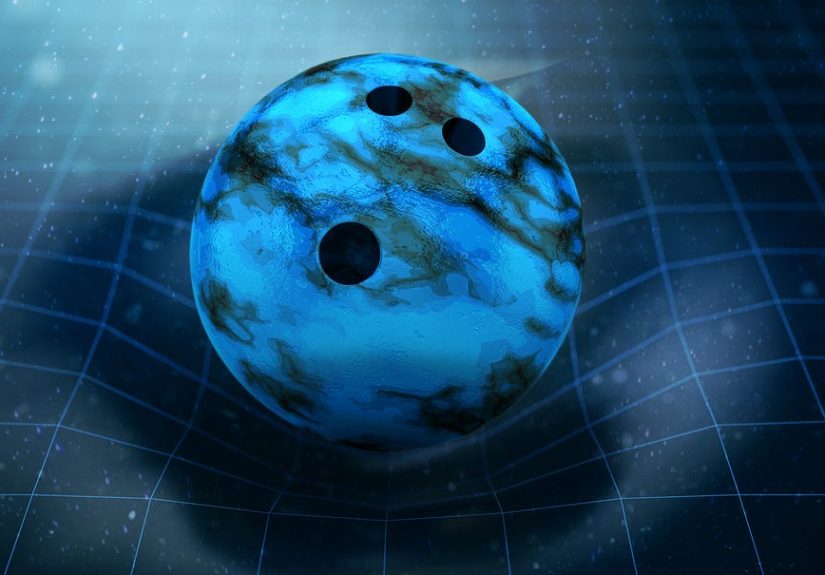
Instead of an invisible force reaching across space like a cosmic tug-of-war rope, GR said: mass and energy reshape spacetime,
and everything else simply follows the curves.
That single ideagravity as geometryturned out to be spectacularly useful. It explained mysteries that bothered astronomers,
predicted effects we later measured with obsessive precision, and became the foundation for modern cosmology.
And yet, despite all its victories, general relativity comes with a big, unglamorous footnote:
it’s not the final story. In certain extreme situations, the math basically waves a white flag.
The theory is brilliant… but incomplete.
What General Relativity Actually Says (Without Melting Your Brain)
The elevator-pitch version starts with Einstein’s equivalence principle: the effects of gravity and acceleration can look the same.
If you’re in a sealed elevator and feel “weight,” you might be standing on Earthor you might be in deep space with the elevator
accelerating upward. (In both cases, your coffee still tries to escape the cup. Physics is consistent like that.)
Einstein took this seriously and made a radical claim: what we experience as gravity is the result of curved spacetime.
Matter and energy tell spacetime how to curve, and curved spacetime tells matter how to move.
Planets don’t get “pulled” by a force in the Newtonian sense; they follow the straightest possible paths (called geodesics)
in a spacetime that isn’t flat.
Under the hood, the theory is encoded in Einstein’s field equations, which relate spacetime geometry to the distribution of energy,
momentum, and pressure (all packed into something called the stress-energy tensor). You don’t need to memorize the equation to get the point:
in GR, gravity isn’t a thing in spaceit’s a feature of space and time themselves.
The Game-Changing Wins
1) The Mercury Problem: When Newton’s Math Came Up Short
Before Einstein, astronomers noticed Mercury’s orbit didn’t behave exactly as Newton’s laws predicted. The point of closest approach
to the Sun (the perihelion) slowly shifts over time. Most of that shift can be explained by gravitational nudges from other planets,
but there was a stubborn leftover discrepancyabout 43 arcseconds per century.
General relativity explained that leftover perfectly: Mercury orbits in a region where the Sun’s gravity slightly warps spacetime,
and that curvature adds a subtle extra precession. This wasn’t a minor “nice to have.” It was an early sign that gravity wasn’t
just a force; it was geometry.
2) Light Bends: The Universe Invented the Ultimate Optical Illusion
Newtonian gravity could hint that light might be affected by gravity, but Einstein’s GR predicted a specific amount of deflection:
light passing near a massive body like the Sun should bend because spacetime is curved.
In 1919, eclipse expeditions measured starlight deflection near the Sun and made Einstein internationally famous.
(Imagine becoming a global celebrity because you were right about math. What a time.)
Today, “bending light” isn’t just a historical flex. Gravitational lensing has become a practical tool.
Massive galaxies and clusters can magnify and distort background objects like cosmic funhouse mirrorsuseful for discovering distant galaxies,
mapping dark matter, and testing gravity on large scales.
3) Time Dilation: Gravity Messes With Your Watch (Politely, But Relentlessly)
GR predicts gravitational time dilation: clocks tick more slowly in stronger gravity. That means a clock at sea level runs a tiny bit
slower than one on a mountain. This sounds like trivia until you remember that modern life is basically one big scheduling app.
The most famous real-world example is GPS. Satellites experience different gravitational strength than receivers on Earth, and they’re moving fast,
so both general relativity (gravity) and special relativity (speed) affect their clock rates. If you ignore relativity, GPS errors would pile up
quickly and your “turn left” would become “turn into a lake.” Relativity is quietly saving your road trips.
4) Black Holes: From “Math Weirdness” to Astrophysical Reality
GR allows solutions where gravity becomes so intense that not even light can escape: black holes.
For decades, black holes felt like theoretical drama. Then astronomy began collecting receipts:
stars orbiting invisible massive objects, x-ray emissions from accretion disks, and, in 2019, the first image of a black hole’s shadow.
That black hole image wasn’t just a pretty donut of glowing gas. It was also a test of strong gravity,
showing light bent around an extreme object in a way consistent with GR’s expectations.
5) Gravitational Waves: The Universe Has a “Vibrate” Mode
Einstein predicted in 1916 that accelerating massive objects should create ripples in spacetimegravitational waves.
For a century, that prediction was a “trust me, bro” backed by very serious math.
Then, in 2015 (announced in 2016), LIGO directly detected gravitational waves from merging black holes.
This wasn’t just one more checkmark. The waveform matched GR’s predictions in the strongest gravity conditions humans have ever measured directly.
It also opened a new era of astronomy: instead of only seeing the Universe, we can “listen” to it.
How We Keep Putting Einstein on Trial
One reason general relativity is so respected is that it’s been tested in wildly different ways: from planetary motion to atomic clocks,
from radio signals passing near the Sun to black hole mergers billions of light-years away.
Scientists love Einstein… but they also love catching errors. It’s a healthy relationship.
Classic and modern tests (a highlight reel)
- 1919 eclipse observations helped establish light-bending as a real phenomenon, not just elegant math.
- Precision time experiments (including modern atomic clocks) measure gravitational time dilation with extraordinary sensitivity.
- Gravity Probe B targeted effects like geodetic precession and frame-draggingsubtle “twists” of spacetime near Earth.
- LIGO checks GR in extreme gravity by comparing observed gravitational wave signals to predicted waveforms.
- Event Horizon Telescope images black hole shadows, offering a strong-field laboratory for spacetime geometry.
- Large surveys like DESI test how gravity shapes cosmic structure across billions of years.
So Where’s the “Flaw”?
Calling general relativity “flawed” doesn’t mean it’s wrong in everyday situations. It means the theory has limitsplaces where it stops being
an adequate description of reality. Think of it like an incredibly accurate map… of everything except the cliff edge labeled “Here Be Dragons.”
1) Singularities: When the Math Says “Infinity” and Walks Away
GR predicts singularitiesregions where curvature becomes infiniteat the centers of black holes and (in many models) at the beginning of the Universe.
In physics, “infinite” is usually a sign your model has left the chat. Singularities suggest GR is being pushed beyond its domain of validity.
Something more complete should take over there.
This is not a small technicality. Singularities are where prediction breaks down, meaning the theory can’t tell you what happens next.
A theory that can’t make predictions in the most extreme regimes is like a weather app that works greatuntil hurricane season.
2) Quantum Mechanics vs. General Relativity: Two Bosses, One Universe
Quantum mechanics rules the small: atoms, particles, fields, probabilities. General relativity rules the large: planets, stars, galaxies,
and the structure of spacetime. Both theories are extremely successful in their domainsand deeply awkward roommates at the boundary.
The trouble shows up when gravity becomes strong on tiny scales, like near singularities or in the early Universe.
GR treats spacetime as smooth and continuous. Quantum theory says nature at small scales is grainy, uncertain, and governed by quantum fields.
Merging them into a consistent theory of “quantum gravity” remains one of the biggest open problems in physics.
Black holes put this conflict on a stage with bright lighting. They combine intense gravity with quantum effects,
and puzzles like the black hole information problem highlight that “GR + quantum” is not a finished recipe.
3) Cosmology’s Mystery Ingredients: Dark Matter and Dark Energy
GR is the backbone of modern cosmology, but when we apply it to the Universe as a whole, we quickly meet two strangers:
dark matter and dark energy. Observations of galaxy rotation, gravitational lensing, and large-scale structure suggest there’s more
gravitating “stuff” than we can seedark matter. Meanwhile, the expansion of the Universe is acceleratingan effect attributed to dark energy.
In Einstein’s equations, a term called the cosmological constant can act like a kind of built-in energy of space.
Einstein originally introduced it to allow a static Universe (then later distanced himself from it), but a cosmological constant-like ingredient
remains a leading explanation for cosmic acceleration. The catch? We still don’t understand what dark energy fundamentally is.
Recent large surveys have tested gravity on cosmic scales with increasing precision, often finding results consistent with GR
while still leaving the nature of dark energy wide open. Some analyses even hint dark energy might evolve over time,
which would push cosmology beyond the simplest “constant” story.
4) The Practical “Flaw”: General Relativity Is Hard
Even when GR works perfectly, it’s not always friendly. The equations are nonlinear, meaning gravity can gravitateyes, really.
Solutions are often complex, and for many real systems, scientists use approximations or numerical simulations.
This isn’t a conceptual failure, but it does mean that GR’s elegance can come with computational bills.
What Comes Next: Fixing the Parts That Break
If GR is incomplete, the goal isn’t to toss it outit’s to extend it. Just as Newton’s gravity remains a great approximation in many contexts,
general relativity will almost certainly survive as a “low-energy” or “large-scale” limit of a deeper theory.
How scientists try to patch the gaps
-
Quantum gravity research aims to build a framework where spacetime and quantum principles coexist consistently.
Approaches include string theory, loop quantum gravity, and other ideas that attempt to describe gravity in quantum terms. -
Stronger observations keep raising the stakes: gravitational wave detectors, black hole imaging, and precision cosmology surveys
can expose tiny deviationsor tighten the constraints on alternatives. -
Cosmic-scale tests (like DESI’s mapping of structure growth) help check whether gravity behaves exactly as GR predicts
across billions of years and enormous distances.
The most honest verdict is this: general relativity is one of the most successful scientific theories ever created,
and it almost certainly isn’t the final theory of gravity. It’s a masterpiece that works astonishingly wellright up to the moments when
the Universe demands a sequel.
Final Takeaway
Einstein’s general relativity changed physics by turning gravity into geometry and predicting effects that have been tested again and again:
Mercury’s orbit, the bending of light, time dilation (hello, GPS), black holes, and gravitational waves.
But it also predicts its own limitsespecially at singularitiesand it doesn’t naturally merge with quantum mechanics.
In other words: GR is both triumphant and unfinished, like a blockbuster movie that ends on a cliffhanger.
The next chapterquantum gravityremains one of science’s most ambitious projects.
Experiences Related to “Einstein’s General Relativity Theory Was Game-Changing, But Flawed” (Extra Section)
One of the weirdest “experiences” of general relativity is that most of us use it daily without realizing it. You don’t have to own a spaceship,
study tensor calculus, or dramatically whisper “spacetime curvature” into the night. You can just… open your phone.
GPS is the most relatable example: every time your map app tells you where you are, it’s leaning on relativity corrections.
That’s a wild cultural shift when you think about it. A theory that began as chalkboard geometry is now part of ordinary errands.
You might be buying snacks, but Einstein is quietly making sure you’re buying them at the correct address.
Another common experience is the “gravity is time” moment. People often learn in school that time is constantthen discover that GR disagrees.
That realization can feel like someone moved the furniture in your brain. You start seeing everyday places differently:
the lobby of a tall building, a mountain overlook, an airplane cruising at altitude. In GR’s world, those are not just different views;
they’re slightly different time environments. The differences are tiny in daily life, but the idea is powerful: time isn’t a universal metronome.
It’s more like a playlist that changes tempo depending on where you are and how you move.
If you’ve ever watched footage of a solar eclipse or seen one in person, you’ve also brushed up against relativity’s origin story.
The 1919 eclipse expeditions are famous because they turned a subtle prediction into a public event.
Today, eclipses still carry that “science in the wild” feeling: crowds gather, the light changes, the air gets strange,
and suddenly the sky feels like a laboratory. Even if you’re not measuring starlight deflection,
you’re participating in the same awe that helped launch GR into the mainstream.
Modern “relativity experiences” can be surprisingly emotional, tooespecially when they involve black holes.
The first black hole image in 2019 hit the public like a reality check: the Universe isn’t just theoretical.
There is, really, an object out there so dense that it sculpts light into a glowing ring.
People who aren’t physics nerds (and people who absolutely are) reacted with the same basic message:
“Wait… that’s real?” That’s general relativity turning into a picture you can show your friend who hates math.
Gravitational waves offer another kind of experience: hearing about a detection and realizing it’s spacetime itself that’s “ringing.”
The concept is almost poetic, but the science is brutally precise. Two black holes spiral together, merge, and send ripples outward
and detectors on Earth measure distortions smaller than you’d expect any machine to notice.
For many people, the experience isn’t direct (no one feels a gravitational wave the way you feel a bass drop),
but it’s still a moment of perspective: the Universe has events so violent and so far away that the only thing that reaches us is the shape of spacetime changing.
The “flawed” part of GR shows up in experiences, tooespecially when you learn what singularities mean.
In popular science, a singularity can sound like a dramatic location where “everything becomes infinite.”
But the deeper experience is more humbling: singularities are where our best current description stops making sense.
For students, this can be the first time science feels like an unfinished map rather than a completed encyclopedia.
It’s not disappointingit’s energizing. It suggests that knowledge has edges, and those edges are where discovery happens.
Even science fiction becomes a kind of relativity experience. Stories that involve wormholes, time dilation near black holes,
or extreme gravity often spark the same question: “Could that happen?” Sometimes the answer is “not like that,”
but the curiosity is the point. Relativity gives people permission to imagine the Universe as stranger than intuition allows,
while also demanding that imagination eventually cash out in math and evidence.
In the end, the most human experience related to general relativity is this: learning that the world is not built for our instincts.
Our brains evolved to throw rocks, not to understand four-dimensional geometry. Yet we can still build theories that predict black hole shadows,
guide satellites, and decode cosmic history. General relativity feels game-changing because it proves the mind can outrun intuition.
And it feels flawed (in the productive, scientific sense) because it reminds us the Universe still has unanswered questions
which means the story isn’t over.