Table of Contents >> Show >> Hide
- What Exactly Is a Caftan (and Why Does It Have Two Spellings)?
- A Quick History: From Courts to Courtyards to the Modern Closet
- Why White? The Quiet Power of a Very Loud Color
- The Elder Statesman Effect: How Clothing Signals Authority Without Shouting
- How to Wear a White Caftan Like You Mean It
- Respect, Context, and Not Being “That Person”
- Care and Maintenance: Keeping White White
- Modern Icons: From High Fashion to Personal Uniforms
- Buying a White Caftan: What to Look For
- Conclusion: A Garment That Ages Like a Good Speech
- Experience Notes: Living With the Elder Statesman’s White Caftan (Extra )
There are outfits that scream, “Look at me!” and outfits that quietly whisper,
“I’ve been through three administrations, two recessions, and I still have my hearing.”
The elder statesman’s white caftan belongs to the second category.
It’s not just a garmentit’s a whole vibe: calm authority, heat-friendly comfort,
and a silhouette that says, “Yes, I’ll attend your ceremony… and no, I will not be squeezed
into a stiff blazer to do it.”
In cultures across North Africa, the Middle East, and parts of Central and West Asia, the caftan
(also spelled kaftan) has long carried signals of status, tradition, and occasion.
In modern life, a white caftan can also function as a personal uniformone that communicates
steadiness and dignity without needing a single shoulder pad.
What Exactly Is a Caftan (and Why Does It Have Two Spellings)?
A definition you can wear
In straightforward terms, a caftan is an ankle-length garmentoften cotton or silkwith long sleeves,
common throughout the Middle East (and widely worn beyond it). Depending on region and era,
it may be worn loose, belted, layered, or richly embellished.
Caftan vs. kaftan vs. “that robe thing”
The spelling shift is mostly transliteration and convention: “caftan” and “kaftan” both appear in
modern English usage. Museums and fashion histories often use “kaftan,” while dictionaries and
general writing frequently use “caftan.”
Add to that the fact that different cultures have related garments with their own namessome sharing
a similar cut, others only a similar purpose. You’ll hear terms like thawb, jalabiya,
daraa, or boubou used for long robes in different places. The key point:
the elder statesman’s white caftan is less about a single “one true” pattern and more about a
recognizable formulaflowing length + breathable ease + formal presence.
A Quick History: From Courts to Courtyards to the Modern Closet
Courts, “robes of honor,” and the politics of fabric
The caftan/kaftan has deep roots in West and Central Asia and became especially significant in
imperial contexts. In the Ottoman world, kaftans could be luxurious garments linked to rank,
ceremony, and favorsometimes bestowed as gifts to courtiers and dignitaries. In other words:
long before “power suit” entered the chat, textiles were already doing political work.
Museums note details that mattered: elegant materials like silk brocade or velvet, large-scale
floral designs, and construction choices that separated everyday wear from special-occasion finery.
Even the way a garment closes, belts, or drapes can signal whether you’re headed to lunch… or
to an audience with someone who owns a palace.
North Africa and Morocco: status, scholarship, and the urban elite
In North Africaparticularly Moroccothe caftan also became associated with prominent social roles.
Historical accounts in museum collections describe caftans worn by scholars and high-ranking officials
among the Moroccan urban elite. That connection matters for our “elder statesman” idea:
the garment doesn’t just look dignifiedit has long been part of dignified life.
Today, Moroccan caftans are also strongly tied to major social and religious eventsweddings,
festivals, and rites of passageand their craftsmanship can be elaborate, with embroidery and
fine finishing that elevates the garment into wearable heritage.
How the West adopted itthen kept coming back
In the United States, the caftan’s modern fashion fame grew in the mid-20th century and surged in
the 1960s and 1970s, when designers and tastemakers embraced the silhouette as glamorous,
comfortable, and dramatic. It’s been reinterpreted repeatedly ever sinceresort wear, loungewear,
eveningwear, and “I’m on vacation in my living room” wear.
That American chapter matters because it helps explain why the caftan now reads in two languages at once:
it can be deeply traditional and unmistakably current. It can signal cultural continuityor simply
excellent taste and a refusal to be uncomfortable on principle.
Why White? The Quiet Power of a Very Loud Color
White is a funny color. It’s visually bold but emotionally calm. It looks simple while requiring
the most commitment (because white doesn’t forgive coffee). In the context of an elder statesman,
a white caftan can communicate:
- Clarity and restraint: no distracting pattern, no loud brandingjust presence.
- Ceremony and respect: white is commonly used for formal, religious, and commemorative moments in many cultures.
- Practical heat wisdom: in hot climates, light colors and breathable fabrics are a comfort strategy, not a trend.
The trick is that white can look either transcendent or terrifyingly see-through. The difference
is not spiritual alignmentit’s fabric weight, lining, and tailoring. (And maybe good lighting.)
The Elder Statesman Effect: How Clothing Signals Authority Without Shouting
Think of the standard Western political uniform: dark suit, crisp shirt, tie. It says “I’m serious”
but also “I’m in a temperature-controlled building that hates joy.” The elder statesman’s white caftan
says something else:
“I don’t need armor. I am the institution.”
This is why the caftan silhouette works so well for senior public figures and respected community leaders:
it’s formal without being stiff, commanding without being aggressive, traditional without being dusty.
It makes the wearer look composedespecially when everyone else is sweating through their third layer.
Details that make it statesman-level (not “bathrobe at brunch”)
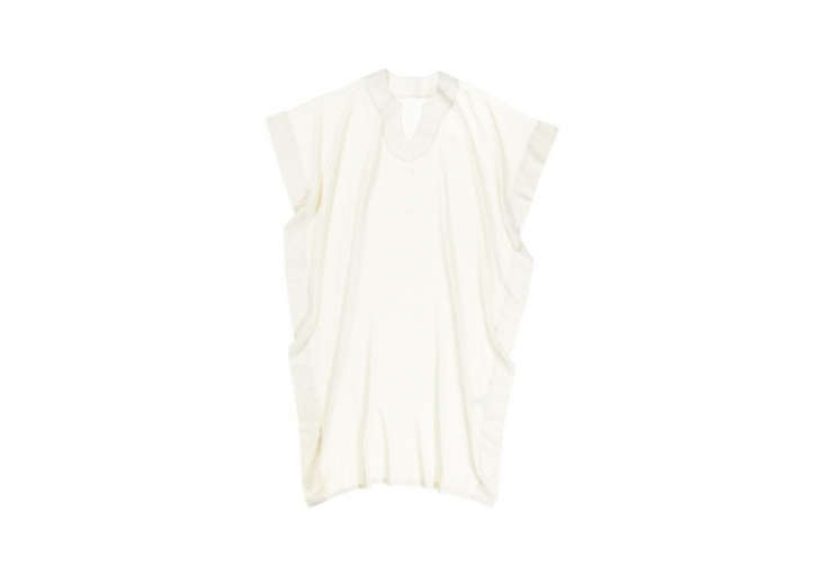
- Structure at the neckline: a clean band collar or subtle placket reads intentional.
- Thoughtful sleeves: cuffs or careful finishing keep it crisp.
- Length that lands right: ankle-length feels ceremonial; mid-calf can feel modern and mobile.
- Quiet luxury: fine cotton, linen, or silk with excellent drape signals quality without flashy logos.
- Subtle texture: jacquard, tone-on-tone embroidery, or a matte weave adds depth while staying “white.”
How to Wear a White Caftan Like You Mean It
1) Pick the right fabric (because white tells on you)
For a statesman vibe, you want fabric that drapes well and holds its dignity. Options:
- Cotton: breathable, classic, easy to maintain. Great for daily wear and warm weather.
- Linen: airy and elegant, with natural texture. Wrinkles are part of the charmthink “seasoned wisdom,” not “forgot the iron.”
- Silk or silk blends: more formal, often used for special-occasion garments. Looks incredible; requires care.
Pro tip: hold the fabric up to the light. If it behaves like a lampshade, reconsideror plan for a liner.
The goal is “dignified,” not “accidental transparency.”
2) Get the fit right: flowing, not floppy
A caftan should move, but it shouldn’t swallow you whole. Look for:
- Shoulder placement: even in looser cuts, seams shouldn’t drift halfway down your arm.
- Balanced volume: enough room for airflow, not so much that you create your own weather system.
- Clean hemline: crisp finishing at the bottom instantly elevates the look.
3) Belt or no belt? Choose your message
Belting a caftan can read “formal” and “intentional,” especially with a fabric sash. Leaving it unbelted
can read “ceremonial ease.” Either can workjust don’t let it look accidental.
4) Footwear and accessories: keep it grounded
A white caftan pairs best with clean, simple choices:
- Leather sandals or loafers: polished, minimal, and timeless.
- A classic watch: statesman energy without trying too hard.
- One strong accessory max: a ring, a scarf, or a distinctive walking stick (if you truly have the aura for it).
5) Occasion guide: where the white caftan shines
- Ceremonies and formal gatherings: the garment’s history supports the moment.
- Religious and cultural events: especially where white garments are customary or welcomed.
- Summer diplomacy: outdoor receptions, community meetings, and any situation where heat is a factor.
- Travel: a well-made caftan can be a one-piece solutioncomfortable, packable, and instantly “put together.”
Respect, Context, and Not Being “That Person”
The caftan is worn across many cultures and contexts, and it can be deeply meaningful. If you’re wearing
a white caftan inspired by a tradition that isn’t your own, do it with care:
- Learn what you’re wearing: know the name, the region, and the typical context.
- Support craftsmanship: choose makers and sellers who respect the garment’s origins and artisanship.
- Skip the “costume” framing: treat it as clothing, not a character.
- Be mindful of sacred spaces: some settings have expectations about modesty, colors, or head coverings.
When done thoughtfully, wearing a caftan can be a genuine appreciation of design and function.
When done carelessly, it can read like a theme party with no invitation.
Care and Maintenance: Keeping White White
A white caftan is beautiful, but it’s also basically a magnet for tomato sauce, street dust, and
“How did that get there?” Here’s how to keep it looking statesman-sharp:
Daily habits that save your laundry life
- Wear an underlayer: a lightweight white undershirt or slip reduces sweat marks and improves opacity.
- Spot-treat early: the sooner you treat a stain, the more likely it won’t become a permanent memoir.
- Mind the fabric care label: cotton and linen may tolerate gentle washing; silk often wants professional care.
- Store properly: hang it to keep the drape; avoid wire hangers that distort shoulders.
Modern Icons: From High Fashion to Personal Uniforms
In American fashion culture, caftans have a recurring habit of returning whenever people collectively
decide that comfort and elegance should be friends again. They’ve appeared as vacation staples,
city outfits, and glamorous at-home wear.
A memorable modern example is fashion editor and cultural figure André Leon Talley, who famously embraced
caftans as part of his larger-than-life style. That’s an important clue: the caftan can be quiet or theatrical.
A white caftan tends toward the quiet endunless you pair it with a cape, in which case you’re doing your own thing
and we respect the commitment.
In the “elder statesman” framing, the white caftan becomes something like an anti-trend: it’s timeless,
rooted in history, and always appropriate when worn with intention. It’s also unbelievably practicalbecause
dignified people still have to sit, stand, travel, and occasionally endure long speeches.
Buying a White Caftan: What to Look For
If you’re choosing a caftan that you want to feel “statesman-grade,” shop like you’re buying something
that should still look good five years from now.
Quality checklist
- Fabric weight: enough substance to drape, not cling.
- Seams and finishing: neat stitching, clean edges, sturdy hems.
- Opacity: check in daylight, not just under flattering store lighting.
- Comfort: breathability matters; you want ease of movement.
- Design restraint: tone-on-tone detailing often reads more elevated than loud contrast.
Most importantly, choose one that feels like you. The “elder statesman” look isn’t about age;
it’s about energy: calm, grounded, and unbothered by nonsense.
Conclusion: A Garment That Ages Like a Good Speech
The elder statesman’s white caftan is what happens when comfort and authority stop fighting.
It’s a garment with a long historytied to courts, scholars, ceremonies, and craftyet it still makes sense
in modern life because it solves real problems: heat, movement, presence, and the need to look dignified
without suffering.
If you want an outfit that says “I have perspective,” “I respect the room,” and “I refuse to be itchy,”
a white caftan might be your best wardrobe diplomat.
Experience Notes: Living With the Elder Statesman’s White Caftan (Extra )
Wearing a white caftan isn’t just about how it looks in photosit’s about how it feels in motion, in heat,
in conversation, and in those oddly important in-between moments (like walking from the car to the event
while pretending you’re not checking whether you stepped on something).
Experience #1: The summer ceremony where everyone else is melting
Picture an outdoor gathering in peak warmth: sun overhead, speeches scheduled, and a sea of people in outfits
that seemed like a good idea in air-conditioning. In that setting, the white caftan becomes a small miracle.
The fabric moves air. The cut doesn’t cling. The color reflects light instead of hoarding it. You’re not
“dressed down”you’re dressed smart. People read it as intentional, not lazy, because the silhouette
carries formality.
The best part is the calm it projects. You may still be hot (we’re all human), but you don’t look frantic.
The caftan’s flow creates a slow, composed rhythm when you walklike you planned your pace years ago and
never needed to change it.
Experience #2: The handshake test
Every outfit has a “social moment” that reveals whether it’s truly functional. For the caftan, it’s the
handshake-and-lean-in greeting: you extend your hand, your sleeve shifts, and you find out if the cuffs are
well-finished or if the fabric is trying to start a separate conversation. A well-made white caftan passes
easilyclean sleeve movement, no awkward bunching, and just enough structure to keep your silhouette sharp.
And here’s the funny thing: people often mirror the energy of your clothing. If you look grounded and
dignified, they tend to slow down a notch. Conversations get a little more respectful, even if you’re
discussing something as unglamorous as parking logistics. That’s the elder-statesman magic: your outfit
quietly asks for civility.
Experience #3: The “travel uniform” moment
Airports and long drives are where fashion goes to be humbled. A white caftan can be surprisingly good here
if you plan like a responsible adult. Choose a breathable fabric that resists wrinkling, wear a soft underlayer,
and keep a small stain-removal pen within reach. The comfort level is high, and you still look like you didn’t
roll out of a laundry basket.
The trick is managing white in the real world. You learn small habits: you don’t lean on unknown surfaces,
you keep your coffee at a respectful distance, and you develop a sixth sense for sauce. It’s not paranoia;
it’s leadership.
Experience #4: Wearing it at homewithout turning it into loungewear
A white caftan can be a home outfit that still feels elevated, especially during hosting. It’s comfortable,
but it’s also presentablelike you’re ready to welcome guests, offer advice, or pretend you’ve never Googled
“how to remove turmeric stains.”
That’s why it works so well as a “statesman” symbol: it bridges worlds. It’s formal enough to carry history,
and relaxed enough to carry real life. In the end, the experience of the elder statesman’s white caftan is
simple: you feel unhurriedlike you have time, and your outfit agrees.