Table of Contents >> Show >> Hide
If you love travel, maps, and DIY home decor, a pieced map art project is basically
your dream combo. It’s budget-friendly, easy to customize, and looks like something
you picked up in a stylish boutique instead of from the clearance bin at the thrift
store. In true Remodelaholic spirit, this tutorial walks you through how to turn
old atlases, road maps, or printed city maps into fabulous pieced map wall art that
tells your story and fits your home’s style.
We’ll cover everything from choosing the right maps and backing board to piecing,
gluing, and sealing your artwork so it actually lasts. You’ll also find design
variations, ideas for where to hang your masterpiece, and real-life tips that DIYers
have learned the hard wayso you don’t have to. Grab a stack of maps and let’s get
crafty.
Why Pieced Map Art Is So Fabulous
It’s Personal and Tells a Story
Pieced map art is more than just wall decor; it’s a visual diary. You can highlight:
- Cities where you’ve lived, studied, or worked
- Road trips you’ve taken across states or countries
- Bucket-list destinations you want to visit
- Family hometowns or ancestral regions
By cutting and arranging map sections, you’re essentially “editing” your own story
into a graphic, modern collage. Guests will almost always walk up to it and say,
“Wait, is that where you went last summer?”
It’s Budget-Friendly and Eco-Conscious
Old atlases, vintage road maps, and outdated classroom maps are often inexpensive
or even free. Thrift stores, yard sales, and used bookstores are full of them.
Instead of letting those maps collect dust, you’re giving them a second life as
art. Pair them with a piece of plywood or MDF, some basic adhesive, and a little
craft time, and you’ve got big-impact decor on a small budget.
It Works with Many Decor Styles
Depending on the colors and layout you choose, pieced map art can swing:
- Modern: Clean grids of map rectangles on a white background
- Vintage: Yellowed road maps with distressed edges and dark frames
- Boho: Overlapping, irregular pieces with lots of color and texture
- Kids’ rooms: Bright maps with clearly labeled countries or states
That flexibility is why map art keeps showing up in DIY decor tutorials, from simple
Mod Podge canvases to gold-leafed world maps and multi-panel wall installations
inspired by travel and geography.
Gather Your Supplies
Before you start cutting up your maps (deep breath), make sure you have everything
you need within reach.
Best Maps to Use
You can use almost any printed map, but some options work especially well:
-
Old atlases: Perfect for smaller rectangles or strips; pages are
usually thin enough to decoupage cleanly. -
Road maps and travel guides: Great for bold highways, state lines,
and colorful legends. -
City maps: Excellent if you want to focus on a single special place
your hometown, honeymoon city, or favorite vacation spot. -
Printed digital maps: If you can’t find the exact map you want, you
can print a city or region map at home or through a print shop at the size you need.
The key is readability. You want visible city names, coastlines, or landmarks, not
just blobs of color. If the paper is very thin, be extra gentle when applying glue
and smoothing out air bubbles.
Backing Board and Adhesives
For the backing, choose something sturdy and flat:
- 1/4″ or 1/2″ plywood
- MDF or hardboard
- Stretched canvas (for a lighter piece)
Cut it to match your desired finished sizeanything from a small 11″ x 14″ panel to
a large statement piece over a sofa.
For adhesives and sealers, many DIY crafters swear by:
- Decoupage medium or Mod Podge
- Spray adhesive (for temporarily positioning pieces)
- Clear acrylic sealer or polyurethane topcoat (for durability)
Pick a finish that matches your stylematte for a subtle, modern look; satin or gloss
if you want a bit of shine.
Tools and Extras
You’ll also need:
- Craft knife or sharp scissors
- Self-healing cutting mat
- Metal ruler or straightedge
- Foam brush or soft paintbrush for glue and sealer
- Fine-grit sandpaper (for smoothing edges on wood)
- Painter’s tape (optional, for straight borders)
- Picture-hanging hardware for the back of the board
Step-by-Step Fabulous Pieced Map Art Tutorial
Step 1: Plan Your Layout
Before you cut anything, decide on the overall look of your map art:
-
Grid layout: Equal-sized rectangles arranged in neat rows and columns
for a crisp, graphic feel. -
Strip layout: Long vertical or horizontal strips of maps that create
a striped, modern pattern. -
Patchwork collage: A mix of sizes and shapes, slightly overlapped for
a more organic, quilt-like effect. -
Triptych: One large map cut into three panels hung side by side for
a gallery-style look.
Lightly sketch your idea on a scrap piece of paper, including where important cities or
regions will land. This helps you avoid accidentally chopping Paris in half when you
had your heart set on highlighting it.
Step 2: Prep and Paint the Backing
Lightly sand your wood or MDF backing, wipe off dust, and, if you like, paint the front
and edges. A neutral backgroundwhite, cream, charcoal graylets the maps shine. If
your layout leaves small gaps between pieces, the background color becomes part of the
design.
Let the paint dry completely before you start gluing. Rushing this step is how you end
up with tacky, smudged fingerprints along the edgesask any impatient DIYer.
Step 3: Cut Your Map Pieces
Now the fun (and slightly nerve-wracking) part: cutting the maps.
-
Use a craft knife and ruler for perfectly straight lines or scissors for more organic,
curved shapes. - Cut slightly larger pieces than you think you need; you can always trim later.
-
Make sure important detailsstate names, coastlines, or favorite citiesare centered
within each piece.
If you’re piecing together different regions, think about color balance. Mix blue ocean
areas with land-heavy sections, or alternate brightly colored maps with more muted ones
so your eye travels across the whole piece.
Step 4: Dry-Arrange the Pieces
Before gluing anything down, do a dry run:
-
Lay all your map pieces on the backing and play with the arrangement until it feels
balanced. -
Check that similar colors or dense text areas aren’t clumped together unless that’s
the look you want. -
Snap a quick photo on your phone once you like the layoutthis is your reference in
case pieces get shuffled during gluing.
This step can take a bit of time, but it’s where your map art really comes to life.
Think of it as puzzle-building, without the missing corner piece drama.
Step 5: Glue Everything Down
Once you’re happy with your layout, it’s time to commit:
-
Working one piece at a time, lift a map section and apply a thin, even coat of
decoupage medium to the backing where it will sit. -
Place the map piece on the glue, starting from one edge and smoothing outward to avoid
bubbles. -
Use a soft cloth, brayer, or the side of a clean credit card to gently press out any
wrinkles or air pockets. -
Repeat for each piece, making sure edges butt up neatly or overlap smoothly, depending
on your design.
If you’re using very thin map paper, avoid soaking it in gluetoo much moisture can
cause tearing. Thin coats are your friend.
Step 6: Seal and Finish the Surface
After the glue has dried (check your product’s recommended drying time), brush a thin
coat of decoupage medium or clear sealer over the entire surface of the map art. Work
in smooth, overlapping strokes and don’t over-brush; as it dries, minor streaks usually
level out.
You can:
-
Add a second or third coat for extra durability, lightly sanding between coats if
needed. - Distress edges of the board with sandpaper for a vintage, well-traveled look.
- Finish the sides with coordinating paint or wood stain for a more polished feel.
Step 7: Frame and Hang Your Map Art
You can display your pieced map art as-is for a casual, contemporary look, or frame it
for a more finished presentation:
- Use simple wood strips to create a DIY frame with a schoolhouse or gallery-style vibe.
- Add twine or metal hardware at the top of wood slats for a vintage pull-down map feel.
- Attach D-rings and picture wire to the back so the piece hangs flat against the wall.
Hang it at eye level where people can walk up and read the little details. Map art is
meant to be studied up close, not just glanced at from across the room.
Design Variations to Try
Monochrome or Limited-Palette Map Art
If your decor leans minimalist, choose maps in a limited color schemethink pale blues
and tans, or black-and-white maps with a single accent color. You can even print maps
in grayscale and let the shapes and text carry the design.
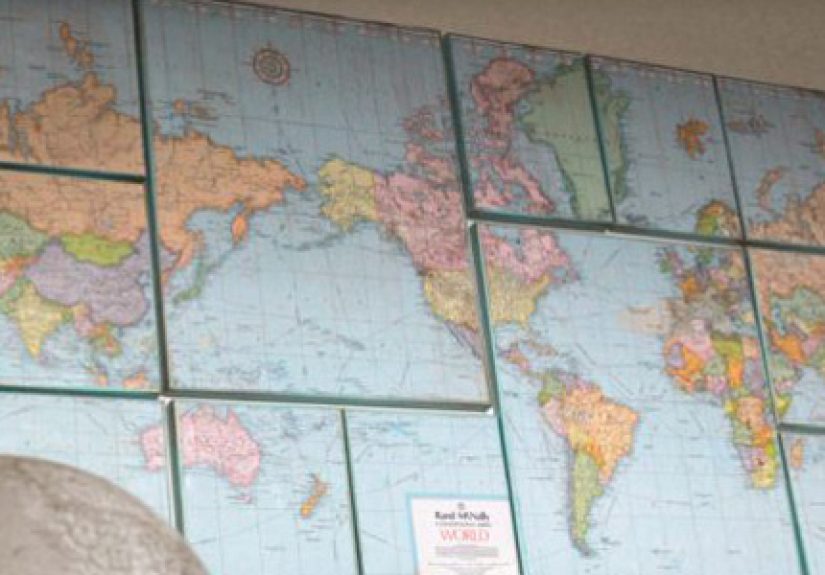
Triptych and Multi-Panel Map Installations
Instead of one large board, divide your design across two or three panels. You can:
- Cut a single large map into multiple sections and mount each on its own board.
-
Use different regions on each panelone for places you’ve been, one for where your
partner has traveled, and one for shared trips. - Stagger the panels slightly for a more dynamic, gallery-style arrangement.
Mixed-Media Map Collage
Take your pieced map art beyond paper and glue by layering in:
- Small printed photos from trips, tucked into map corners
- Handwritten labels, dates, or short notes about favorite memories
- Stickers, enamel pins, or tiny arrows marking key locations
- Metallic foil or gold leaf accents highlighting special cities
These extra touches turn your piece from simple decor into a story wall that feels
deeply personal.
Where to Display Your Fabulous Pieced Map Art
Your finished piece looks great just about anywhere, but some spaces are especially
map-friendly:
-
Entryway: A big map collage makes an instant conversation starter
when guests walk in. -
Home office: Hang it behind your desk to create a “well-traveled”
backdrop for video calls. -
Living room: Use it as the anchor piece above a sofa or console
table. -
Kids’ rooms: Combine bright maps with labels and pins to make
geography more fun and interactive. -
Hallways or staircases: Create a mini gallery wall with your map art
plus framed travel photos.
Care and Longevity Tips
Pieced map art holds up well, but paper and ink always appreciate a little extra care:
-
Avoid hanging in direct sunlight, which can fade colors over time, especially on
older maps. - Dust gently with a soft, dry clothskip spray cleaners or damp wipes on the surface.
-
If you live in a very humid climate, use a sealer designed to protect paper and
prevent warping. - For kids’ rooms, choose non-toxic sealers and keep frames securely fixed to the wall.
Real-Life Map Art Experiences & Ideas
One of the reasons map art keeps showing up on DIY blogs and home tours is that it feels
surprisingly emotional. People don’t just see paper and ink; they see memories. When
you’re designing your own fabulous pieced map, think about the stories you want it to
hold, not just the colors that match your sofa.
For many first-time crafters, the hardest moment is the very first cut into a vintage
atlas or road map. It feels slightly wronglike you’re vandalizing history. But once
you cut that first strip and start arranging pieces on the backing, the nervousness
usually shifts to excitement. Suddenly, that old, bulky book that no one opened for
years becomes something new, modern, and meaningful. If you’re hesitant, practice on
photocopies or printed maps first, then move on to the vintage originals once you’re
confident in your layout.
Families often turn pieced map art into a group project. Kids love helping choose cities
or states, especially if you’re mapping out a summer road trip or marking all the places
relatives live. You can let children pick a few “must-show” spotsgrandma’s town, a
favorite amusement park, or that one beach they still talk aboutand make sure those
names stay front and center. It’s a subtle way to sneak in some geography while
creating something that feels like a shared family artifact.
Another popular approach is to create pieced map art as a gift. Newlyweds appreciate
collages that combine maps of where they met, where they married, and where they spent
their honeymoon. Graduates love artwork featuring the city where they studied alongside
the city where they’re headed next. Housewarming gifts featuring a state or region map
are also an instant hit, especially when you tuck a handwritten note on the back
explaining why you chose those locations.
If you’re working with limited spacesay, a small apartment or rentalyou can scale the
idea down. A narrow pieced map strip over a desk, a mini-panel near a front door, or a
collection of small map blocks arranged in a loose grid can all deliver the same
storytelling power without dominating a wall. Attaching maps to lightweight backing
boards also keeps things renter-friendly; easy to hang, easy to patch later.
Over time, your map art can even evolve. Some people leave small blank areas or border
strips where they can add new map pieces as they travel to more places. Others use tiny
pins, stickers, or stamped dates on top of the sealed surface to track trips taken. It’s
a living artwork that grows as your experiences do. If you like the idea of updating it,
use a sealer that allows for gentle surface marking later and keep a few matching map
scraps tucked away for future additions.
The most important lesson from DIYers who have made pieced map art over the years? Don’t
stress about perfection. Crooked lines, slightly uneven rectangles, or a random little
island sneaking into an otherwise landlocked layout won’t ruin the piece. In many cases,
those quirks are what make the finished art feel handmade, warm, and real. As long as
the overall composition feels balanced and the places that matter to you are visible,
your fabulous pieced map art will be a win.
Conclusion
A fabulous pieced map art project is the kind of DIY Remodelaholic readers love:
creative, affordable, customizable, and endlessly adaptable to your space. With a few
old maps, a sturdy backing, and some glue, you can build wall decor that doesn’t just
fill a blank spaceit sparks stories, remembers trips, and celebrates the places that
matter most to you.
Whether you go for a clean grid of atlas pages, a colorful collage of road maps, or a
multi-panel design stretched across an entire wall, this tutorial gives you the steps
and ideas you need to get started. So pull those maps out of the drawer, fire up your
creative energy, and create a fabulous pieced map art piece that makes your home feel
a little more like you.