Table of Contents >> Show >> Hide
Every great sitcom has one detail fans quietly agree not to inspect too closely. On Friends, it was the apartments. On Saved by the Bell, it was the school logic. And on Family Matters, apparently, it was Carl Winslow’s job. Yes, Carl was a Chicago police officer. Yes, he wore the uniform. Yes, he talked like a man who believed in rules, order, and the spiritual value of a decent breakfast. But if you ask the people who actually starred on the show, the bigger mystery is simple: when exactly did this man go to work?
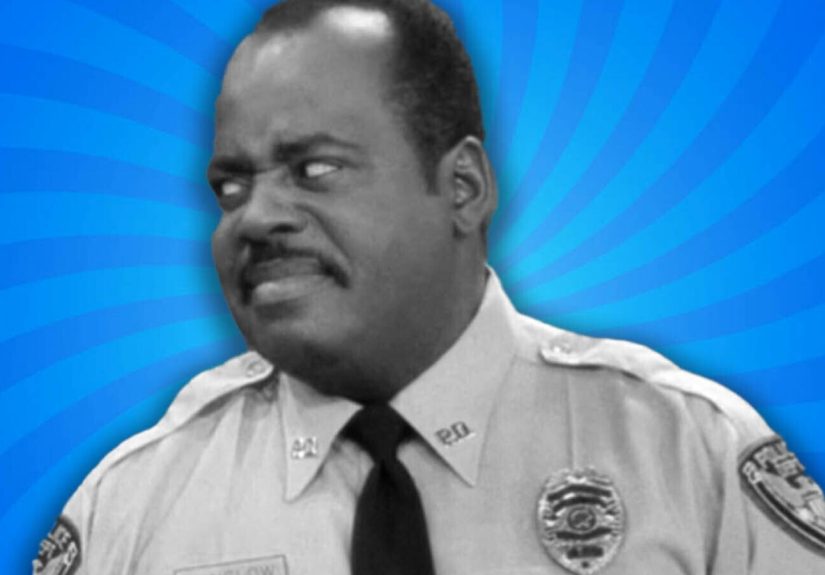
That’s the joke now making the rounds after Family Matters stars Telma Hopkins and Kellie Shanygne Williams laughed on their rewatch podcast about Carl always seeming to be at home. The image is instantly recognizable to anyone who grew up with the show. There was Carl, standing in the living room in full cop attire, somehow available for every kitchen argument, every Urkel invasion, every parental speech, every doorbell disaster, and every “why is this happening in my house?” meltdown. In other words, he may have been a police officer on paper, but on screen he often looked like the busiest stay-at-home lawman in television history.
That is exactly why the “laziest cop in history” line lands so well. It is funny, affectionate, and just sharp enough to expose a truth longtime viewers always sensed but never quite said out loud. Carl Winslow was not written to be a realistic working cop. He was written to be a sitcom dad first, an authority figure second, and a professional officer somewhere after the opening credits. The badge mattered, but the barbecue tongs, the recliner, and the thousand-yard stare after Steve Urkel broke something mattered more.
Why This Joke Hit Fans So Hard
The recent comment from Hopkins and Williams works because it names a piece of sitcom logic that audiences accepted for years. Carl’s job was central to who he was, but not central to what the show wanted to show. Family Matters was never a police procedural with a side of family comedy. It was a family comedy with a uniformed dad who could bring instant authority into any scene just by crossing his arms and raising one eyebrow. The minute viewers hear “lazy cop,” they are not imagining Carl skipping patrol so much as remembering how often he was somehow available in real time for household chaos.
That is the genius of the bit. Carl was not lazy in the emotional sense. He was constantly working. He was parenting Eddie, grounding Laura, clashing with Mother Winslow, sparring lovingly with Harriette, tolerating Rachel’s schemes, and trying not to launch Steve Urkel into low Earth orbit. But in the literal workplace sense? Let’s just say the Chicago Police Department must have had the most generous home-flex policy of the 1990s.
Part of the laughter also comes from hindsight. When people watched the show as kids, Carl being home all the time felt normal. He was Dad. Dads on sitcoms materialized exactly when the plot needed a lecture, a laugh, or a glorious overreaction. As adults, viewers rewatch these episodes and suddenly notice what the cast noticed: this man is in uniform in the living room again. Not at the station. Not in the squad car. Not responding to calls. Just policing the house, as Williams joked, which may be the most accurate job description Carl ever had.
The Uniform Did a Lot of Heavy Lifting
Carl’s police uniform was one of the smartest shortcuts in sitcom history. The audience saw it and immediately understood the character. He was disciplined, protective, traditional, and a little intimidating until the joke landed. The uniform told you he represented structure in a household where structure was regularly being flattened by Steve Urkel, teenage drama, and whatever weird energy TGIF was serving that week.
In practical terms, the uniform also meant the show did not need to spend much time proving Carl’s authority. He walked into a room already carrying it. That let the series stay where it was strongest: at home, around the family, in spaces where arguments could become lessons and lessons could become punch lines. Carl’s job existed as a character engine, not as a realism checklist.
Carl Was Never Meant to Be TV’s Most Active Cop
To understand why Carl looked suspiciously off-duty so often, you have to remember what Family Matters was built to be. The show began as a family-centered sitcom focused on the Winslows, not as a law-and-order drama hiding inside TGIF. Carl’s profession gave him identity and comic contrast. He was a man of rules living inside a house that seemed spiritually committed to disorder. That was the point.
And once Steve Urkel arrived and exploded into pop-culture icon status, the series leaned even harder into home-based chaos. Urkel was originally not supposed to become the gravitational center of the show, but once audiences fell for the suspenders, the glasses, and the “Did I do that?” energy, the whole series bent around his orbit. Suddenly the real action was not what Carl did on the streets. It was how Carl reacted when Urkel entered through the front door and endangered the structural integrity of the property.
That shift matters because it helps explain why Carl as a working cop was often more idea than depiction. The deeper the series moved into broad comedy, oddball inventions, and increasingly cartoonish family disasters, the less useful it became to show Carl doing realistic police work. What viewers wanted was Carl at home, annoyed, baffled, and somehow still dependable. His career gave him stature. His domestic frustration gave him comedy.
A Great TV Dad Beats a Realistic Cop Every Time
Reginald VelJohnson understood the assignment beautifully. He played Carl with weight, warmth, irritation, and tenderness all at once. That combination made him feel like a real father even when the show’s logic got wobbly enough to need guardrails. Carl could be stern without becoming cold, ridiculous without becoming a clown, and exhausted without losing dignity. That balance is harder than it looks, and VelJohnson made it feel effortless.
It also helped that Carl was not just the straight man. He had comic vanity, a quick temper, a giant appetite, and a gift for acting personally offended by Urkel’s mere existence. One reason the “lazy cop” joke works is because fans know Carl as such a vivid presence at home that it almost seems rude to ask whether he had a schedule. He was too busy doing the truly essential labor of the sitcom father: reacting.
And make no mistake, reacting was work. Carl reacted to broken inventions, broken windows, broken plans, broken nerves, and occasionally broken common sense. He was the firewall between the Winslow house and total collapse. A less charming actor might have turned Carl into a flat authority figure. VelJohnson turned him into the emotional anchor of the series.
The Joke Says Something Bigger About the Show
The funniest thing about the “laziest cop in history” remark is that it opens the door to a much larger truth about why Family Matters lasted. Fans did not come back week after week because they were desperate to watch Carl complete paperwork. They came back because the Winslow home felt alive. It was warm, noisy, chaotic, recognizable, and comforting. Carl being around all the time was part of that comfort, even if it made no earthly sense from an employment perspective.
This is also why the show still carries cultural weight. Family Matters presented a middle-class Black family in a way that was funny, accessible, and deeply memorable to a generation of viewers. It dealt with family conflict, friendship, crushes, school pressure, and bigger social themes without losing its broad sitcom charm. Carl, as the father at the center of that world, mattered far beyond his occupation. He modeled authority, protection, frustration, and affection in equal measure.
That is why the cast can joke about him now without puncturing the show’s legacy. If anything, the joke highlights how successfully the series trained viewers to accept Carl as the ever-present center of the house. He was not there because the writers forgot he had a job. He was there because the family needed him there, the audience wanted him there, and the sitcom machine ran on his reactions.
So, Was Carl Winslow Really the Laziest Cop in History?
In a literal sense, obviously no. Carl was a fictional character in a sitcom, not an internal affairs file waiting to happen. But in a comedic sense? The evidence is hilarious. The man seemed to have unlimited availability, infinite home access, and a supernatural ability to be present for every crisis with astonishing speed. If the house sneezed, Carl was already in the room.
Still, calling him lazy misses the better joke. Carl was not lazy. He was overqualified for a completely different job. He was less “street cop” and more “domestic crisis commissioner.” He enforced curfews, issued lectures, investigated lies, mediated sibling nonsense, and attempted to contain a next-door neighbor who operated like a one-boy FEMA disaster. That is not laziness. That is a reassignment.
Besides, Carl’s presence at home was part of what made the character lovable. He was accessible. He was involved. He cared. He got mad because he was invested. Even his most explosive reactions carried the heartbeat of somebody trying to keep the family together and the house standing. If he looked like a cop who never left the living room, he also looked like a father who never stopped showing up.
Why Fans Still Love Revisiting Carl Winslow
There is a reason cast reunions, memoirs, rewatch podcasts, and revival debates keep pulling Family Matters back into the conversation. The show is a nostalgia machine, yes, but it is also sturdier than nostalgia. It created characters who are easy to joke about and even easier to remember. Carl Winslow is a perfect example. He is broad enough to become a meme and grounded enough to still feel human.
That combination is rare. You can laugh at the absurdity of his work-life balance and still appreciate why he endures. He was the guy who wanted peace and never got it. He was the authority figure whose house ignored authority on a near-daily basis. He was the father who loved his family enough to keep engaging, even when every instinct told him to fake an emergency and disappear into a quieter zip code.
And maybe that is the real reason the joke has such staying power. Carl did not feel lazy. He felt trapped in the most affectionate way possible, forever one Urkel entrance away from another blood pressure event. That is comedy. That is character. That is also, if we are being honest, elite sitcom cardio.
Viewer Experiences: Why This Topic Feels So Familiar
One of the most interesting experiences attached to this whole conversation is how differently people watch Family Matters depending on when they first met the show. For kids, Carl Winslow was simply part of the furniture in the best possible way. He was always there because parents on television were always there. He represented the grown-up wall that stood between chaos and consequences. Viewers did not question why he was home so much, because the emotional logic made perfect sense. If Laura had a problem, if Eddie messed up, if Steve Urkel arrived with a machine that looked illegal in several states, Carl had to be present. End of discussion.
Watching the series as an adult creates a totally different experience. Suddenly you notice the mechanics. You start asking practical questions. Why is Carl in uniform in the kitchen again? Does this precinct not have shifts? Is Chicago somehow crime-free from 7:30 to 8 p.m. every Friday? That second-viewing experience is part of the fun of nostalgic television. You are not just rewatching the show. You are rewatching your old relationship to the show. The jokes hit differently, the parents make more sense, and the logistical nonsense becomes weirdly adorable.
There is also a shared experience among viewers who grew up on 1990s family sitcoms: television dads were always emotionally on call. They might have had jobs, but their true profession was being available for the plot. Carl Winslow, Danny Tanner, Uncle Phil, and other TV fathers all existed in this magical space where work happened offscreen and parenting happened exactly when the audience needed it. Carl just wore the most obviously official outfit while doing it, which makes the illusion even funnier in retrospect.
For many fans, revisiting Carl also brings back the experience of watching Family Matters as part of a weekly routine. The show was not just content. It was atmosphere. It belonged to an era when families gathered, theme songs mattered, and a familiar living room on television could feel like an extension of your own. Carl’s constant presence helped create that comfort. He was predictable in the most reassuring way. He would sigh, glare, complain, defend his family, and somehow land the episode with his dignity mostly intact. People remember that rhythm as much as they remember any specific storyline.
And then there is the emotional experience of seeing the cast joke about it now. That adds a new layer of affection. When Telma Hopkins and Kellie Shanygne Williams laugh about Carl basically working from the Winslow residence, fans get permission to laugh at the same thing without feeling cynical. It turns nostalgia into conversation. It reminds viewers that sitcom history is not frozen in amber; it keeps getting reinterpreted by the people who made it and the people who loved it.
In that way, the “laziest cop in history” line is more than a punch line. It captures the experience of growing up with television that felt larger than life but emotionally true. Carl may not have modeled a believable law-enforcement schedule, but he absolutely modeled something else: consistency. He was there. He cared. He reacted. He anchored the mayhem. For a lot of viewers, that is the experience that lasted, and it is exactly why the joke lands with such warmth today.
Conclusion
So yes, the Family Matters stars have a point. If you measure Carl Winslow by visible hours on patrol, the case is not looking great. But if you measure him by sitcom usefulness, fatherly endurance, and his ability to manage a household under permanent Urkel-related stress, the man was working overtime. The recent cast joke succeeds because it pokes at one of the show’s oldest, funniest contradictions: Carl was a cop whose most memorable beat was usually standing in his own house, trying to keep order with a face that said he had seen too much.
That contradiction is not a flaw. It is part of the charm. Carl Winslow was never supposed to be television’s most accurate portrait of law enforcement. He was supposed to be a rock-solid TV dad with a badge, a booming voice, and a breaking point. Reginald VelJohnson made that combination unforgettable. Decades later, fans are still laughing, still quoting, and still wondering whether this man ever actually clocked in. That is not a failure of realism. That is a victory of character.