Table of Contents >> Show >> Hide
- Why Door Hardware Is the Most Underrated Design Decision
- Gio Ponti in 60 Seconds (Because He Did Everything)
- The Lever Handle as Ponti Intended: A “Miniature Ritual”
- Meet the Family: Ponti’s Midcentury Handles (Lama, Cono, and Friends)
- So What Makes a Gio Ponti Lever Handle Special?
- Materials and Finishes: Where the Handle Becomes “Door Jewelry”
- Function Matters: Lever Handles, Accessibility, and Why Ponti Still Wins
- Where a Gio Ponti Lever Handle Looks Best
- How to Specify Door Hardware Like You’ve Done This Before
- Care and Maintenance: Keep the Magic Without Babying It
- Common Mistakes (And How to Avoid Them)
- Conclusion: A Small Upgrade With Outsized Impact
- of Experience: Living With a Ponti-Style Lever Handle
You can tell a lot about a building by the way it shakes your hand. Some doors greet you with a stiff, sweaty knob (rude).
Others offer a confident, effortless lever that says, “Come inno wrist yoga required.” That tiny moment is exactly why
fixtures and fittings deserve more respect than they get, and why a Gio Ponti lever handle has earned its spot in the
design hall of fame: it turns an everyday action into a small, repeatable pleasure.
This isn’t a story about “hardware.” It’s a story about touch, proportion, craft, and the strange magic of a well-made
lever: the one object in your home you’ll use more than your sofa, your stove, and possibly your phone (okay, maybe not
your phonebut give it time).
Why Door Hardware Is the Most Underrated Design Decision
It’s the only design object you physically “review” every day
Paint is visual. Tile is visual. Lighting is visual (and occasionally blinding). But a door handle is tactileyour hand
gets a vote. And hands are brutally honest. If the handle feels sharp, flimsy, sticky, or awkward, you’ll notice every
single time. If it feels right, you’ll stop thinking about it… which is the highest compliment functional design can get.
It sets the tone for the entire space
A lever handle sits at the intersection of architecture and jewelry. It’s small enough to feel like an accessory, but it
controls a boundaryprivate/public, inside/outside, quiet/noisy. In other words: it’s a tiny object with big emotional
responsibilities.
Gio Ponti in 60 Seconds (Because He Did Everything)
Gio Ponti (1891–1979) wasn’t “a designer.” He was a whole ecosystem: architect, industrial designer, editor, and
champion of modern Italian design. He founded Domus magazine in 1928, helped shape the design conversation for
decades, and moved comfortably between buildings, furniture, ceramics, and objects that live right at the human scale.
His best-known architectural work includes the Pirelli Building in Milan (a sleek midcentury icon), and he even designed a
major museum building in the United States later in his career. What matters for a lever handle, though, is his mindset:
Ponti treated details as design, not leftovers.
The Lever Handle as Ponti Intended: A “Miniature Ritual”
There’s a reason design people get poetic about door levers: they’re the choreography of daily life. One of the most
charming ways to describe great hardware is that it “enhances the miniature rituals” of a buildingthose repeated motions
that quietly determine whether a space feels graceful or cranky.
Ponti’s lever handle fits this philosophy perfectly. It isn’t trying to be loud. It’s trying to be inevitablelike it
always belonged there, waiting for your hand to arrive.
Meet the Family: Ponti’s Midcentury Handles (Lama, Cono, and Friends)
A long collaboration with Olivari
In the mid-1950s, Ponti worked with the Italian manufacturer Olivari on a small constellation of door-handle designs.
The company became known for treating handles as serious industrial products: forged, machined, finished, and built for
repeated use, not just showroom glamour.
Two design approaches: “organic” vs. “geometric clarity”
Olivari’s own description of Ponti’s handle thinking is refreshingly direct: he explored two paths. One was more organic,
with a lever shaped to meet the grip like a molded gesture. The other leaned into crisp geometry, trusting the hand to
naturally adapt to a clear form. In plain English: sometimes the handle hugs you; sometimes it politely offers its arm.
Why “Lama” matters
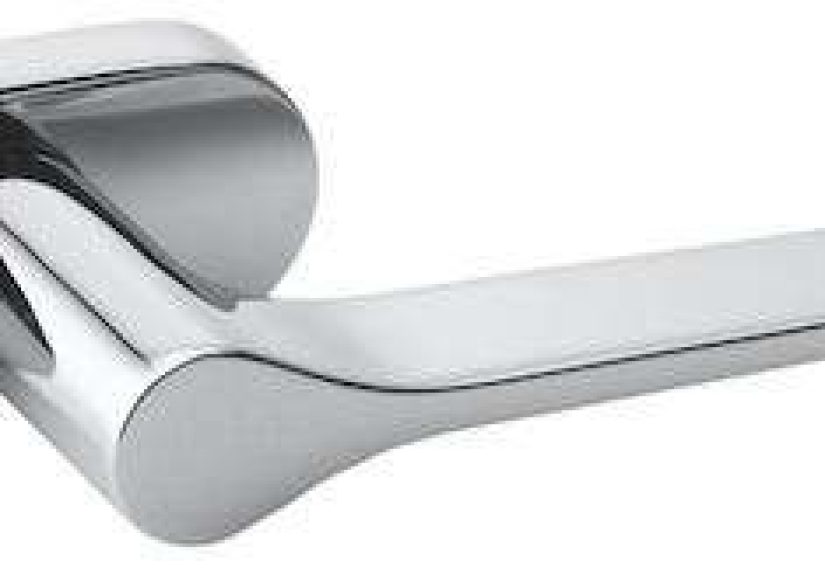
One of Ponti’s best-known handle designs is called Lama (Italian for “blade”), and the name tells you everything:
slender, precise, and sharp in silhouette (not sharp to the touchno one wants a door handle that files your fingerprints).
The Lama handle is also tied to Ponti’s architectural legacy: versions of it were used in the Pirelli skyscraper, aligning
the handle’s light, modern profile with the building’s sleek materials.
So What Makes a Gio Ponti Lever Handle Special?
1) The silhouette: slim, disciplined, confident
Ponti’s lever is a masterclass in restraint. The proportions feel “architectural”more like a line drawn with intention
than a decorative flourish. The handle doesn’t beg for attention, but it also doesn’t disappear. It’s the design equivalent
of someone who speaks softly and still runs the meeting.
2) The grip: comfortable without looking “ergonomic”
Many modern handles chase comfort by getting chunky. Ponti does it by getting smart: the lever offers enough surface to
push, enough presence to find without looking, and enough refinement to stay elegant even in shiny finishes.
3) The “click”: the invisible part you feel
Great hardware has a satisfying actionsmooth rotation, a clean return, no gritty resistance. That experience depends on
engineering you rarely see (springs, spindles, tolerances, internal mechanisms). But you feel it every day, and it’s one of
the reasons high-quality architectural hardware tends to inspire borderline emotional attachment.
Materials and Finishes: Where the Handle Becomes “Door Jewelry”
Brass as the classic base
Many Ponti-associated levers are produced with brass as a foundational material. Brass is beloved for a reason: it’s
substantial, it finishes beautifully, and it ages with personality. Polished brass reads warm and traditional; satin or
matte brass reads modern and calm; and darker treatments can make the handle feel graphic.
Chrome and stainless for a sharper, modernist read
Prefer your doors to feel like a Milanese office tower? Bright chrome and stainless finishes push the handle toward a
crisp, modernist vibe. These finishes can be especially effective in midcentury homes, lofts, and spaces where you want
the hardware to echo steel window frames, modern lighting, or minimalist cabinetry.
Patina: the design feature people don’t plan (but secretly love)
If you choose a finish that develops character over time, you’re signing up for a living surface. Some designers love the
slow evolution of metalhow frequent touch creates subtle shifts and highlights. Others prefer a finish that stays
consistent. Neither is “right,” but you should decide before you fall in love with a photo online.
Function Matters: Lever Handles, Accessibility, and Why Ponti Still Wins
Levers are simply easier to use
Here’s the practical truth: levers are friendly. They work when your hands are full, when your grip is weak, when you’re
holding a toddler, a laundry basket, or a very dramatic cup of coffee you refuse to spill. This is one reason lever-style
hardware is often favored for accessibility.
Accessibility basics you should know (even if you’re not renovating a courthouse)
U.S. accessibility guidance for door and gate hardware emphasizes one-hand operation and hardware that doesn’t require
tight grasping, pinching, or twisting of the wrist, and that can operate with limited force. Lever-shaped handles are
widely recognized as accommodating a broad range of users. Translation: a lever handle isn’t just “nice design”it’s a
design decision that welcomes more people.
Where a Gio Ponti Lever Handle Looks Best
Midcentury homes that want authenticity without cosplay
If you’re restoring a 1950s–60s house, Ponti’s handle language fits naturally: slim profiles, clean geometry, and a sense
of modern optimism. Pair it with flat-panel doors, walnut tones, or minimalist trim for a quiet, period-correct effect.
Contemporary spaces that need a little warmth
In a modern renovationwhite walls, large-format tile, simple cabinetrya Ponti-style lever in brass can act like a warm
punctuation mark. It keeps the space from feeling sterile without turning the hardware into an attention-grabbing costume
piece.
Bathrooms and powder rooms (aka the place where people notice everything)
Bathrooms are detail magnifiers: lighting is close, reflections are everywhere, and guests are standing two feet from the
door while wondering if they’re allowed to open the medicine cabinet. A refined lever handle plus a companion turn or
privacy function can make the whole room feel intentionally finished.
How to Specify Door Hardware Like You’ve Done This Before
- Choose the function: passage (no lock), privacy (bed/bath), keyed entry (exterior), or dummy (fixed for closets/pull-only situations).
- Confirm door thickness and prep: many levers fit standard interior doors, but older homes and custom doors can surprise you.
- Pick the rosette/plate style: a minimal round rosette is modern; a backplate can feel more traditional and can cover old holes.
- Decide how “matchy” you want to be: some designers recommend consistent door hardware throughout for cohesion, while others intentionally mix finishes by zone (public vs. private spaces).
- Don’t forget hinges: hinges are the hardware that photobombs every doorway. If the finish clashes, you’ll notice.
Care and Maintenance: Keep the Magic Without Babying It
For brass and specialty finishes
Use gentle cleaning methods first: soft cloth, mild soap, water, and a quick dry. Avoid harsh abrasives unless you’re
intentionally restoring a neglected piece. If your finish is meant to patina, let it do its thingaggressive polishing can
create uneven spots that look less “charming” and more “I panicked and attacked it with a paste.”
For stainless and chrome
These finishes tend to be more forgiving day to day, but fingerprints can be dramatic under certain lighting. A microfiber
cloth works wonders. The goal is to keep the handle clean without turning your home into a daily hardware-detailing
operation.
Common Mistakes (And How to Avoid Them)
- Choosing looks over feel: if you can, test a sample. The best-looking lever in the world won’t make up for an awkward grip.
- Ignoring context: ultra-minimal levers can look lost on ornate doors, and highly traditional knobs can look like costume jewelry on modern slabs.
- Mixing finishes randomly: mixing can be beautiful when it’s intentional. When it’s accidental, it reads like “we ran out.”
- Forgetting accessibility: even if you don’t “need” accessible hardware today, your future self (or your guests) will appreciate a lever that’s easy to operate.
Conclusion: A Small Upgrade With Outsized Impact
A Gio Ponti lever handle is proof that the smallest parts of a building can carry the biggest design confidence. It’s not
flashy. It’s not trying to be the star of the room. It’s simply precise, comfortable, and beautifully composedso every
time you open a door, the building feels a little more considered.
If you want a home that feels quietly “finished,” start where your hand starts: with the handle.
of Experience: Living With a Ponti-Style Lever Handle
Imagine you’ve just swapped your old hardware for a slender, Ponti-inspired lever. The first thing you notice isn’t the
look (though yes, it’s handsome). It’s the absence of frictionphysical and mental. You stop wrestling a knob that
needs a full twist-and-grip maneuver like you’re opening a pickle jar with feelings. Instead, you nudge the lever down with
the side of your hand while balancing groceries, and the door opens like it was trying to help you the whole time.
By day two, the handle becomes a small orientation device. In the morning, half-awake, you can find it without looking
because the profile is clear and the lever sits where your hand expects it to be. There’s a subtle confidence in that:
the hardware isn’t asking you to learn it. It’s meeting you. That’s the “miniature ritual” effectyour home feels easier to
live in, not because you renovated a wall, but because you removed tiny points of daily annoyance.
Then comes the social test: guests. People don’t usually comment on door handlesunless they’re either terrible or oddly
delightful. With a refined lever, you’ll catch the micro-reaction: a quick glance down, a tiny nod, the unspoken message of
“oh, this place has its act together.” In a powder room, the handle does double duty. It’s a touchpoint and a clue.
Comfortable hardware signals thoughtfulness, which makes a small room feel more intentional. (Also: it quietly prevents the
classic guest struggle of “is this door locked or am I just bad at doors?”)
Over time, you’ll notice the finish story. If you chose brass, the lever becomes a record of livingslight brightening in
the places fingers naturally land, softer tones around the edges. If you chose a more consistent finish, you’ll still get
that satisfying “clean line” moment when the light hits the handle and it reads like a deliberate stroke against the door.
Either way, the hardware stops being an accessory and starts being part of the building’s character.
The most practical “experience” is the one you can predict: levers make life easier for everyone. Kids can operate them.
Adults can operate them while carrying things. People with limited grip strength don’t have to fight your house to use a
bathroom. And once you get used to that ease, going back to twisty knobs feels like downgrading from a smooth zipper to
stubborn Velcro.
The best part is how strangely contagious the upgrade becomes. You replace one handle, then notice the next door. Then the
closet. Then the back entry. Suddenly you’re the kind of person who thinks about rosettes and latch actionsand while that
might sound like a personality change, it’s really just the result of one simple truth: good design is addictive when it
makes daily life feel better.