Table of Contents >> Show >> Hide
- Why This Story Strikes Such a Nerve
- Do 3-Year-Olds Know What They Want?
- Why Forced Kissing Is a Bigger Deal Than It Looks
- What Experts and Child-Development Advocates Generally Emphasize
- How Parents Can Respond When Grandma Crosses the Line
- Can Families Teach Consent Without Turning the House Into a Courtroom?
- What This Story Gets Right and What It Gets Wrong
- Practical Takeaways for Parents and Grandparents
- Conclusion
- Additional Experiences Related to This Topic
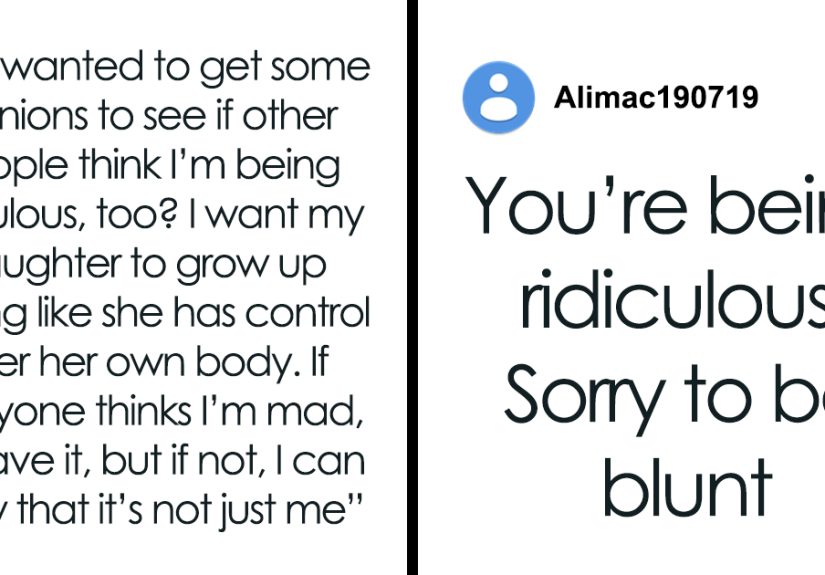
Some headlines sound like family gossip with a side of chaos. This one sounds like it walked straight out of a holiday dinner, knocked over the mashed potatoes, and started an argument before dessert. But beneath the drama is a very real parenting question: what should happen when a young child says no to hugs or kisses, and a beloved grandparent decides that “no” is just adorable background noise?
That question matters because the moment is rarely just about a kiss. It is about body autonomy, respect, boundaries, family culture, and the age-old tug-of-war between “be polite” and “your body is yours.” In households across America, parents are rethinking the once-standard command to “go give Grandma a kiss,” especially when a toddler clearly is not interested in participating in the family affection Olympics.
And yes, toddlers are tiny contradictions in sneakers. A 3-year-old may refuse a hug at 5:01 p.m., demand to be carried at 5:03 p.m., and then act personally betrayed by the existence of sleeves at 5:05 p.m. But inconsistency is not the same thing as not having preferences. A child can change her mind later and still deserve to have her “no” respected in the moment.
Why This Story Strikes Such a Nerve
The reason this scenario resonates is simple: it captures a generational divide in one awkward family interaction. Many older adults were raised to see affection as proof of love and obedience as proof of good manners. A child who pulled back from a hug could be labeled rude, shy, spoiled, or “just being difficult.” A lot of modern parents, however, see the same moment differently. They believe affection should be invited, not demanded, and that teaching consent starts long before children are old enough to understand the word in a textbook sense.
So when a grandmother says a 3-year-old “doesn’t know what she wants,” the real conflict is not only about the child. It is about whose interpretation matters more: the adult’s expectations or the child’s body language and words. That is why the issue gets emotional fast. One side thinks it is a harmless family kiss. The other sees a child learning that adults can override discomfort if they feel affectionate enough.
Put less delicately: love should not come with a mandatory smooch clause.
Do 3-Year-Olds Know What They Want?
In the moment, often yes
A 3-year-old may not be able to deliver a TED Talk on boundaries, but she absolutely can communicate comfort and discomfort. If she turns away, stiffens, hides behind a parent, says “no,” or starts swatting away a face coming toward hers, that is useful information. Adults do not need a preschooler to submit a written affidavit to understand that now is not the time.
Young children are also highly sensitive to context. They may reject physical affection because they are tired, overwhelmed, shy, overstimulated, or still warming up. That does not make their refusal meaningless. It makes it normal. Plenty of children who say no at the front door will climb into a grandparent’s lap an hour later after they have settled in, had a snack, and confirmed that nobody is planning a surprise cheek attack.
Changing your mind does not cancel your earlier “no”
This is where many adults get tripped up. A child may say no now and yes later. Some people interpret that as proof she “didn’t really mean it” the first time. Not true. It simply means her feelings changed. Adults do this all the time. We decline plans, get some rest, eat a cookie, and suddenly become social again. Toddlers are no different, except smaller and less likely to hide the emotional plot twists.
The healthier lesson is this: “no” means not now, unless the person later says otherwise. That is a far better message than, “If I wait two seconds and insist hard enough, your boundary becomes optional.”
Why Forced Kissing Is a Bigger Deal Than It Looks
To some relatives, refusing a kiss seems tiny. To a child, repeated forced affection can send several confusing messages all at once. First, it can teach that politeness matters more than comfort. Second, it can suggest that adults are allowed to decide what kind of physical contact is acceptable, even when the child objects. Third, it can blur the line between loving attention and unwanted attention, especially when the child’s “no” is treated like a joke.
That does not mean one unwanted goodbye kiss automatically determines a child’s entire future. That kind of dramatic one-to-one claim is too simple and too neat for real life. But daily family habits do matter. Repeated interactions teach children what adults will listen to, what adults will dismiss, and whether their voices have any power when they are uncomfortable.
In other words, the lesson is cumulative. A single moment may be small. A pattern is not.
What Experts and Child-Development Advocates Generally Emphasize
Ask before affectionate touch
One of the simplest shifts parents can make is asking before hugs, kisses, tickles, and cuddles. That tiny pause communicates respect. It shows children that affection is not something adults take from them just because they feel loving. It is something shared when both people are on board.
Offer alternatives instead of forcing compliance
If a child does not want a hug or kiss, that does not mean she must ignore the relative like a tiny celebrity avoiding the paparazzi. Families can offer other greeting and goodbye rituals: a high-five, wave, fist bump, smile, hand squeeze, air kiss, drawing, dance move, funny salute, or “Can you help Grandma carry her bag?” Affection and respect do not have to look like lip-to-cheek contact every single time.
Back up the child in real time
Parents often make the mistake of hoping the child will handle it alone. A 3-year-old is not a customer-service representative for her own boundaries. She needs backup. If Grandma leans in after the child says no, the parent should step in calmly and clearly: “She said no kisses right now. You can offer a high-five instead.”
Separate necessary care from optional affection
This point matters. Respecting body autonomy does not mean children run the entire republic. Parents still buckle car seats, brush teeth, give medicine, help with hygiene, and take kids to the doctor. Those are health and safety responsibilities, not optional affection. The difference is that good caregivers explain what is happening, stay gentle, and avoid pretending that mandatory care and voluntary affection are the same thing.
How Parents Can Respond When Grandma Crosses the Line
1. Use a clear, boring, repeatable script
You do not need a dramatic speech. In fact, the calmer the better. Try: “We’re teaching her that she gets to decide about hugs and kisses.” Or: “Please stop when she says no.” Or: “She can wave if she doesn’t want a kiss.”
Short statements work because they leave less room for debate. Long explanations invite cross-examination from relatives who suddenly become constitutional scholars on the subject of cheek kisses.
2. Talk before the visit, not only during the awkward moment
If you already know a family member tends to ignore boundaries, talk ahead of time. A simple message can save everyone a showdown by the coat rack: “Just a heads-up, we’re not forcing hugs or kisses. Please let her choose how she says hello and goodbye.” This is especially useful for holidays, birthdays, and family reunions, where everyone arrives emotionally loaded and carrying casseroles.
3. Do not throw the child under the bus
Avoid saying things like, “She’s being shy,” “She’s in a mood,” or “Just do it this once.” Those phrases accidentally frame the child as the problem. Instead, put the boundary on the family rule: “In our home, she gets to choose.” That protects the child and reduces pressure on her to perform affection to keep the room comfortable.
4. Stay consistent even when the relative is offended
This is the hard part. Some grandparents interpret the boundary as rejection, criticism, or proof that “kids today” are being raised by podcasts and feelings. But consistency matters. A rule that exists only when everyone agrees is not really a rule. If the child’s “no” is respected only when it is convenient, she learns that boundaries are decorative.
Can Families Teach Consent Without Turning the House Into a Courtroom?
Absolutely. Teaching body autonomy does not require turning every hug into a legal proceeding. It just means making room for choice. The goal is not to make children suspicious of affection or cold toward loved ones. The goal is to help them understand that genuine affection feels better when it is mutual.
In many cases, children actually become warmer when the pressure disappears. When they know they will not be cornered into a kiss, they relax. They approach on their own terms. They might sit next to Grandma during story time, hold Grandpa’s hand on a walk, or launch themselves into a hug when they feel safe and ready. Funny how affection gets more authentic when it is not treated like a mandatory school assignment.
What This Story Gets Right and What It Gets Wrong
The headline gets one thing very right: family members often underestimate how meaningful these moments are to parents trying to teach boundaries. To the adult insisting on a kiss, it may feel harmless. To the parent watching, it can look like a direct contradiction of everything they are trying to model.
But the headline also points to a common mistake: assuming a child’s age makes her wishes unimportant. A 3-year-old may not understand every social nuance, but she does understand liking and not liking, comfortable and uncomfortable, welcome and unwelcome. Adults should not dismiss that because it is inconvenient or because their feelings got bruised.
What families need is not less affection. They need better boundaries around affection. There is a huge difference between “Grandma loves you” and “Grandma gets what she wants from your body because she loves you.” One of those is warmth. The other is entitlement dressed up in family photos.
Practical Takeaways for Parents and Grandparents
- Believe the child’s “no” the first time.
- Offer alternatives like a wave, high-five, fist bump, or helping gesture.
- Ask before affectionate touch, even in close families.
- Do not shame, tease, or guilt a child for refusing affection.
- Let children warm up at their own pace.
- Teach that necessary care is different from optional affection.
- Keep family rules consistent across relatives, not only with strangers.
Conclusion
At the center of this story is a question that sounds simple and turns out to be anything but: when a young child says no, do the adults around her act like that answer matters? For families trying to raise respectful, confident kids, the answer should be yes.
A grandmother wanting affection is not the problem. Love is not the villain here. The problem begins when affection becomes something a child is expected to surrender to keep an adult happy. That may look old-fashioned to some families and obvious to others, but the healthier standard is the same: if a child does not want a kiss, the loving response is not to argue with her feelings. It is to respect them.
Because a child who learns, “My no is heard,” is learning more than manners. She is learning that her body belongs to her, that closeness should feel safe, and that the people who love her most are the ones who listen when she speaks up.
Additional Experiences Related to This Topic
Across family advice columns, parenting conversations, and real-world homes, stories like this tend to sound uncannily similar. A child sees relatives after a long break, freezes at the doorway, and instantly becomes the center of a social experiment nobody asked to run. One adult says, “Give Grandma a hug.” The child buries her face in a parent’s leg. Then someone laughs and says, “Oh, come on, don’t be rude,” as if courtesy can be extracted by force like juice from an orange. The room gets tense. The child gets more tense. Suddenly, a hello turns into a power struggle.
Another common experience happens at goodbye time. The child has had a decent visit, even a fun one, but is tired, sugared up, and operating on the emotional stability of a wet napkin. A grandparent swoops in for one last kiss. The child says no. The adult insists. The parent steps in. Now everyone is pretending this is about “family closeness,” when in reality it is about whether adults can accept a limit without taking it personally. Many parents say the strangest part is that the same child often comes back later, calm and cheerful, and offers affection voluntarily. The difference was never love. It was timing, pressure, and choice.
There are also families where cultural expectations make this issue more loaded. In some households, greeting elders physically is seen as basic respect. Parents who want to honor their culture while still teaching body autonomy often describe feeling caught in the middle. They do not want to embarrass grandparents or insult traditions. But they also do not want their child learning that “respect” means override your discomfort and smile through it. In those homes, the compromise that works best is often a ritual that still shows warmth without removing choice: a wave, two-handed hello, hand on the heart, verbal greeting, or another family-specific tradition that says, “I see you, I care about you, and I still get control over my body.”
Some parents also share the experience of being dismissed by relatives who insist the child is too young to understand. Yet these same adults often trust the child to know when she is hungry, tired, scared, clingy, or full of opinions about socks. That contradiction is hard to miss. Children are routinely seen as capable judges of their own feelings until the feeling becomes inconvenient for an adult. Then suddenly they are “confused.” That inconsistency is one reason modern parents push back. They are not claiming toddlers are wise sages. They are simply saying that discomfort counts, even when expressed in preschool grammar.
What many families report, after the awkward phase passes, is that the boundary improves relationships instead of harming them. Grandparents who stop pressuring often get more authentic affection. Children who are trusted tend to feel safer. Parents feel less like referees in a kissing tournament. And the whole family gradually learns a better script: affection is offered, not demanded; love is shown in many ways; and when a child says no, the sky does not fall, the family does not collapse, and Grandma can still survive the radical indignity of a high-five.