Table of Contents >> Show >> Hide
- What Counts as a Home Makeover (And What’s Just Rearranging Problems)
- The Real “Why” Behind Makeovers: Comfort, Joy, and Value
- Before You Start: The Makeover Plan That Saves Money (and Relationships)
- High-Impact, Low-Drama Upgrades (The “Weekend Wow” List)
- Room-by-Room Home Makeovers That Actually Work
- Big-Impact Upgrades That Improve How Your Home Performs
- Common Home Makeover Mistakes (Learn These the Easy Way)
- A Practical Home Makeover Checklist
- Experiences That Make Home Makeovers “Click” (Extra )
- Final Thoughts
A home makeover is basically a glow-up with a purpose: you want your place to look better, work better, and feel betterwithout accidentally
turning your living room into a long-term storage unit for boxes labeled “misc.” (There is no “misc.” There is only chaos.)
The best makeovers aren’t about chasing every trend on the internet. They’re about fixing daily annoyances, making the space fit your life,
and spending your money where it actually shows. Whether you’re refreshing a starter condo or reviving a “vintage” (read: tired) family home,
this guide breaks down what to prioritize, how to plan, and which upgrades deliver the biggest wow for the least drama.
What Counts as a Home Makeover (And What’s Just Rearranging Problems)
“Home makeover” is a big umbrella. It can mean anything from swapping builder-grade light fixtures to a full kitchen rework. In practical terms,
a makeover usually falls into three buckets:
- Cosmetic refresh: paint, lighting, hardware, styling, and small repairs.
- Functional upgrade: storage, layout tweaks, better flow, and smarter use of space.
- Performance improvement: comfort, energy efficiency, ventilation, durability, and safety fixes.
The goal is to choose upgrades that solve real problems. If your house looks pretty but you still can’t find a phone charger without calling a
search party… congrats, you’ve decorated your way into frustration.
The Real “Why” Behind Makeovers: Comfort, Joy, and Value
People remodel for lots of reasons: the kitchen feels cramped, the bathroom always looks tired, the living room layout is weird, or the home
office is currently your dining table. But there’s another reason that gets overlooked: how the home makes you feel.
Many homeowners report a noticeable boost in satisfaction after finishing a projectespecially when it removes daily friction (like poor
storage, bad lighting, or a kitchen that can’t handle two people without a polite traffic system). The best makeovers upgrade your mood
as much as your countertops.
And yes, value matters. If resale is on your radar, prioritize changes that make the home feel cared-for: clean lines, consistent finishes,
good lighting, and a strong first impression. In many markets, “well-maintained and updated” sells faster than “customized like a spaceship.”
Before You Start: The Makeover Plan That Saves Money (and Relationships)
1) Pick Your “North Star”
Decide what your makeover is really for. Choose one primary goal and two supporting goals:
- Primary: everyday function, comfort, resale value, or style refresh.
- Support: energy savings, better organization, accessibility, or low-maintenance durability.
This keeps you from drifting into “while we’re at it” territorythe place where budgets go to disappear.
2) Build a Real Budget (Not a Wish Budget)
A smart budget includes more than materials. Common cost categories include labor, permits/inspections, delivery fees, disposal, and the
sneaky “oh… that wall has a surprise” moments. A common guideline is to set aside a 10–20% contingency for unforeseen expenses,
especially in older homes where hidden issues are more likely.
If you’re planning a bigger renovation, get multiple quotes and compare scopenot just the total price. The cheapest bid can be the most
expensive if it’s missing key line items (or assumes you’re fine with finishing details later… which you won’t be).
3) Create a Timeline That Matches Reality
Your timeline should include ordering lead times, contractor availability, and the fact that some tasks must happen in sequence. Also:
add buffer time. Renovations often slow down for reasons that are boring but realbackorders, inspections, weather, or discovering that the
previous owner apparently used “DIY” as a lifestyle.
4) Decide What’s DIY vs. Pro
A safe rule: cosmetic and reversible changes (paint, styling, hardware swaps) are often DIY-friendly; structural, plumbing, and electrical
work is best left to licensed pros. Not only is it safer, it can help prevent expensive fixes later and keep your project compliant with
local requirements.
High-Impact, Low-Drama Upgrades (The “Weekend Wow” List)
Paint: The Most Affordable Transformation
Fresh paint is the makeover MVP. It changes the mood instantly, hides scuffs, and makes a home feel cleanereven if your laundry situation
is still complicated. For a cohesive look, pick one neutral for main spaces, one accent color for personality, and one crisp trim color.
Example: warm off-white walls + soft greige trim + a moody green accent in a hallway or powder room. The house feels “designed” without
screaming, “I learned color theory at midnight.”
Lighting: Fix the Vibe and the Function
Bad lighting makes good rooms look sad. A simple lighting plan layers:
- Ambient: ceiling fixtures or recessed lighting for overall brightness.
- Task: under-cabinet kitchen lighting, vanity lighting, desk lamps.
- Accent: sconces, picture lights, or a floor lamp that makes the corner feel intentional.
Quick win: swap harsh, overly cool bulbs for a consistent warm-white temperature throughout the home. It’s like putting your rooms on “easy
mode” for looking good.
Hardware and Fixtures: Tiny Changes, Big Upgrade Energy
Replacing cabinet pulls, doorknobs, faucets, and switch plates can make an entire home feel newer. Choose one or two metal finishes (like
matte black + warm brass, or brushed nickel + black accents) and repeat them for consistency.
Declutter + Storage: The Secret Makeover
The fastest way to make a home feel bigger is to remove the stuff that’s visually shrinking it. Then, add storage where you naturally drop
things: an entry bench, baskets in the living room, drawer dividers in the kitchen. A home that functions smoothly looks bettereven before
you hang art.
Room-by-Room Home Makeovers That Actually Work
Kitchen Makeovers: Upgrade Without a Full Gut
Kitchens are expensive to fully remodel, so strategy matters. If your layout works, you can get a dramatic update by focusing on:
- Cabinet refresh: repaint, refinish, or consider cabinet refacing if boxes are solid but doors look dated.
- Backsplash: a new tile backsplash gives instant “new kitchen” vibes.
- Lighting: add under-cabinet lighting for both beauty and function.
- Countertops: choose durable materials that fit your lifestyle (and your tolerance for constant wiping).
Specific example: keep the cabinet boxes, reface doors in a clean shaker style, add a simple subway or zellige-look backsplash, and install
warm under-cabinet lighting. You’ll swear you moved.
Bathroom Makeovers: Small Space, Big Payoff
Bathrooms benefit from upgrades that feel fresh and clean:
- Vanity swap: new vanity + updated mirror can change the whole room.
- Lighting: prioritize flattering, even light at the mirror.
- Surface refresh: re-grout, recaulk, and replace stained sealant (the unglamorous heroes).
- Ventilation: moisture control helps prevent mold and keeps finishes looking good longer.
If your bathroom always feels “damp,” treat ventilation as part of the makeovernot an optional extra. A prettier bathroom is great; a
healthier bathroom is better.
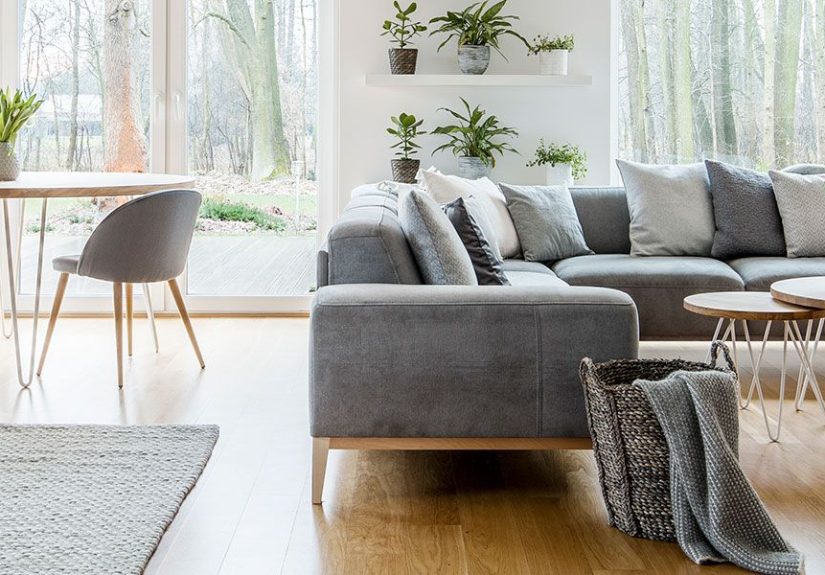
Living Room Makeovers: Layout First, Decor Second
The living room makeover that never fails starts with layout. Before buying anything:
- Anchor seating around a focal point (fireplace, TV, or a statement wall).
- Use a properly sized rug (too small makes everything look like it’s floating).
- Add layered lighting for evening comfort.
Example: pull the sofa off the wall, add a console table behind it, place two chairs opposite to create conversation flow, and finish with a
large rug that fits at least the front legs of major furniture. Suddenly it looks “designer,” not “waiting room.”
Bedroom Makeovers: Calm Wins
Bedrooms shine when they feel restful. Keep the palette simple, invest in good curtains (they visually “finish” a room), and make storage
invisible where possible: under-bed bins, closet systems, and a dresser that actually closes.
Entry + Curb Appeal: The Instant First Impression
If you want the quickest “wow,” start outside. A clean entry, updated exterior lighting, a tidy walkway, and landscaping that looks intentional
can make the entire house feel higher-end. Exterior upgrades like entry doors and garage doors often show strong cost recoupment compared to
many bigger interior projectsbecause buyers notice them immediately.
Big-Impact Upgrades That Improve How Your Home Performs
Energy Efficiency: Makeovers That Pay You Back
The most satisfying upgrades are the ones you feel every day: better comfort, fewer drafts, quieter rooms, and lower utility bills. Consider:
- Air sealing + insulation: reduces drafts and improves temperature consistency.
- Efficient heating/cooling: heat pumps are commonly recommended as a modern, efficient option.
- Efficient appliances: especially in kitchens and laundry areas.
Note for U.S. homeowners: energy-related incentives and tax credits can change over time. For example, federal credits have been available for
qualifying upgrades under certain programs through specific end datesso it’s worth checking current IRS and ENERGY STAR guidance before you
buy.
Indoor Air Quality: The Makeover Nobody Brags About (But Everyone Benefits From)
A great home makeover doesn’t stop at looks. Ventilation helps remove or dilute indoor pollutants, and moisture control helps prevent mold.
Practical steps include fixing leaks, ventilating moisture-heavy spaces, and keeping indoor humidity in a reasonable range.
Translation: your home can look gorgeous and feel easier to breathe in. That’s not boringthat’s premium living.
Common Home Makeover Mistakes (Learn These the Easy Way)
- Changing your mind mid-project: late decisions cost time and money. Make selections early.
- Underestimating labor: the finish work is where quality showsand where costs add up.
- Skipping measurements: measure twice, order once. (Or measure once, cry twice.)
- Forgetting storage: beautiful rooms still need places for real-life items.
- Buying everything at once: get the big pieces first, then layer in decor.
A Practical Home Makeover Checklist
Use this as your “keep it together” list:
- Define the goal: function, comfort, resale, or style refresh.
- Set the budget: include labor, fees, delivery, disposal, and contingency.
- Pick the scope: what’s in, what’s out, and what’s “maybe later.”
- Create a timeline: include ordering lead times and buffer.
- Lock selections early: paint colors, finishes, fixtures, and materials.
- Plan the lighting: ambient + task + accent.
- Prioritize durability: choose materials that match your lifestyle.
- Finish with styling: art, textiles, plants, and finishing touches.
Experiences That Make Home Makeovers “Click” (Extra )
If you want the honest truth about home makeovers, it’s this: the transformation is rarely just about the room. It’s about how people live in
itand what they learn about their habits along the way. Homeowners often start with a purely visual goal (“make it prettier”), and end up
celebrating something more practical (“we can finally find our keys without reenacting a detective movie”).
One common experience is the paint revelation. Many people underestimate how much a single, consistent wall color can unify
a home. The story usually goes like this: they pick a neutral they like, paint a main space, and suddenly the furniture looks more intentional
and the natural light feels brighter. Then they do the hallway. Then the adjacent room. Then they stare at the last unpainted wall like it’s
a personal challenge. The lesson: a cohesive palette makes a home feel “finished,” even if every other upgrade is still on the wish list.
Another classic is the kitchen refresh turning into a kitchen rethinkbut in a good way. Homeowners may plan to update
cabinet hardware and add a backsplash, and then realize the real issue isn’t the color of the cabinets…it’s the lack of landing space near the
fridge, or a trash can with no sensible home, or lighting that makes chopping vegetables feel like working in a cave. The best kitchen
makeovers often focus on small functional wins: adding task lighting, creating a coffee station, organizing drawers by “how you cook,” and
using smart storage so countertops stay clearer. The result isn’t just an Instagram-worthy kitchen; it’s a kitchen that feels easier to use on
a Tuesday night.
Bathrooms bring their own set of experiencesespecially the “why does this room always look dirty?” mystery. Homeowners commonly discover that
dingy grout, old caulk, and harsh lighting can make a clean bathroom look tired. When they refresh those detailsplus add a mirror that better
fits the scale of the vanitythe room suddenly feels newer without a major remodel. Many people also learn to respect ventilation and moisture
control in a new way. A bathroom makeover can be the moment someone realizes comfort isn’t just about finishes; it’s about how the space holds
up over time.
Living rooms often deliver the biggest “aha” because the change is so immediate: layout is a makeover. Homeowners move a sofa,
swap in a rug that actually fits, add two light sources, and suddenly the room feels biggerwithout removing a single wall. It’s a reminder
that the most expensive upgrade isn’t always the most powerful. Sometimes it’s simply making the space match how people want to gather, relax,
and move through the room.
The most rewarding takeaway across real makeovers is this: the home becomes easier to live in. Less friction. More comfort. More “this place
feels like us.” And when a makeover does that, it doesn’t just look goodit feels like a fresh start you get to come home to every day.