Table of Contents >> Show >> Hide
- What Counts as a Broken Bone in Dogs?
- Signs of Broken Bones in Dogs
- What Can Look Like a Broken Bone but Is Not One?
- How Veterinarians Diagnose Broken Bones in Dogs
- What You Can Safely Do at Home Before Seeing the Vet
- When to See a Vet Right Away vs. the Same Day
- Special Cases Owners Should Know About
- What Treatment Usually Looks Like
- Owner Experiences: What This Looks Like in Real Life
- Conclusion
Dogs are talented at many things: loving their humans, finding the squeakiest toy in the house, and making terrible decisions at top speed. One leaping miss off the couch, one bad landing in the yard, or one scary accident on a walk can leave you wondering whether your dog has a broken bone. That question matters, because a fracture is not something to “sleep on and see tomorrow” when the signs are serious.
Here is the most important truth right up front: you cannot truly confirm a broken bone at home. You can strongly suspect one based on your dog’s symptoms, the way the limb looks, and what happened before the injury. But a veterinarian usually needs an exam and X-rays to confirm whether the problem is a fracture, dislocation, severe sprain, ligament tear, growth plate injury, or something else entirely.
Still, pet owners are not helpless. If you know what signs to look for, what red flags mean “go now,” and what not to do in the panic of the moment, you can get your dog the right care faster and avoid making the injury worse. Let’s walk through how to spot the warning signs of broken bones in dogs, how vets diagnose them, and what you can safely do on the way to the clinic.
What Counts as a Broken Bone in Dogs?
A broken bone is also called a fracture. Some fractures are clean and simple. Others are messy, displaced, or involve multiple pieces of bone. Some stay under the skin, while others are open fractures, meaning the skin is broken and the injury is exposed to contamination. Puppies can also injure their growth plates, which are softer areas near the ends of developing bones.
Fractures in dogs often happen after trauma, such as being hit by a car, falling from a height, rough play gone wrong, or getting a leg caught somewhere it definitely did not belong. But not every broken bone comes from a dramatic accident. In some dogs, especially seniors or dogs with bone disease or cancer, a bone can fracture with surprisingly mild force.
That is why the phrase dog fracture signs matters. Sometimes the injury is obvious. Sometimes it looks like “just limping” until you realize your dog will not put the foot down, cries when shifting position, or suddenly seems protective of the whole limb.
Signs of Broken Bones in Dogs
Classic fracture symptoms
If you are trying to diagnose broken bones in dogs at the level a pet owner can, these are the most common signs that should make your suspicion go way up:
- Sudden lameness or limping after trauma or a bad landing
- Refusal to bear weight on one leg
- Pain, including whining, yelping, panting, or flinching
- Swelling around the injured area
- An unnatural limb position, twisted angle, or leg that looks “off”
- Visible deformity, including shortening, bending, or instability
- Bruising or a wound near the painful area
- Reluctance to stand, walk, jump, or climb stairs
Some dogs hold the injured limb tucked up and refuse to use it at all. Others will lightly touch the toes to the floor but immediately shift weight away. That “I technically touched the ground, please clap” behavior still counts as a major concern.
Behavior signs that can point to a fracture
Dogs do not always send a formal memo announcing pain. Sometimes they communicate it through behavior. A dog with a broken bone may:
- Whine, yelp, or become unusually quiet
- Hide or avoid being touched
- Lick or bite at one area repeatedly
- Act restless and unable to settle
- Show aggression when the sore spot is approached
- Stand stiffly or carry weight unevenly
- Eat less or skip meals because pain is exhausting
These signs do not prove a fracture, but they do tell you your dog is uncomfortable and needs attention.
Red-flag emergency signs
Some symptoms mean you should not wait for a routine appointment. Head to an emergency vet right away if your dog has:
- Bone visible through the skin or an open wound over the injury
- A dangling, twisted, or obviously shortened limb
- Severe pain that keeps escalating
- Inability to stand or walk
- Trouble breathing after trauma
- Suspected spinal injury, weakness, wobbliness, or dragging limbs
- Signs of major trauma, such as after a car accident or high fall
- Pale gums, collapse, or extreme lethargy
Broken bones are sometimes only one part of the problem. A dog hit by a car might also have chest, abdominal, pelvic, or spinal injuries. In those situations, the fracture may be dramatic, but it may not even be the most urgent problem.
What Can Look Like a Broken Bone but Is Not One?
This is where things get tricky. Not every dog that limps has a fracture, and not every fracture creates cartoon-level drama. Other conditions that can mimic a broken bone include:
- Sprains or muscle strains
- Ligament tears, especially a cranial cruciate ligament tear
- Joint dislocations
- Paw pad injuries or torn nails
- Foreign objects in the paw, such as thorns or grass awns
- Neurologic or spinal problems
- Arthritis flare-ups
- Bone tumors or other bone disease
That is why an owner should avoid saying, “It’s definitely broken,” or “It’s definitely just a sprain,” based on a quick look. A dog that refuses to bear weight could have a fracture, a dislocation, or a severe ligament injury. A dog with swelling and pain but no obvious trauma might even have a bone tumor causing a pathologic fracture. The outside appearance only tells part of the story.
How Veterinarians Diagnose Broken Bones in Dogs
1. History and physical exam
Your vet usually starts with the basics: What happened? When did the limp start? Was there a fall, collision, or rough play session? Has the dog been eating, breathing normally, and acting alert?
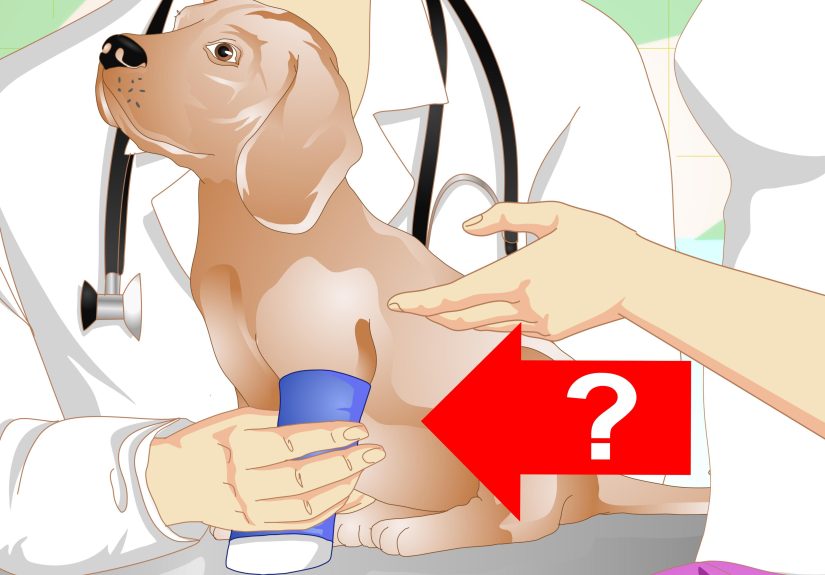
Then comes the physical exam. The veterinarian checks the entire dog, not just the leg. That matters because trauma patients may have more than one injury. The exam often includes checking for pain, swelling, abnormal motion, instability, bruising, wounds, and whether the dog can bear weight. In some cases, the vet may feel signs strongly suggesting a fracture, but they still need imaging to know exactly what type of fracture it is and how to treat it.
2. X-rays
X-rays are the main tool used to confirm a fracture in dogs. They help show:
- Which bone is broken
- Whether the fracture is simple or complex
- Whether the pieces are displaced
- Whether a joint or growth plate is involved
- Whether there may be additional injuries nearby
Many dogs need sedation for X-rays, especially if they are scared, painful, or unable to stay still. That is not a bad sign. It is often the kindest, safest way to get accurate images without making the dog suffer through awkward positioning.
3. Advanced imaging and other tests
Some cases need more than standard X-rays. CT scans can be especially helpful for complex fractures, pelvic injuries, skull injuries, and some spinal problems. In trauma cases, the veterinarian may also recommend chest X-rays, abdominal imaging, blood work, or neurologic testing to look for internal injuries that need immediate treatment.
If the fracture seems unusual, happened with little trauma, or is associated with swelling that has been building for a while, your vet may also investigate bone disease or cancer. In those cases, the workup can include more imaging and sometimes a biopsy.
What You Can Safely Do at Home Before Seeing the Vet
Here is the golden rule: your job is to protect, not diagnose perfectly. Think “safe transport,” not “backyard orthopedics.” You are not auditioning for a TV medical drama.
Do this
- Keep your dog as still as possible. Restrict movement immediately.
- Support the body during transport. Use a towel or blanket as a sling for larger dogs if needed.
- Carry small dogs carefully. Support both the front and back of the body.
- Place the injured leg upward when carrying if practical and comfortable.
- Use a clean towel or gauze to lightly cover an open wound.
- Call the vet or ER on the way. A heads-up can save precious minutes.
- Apply ice wrapped in a towel for brief periods if the injury seems more like swelling from a sprain and your dog tolerates it, but do not delay veterinary advice.
Do not do this
- Do not try to push the bone back into place.
- Do not aggressively test the leg. Repeated poking can worsen pain and damage.
- Do not put ointments or antiseptics on an open fracture.
- Do not allow your dog to “walk it off.”
- Do not give human pain medications. Ibuprofen, naproxen, and acetaminophen can be dangerous or toxic for dogs.
- Do not force a homemade splint if you are not trained. Poor splinting can make the injury worse.
If your dog is painful enough to snap, use caution. Even sweet dogs may bite when frightened or hurt. Handle gently, move slowly, and prioritize safety for both of you.
When to See a Vet Right Away vs. the Same Day
Go immediately
Seek emergency care now if the injury happened after major trauma, the leg looks deformed, your dog cannot bear weight, there is severe swelling, there is an open wound, or your dog shows breathing trouble, collapse, weakness, or neurologic signs.
Call for same-day advice
If the limp is mild, there is no obvious deformity, and your dog still seems bright and comfortable, call your veterinarian for guidance the same day. Even then, do not assume it is minor if the limp persists, worsens, or comes with swelling and pain. A dog that has not improved after a short rest period still needs an exam.
Special Cases Owners Should Know About
Puppies
Puppies are extra dramatic and extra breakable at the same time, which is a bold design choice by nature. Their growth plates are softer than mature bone, so young dogs can suffer fractures near the ends of bones. These injuries need prompt diagnosis because improper healing can affect limb growth and alignment.
Senior dogs
Older dogs with sudden lameness and swelling may have a fracture, but bone tumors also need to be considered, especially if the injury seems to happen with minimal trauma. A bone weakened by disease can crack more easily than a healthy one.
Dogs with spinal trauma signs
If the problem seems to involve the back or neck, or your dog is dragging limbs, knuckling over, or unable to coordinate movement, think bigger than a leg injury. A spinal fracture or luxation can be life-threatening and needs careful transport with minimal movement.
What Treatment Usually Looks Like
Treatment depends on the type and location of the fracture. Some stable fractures can be managed with a cast or splint, especially in young dogs. Many others need surgery, such as plates, pins, screws, wires, or external fixation. Open fractures may need antibiotics. Pain control is part of the plan from day one.
Recovery often includes strict rest, follow-up imaging, bandage or cast care if used, and a carefully staged return to activity. Rehabilitation can also play a big role. In other words, once your dog is diagnosed, the real challenge becomes convincing them that sprinting across the living room is not part of physical therapy.
Owner Experiences: What This Looks Like in Real Life
Many owners say the first clue was not a dramatic cry. It was the silence. One minute their dog was racing after a ball like the neighborhood Olympian, and the next minute he was standing oddly, refusing to put one foot down, and giving everyone a look that said, “I have made a terrible mistake.” In those cases, owners often describe a brief period of denial. Maybe it is a sprain. Maybe he just landed funny. Then the swelling starts, the dog will not walk to the door, and reality arrives wearing muddy paws.
Another common experience happens after a fall from furniture or stairs. Owners of small dogs especially talk about how shocking it feels when a jump that seemed harmless turns into a full-blown emergency. A little dog hops off a couch, yelps once, and suddenly holds the leg at a strange angle. Many people later say the hardest part was staying calm enough to avoid making things worse. They wanted to touch, inspect, and help immediately, but what actually helped most was limiting movement, wrapping the dog in a towel, and getting straight to the clinic.
There are also the sneaky cases. Some owners do not witness an injury at all. They come home to find the dog limping, hiding, or acting grumpy. The dog still eats a little and can hobble outside, so the family wonders whether they are overreacting. In quite a few of these situations, the lesson is the same: dogs can underplay pain until they absolutely cannot. A fracture, dislocation, or serious ligament injury may not always look cinematic. Sometimes it just looks like a dog who suddenly hates stairs and wants everyone to stop asking questions.
Owners whose dogs had fractures repaired often describe the diagnosis itself as oddly reassuring. Before the X-rays, everything is uncertainty. After the X-rays, there is at least a plan. Yes, surgery can be expensive. Yes, recovery can be long. Yes, your dog may act personally offended by crate rest. But knowing exactly what broke, what treatment is needed, and what recovery should look like gives people a roadmap.
One more experience comes up again and again: many owners say they underestimated how much the whole body matters after trauma. They focused on the obvious limp, while the veterinary team looked at breathing, gums, abdomen, spine, and neurologic status. That wider perspective is why professional diagnosis matters so much. A broken bone is serious enough on its own, but after major trauma it may be only one chapter of the story.
The biggest practical takeaway from owner experiences is simple. Fast action beats perfect guessing. The owners who did best were not the ones who correctly named the exact fracture at home. They were the ones who recognized pain early, restricted activity, avoided home “fixes,” and got veterinary help quickly. In the end, that is the real skill: not becoming your dog’s orthopedic surgeon in the kitchen, but becoming the calm, observant human who gets them where they need to be.
Conclusion
If you suspect a broken bone in your dog, think in three steps: look for the warning signs, limit movement, and get veterinary help fast. Pain, swelling, refusal to bear weight, deformity, and an unnatural limb position are major clues, especially after trauma. But because fractures can mimic sprains, dislocations, ligament tears, and even bone tumors, a true diagnosis usually requires a veterinary exam and X-rays.
The smartest move is not trying to confirm the fracture in your living room. It is preventing further injury, avoiding risky home treatment, and getting your dog evaluated as quickly as possible. When in doubt, treat it like the real deal. Dogs are tough, but bones still prefer not to be tested by gravity, bad landings, or enthusiastic chaos.