Table of Contents >> Show >> Hide
- Shyness vs. Social Anxiety: Why the Difference Matters
- The Confidence Formula (It’s Less Magical Than You Think)
- 17 Proven Strategies to Go From Shy to Confident
- 1) Rename the story you tell about “being shy”
- 2) Use a “fear ladder” (tiny exposures, not dramatic leaps)
- 3) Do a 30-second “body reset” before social moments
- 4) Practice self-talk like a coach, not a heckler
- 5) Build self-compassion (it’s confidence’s quiet cousin)
- 6) Upgrade your “first 10 seconds” script
- 7) Become ridiculously good at asking follow-up questions
- 8) Use “micro-contributions” in groups
- 9) Learn one assertive sentence and repeat it like it’s your job
- 10) Set “brave goals,” not “perfect performance” goals
- 11) Stop mind-reading (and collect actual evidence instead)
- 12) Train “recovery,” not just “performance”
- 13) Use a growth mindset for social skills
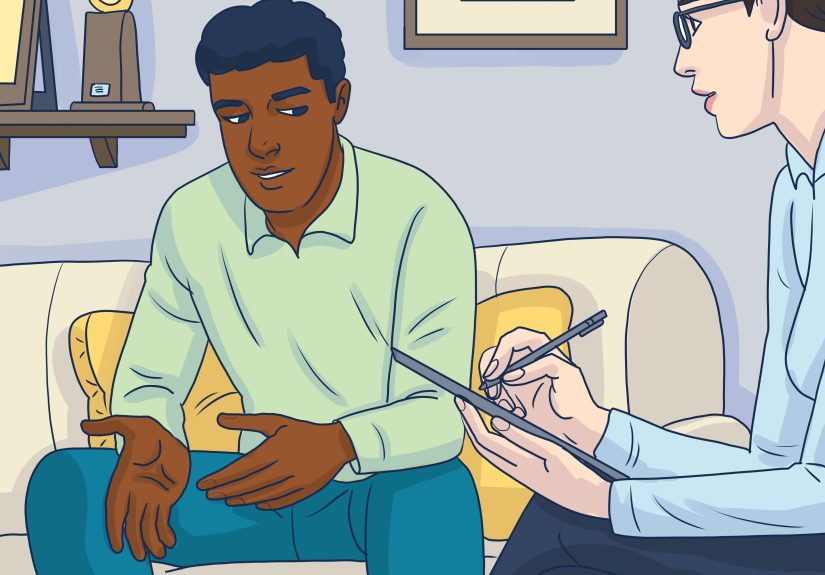
- 14) Take care of your body like it’s your confidence engine
- 15) Reduce comparison triggers (especially on social media)
- 16) Build a “confidence circle” (environment beats willpower)
- 17) Get the right help if your shyness is really anxiety
- A Simple 30-Day Confidence Plan (No Dramatic Reinvention Required)
- Real-World Experiences: What Going From Shy to Confident Actually Feels Like (and Why It’s Normal)
- Conclusion
If you’re shy, you’ve probably been told to “just be confident” the way people tell a computer to “just load faster.”
Helpful! Also impossible! The good news: confidence isn’t a personality trait you’re born with (or never get).
It’s a set of skills you practiceawkwardly at first, then better, then without thinking.
This guide blends research-backed psychology (hello, CBT and exposure practice), real-world social skills,
and the unglamorous truth about confidence: it’s mostly built in tiny, repeatable moments. Not in a single
heroic transformation montagethough you’re welcome to imagine one with a playlist and slow-motion hair flips.
Shyness vs. Social Anxiety: Why the Difference Matters
Shyness usually means you feel cautious, self-conscious, or slow-to-warm-up around peopleespecially new people.
You might still want connection, but your nervous system hits the brakes.
Social anxiety is more intense: fear of judgment can feel overwhelming and can drive avoidance that interferes with work,
relationships, or everyday life. If your fear is persistent and your world has gotten smaller because of it,
consider talking with a licensed mental health professional. Evidence-based approaches (like CBT and gradual exposure)
can be very effective, and you don’t have to brute-force this alone.
The Confidence Formula (It’s Less Magical Than You Think)
Confidence tends to grow when three things stack up:
(1) competence (skills), (2) evidence (small wins you can point to),
and (3) self-trust (you’ll handle discomfort without abandoning yourself).
The strategies below build those three pillars on purpose.
17 Proven Strategies to Go From Shy to Confident
1) Rename the story you tell about “being shy”
Instead of “I’m shy,” try: “I warm up slowly,” or “I get nervous, and I can still show up.”
Labels can become life sentences. A better identity statement is flexible, accurate, and kindlike good jeans.
Start catching absolute language (“I always… I never…”) and replace it with “sometimes” and “right now.”
2) Use a “fear ladder” (tiny exposures, not dramatic leaps)
Confidence grows through gradual practice in mildly uncomfortable situations. Make a 10-step ladder:
Step 1 might be smiling at a cashier; Step 10 might be speaking up in a meeting.
Repeat a step until it feels easier, then move up. You’re training your brain that discomfort is survivableand temporary.
3) Do a 30-second “body reset” before social moments
Shyness often comes with physical anxiety: tight chest, shallow breathing, tense shoulders.
Before you walk into a room, do this: inhale slowly, exhale longer than you inhale, relax your jaw,
drop your shoulders, and plant both feet. It’s not a spellit’s nervous-system housekeeping.
4) Practice self-talk like a coach, not a heckler
A simple CBT-style swap: replace “They’ll think I’m weird” with “I don’t know what they’ll thinkand I can handle it.”
You’re not forcing toxic positivity; you’re choosing a thought that’s realistic and useful.
Your inner voice should sound like someone trying to help you win, not someone auditioning for “Meanest Commenter.”
5) Build self-compassion (it’s confidence’s quiet cousin)
Confidence isn’t only “I can do this.” It’s also “Even if I mess up, I’m still okay.”
Practice talking to yourself the way you’d speak to a friend who’s nervous: warm, honest, encouraging.
When you stop treating mistakes like proof you’re doomed, you take smarter risksand that’s where growth lives.
6) Upgrade your “first 10 seconds” script
Shy people often freeze at the start. Solve that with a tiny script you can use anywhere:
“Hey, I’m ___how do you know the host?” or “What’s been the highlight of your week?”
You’re not being fake; you’re reducing cognitive load so your personality can show up once you’re warmed up.
7) Become ridiculously good at asking follow-up questions
Here’s a secret: you don’t have to be the most interesting person in the room to be liked.
Aim for curious listening. Use follow-ups like “How did you get into that?” or “What was that like?”
People remember how you made them feelseen, safe, and interesting.
8) Use “micro-contributions” in groups
In meetings or group chats, don’t wait for the perfect moment. Aim for one small contribution early:
summarize, ask a clarifying question, or add one supporting detail. Early participation lowers the pressure later.
Try: “Just to confirm, the goal is ___, right?” Easy, useful, and it counts.
9) Learn one assertive sentence and repeat it like it’s your job
Assertiveness isn’t aggressionit’s clarity with respect. Memorize one sentence:
“That doesn’t work for me; I can do ___ instead.” Start in low-stakes situations (scheduling, small requests).
Each time you advocate for yourself, you build self-respectwhich is basically confidence with a backbone.
10) Set “brave goals,” not “perfect performance” goals
A performance goal is “Be charismatic.” A brave goal is “Introduce myself to one person.”
Brave goals are measurable and within your control. Confidence comes from keeping promises to yourself,
not from trying to be flawless in public (which, by the way, is exhausting and suspicious).
11) Stop mind-reading (and collect actual evidence instead)
Shy brains love guessing what others thinkand guessing worst-case.
Replace mind-reading with evidence: “What did they actually do?” Most of the time,
people are busy thinking about their own hair, their own words, and whether they left the stove on.
12) Train “recovery,” not just “performance”
After an awkward moment, your brain may replay it like a bad DJ. Practice a recovery routine:
name one thing you did well, one thing you’ll try differently next time, then move on.
This teaches your nervous system: “We learn, we don’t spiral.” Confidence is partly the ability to bounce back fast.
13) Use a growth mindset for social skills
Social confidence isn’t a fixed trait. Treat it like learning a language: awkward at first, better with reps.
Instead of “I’m bad at people,” try “I’m practicing being better with people.”
This shift makes mistakes information, not identityand that keeps you in the game long enough to improve.
14) Take care of your body like it’s your confidence engine
Sleep, movement, and food aren’t “self-care aesthetic”they’re anxiety management.
Regular physical activity can reduce feelings of anxiety and support mood.
If you want a simple target, aim for weekly consistency (even brisk walking counts).
A calmer baseline makes social situations feel less like a threat and more like a challenge you can handle.
15) Reduce comparison triggers (especially on social media)
Confidence dies in the shadow of constant comparison. Curate your feeds, limit scrolling before social events,
and remember: you’re comparing your behind-the-scenes to someone else’s highlight reel.
If you want an upgrade: compare yourself only to yesterday’s version of you.
16) Build a “confidence circle” (environment beats willpower)
Spend more time with people who make you feel safe to be a work in progress.
That might mean one supportive friend, a hobby group, a class, or a community where you share interests.
Confidence grows faster in environments that reward effort, not perfection.
17) Get the right help if your shyness is really anxiety
If fear is intense, persistent, or disruptive, consider evidence-based support.
Therapies like CBT often include skills for changing unhelpful thoughts and practicing feared situations gradually.
For some people, professional treatment (and sometimes medication) can be a turning pointnot a sign of weakness.
A Simple 30-Day Confidence Plan (No Dramatic Reinvention Required)
- Week 1: Pick 3 tiny exposures (smile, say hello, ask one question). Repeat daily.
- Week 2: Add one “micro-contribution” in a group (meeting, class, group chat) twice this week.
- Week 3: Practice one assertive sentence once a day in low-stakes situations.
- Week 4: Do one bigger exposure (coffee chat, networking event, short presentation) and debrief kindly.
Track wins with one sentence per day: “Today I did ___ even though I felt ___.”
That’s how you build evidence. Evidence is the brickwork of self-confidence.
Real-World Experiences: What Going From Shy to Confident Actually Feels Like (and Why It’s Normal)
Let’s talk about the part most articles skip: the messy middle. The “I’m trying, but I still feel weird” phase.
That phase isn’t failureit’s the training ground. Below are a few composite experiences based on common patterns people report
when they practice confidence-building skills over time.
The first win is usually microscopic. One person starts with a fear ladder so small it feels silly:
making eye contact and saying “Morning” to a coworker. The first few times, their heart spikes anyway.
But something surprising happens: nothing bad happens. No one laughs. No one files a formal complaint.
After a week, the greeting becomes automaticlike brushing your teeth, but with social health benefits.
That “tiny” win matters because it teaches the nervous system a new rule: approach doesn’t equal danger.
Confidence often arrives after the event, not before it. Another person goes to a friend’s birthday party
and decides their brave goal is simply: “Ask two people a question.” They feel awkward the whole time.
Later that night, they realize they did it anyway. That’s the confidence seed:
“I can be uncomfortable and still do the thing.” The next party isn’t magically easybut it’s easier,
because they now have proof they can survive the discomfort.
The biggest shift is learning to recover. Many shy people aren’t afraid of talkingthey’re afraid of
the aftershock: replaying every word, cringing for days, deciding it “went terribly.” When someone adopts a recovery routine,
their confidence accelerates. After an awkward moment, they write: “What went okay? What’s one tweak for next time?”
Then they stop the mental replay. Not because they’re pretending everything is perfect, but because they’re treating the moment
like practicenot a verdict on their worth.
Assertiveness is where self-respect turns into social confidence. A common experience is realizing you can be kind
and still say no. The first time someone says, “I can’t take that on, but I can help next week,” they expect backlash.
Instead, they often get respector at least clarity. Even when the other person is disappointed, the shy person learns:
“I didn’t collapse. I didn’t apologize for existing. I handled it.” That’s confidence you can feel in your bones.
And yes, sometimes you need support. Some people realize their “shyness” is actually intense anxiety.
When they get professional help and learn CBT tools plus gradual exposure, social life stops feeling like a constant threat assessment.
They still have quiet days. They still prefer smaller groups. But they’re no longer trapped by fearand that freedom looks a lot like confidence.
Conclusion
Going from shy to confident isn’t about becoming louder, tougher, or “more extroverted.”
It’s about becoming more youwith better tools. Pick two strategies, practice them for two weeks,
and let the evidence build. Confidence doesn’t usually show up as a sudden feeling.
It shows up as a pattern: “I did it anyway, and I handled it.”