Table of Contents >> Show >> Hide
- First, a reality check: can you “spot reduce” calves?
- Why calves look “big” (it’s not always fat)
- The winning formula for smaller-looking calves
- Part 1: Weight loss basics that actually work (without chaos)
- Part 2: Toning tips to “slim the look” (without accidentally building bigger calves)
- Part 3: Reduce “puffy calves” (edema/water retention) the smart way
- What to avoid (if your goal is smaller calves)
- A simple 4-week plan (balanced, realistic, calf-smart)
- When to talk to a clinician
- Real-world experiences: what people commonly notice (and what actually helped)
- Experience #1: “My calves were ‘big’… but really they were just puffy by night.”
- Experience #2: “I started walking more… and my calves got bigger. Rude.”
- Experience #3: “I stopped chasing ‘small’ and started chasing ‘balanced’and my legs looked better.”
- Experience #4: “Progress was slow… until I fixed the ‘invisible’ stuff.”
- Conclusion
If you’ve ever looked down at your lower legs and thought, “Why do my calves look like they’ve been secretly training for a mountain goat Olympics?”
you’re not alone. Calves are one of those body parts that can feel oddly “stubborn,” because they’re influenced by genetics, muscle structure, daily habits,
and sometimes plain old fluid retention.
The good news: you can absolutely change how your calves look and feel over timeby focusing on sustainable weight loss (if fat loss is part of the goal),
smart training (to tone without over-bulking), and lifestyle tweaks that reduce puffiness and swelling. The even better news: you don’t need punishing workouts,
weird gadgets, or a diet made entirely of sadness.
First, a reality check: can you “spot reduce” calves?
Here’s the honest truth: you can’t choose where your body loses fat. The “spot reduction” ideadoing a bunch of calf exercises to burn calf fatis largely a myth.
Fat loss happens systemically (across the body), influenced by energy balance, genetics, hormones, and time. Targeted exercises can strengthen and shape muscles in an area,
but they don’t reliably melt fat from that exact spot.
So if part of your goal is smaller calves because of body fat, the most effective approach is overall fat losscombined with training choices that emphasize tone and function,
not max calf growth.
Why calves look “big” (it’s not always fat)
Calves can appear larger for several reasons. Understanding which one applies to you helps you pick the right strategy.
1) Muscle shape and genetics
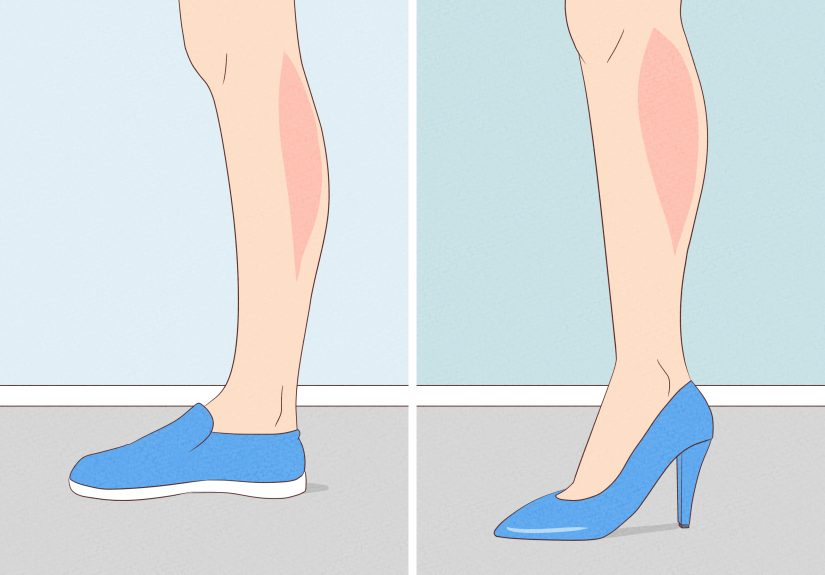
Your calf is mainly two musclesgastrocnemius (the more visible “diamond” shape) and soleus (deeper, important for endurance).
Where these muscles attach (your “muscle belly” length) is largely genetic, which affects how calves look even at the same body fat level.
2) Muscle development from daily life
If you walk a lot, stand for work, climb stairs, play sports, or do lots of jumping/running, your calves may be stronger and more developedbecause they’re basically
your body’s built-in shock absorbers.
3) Body fat (overall)
Some people store more fat in the lower legs. If overall fat loss happens, calves often slim down toojust not always first.
4) Water retention or swelling (the “puffy calf” problem)
Swelling in the lower legs can happen from long sitting/standing, high sodium intake, travel, heat, certain medications, or medical conditions. Mild edema may improve
with movement, elevation, and compression, but sudden or one-sided swelling needs medical attention.
The winning formula for smaller-looking calves
Think of this as a three-part strategy:
(1) overall body composition, (2) calf-smart training, and (3) de-puff habits.
You don’t need perfectionconsistency beats intensity.
Part 1: Weight loss basics that actually work (without chaos)
Create a gentle calorie deficit (no crash diets)
Sustainable weight loss is usually gradual. Public health guidance commonly recommends aiming for steady progress (often around 1–2 pounds per week for adults),
because it’s more maintainable than rapid loss.
Translation: you don’t need to eat like a bird. You need a plan you can repeat on a normal Tuesday when life is being rude.
Build meals around “high-satiety” basics
- Protein each meal (chicken, fish, eggs, Greek yogurt, tofu, beans)
- Fiber (berries, apples, veggies, oats, lentils)
- Smart carbs (potatoes, rice, whole grains) to fuel training
- Healthy fats (olive oil, avocado, nuts) for satisfaction
Patterns like a Mediterranean-style approach are often associated with better weight and body-fat outcomes when paired with activity.
(Not “Mediterranean” as in “only eating olives while staring wistfully at the sea,” but as in whole foods, plants, lean proteins, and reasonable portions.)
Use cardio guidelines as your “minimum viable dose”
A widely used baseline for adults is about 150 minutes/week of moderate-intensity activity (or equivalent vigorous activity),
ideally spread through the weekplus strength training at least 2 days/week.
If your calves get bulky easily, choose cardio that’s effective but less calf-dominant (more on that soon).
Don’t skip strength training
Strength training helps preserve muscle while losing weight and supports long-term health. Recommendations commonly include training major muscle groups at least
twice per week.
Part 2: Toning tips to “slim the look” (without accidentally building bigger calves)
If your calves already feel muscular, the goal is usually:
maintain strength, improve mobility, and train legs in ways that emphasize hips/glutes and overall balancewithout tons of heavy calf loading.
Choose lower-leg-friendly cardio
Some cardio styles recruit calves a lot (sprinting, lots of jumping, steep incline running). If you’re trying to reduce calf size, you may prefer:
- Flat walking at a brisk pace (avoid steep inclines for now)
- Cycling with moderate resistance (not max hill climbs)
- Swimming or pool walking (great for low impact)
- Rowing (more posterior chain, less calf “pump” for many people)
Train legs with a “glutes-first” bias
Building your glutes and hamstrings can change leg proportions and improve how your lower body looks and functions. Prioritize:
- Hip hinges: Romanian deadlifts (light/moderate), good mornings (very light), hip thrusts
- Glute moves: bridges, step-ups (controlled), lateral band walks
- Balanced squats/lunges: focus on form and moderate loads
You’re not “skipping calves”you’re just not making them the star of the show every single workout.
Be strategic with calf raises
Calf raises are great for strength and injury prevention, but if you’re already calf-dominant, heavy calf raises can increase muscle size.
Consider maintaining calf strength with:
- Bodyweight calf raises (higher reps, slow tempo) 1–2x/week
- Eccentric focus (slow lowering) to support tendon health
- Stop a set before a massive burn that makes you waddle like a newborn giraffe
If you’re dealing with shin splints or lower-leg discomfort, gentle strengthening and stretching patterns can helpjust progress gradually.
Stretching and mobility: the underrated “calf slims the silhouette” move
Tight calves can make ankles look thicker, affect posture, and change how your lower legs sit visually. A consistent flexibility routine improves range of motion
and can make calves look less “bunched up.”
- Straight-knee calf stretch (targets gastrocnemius)
- Bent-knee calf stretch (targets soleus)
- Dynamic calf raises through full range
These movements show up often in reputable fitness and health guidance for lower-leg mobility.
Part 3: Reduce “puffy calves” (edema/water retention) the smart way
If your calves look bigger at night, after travel, or after salty meals, you may be battling fluid retention more than fat or muscle.
Helpful strategies include:
Move your ankles and take “circulation breaks”
Calves act like a pump that helps blood and fluid move upward. If you sit or stand for long periods, do ankle circles, heel-to-toe rocks, or short walks.
Prolonged immobility can increase clot risk in susceptible peopleanother reason movement breaks matter.
Elevate legs when you can
Elevating legs above heart level can help reduce mild swelling.
Compression socks (the gentle “hug” that helps)
Compression garments can support circulation and reduce ankle/foot swelling for some people, especially with long standing or travel.
Watch sodium (because salt can make you look “fluffier”)
High sodium can contribute to water retention in some people. Reducing salty, ultra-processed foods helps many people feel less puffy.
Mayo Clinic and Cleveland Clinic self-care guidance for edema commonly includes reducing salt.
What to avoid (if your goal is smaller calves)
- Crash dieting or extreme restriction (often rebounds and can harm health)
- “Calf-only marathons” of heavy calf raises if you’re already muscular
- Endless incline running if your calves grow quickly (save it for later)
- Quick-fix wraps/creams that promise “inch loss” overnight (usually water shifts at best)
A simple 4-week plan (balanced, realistic, calf-smart)
Weekly targets
- Cardio: 150 minutes/week moderate intensity (flat brisk walks, cycling, swimming)
- Strength: 2 days/week full body (glutes-first lower body emphasis)
- Mobility: 5–10 minutes of calf/ankle stretching most days
Sample week
- Mon: Strength (glutes/hamstrings + core) + 10-min walk
- Tue: 30–40 min brisk flat walk
- Wed: Strength (full body) + calf mobility
- Thu: Cycling 30 min (moderate resistance)
- Fri: 20–30 min walk + stretch
- Sat: Optional swim/pool walk + easy mobility
- Sun: Rest, light steps, elevate if puffy
Track progress with how clothes/shoes fit, how your legs feel, and photos taken under the same lightingbecause calves love to look dramatically different
depending on time of day and salt intake. (Yes, your body can basically be a mood ring.)
When to talk to a clinician
Seek medical advice if you have persistent swelling, swelling with shiny/tight skin, or swelling that leaves a dent when pressed (pitting edema).
Get urgent care for sudden unexplained swelling, especially if it’s one-sided, painful, warm/red, or paired with breathing issues or chest pain.
Real-world experiences: what people commonly notice (and what actually helped)
Below are realistic, experience-based patterns people often report when they try to slim or tone their calves. These are not “miracle stories.”
They’re the boring (but effective) truthserved with a side of humanity.
Experience #1: “My calves were ‘big’… but really they were just puffy by night.”
A super common pattern: calves look normal in the morning, then feel tighter by eveningespecially after a long day of sitting, standing, or travel.
People in this situation often see the biggest visual change from movement snacks (short walks, ankle pumps), elevation at night,
and sometimes compression socks during long days. A second “aha” moment is sodium: cutting back on ultra-salty convenience foods for a couple of weeks
often reduces that end-of-day tightness. The result isn’t dramatic like a movie montage, but it’s noticeable: shoes fit more comfortably, sock lines are less intense,
and calves look less “inflated.” These approaches align with common medical self-care guidance for mild swelling.
Experience #2: “I started walking more… and my calves got bigger. Rude.”
This can happenespecially if your walking plan includes lots of hills, inclines, stairs, or fast power-walking on your toes.
Many people who are calf-dominant find that switching to flat brisk walking, cycling with moderate resistance,
or swimming keeps calorie burn high while calming the calf “pump.” Once weekly movement is consistent, body fat trends down over time,
and calves often look leaner even without “calf-targeting.” The takeaway: cardio is great, but the style of cardio matters if you’re trying not to overbuild calves.
Hitting the general activity guidelines while choosing the right modalities is a practical compromise.
Experience #3: “I stopped chasing ‘small’ and started chasing ‘balanced’and my legs looked better.”
A surprising mental shift many people describe: when they focused less on “shrinking calves” and more on overall lower-body balance, their legs looked more proportional.
Building glutes/hamstrings (hip thrusts, bridges, hinges) improved posture and changed the silhouette. Adding consistent calf stretching improved ankle mobility,
which can make the lower leg look less tight and bunched. And when overall weight moved in a healthier directionslowly and steadilythe calves often followed.
This also tends to feel better day-to-day: fewer aches, more stable ankles, and easier walking. The “best” calf size is one that supports your life, not one that wins an argument with a tape measure.
(Tape measures have never once paid anyone’s bills.)
Experience #4: “Progress was slow… until I fixed the ‘invisible’ stuff.”
People often underestimate the role of sleep, stress, and consistency. A week of chaotic sleep and high stress can lead to more water retention and less motivation to move
making calves look and feel tighter. When routines became more consistent (regular activity, more home-prepped meals, and fewer high-sodium late-night snacks),
results became more predictable. Gradual weight loss tends to be more sustainable than rapid drops, and that sustainability is what makes changes in body shape stick.
Conclusion
Making your calves look smaller usually isn’t about doing 1,000 calf raises and hoping the universe applauds. It’s about zooming out:
create sustainable fat-loss habits (if needed), train your lower body with a glutes-first approach, keep calves strong without over-bulking,
and reduce puffiness with movement, elevation, and smarter sodium habits. Give it a few weeks of consistencyand take progress photos under the same conditions.
Your calves didn’t transform overnight, and they won’t “un-transform” overnight either. But they will respond to a plan that makes sense.