Table of Contents >> Show >> Hide
- Why Leaves Lose Their Color So Quickly
- Before You Start: How to Pick the Best Leaves
- Method 1: Press Leaves in a Heavy Book
- Method 2: Preserve Leaves With Wax Paper and an Iron
- Method 3: Use Glycerin for Soft, Flexible Leaves
- Method 4: Dry Leaves With Silica Gel
- Method 5: Microwave Leaves for Fast Results
- Method 6: Seal Leaves With Mod Podge or Acrylic Spray
- Which Leaf Preservation Method Is Best?
- Common Mistakes to Avoid
- Creative Ways to Use Preserved Leaves
- Experience Notes: What Actually Works Best in Real Life
- Conclusion
There is a tiny window every year when leaves look almost too pretty to be real. One minute, the maple tree is showing off like it has a personal lighting crew. The next minute, those same leaves are brown, curled, and crunchy enough to audition as breakfast cereal. That is why learning how to preserve leaves is such a satisfying skill. It lets you capture fall color, spring greenery, or a sentimental leaf from a hike before nature hits the “compost” button.
Preserving leaves is part craft project, part science experiment, and part patience test. The good news is that you do not need a fancy studio or professional florist tools. With basic supplies like wax paper, heavy books, glycerin, silica gel, or craft sealant, you can keep leaves attractive for art, journaling, home decor, wreaths, garlands, framed botanical prints, school projects, and seasonal table settings.
This guide explains the six best methods for preserving leaves, including when to use each one, what results to expect, and how to avoid the classic beginner mistakes. Spoiler alert: not every leaf wants to be preserved the same way. A thick magnolia leaf and a delicate red maple leaf have very different personalities. Think of this as matchmaking, but for foliage.
Why Leaves Lose Their Color So Quickly
Before choosing a preservation method, it helps to understand what you are racing against. Leaves appear green during the growing season because of chlorophyll, the pigment that helps plants use sunlight to make food. In fall, shorter days and cooler temperatures slow chlorophyll production. As the green fades, yellow, orange, red, and purple pigments become more visible.
Once a leaf drops, it begins losing moisture. Its cells shrink, pigments break down, and the leaf becomes brittle. Preservation methods work by slowing or controlling that process. Some methods dry the leaf flat. Others coat it. A few replace moisture inside the leaf with another substance so the leaf remains flexible. The best method depends on whether you want realistic texture, bright color, long-lasting durability, or a fast craft result.
Before You Start: How to Pick the Best Leaves
The secret to great results begins before you touch the wax paper or plug in the iron. Choose leaves that are fresh, clean, and flexible. If a leaf already cracks when you bend it, preservation will not magically turn it into a botanical masterpiece. It will simply become a better-preserved crunchy leaf.
Look for Leaves With These Qualities
Choose leaves that have strong color, minimal blemishes, and no mold, insect damage, or wet spots. Freshly fallen leaves often work well, but leaves picked directly from a tree can be even better if you are allowed to collect them. Avoid leaves that have been sitting in a damp pile, because moisture encourages decay and discoloration.
Clean and Dry Them Gently
If needed, wipe leaves with a soft cloth or let them air-dry briefly on paper towels. Do not scrub them. Leaves are tougher than they look, but they still object to being treated like dirty dishes.
Method 1: Press Leaves in a Heavy Book
Book pressing is the classic method for preserving leaves, and it remains one of the easiest. It is best for flat art projects, scrapbooks, greeting cards, botanical journals, framed displays, and educational collections.
Supplies You Need
You will need fresh leaves, absorbent paper, a heavy book, and extra weight such as more books. Use printer paper, parchment paper, blotting paper, or paper towels between the leaves and book pages. This protects the book from moisture and pigment transfer.
How to Press Leaves in a Book
- Place each leaf between two sheets of absorbent paper.
- Slide the paper-and-leaf sandwich into a heavy book.
- Add more books or weight on top.
- Leave the leaves undisturbed for one to three weeks.
- Check for dryness before removing them.
Best Results
This method creates beautifully flat leaves with a natural, delicate look. However, colors may fade over time, especially reds and purples. For longer-lasting results, store pressed leaves away from direct sunlight or seal them after drying.
Method 2: Preserve Leaves With Wax Paper and an Iron
Wax paper pressing is popular because it is quick, inexpensive, and kid-friendly with adult supervision. It works well for leaf garlands, window decorations, classroom projects, and simple fall crafts.
Supplies You Need
You will need leaves, wax paper, a towel or plain paper, scissors, and an iron. The towel protects your iron and ironing board from melted wax. Skipping that layer is how ironing boards become modern art.
How to Preserve Leaves With Wax Paper
- Place one leaf between two sheets of wax paper, waxy sides facing inward.
- Cover the wax paper with a thin towel or plain paper.
- Press with a warm iron for a few minutes.
- Flip carefully and press the other side.
- Let the leaf cool completely.
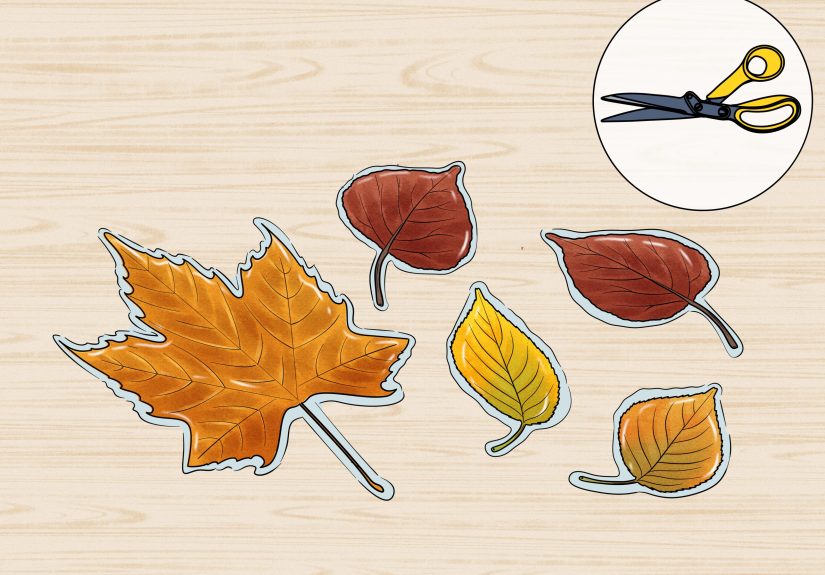
- Trim around the leaf, leaving a small sealed border.
Best Results
Wax paper helps seal the leaf and gives it a slightly glossy finish. The leaf stays flatter and more protected than an untreated dried leaf. This method is not always archival, but it is excellent for seasonal decor and fast crafts. Use leaves that are not too wet, because excess moisture can cause uneven sealing.
Method 3: Use Glycerin for Soft, Flexible Leaves
If you want preserved leaves that remain soft and bendable, glycerin is one of the best methods. It is especially useful for wreaths, arrangements, centerpieces, and crafts where leaves need to curve without cracking.
Why Glycerin Works
Glycerin preservation works by replacing some of the leaf’s natural moisture with a glycerin-and-water solution. Instead of drying into a fragile shape, the leaf becomes more pliable. This method is great for sturdy leaves such as magnolia, oak, maple, beech, and eucalyptus.
Supplies You Need
You will need vegetable glycerin, water, a shallow pan or container, leaves, and a plate or weight to keep the leaves submerged.
How to Preserve Leaves With Glycerin
- Mix one part glycerin with two parts warm water.
- Pour the mixture into a shallow container.
- Place leaves in a single layer.
- Use a plate or small weight to keep them submerged.
- Soak for three to seven days, depending on leaf thickness.
- Remove the leaves and blot them dry with paper towels.
Best Results
Glycerin-preserved leaves feel leathery and flexible. They may darken slightly, so this is not always the best method if your only goal is ultra-bright color. However, for durability and natural movement, glycerin is hard to beat. If you are making a wreath, this method is your reliable friendthe one who brings snacks and remembers the tape.
Method 4: Dry Leaves With Silica Gel
Silica gel is a desiccant, which means it absorbs moisture. It is commonly used for drying flowers, but it can also help preserve leaves, especially leaves with shape, texture, or delicate structure. This method is useful when you want better color retention than slow air drying and less flattening than book pressing.
Supplies You Need
You will need silica gel crystals, an airtight container, a soft brush, and leaves. Craft stores often sell silica gel for drying flowers. Do not use packets from shoe boxes unless you have somehow collected enough to fill a container, which would be both impressive and slightly mysterious.
How to Dry Leaves With Silica Gel
- Add a thin layer of silica gel to the bottom of an airtight container.
- Lay leaves flat in a single layer.
- Gently cover the leaves with more silica gel.
- Seal the container.
- Check thin leaves after two to three days and thicker leaves after several days.
- Remove carefully and brush away crystals.
Best Results
Silica gel can preserve more dimensional texture than book pressing. It also dries plant material faster than many traditional methods, which can help reduce browning. The tradeoff is that dried leaves may still be fragile, so handle them gently and consider sealing them with acrylic spray afterward.
Method 5: Microwave Leaves for Fast Results
The microwave method is the speed runner of leaf preservation. It is useful when you need dried leaves quickly for a project, but it requires careful attention. Leaves can scorch if heated too long, and nobody wants their fall craft to smell like botanical popcorn.
Supplies You Need
You will need fresh leaves, paper towels, a microwave-safe plate, and optional acrylic spray. Some crafters also use a microwave flower press.
How to Preserve Leaves in the Microwave
- Place leaves between two paper towels.
- Set them on a microwave-safe plate.
- Microwave in short bursts of 10 to 20 seconds.
- Check often to avoid overheating.
- Let leaves cool and dry fully.
- Seal with acrylic spray if desired.
Best Results
This method is best for leaves that are fresh but not wet. It is fast, convenient, and good for last-minute crafts. However, it may not preserve color as beautifully as glycerin, wax paper, or silica gel. Use low time intervals and patience. The microwave is powerful, and leaves are small. This is not the moment to multitask.
Method 6: Seal Leaves With Mod Podge or Acrylic Spray
Sealing leaves is a great finishing step after pressing, microwaving, or drying. It can also work as a simple preservation method on its own when leaves are already fairly dry but still attractive.
Supplies You Need
You will need leaves, a foam brush, Mod Podge or a similar craft sealer, parchment paper, and optional acrylic spray. Choose matte, satin, or glossy finish depending on the look you want.
How to Seal Leaves
- Start with clean, dry leaves.
- Brush a thin coat of sealer on one side.
- Let it dry completely on parchment paper.
- Flip the leaf and seal the other side.
- Add a second thin coat if needed.
Best Results
Sealers help protect leaves from crumbling and make them easier to handle. Glossy finishes can deepen color, while matte finishes look more natural. The key is to apply thin coats. Thick coats may curl the leaf or create cloudy patches. In leaf preservation, as in many parts of life, “more glue” is not always the answer.
Which Leaf Preservation Method Is Best?
The best method depends on your project. For framed art and scrapbooks, book pressing is simple and elegant. For quick seasonal crafts, wax paper is reliable. For flexible wreath leaves, choose glycerin. For delicate color and shape, try silica gel. For speed, use the microwave. For extra protection, finish with a sealer.
Quick Comparison
- Best for beginners: Book pressing
- Best for kids’ crafts: Wax paper with adult help
- Best for flexible leaves: Glycerin
- Best for color retention: Silica gel or quick drying
- Best for fast projects: Microwave drying
- Best finishing step: Acrylic spray or Mod Podge
Common Mistakes to Avoid
Using Leaves That Are Too Dry
Dry, brittle leaves are difficult to preserve well. Start with leaves that still feel flexible. If the leaf breaks before preservation, it will probably break afterward too.
Trapping Too Much Moisture
Moisture can cause mold, browning, and uneven drying. Let damp leaves air-dry before pressing or sealing. Never seal a wet leaf and expect a happy ending.
Using Too Much Heat
High heat can darken, curl, or scorch leaves. When ironing or microwaving, use controlled heat and check often.
Displaying Leaves in Direct Sunlight
Even preserved leaves can fade. Keep finished projects away from bright windows if you want the colors to last longer.
Creative Ways to Use Preserved Leaves
Once you have preserved your leaves, the fun really begins. Pressed leaves look beautiful in floating frames, handmade cards, bookmarks, nature journals, and wall art. Glycerin leaves are excellent for wreaths, garlands, Thanksgiving centerpieces, and floral arrangements. Wax paper leaves can become sun catchers, classroom decorations, or festive banners. Sealed leaves can be added to gift tags, place cards, candles, and scrapbook pages.
You can also combine methods. For example, press leaves first, then seal them with matte Mod Podge. Or dry leaves in silica gel, then use acrylic spray for extra durability. Experimentation is part of the charm. Some leaves will look stunning. Others will curl dramatically, as if offended. Either way, you learn something.
Experience Notes: What Actually Works Best in Real Life
After trying different leaf preservation methods, one thing becomes clear: the “best” method is not always the fanciest one. For everyday projects, book pressing is still the most dependable. It costs almost nothing, requires no special supplies, and produces clean, flat leaves that are easy to frame or glue. The downside is waiting. If you are the kind of person who checks the oven light every two minutes while cookies bake, book pressing may test your character.
Wax paper is the most nostalgic method. It feels like a school craft in the best possible way. The results are cheerful and slightly shiny, and the sealed border makes the leaves easy to cut, hang, and display. The biggest lesson is to protect your surfaces. Always use a towel or plain paper over the wax paper. Melted wax has a gift for appearing exactly where you do not want it.
Glycerin is the method that feels most like magic. The leaves come out soft, bendable, and surprisingly durable. If you want leaves for a wreath or arrangement, glycerin is usually worth the extra time. The experience is not instant, and the color may deepen or shift, but the texture is excellent. Thick leaves especially benefit from glycerin. Magnolia leaves, for example, can look rich and elegant after treatment, almost like something from an expensive florist arrangement.
Silica gel gives lovely results when you want to preserve form, but it requires a gentle hand. Removing the leaves from the crystals can feel like archaeological work. Move too quickly, and a perfect leaf can tear at the edge. Still, the faster drying time can help keep colors from fading too much, especially compared with slow air drying.
The microwave method is useful but slightly dramatic. It works best when you need leaves today, not three weeks from now. The key is short bursts. Do not guess. Do not wander away. Do not decide this is a good time to answer a text. Leaves can go from damp to overcooked quickly. When done carefully, microwave drying is handy for quick crafts, but it is not always the most beautiful option.
Sealing with Mod Podge or acrylic spray is best viewed as a finishing move. It helps strengthen leaves that have already been dried or pressed. A thin coat is enough. Heavy coating can make leaves curl or look artificial. For framed botanical art, matte sealer often looks more natural. For ornaments and festive decorations, gloss can make colors pop.
One practical tip from experience: collect more leaves than you think you need. Some will fade. Some will curl. Some will reveal tiny flaws only after drying. A generous batch gives you options. Also, label experiments with the date and method. It may sound overly organized, but future you will appreciate knowing which batch was glycerin-treated and which one was microwaved into a crispy little science lesson.
Finally, preserve leaves soon after collecting them. Waiting even one night can change the result, especially with thin, colorful fall leaves. Bring a folder, envelope, or flat container when gathering leaves so they do not get crushed on the way home. Treat them like tiny pieces of art, because that is exactly what they are.
Conclusion
Learning how to preserve leaves is a simple way to stretch the beauty of nature beyond a single season. Whether you want elegant pressed leaves for wall art, flexible glycerin leaves for a wreath, quick microwave-dried leaves for a school project, or wax paper leaves for cheerful fall decor, there is a method that fits your goal.
The most important rules are simple: start with fresh leaves, choose the method that matches your project, avoid excess moisture, and protect finished leaves from direct sunlight. With a little patience and a few household supplies, you can turn ordinary leaves into lasting keepsakes. Not bad for something you found on the ground.