Table of Contents >> Show >> Hide
- What Causes Electrical Shock (and Why It Happens So Fast)
- The “Big 3” Rules for Preventing Electrical Shock
- Home Electrical Safety Checklist (Shock Prevention Edition)
- Install and test GFCI protection where water and electricity might meet
- Consider AFCIs for added protection (especially in living areas)
- Use tamper-resistant receptacles for kids (and curious guests)
- Replace damaged cords, plugs, and outlets immediately
- Respect water: bathrooms, kitchens, pools, and outdoors
- Extension cords: temporary helpers, not permanent roommates
- Power strips and surge protectors: the “1,800-watt reality check”
- Workshop and DIY Safety: Preventing Shock Without Becoming a Cautionary Tale
- Workplace and Jobsite Shock Prevention (For Pros and Teams)
- Storms, Floods, and Power Outages: Shock Hazards Spike Here
- What to Do If Someone Gets Shocked (Keep It Safe)
- Quick Upgrade List: Small Changes That Make a Big Safety Difference
- Conclusion: Electrical Shock Prevention Is Mostly About Habits (and a Little Humility)
- Experiences People Commonly Have (and What They Teach You About Preventing Electrical Shock)
- 1) The bathroom charger balancing act
- 2) The “this extension cord is basically permanent” lifestyle
- 3) The power strip that starts feeling “toasty”
- 4) The garage project that turned into a “mystery breaker trip”
- 5) Outdoor holiday lights meet wet weather
- 6) The post-storm curiosity walk
- 7) The “I’ll just tighten this real quick” moment
Electricity is one of humanity’s greatest inventionsright up until it tries to use you as a shortcut to the ground.
The good news: most electrical shocks are preventable with a few smart habits, the right safety devices, and the humility to
say, “Yeah… I’m calling an electrician for this one.”
This guide walks you through practical ways to prevent electrical shock at home, in a workshop, and on jobsiteswithout turning
your life into a science fair project titled “What Happens When I Ignore Safety?”
What Causes Electrical Shock (and Why It Happens So Fast)
Electrical shock occurs when electric current travels through the body. Your body becomes part of the circuitusually because
you touched an energized (live) part while also touching something grounded (like plumbing, damp concrete, or the earth).
Three factors make shocks more likely and more dangerous
- Moisture: Wet skin lowers resistance, so current flows more easily (hello, bathrooms and outdoor outlets).
- Contact area: A firm grip or large contact patch increases exposure (a loose touch is still badjust “less bad”).
- Path through the body: Current that passes through the chest area can be especially dangerous.
Prevention is about breaking the chain: keep electricity contained, keep yourself insulated, and make sure protective devices
cut power quickly when something goes wrong.
The “Big 3” Rules for Preventing Electrical Shock
1) Keep electricity where it belongs
Electricity should stay inside insulation, device housings, and properly covered boxes. If you see exposed wiring, cracked
device casings, missing outlet covers, or damaged cords, treat it like a “Do Not Pet” sign on an angry raccoon.
2) Keep your body out of the circuit
Dry hands, dry floors, proper footwear, and avoiding contact with grounded metal surfaces (like pipes) reduce the chance that
your body becomes the easiest route for current.
3) Use devices that shut off power fast
Safety devices like GFCIs (ground-fault circuit interrupters) can cut power in a fraction of a second when they detect
a ground faulthelpful in wet areas and anywhere shock risk is higher. They’re not magic shields for every scenario, but they’re
one of the best shock-prevention upgrades for homes and worksites.
Home Electrical Safety Checklist (Shock Prevention Edition)
Install and test GFCI protection where water and electricity might meet
GFCI protection is especially important in places like bathrooms, kitchens (countertop areas), garages, basements, crawl spaces,
and outdoors. Many modern homes already have GFCI outlets (they usually have “Test” and “Reset” buttons).
- Test monthly: Use the built-in test button. If it won’t test/reset properly, replace it or call a pro.
- Know the limitation: A GFCI is designed to reduce risk from ground faults. It may not protect against every kind of
“line-to-line” contact (for example, contacting two energized conductors). It’s still a major safety layerjust not an invincibility cloak. - Portable protection: For older homes or temporary setups, portable GFCIs can add protection where built-in ones aren’t present.
Consider AFCIs for added protection (especially in living areas)
AFCIs (arc-fault circuit interrupters) are primarily designed to reduce fire risk from arcing faults, and they’re common in
newer construction. While their main mission is fire prevention, a safer electrical system overall means fewer “something’s wrong”
events that can lead to shocks (and other bad outcomes).
Use tamper-resistant receptacles for kids (and curious guests)
If there are children aroundor you host people who have a talent for making odd choicestamper-resistant receptacles
help prevent objects from being inserted into outlets. They look normal, but include internal shutters that reduce access to energized parts.
Replace damaged cords, plugs, and outlets immediately
A frayed cord isn’t “character.” It’s a hazard. Replace cords and devices that show:
- Cracks, brittleness, exposed wire, or scorch marks
- Loose plugs or outlets that won’t hold a plug firmly
- Warm or buzzing outlets (warmth can signal a problem)
- Frequent breaker trips or flickering lights (a clue something’s overloaded or failing)
Respect water: bathrooms, kitchens, pools, and outdoors
- Keep electronics away from sinks and tubs: Chargers and hair tools should be used far from water sources.
- Dry hands first: Touching plugs or switches with wet hands increases shock risk.
- Outdoor gear matters: Use outdoor-rated cords and weather-protected outlets for outside tasks and decorations.
- After flooding: Don’t use electrical equipment that may have been submerged. Have a qualified professional inspect the system.
Extension cords: temporary helpers, not permanent roommates
Extension cords can be safe when used correctlyand sketchy when treated like home wiring. Keep it simple:
- Use the right cord: Choose cords rated for the load and for indoor vs. outdoor use.
- Inspect before use: If it’s damaged, retire it. Immediately.
- Don’t run cords under rugs or through doorways: Pinching and heat buildup can damage insulation over time.
- One cord per task: Avoid “cord spaghetti” that hides damage and overloads.
- Never remove the ground pin: That third prong is there for a reason.
Power strips and surge protectors: the “1,800-watt reality check”
Many common power strips are designed for light loadsthink electronics, lamps, and chargers. High-wattage appliances can overload
them fast. A useful mental guardrail: many standard strips top out around 15 amps (often 1,800 watts at 120V),
but you should always follow the product’s label and instructions.
- Do plug in: TVs, computers, monitors, chargers, lamps (low-to-moderate loads).
- Do NOT plug in: space heaters, microwaves, refrigerators/freezers, air conditioners, hair dryers, and many cooking appliances.
- Never daisy-chain: Don’t plug one power strip into another (or into an extension cord). It increases overload and heat risk.
- Buy quality: Use power strips/surge protectors that are listed by a recognized testing lab and include overload protection.
- Heat is a warning: A hot strip or plug is a “stop what you’re doing” signalunplug and investigate.
Workshop and DIY Safety: Preventing Shock Without Becoming a Cautionary Tale
De-energize before you touch anything electrical
If you’re doing any work near wiring, outlets, fixtures, or panels, the safest approach is to turn off power at the breaker
and confirm it’s off using appropriate test equipment. If you’re not trained, don’t guesshire a qualified electrician.
Avoid “accidental grounding”
Shock risk increases when you’re touching grounded surfaces. In workshops and garages, that can include concrete floors, metal workbenches,
plumbing, and ladders. Practical habits:
- Keep your work area dry and well-lit
- Avoid working in damp shoes or on wet floors
- Remove metal jewelry when doing any electrical-adjacent work
- Use ladders and tools appropriate for the task (and in good condition)
Know when to stop and call a pro
Call a licensed electrician if you see repeated breaker trips, burning smells, sizzling sounds, damaged service panels, outlets that spark
regularly, or any sign of overheated wiring. “I’ll just ignore it” is not a troubleshooting method.
Workplace and Jobsite Shock Prevention (For Pros and Teams)
Only qualified people should do electrical work
One of the most consistent safety messages across U.S. workplace guidance: electrical tasks should be assigned to trained, qualified persons.
Training isn’t bureaucracyit’s what keeps “routine work” from becoming “incident report.”
Lockout/Tagout: stop surprise power-ups
Lockout/tagout procedures help prevent circuits from being energized while someone is working. The idea is simple: if people are working on it,
power stays off until it’s safe and verified.
Verify de-energized, then use proper PPE and insulated tools
For qualified workers, best practice includes verifying that equipment is de-energized with proper testing and using insulated tools and
protective equipment when energized work is necessary. If you’re not trained and authorized for energized work, don’t attempt it.
Use GFCIs on construction sites and high-risk areas
Ground-fault protection is widely emphasized for construction and other environments where wet conditions, temporary wiring, and heavy tool use
increase risk. Use GFCI-protected circuits or portable devices when appropriate.
Respect overhead power lines
Overhead lines don’t need direct contact to ruin your dayequipment and ladders can get too close. If you see power lines near a work area,
plan the job to keep a safe distance, and treat all lines as energized unless the utility confirms otherwise.
Storms, Floods, and Power Outages: Shock Hazards Spike Here
Stay far away from downed power lines
If you see a fallen power line, assume it’s energized. Keep your distance (guidance commonly recommends staying at least 35 feet away)
and call emergency services or the utility.
Floodwater + electricity = a hard no
Avoid flooded areas where electrical systems may be energized. Don’t use appliances or electronics that were submerged. Have the electrical system
inspected by a qualified professional before restoring use.
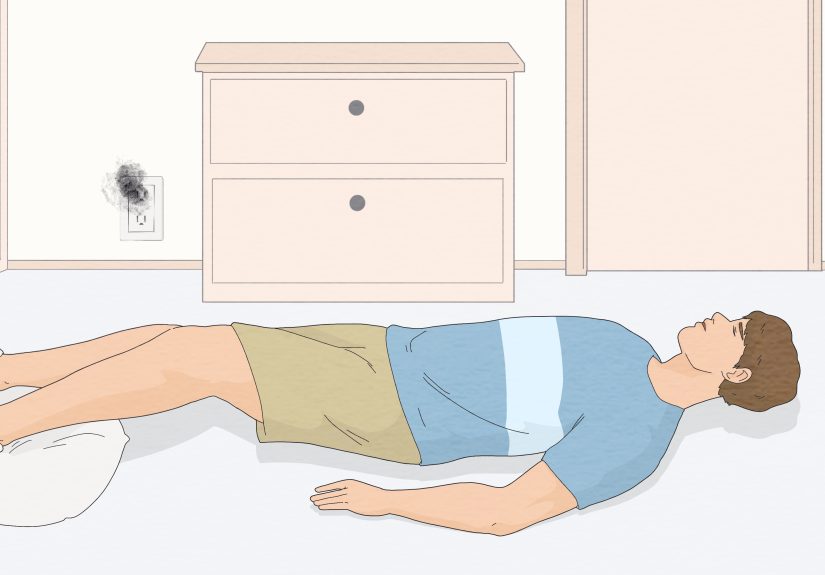
What to Do If Someone Gets Shocked (Keep It Safe)
If you suspect someone is being shocked, your first job is to avoid becoming the second victim.
- Do not touch them if they may still be in contact with the source.
- Shut off power at the breaker or unplug the device only if it’s safe to do so without contact risk.
- Call 911 for any serious shock, loss of consciousness, burns, or breathing problems.
- If the person is unresponsive, get emergency help immediately and provide first aid/CPR only if you’re trained and the scene is safe.
Quick Upgrade List: Small Changes That Make a Big Safety Difference
- GFCI outlets or breakers in wet/high-risk areas
- Tamper-resistant outlets if kids are present
- Weather-resistant outdoor outlets and covers
- Quality, listed power strips with overload protection (used for light loads only)
- Outdoor-rated extension cords for outdoor jobs
- Replacement of old/damaged cords, loose outlets, and cracked device housings
- Clear labeling of your breaker panel (so you can shut off the right circuit fast)
Conclusion: Electrical Shock Prevention Is Mostly About Habits (and a Little Humility)
Preventing electrical shock isn’t about living in fear of outletsit’s about making electricity behave. Keep things dry, use the right protective
devices (especially GFCIs), avoid overloading strips and cords, replace damaged equipment, and don’t DIY beyond your training. The safest sentence
in home improvement is: “Let’s call a licensed electrician.”
Experiences People Commonly Have (and What They Teach You About Preventing Electrical Shock)
To make this practical, here are real-world scenarios people commonly describethose “yikes” moments that don’t always make the highlight reel,
but absolutely change how you treat electricity afterward. Think of these as safety lessons delivered by reality, sometimes with a tiny spark of
unwanted drama.
1) The bathroom charger balancing act
Someone plugs in a phone charger near a sink “just for a minute.” Water splashes. Hands are damp. Nothing happens… until the day it does. The
lesson is boring but lifesaving: keep chargers and small appliances away from sinks and tubs, and make sure bathrooms have working GFCI
protection. Convenience is not worth turning your morning routine into an emergency.
2) The “this extension cord is basically permanent” lifestyle
A cord runs under a rug for months because it looks nicer than stepping over it. Over time it gets pinched, walked on, and warmed up. Eventually,
the insulation degrades and the cord becomes a shock and fire risk. The lesson: extension cords are temporary tools, not a wiring strategy. If you
need power in that spot all the time, add an outletproperly.
3) The power strip that starts feeling “toasty”
A power strip behind a desk is packed with a space heater, a printer, and a bunch of chargers. After a while, the strip feels warm. People ignore
it because nothing has failed yet. That warmth is a warning label you can’t read with your eyes. The lesson: power strips are for light loads like
electronics and lamps, not high-wattage heat-making appliances. If a strip is hot, unplug it and reduce the load immediately.
4) The garage project that turned into a “mystery breaker trip”
Someone is using tools in the garage and the breaker keeps tripping. They reset it again and again, assuming the breaker is “annoying.” But
breakers often trip because they’re doing their jobprotecting you from overloads or faults. The lesson: repeated trips mean you should stop and
troubleshoot safely. Spread tools across circuits, reduce simultaneous high-draw devices, and call an electrician if the behavior continues.
5) Outdoor holiday lights meet wet weather
Decorations go up, an indoor extension cord gets used outside “just for the weekend,” and then rain happens. Maybe the lights flicker. Maybe the
outlet trips. Maybe nothing happens until someone grabs a plug with wet hands. The lesson: use outdoor-rated cords and weather-protected outlets,
keep connections elevated away from puddles, and rely on GFCI protection outdoors.
6) The post-storm curiosity walk
After a storm, someone notices a downed line and wants to “take a closer look.” That instinct is naturaland dangerous. The lesson: treat downed
lines as energized and keep far away. Call emergency services or the utility. The safest distance is the one where you can’t “see details.”
7) The “I’ll just tighten this real quick” moment
A loose outlet cover plate or a wobbly switch makes someone think, “I can fix that in 30 seconds.” The risky version of this story happens when
they don’t shut off power and assume nothing is live. The lesson: even small electrical tasks should be treated with respect. If you’re not trained,
shut off the circuit and use proper verificationor hire a pro. Thirty seconds isn’t worth a lifetime of regret.
The big takeaway from these experiences is that electrical safety is rarely about one dramatic mistake. It’s usually a chain of small shortcuts:
damp hands, overloaded strips, worn cords, ignored breaker trips, and “temporary” setups that quietly become permanent. Break the chain early with
smart habits, protective devices, and a quick willingness to ask for professional help. Your future self will thank youand will also enjoy not
being mildly terrified of the toaster.