Table of Contents >> Show >> Hide
- What Is Spaghetti Squash, and Why Roast It?
- Quick Shopping Guide: Pick a Squash That Won’t Betray You
- Tools and Ingredients You’ll Need
- How to Cut Spaghetti Squash Safely (Without Starting a Feud With Your Knife)
- The Two Roasting Styles: Cut-Side Down vs Cut-Side Up
- Step-by-Step: How to Roast Spaghetti Squash in the Oven
- How to Tell When Spaghetti Squash Is Done
- How to Avoid Watery or Mushy Squash
- Flavor Ideas: Make It Taste Like Dinner, Not “Vegetable Homework”
- Bonus: Don’t Throw Out the Seeds
- Storage and Meal Prep Tips
- FAQ: Roasting Spaghetti Squash
- Conclusion: Roast It Like You Mean It
- Experience Notes: What You Learn After Roasting Spaghetti Squash a Few Times (Extra )
Spaghetti squash is the vegetable that desperately wants to be pasta. And honestly? It does a pretty solid job
as long as you roast it correctly. Do it wrong and you’ll end up with watery strands that taste like sadness
(and dishwater). Do it right and you get golden, lightly sweet squash “noodles” that can handle marinara,
pesto, cheesy bakes, garlic butter, or whatever saucy chaos your week requires.
This guide shows you exactly how to roast spaghetti squash so it turns into long, forkable strands
that are tender, not mushy, and definitely not soup. We’ll cover cutting hacks, the best oven temperature,
how long to roast spaghetti squash by size, and a few flavor ideas that make it taste like you tried harder
than you actually did.
What Is Spaghetti Squash, and Why Roast It?
Spaghetti squash is a winter squash that pulls apart into pasta-like strands after cooking.
Roasting is the go-to method because it concentrates flavor, improves texture, and avoids the “boiled sponge”
vibe that can happen with wetter cooking methods.
If you’re searching for a low-carb pasta substitute or just want more vegetables in your life
without eating another sad desk salad, oven roasting spaghetti squash is the move.
Quick Shopping Guide: Pick a Squash That Won’t Betray You
- Look for: firm skin, no soft spots, and a dry stem (intact is a bonus).
- Weight matters: choose one that feels heavy for its size (more flesh, fewer regrets).
- Color: creamy yellow to deeper golden is usually a good sign of ripeness.
- Size: medium (about 2.5–3.5 lb) is the easiest to roast evenly.
Tools and Ingredients You’ll Need
- Spaghetti squash
- Sharp chef’s knife (this is not the moment for the “kind of dull” one)
- Cutting board (bonus points for a damp towel underneath to stop it sliding)
- Spoon for scooping seeds
- Sheet pan (rimmed is best)
- Olive oil (or avocado oil)
- Kosher salt + black pepper
- Optional: parchment paper for easy cleanup
How to Cut Spaghetti Squash Safely (Without Starting a Feud With Your Knife)
Spaghetti squash is famously tough. If cutting it feels like wrestling a bowling ball, you’re not alone.
The trick is creating stability and using a method that matches your goals for strand length.
Option A: The “Lengthwise Halves” Cut (Classic and Easy)
- Wash and dry the squash (yes, even if you’re roasting itdirt is not a seasoning).
- Slice off a thin piece from one end to create a flat base.
- Stand it up on the flat end and carefully cut down the middle lengthwise.
- Scoop out seeds and stringy bits with a spoon.
Result: strands tend to be a bit shorter, but it’s the simplest cut and roasts evenly.
Option B: The “Crosswise” Cut (For Longer, More Spaghetti-Like Strands)
If you want the longest squash noodles, cut the squash across the equator (not stem-to-bottom).
The strands run around the squash in rings, so crosswise cutting can give you those longer pulls.
Option C: The “Ring Slices” Method (Maximum Caramelization)
Some cooks slice the squash into thick rings, salt them briefly, pat dry, then roast on racks for
more browning and less steam. It’s slightly more work, but the payoff can be extra flavorful edges.
If Your Squash Is Impossible to Cut: Soften It First
You can partially soften spaghetti squash before cutting:
- Microwave method: poke several vent holes, microwave in short bursts until the skin is slightly softer.
- Oven pre-soften: bake the whole squash briefly to make slicing easier.
Important: always vent the squash first. Squash steam pressure is a real thing, and nobody wants a surprise pumpkin grenade.
The Two Roasting Styles: Cut-Side Down vs Cut-Side Up
Here’s the truth: both methods work. The “best” one depends on whether you’re prioritizing moisture retention or caramelization.
(This is a choose-your-own-adventure book, but with fewer dragons and more olive oil.)
Cut-Side Down (Most Popular)
- Pros: more even steaming inside the shell, tender strands, less risk of drying out.
- Cons: less browning on the flesh; can be slightly wetter if overcooked.
Cut-Side Up (More Browning)
- Pros: more caramelized flavor, slightly drier strands (great for saucy dishes).
- Cons: easier to over-dry if you roast too long; edges can get a bit crisp.
If you’re new to this, start with cut-side down. Once you’ve found your preferred texture,
experiment with cut-side up for more roast flavor.
Step-by-Step: How to Roast Spaghetti Squash in the Oven
Step 1: Preheat the Oven
Preheat to 400°F. This temperature is the sweet spot: hot enough to roast, not so aggressive
that the outside burns before the inside softens.
Step 2: Prep the Squash
- Cut the squash (lengthwise halves for easiest roasting).
- Scoop out seeds and stringy fibers.
- Brush or rub the cut sides with a thin layer of oil.
- Season with salt and pepper.
Step 3: Roast
Place the squash on a rimmed baking sheet. Choose your orientation:
- For tender, classic strands: place cut-side down.
- For extra roast flavor: place cut-side up.
Step 4: Roast Time (By Size)
How long to roast spaghetti squash depends on size and your preferred texture.
Use this as a starting point and adjust as needed.
| Squash Size | Approx. Weight | Roast Time at 400°F | Texture Notes |
|---|---|---|---|
| Small | 1.5–2.5 lb | 30–40 minutes | Check early; can go from “perfect” to “mushy” fast. |
| Medium | 2.5–3.5 lb | 35–50 minutes | Most consistent size for roasting. |
| Large | 3.5–5 lb | 50–70 minutes | May need longer; consider tenting foil if edges brown too fast. |
Step 5: Rest, Then Shred Into “Noodles”
Let the squash cool for 5–10 minutes (hot squash is basically lava in a helmet).
Then use a fork to scrape the flesh into strands, working around the shell.
How to Tell When Spaghetti Squash Is Done
- A knife slides into the flesh easily with little resistance.
- The shell gives slightly when pressed (carefully, because it’s hot).
- The strands pull away cleanly with a fork and look like spaghettinot crunchy sticks.
Pro tip: aim for tender with a little bite. Overcooked spaghetti squash turns watery and limp,
like pasta that spent too long in a hot tub.
How to Avoid Watery or Mushy Squash
The most common complaint about baked spaghetti squash is “why is my ‘noodle’ puddle forming a lake?”
Here’s how to keep your roasted spaghetti squash strands firm and sauce-ready:
- Don’t overcook it. Start checking early, especially with smaller squash.
- Skip adding water to the pan if you want drier strands.
- Ventilation helps. Parchment is fine, but avoid tightly covering the squash while roasting.
- Let it rest. A short rest helps steam settle so you don’t scrape out soggy strands.
- Drain if needed. If it’s juicy, let strands sit in a colander for a few minutes before saucing.
Flavor Ideas: Make It Taste Like Dinner, Not “Vegetable Homework”
Spaghetti squash has a mild, slightly sweet flavorso treat it like a blank canvas (but tastier than your high school art project).
After roasting, toss strands with one of these combos:
Classic Comfort
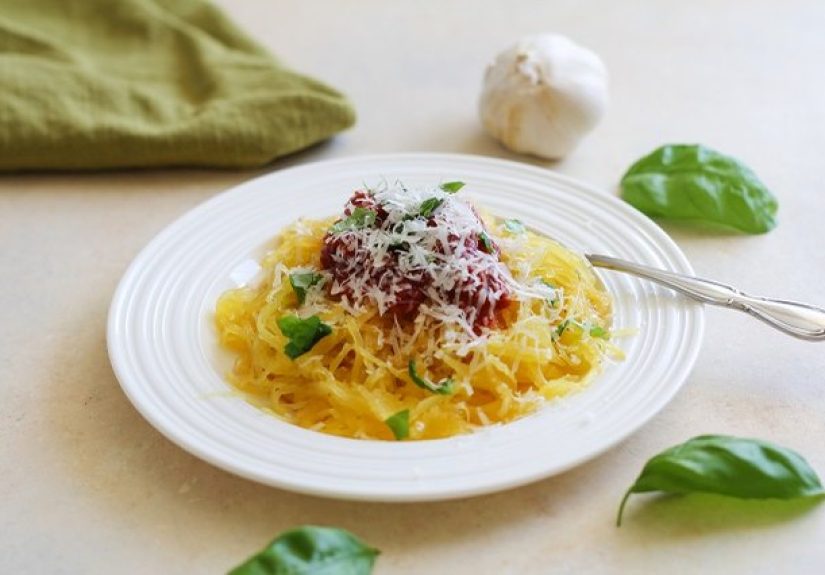
- Marinara + parmesan + basil
- Garlic butter + black pepper + pecorino
- “Light Alfredo”: sautéed garlic + a splash of milk/cream + parmesan
Bright and Fresh
- Pesto + lemon zest + cherry tomatoes
- Olive oil + capers + parsley + red pepper flakes
- Feta + cucumbers + olives + oregano (Mediterranean bowl vibes)
Big Flavor, Minimal Effort
- Taco-style: salsa + black beans + corn + avocado
- Thai-ish: peanut sauce + lime + cilantro + crushed peanuts
- BBQ chicken + scallions + a sprinkle of cheese
Bonus: Don’t Throw Out the Seeds
Those seeds aren’t trashthey’re snacks in disguise. Rinse, dry, toss with oil and salt, then roast until crisp.
Think of them as the “chips and salsa” of the squash world: mostly there to keep you from hovering near the oven impatiently.
Storage and Meal Prep Tips
- Whole squash: store in a cool, dry spot (not the sunlit windowsill that turns it into décor).
- Cooked strands: refrigerate in an airtight container.
- Freezing: freeze cooked strands for later, but expect a softer texture after thawing.
For best results, store strands without sauce. Reheat gently, then sauce right before serving to avoid sogginess.
FAQ: Roasting Spaghetti Squash
What’s the best oven temperature for spaghetti squash?
400°F is the most reliable for even roasting and good texture. If you want more browning,
you can go a little higher, but watch closely.
Should I roast cut-side down or up?
Cut-side down is the safest bet for tender strands. Cut-side up gives more roasted flavor.
If you’re making a super saucy dish, cut-side up can help keep strands from getting watery.
How do I get longer spaghetti squash noodles?
Try cutting the squash crosswise (across the middle) instead of lengthwise. The strands naturally
run around the squash, so that cut can produce longer pulls.
Why is my spaghetti squash crunchy?
It’s usually undercooked. Roast a bit longer, checking every 5–10 minutes.
Some squash also run drier depending on age and storage, so times can vary.
Conclusion: Roast It Like You Mean It
Roasting spaghetti squash is simple once you know what matters: a hot oven, a careful cut, a little oil and salt,
and pulling it out when it’s tendernot collapsed into a watery heap. From there, treat the strands like pasta:
pair with bold sauces, add texture (nuts! breadcrumbs! crispy bits!), and season like you’re trying to impress someone.
Even if that someone is just you on a Tuesday.
Experience Notes: What You Learn After Roasting Spaghetti Squash a Few Times (Extra )
The first “experience” most people have with spaghetti squash is not the eatingit’s the cutting. There’s a specific moment
where you realize this cheerful yellow oval is basically a vegetable-shaped boulder. The kitchen lesson is simple:
stability is safety. A flat base (trim a tiny slice off one end) and a sharp knife change everything. And if it still feels
like you’re trying to split a coconut with a butter knife, softening the squash first is not “cheating.” It’s “living to cook again.”
Next comes the roast-time reality check. Online you’ll see everything from 25 minutes to over an hour, and both can be true.
A small squash can go from “perfectly al dente” to “why is it crying?” in the final ten minutes. That’s why experienced cooks
start checking early and treat roast time like a range, not a prophecy. You’re looking for tender strands that still have a little bite
the same way you’d treat pasta if you wanted it to hold sauce instead of turning into mush.
People also learn quickly that spaghetti squash is not a perfect 1:1 pasta clone, and that’s good news. It has its own personality:
slightly sweet, mild, and happy to play supporting actor. The most successful meals usually involve seasoning and texture.
A simple jarred marinara can be fine, but adding something crunchytoast crumbs, chopped toasted nuts, crispy shallots,
browned sausage, even a sprinkle of chili flakesmakes the whole dish feel intentional. Without texture, spaghetti squash plus sauce can
lean soft-on-soft, and “soft-on-soft” is rarely anyone’s dream dining experience.
Another common lesson: moisture management. Some cooks love the super-tender, steamy result of roasting with a little water in the pan
or covering with foil. Others want strands that behave more like noodles. Over time, you notice your pattern: if your favorite toppings
are saucy (bolognese, creamy cheese sauces, tomato-heavy mixes), you’ll probably prefer a slightly drier roastno added water,
and careful timing. If you’re serving it as a simple side with butter and herbs, a moister roast can feel cozy and rich.
Then there’s the “strand strategy.” A lot of home cooks discover that strand length depends on how you cut the squash.
If you cut it crosswise, you often get longer noodles that feel more spaghetti-like. If you cut lengthwise, you tend to get shorter strands
that are still delicious but read more like a squash “tangle.” Neither is wrong; it’s just a tool. Longer strands are fun for twirling.
Shorter strands are fantastic for casseroles, stuffed squash boats, or anything you’re scooping with a fork.
Finally, there’s the surprise win: spaghetti squash is quietly great for meal prep. Roast it, scrape it, chill it, and suddenly you have a
fast base for all kinds of weeknight mealstaco bowls, pesto “pasta,” cheesy bakes, or a quick garlic-and-parmesan situation.
The experienced move is storing strands without sauce, then reheating gently and saucing right before serving. That keeps the texture better,
and it keeps your leftovers from turning into an accidental squash stew. Which, to be fair, is a dish… but not the one you were aiming for.