Table of Contents >> Show >> Hide
- What is hypertensive retinopathy?
- How high blood pressure damages the retina
- Stages (grades): what doctors mean when they “grade” hypertensive retinopathy
- Signs and symptoms: what you might notice (and what you probably won’t)
- What an eye doctor looks for
- Diagnosis: tests you may encounter
- Causes and risk factors
- Treatment: what actually helps
- Can hypertensive retinopathy be reversed?
- Prevention: protecting your vision by protecting your vessels
- When to seek urgent help
- FAQs
- Real-world experiences (what it can feel like in day-to-day life)
- Conclusion
- SEO Tags
High blood pressure has a reputation for being a “silent” problemuntil it isn’t. And one of the most surprising places it can show up is in your eyes.
Hypertensive retinopathy is damage to the retina (the light-sensing layer at the back of your eye) caused by long-standing or severely elevated blood pressure.
It’s like your body leaving a sticky note on your eyeball that says: “Hey… we should probably talk about your arteries.”
The tricky part is that many people don’t feel anything at first. No pain. No dramatic warning sirens. Just tiny blood vessels slowly getting stressed, stiff, and leaky.
The good news: the retina can sometimes recoverespecially when blood pressure gets controlled early.
The not-so-fun news: advanced disease can threaten vision and is often a sign of higher risk elsewhere (think heart, brain, kidneys).
Quick note: This article is for education, not a medical diagnosis. If you’re worried about your vision or your blood pressure, talk with a licensed clinician.
What is hypertensive retinopathy?
Hypertensive retinopathy is a spectrum of retinal blood vessel changes caused by high blood pressure (hypertension).
Over time, elevated pressure can narrow the tiny retinal arteries, thicken their walls, and reduce healthy blood flow to the retina.
In more severe cases, vessels can leak fluid or blood, and parts of the retina can become swollen or oxygen-starved.
Clinically, hypertensive retinopathy matters for two big reasons:
- Vision: Severe or sudden blood pressure spikes can cause swelling or bleeding that blurs vision.
- Whole-body health: Eye findings can reflect blood vessel damage happening throughout the body.
Think of the retina as the only place doctors can directly look at your blood vessels without needing an MRI, a scope, or a superhero cape.
How high blood pressure damages the retina
Your retinal circulation is built for precision, not pressure-wrestling. When blood pressure stays high, the body tries to protect fragile capillaries by tightening arterioles (vasospasm).
Over time, repeated stress can injure the lining of blood vessels (endothelium) and lead to structural thickening (arteriolosclerosis).
That’s when problems start stacking like a poorly planned Jenga tower.
The main damage patterns
- Vasoconstriction: Arterioles narrow, reducing blood flow.
- Sclerotic changes: Vessel walls thicken and reflect more light (classic “copper wiring” or “silver wiring”).
- Leakage and ischemia: A damaged blood-retina barrier can leak fluid; reduced oxygen causes “cotton-wool spots.”
- Malignant/severe stage: Swelling can involve the optic nerve head (papilledema/optic disc edema) and the macula.
Stages (grades): what doctors mean when they “grade” hypertensive retinopathy
Staging helps clinicians describe severity, estimate risk, and decide how urgently blood pressure needs attention.
Multiple grading systems exist. In real-world practice, your eye doctor may use one system, a “mild/moderate/severe” shorthand, or describe the specific findings (often the most helpful approach).
Common severity buckets (plain-English)
| Severity | Typical retinal findings | What it suggests |
|---|---|---|
| Mild | Generalized arteriolar narrowing; early AV crossing changes | Chronic hypertension effects may be starting |
| Moderate | More obvious narrowing; AV nicking; “copper wiring”; possible microaneurysms | More established vessel wall changes |
| Severe / Malignant | Retinal hemorrhages, cotton-wool spots, hard exudates, retinal/macular edema; possible optic disc swelling | High risk and possible hypertensive emergency; needs prompt evaluation |
Keith-Wagener-Barker (classic 4-grade system)
- Grade 1: Mild, generalized arteriolar narrowing
- Grade 2: More narrowing + arteriovenous (AV) nicking
- Grade 3: Grade 2 + hemorrhages, cotton-wool spots, and/or hard exudates
- Grade 4: Grade 3 + optic disc swelling (papilledema) and/or marked edema
Modified Scheie (often used for acute/malignant hypertensive changes)
- Grade 0: No visible changes
- Grade 1: Barely detectable arteriolar narrowing
- Grade 2: Obvious narrowing + focal irregularities
- Grade 3: Grade 2 + hemorrhages/exudates/cotton-wool spots/retinal edema
- Grade 4: Grade 3 + papilledema
Scheie “arteriolosclerosis” staging (chronic vessel wall changes)
Separate from acute retinopathy findings, some clinicians stage chronic arteriolar sclerosis: widening of the light reflex, AV crossing changes, then “copper” and “silver” wiring as walls thicken and reflect more light.
Signs and symptoms: what you might notice (and what you probably won’t)
Most people with early hypertensive retinopathy have no symptoms.
The retina can tolerate gradual blood flow changes surprisingly welluntil a threshold is crossed.
Possible symptoms (more likely in advanced disease)
- Blurred or dim vision
- Difficulty focusing (especially if macular edema develops)
- Headaches (often tied to dangerously high blood pressure)
- Rarely, sudden vision loss if there’s significant swelling or a retinal vascular event
If vision changes appear suddenlyespecially with very high blood pressure symptomstreat it as urgent. Eyes don’t do “casual emergencies.”
What an eye doctor looks for
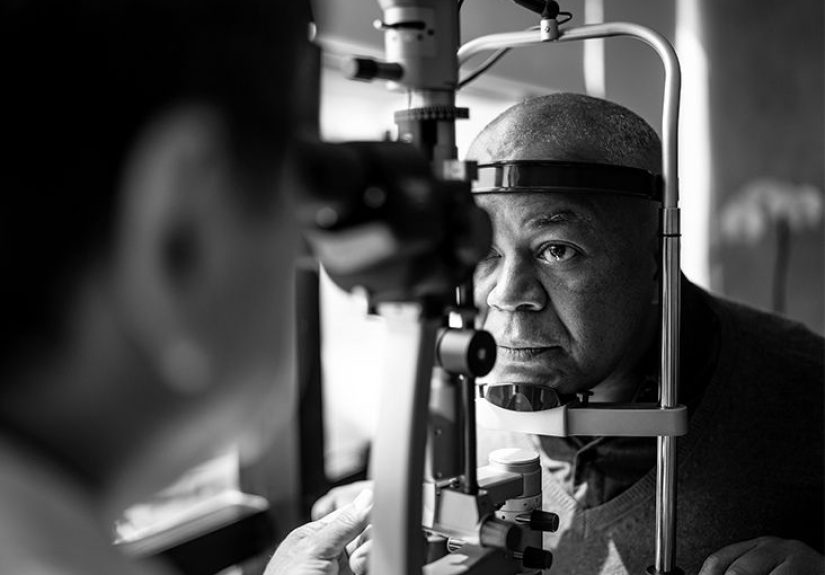
During a dilated eye exam (fundus exam), clinicians look for a combination of vessel narrowing, vessel wall changes, and signs of leakage or ischemia.
Some of the classic findings sound like a hardware store aisle, but they’re meaningful clues.
Common exam findings
- Generalized arteriolar narrowing: “Skinny” arteries from persistent vasoconstriction.
- Focal arteriolar narrowing: Local pinch points suggesting more severe vascular stress.
- AV nicking: Arteries compress veins at crossing points as walls stiffen.
- Copper wiring / silver wiring: Increased light reflex from thickened vessel walls.
- Retinal hemorrhages: Often flame-shaped in superficial layers.
- Cotton-wool spots: Small pale patches indicating nerve fiber layer ischemia.
- Hard exudates: Yellowish lipid/protein deposits from leakage; may form a “macular star.”
- Retinal or macular edema: Swelling that can distort vision.
- Optic disc edema (papilledema): A red-flag finding associated with severe hypertension.
These findings aren’t just “eye things.” They can mirror broader vascular injuryand may prompt a clinician to push for tighter blood pressure control or urgent evaluation.
Diagnosis: tests you may encounter
Diagnosis typically starts with a detailed history (blood pressure, medications, kidney disease, diabetes, pregnancy history, symptoms)
plus an eye exam and imaging.
Common tools
- Dilated fundus exam: The core exam for seeing retinal vessels and the optic nerve head.
- Fundus photography: Helpful for documentation and tracking changes over time.
- Optical coherence tomography (OCT): Cross-sectional imaging that can detect retinal/macular swelling.
- Fluorescein angiography (selected cases): Dye-based imaging to map leakage or perfusion problems.
Because hypertensive retinopathy can signal systemic risk, clinicians may also recommend blood pressure monitoring, lab work (kidney function),
and a cardiovascular risk assessmentespecially if retinal findings are moderate to severe.
Causes and risk factors
The core cause is simple: elevated blood pressure damaging small retinal blood vessels.
The pathways into that problem, however, can vary widely.
Common risk factors
- Long-standing uncontrolled hypertension
- Hypertensive crisis (very high readings, often around 180/120 mm Hg or higher)
- Missed or stopped blood pressure medications
- Smoking/tobacco use
- High cholesterol
- Obesity
- Diabetes or high blood sugar (raises overall vascular risk)
- Kidney disease (both a cause and a consequence of high blood pressure)
- Pregnancy-related hypertensive disorders (require immediate medical guidance)
Sometimes hypertension is “primary” (no single cause). Other times it’s driven by secondary factors (kidney problems, endocrine causes, certain medications).
If hypertensive retinopathy appears unexpectedlyespecially in younger peopleclinicians often look carefully for underlying causes.
Treatment: what actually helps
Here’s the headline: the treatment for hypertensive retinopathy is blood pressure control.
Eye drops don’t fix it. Blue-light glasses don’t fix it. Squinting harder definitely doesn’t fix it.
The retina improves when the blood pressure environment improves.
1) Control blood pressure (the main event)
Management usually involves your primary care clinician (and sometimes cardiology/nephrology) plus your eye doctor.
Treatment plans often combine lifestyle changes with antihypertensive medications tailored to your overall health.
In early stages, better blood pressure control can lead to improvement in retinal findings over time, and may reduce the risk of complications.
2) Handle severe elevations as urgent
If retinal findings suggest malignant hypertension (especially optic disc swelling), clinicians may treat it as a medical urgency or emergency.
In a hypertensive emergency, blood pressure reduction is typically controlled (not slammed down instantly), often in a monitored setting.
This is one reason severe hypertensive retinopathy is taken so seriously: it can be part of broader, acute organ injury.
3) Treat complications (when they occur)
Some people develop related eye problems, such as retinal vein occlusion, retinal artery occlusion, or significant macular edema.
Those situations may require additional evaluation by an ophthalmologist or retina specialist and targeted treatment based on the specific complication.
4) Reduce overall cardiovascular risk
Hypertensive retinopathy often travels with other risk factors. A plan that addresses cholesterol, blood sugar, kidney health, sleep quality,
and tobacco cessation can help protect both vision and long-term health.
Can hypertensive retinopathy be reversed?
Sometimes, yesat least in part. Acute signs related to high pressure and leakage can improve with effective blood pressure control.
Swelling may decrease. Hemorrhages and cotton-wool spots can resolve.
But chronic vessel wall remodeling (like pronounced “copper” or “silver” wiring) may persist because those structural changes can be long-lasting.
That’s why catching hypertensive retinopathy early is so valuable: it’s easier to stop a small snowball than to negotiate with an avalanche.
Prevention: protecting your vision by protecting your vessels
Preventing hypertensive retinopathy is essentially the same as preventing hypertension-related organ damage anywhere:
keep blood pressure in a healthy range and treat it consistently if it’s elevated.
Practical prevention steps
- Know your numbers: Check blood pressure regularly (at home if recommended).
- Take medications as prescribed: Consistency matters more than perfection.
- Eat for vessel health: A DASH-style approach (fruits/veg, lean proteins, lower sodium) is commonly recommended.
- Move your body: Regular activity supports blood pressure control.
- Sleep and stress: Both can influence blood pressure and adherence habits.
- Avoid tobacco: It compounds vascular injury.
- Get routine eye exams: Especially if you have hypertension, diabetes, kidney disease, or a strong family history.
When to seek urgent help
If you have sudden vision changes, severe headache, chest pain, shortness of breath, confusion, or one-sided weaknessespecially with very high blood pressureseek emergency medical care.
Hypertensive emergencies can involve multiple organs, and severe retinal findings may be part of that picture.
FAQs
Is hypertensive retinopathy the same as diabetic retinopathy?
No. They’re different conditions with different patterns, although both affect retinal blood vessels and can coexist.
Having both hypertension and diabetes can raise overall risk for retinal damage, so coordinated management is important.
Will I go blind?
Most people with mild hypertensive retinopathy do not go blindespecially if blood pressure is controlled.
Vision loss risk rises in advanced disease or when complications occur, which is why follow-up and blood pressure control matter.
How often should I get my eyes checked if I have high blood pressure?
Many adults do well with routine eye exam schedules, but if you’ve been diagnosed with hypertensive retinopathyor your blood pressure is difficult to controlyour eye doctor may recommend more frequent monitoring.
Real-world experiences (what it can feel like in day-to-day life)
Because hypertensive retinopathy often starts silently, many “experiences” begin with surprisesomeone goes in for a routine eye exam and walks out with a new respect for the phrase
“Your eyes are a window to your health.” A common scenario looks like this: a person gets a dilated exam for new glasses, the eye doctor notices arteriolar narrowing and AV nicking,
and suddenly the conversation shifts from lens coatings to blood pressure management. It can feel jarring, but it’s also a giftan early warning before the retina (or the heart or brain) pays a higher price.
People who do notice symptoms often describe them in practical, inconvenient terms: “Street signs look fuzzy,” “My phone text seems slightly smeared,” or “I’m squinting at things I used to read easily.”
If macular swelling is involved, straight lines may look wavy or dull. Some also report headaches at the same timeespecially when blood pressure is severely elevated.
That combination (vision changes + systemic symptoms) is often what pushes someone to urgent care, where the eye findings can help confirm how serious the blood pressure situation is.
The testing experience is usually more annoying than scary. Dilation drops blur near vision for hours and can make lights feel extra brightlike the sun is personally offended by your pupils.
OCT imaging is painless and quick, but it can be a little strange to sit still while a machine takes cross-sectional “slices” of your retina.
Many patients find fundus photos helpful because they can actually see what the clinician is talking aboutnarrowed vessels, little spots, or swelling that didn’t “feel” like anything.
The emotional experience can be the biggest part. A hypertensive retinopathy diagnosis often lands as a wake-up call:
“I knew my blood pressure was high, but I didn’t realize it was already affecting my eyes.”
The most common turning point is medication consistencytaking prescriptions daily, not just when someone “feels” hypertensive (because most people don’t).
People also talk about changing routines in small, sustainable ways: cooking more at home to cut sodium, walking after meals, setting a phone reminder for meds, and tracking blood pressure at home
so the numbers stop being mysterious.
Follow-up visits can be encouraging. When blood pressure improves, clinicians may see hemorrhages fade and swelling reduce over weeks to months.
That feels validating: the work is paying off. On the flip side, some chronic signs (like prominent vessel wall changes) may linger,
and it can be frustrating to hear “this part may not fully reverse.” But even then, stabilization is a winbecause preventing progression is the real goal.
Many people describe the long-term experience as shifting from fear to maintenance: treat blood pressure like brushing your teethboring, consistent, and non-negotiable.
One more reality check: hypertensive retinopathy isn’t an “eye-only” diagnosis.
People often end up with broader health check-inskidney labs, cholesterol management, diabetes screening, sleep apnea evaluationbecause vascular problems tend to show up in groups.
That can feel like a lot, but it’s also a chance to protect vision and overall health at the same time.
Conclusion
Hypertensive retinopathy is your retina’s way of sending a strongly worded memo about blood pressure.
Early stages may not affect vision, but they can reveal vascular stress that matters for your whole body.
The most effective “eye treatment” is consistent blood pressure controlthrough lifestyle changes, medication adherence, and regular follow-up.
If you already have hypertensive retinopathy, think of it as a high-value warning sign: it’s a chance to protect your sight and your future.