Table of Contents >> Show >> Hide
- How a WNBA Game Turned Into a Meme Coin Billboard
- Meet Green Dildo Coin, the Stunt Token No One Asked For
- What Even Is a Meme Coin?
- Inside the Meme Coin Community: Who Signs Up for This?
- Collateral Damage: The People Who Didn’t Opt In
- Why Meme Coins Love Chaos
- Does Any of This Actually “Protest” Crypto Scams?
- From the Inside: A Week in the Meme Coin Trenches
- Final Thoughts: The Joke That Wasn’t Worth It
If you’ve ever watched a WNBA game and thought, “This could really use fewer turnovers and
absolutely zero flying neon sex toys,” congratulations: you’re on the same page as every player,
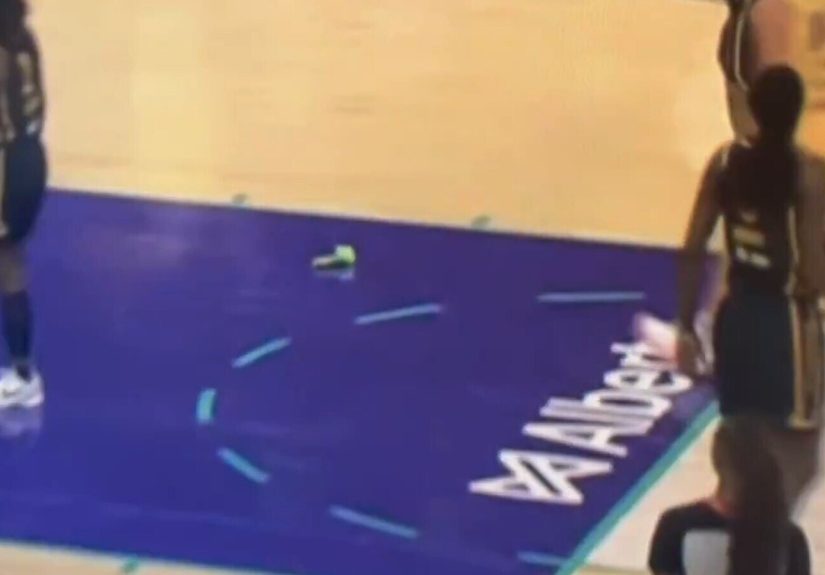
coach, and security guard in the building. Yet in the summer of 2025, lime-green dildos started
landing near benches and bouncing across WNBA courts, all allegedly in the name of a new crypto
meme coin and the desperate chase for viral attention.
The saga around “Green Dildo Coin” is part prank, part marketing campaign, part
“please, for the love of basketball, stop doing this.” Underneath the ridiculous visuals,
though, is a very real story about how meme coins work, how online communities form around them,
and why some people will risk a lifetime arena ban to be a five-second clip in someone else’s
pump-and-dump fantasy.
How a WNBA Game Turned Into a Meme Coin Billboard
According to news reports, the first incidents happened in late July and early August 2025,
when lime-green sex toys were thrown onto the court during multiple WNBA games. In several cases,
play had to be stopped while referees and arena staff removed the objects. At least one toy
appeared to graze a player, and another incident reportedly involved a young fan in the stands
being hit, escalating this from “weird” to “absolutely not okay.”
The league responded the way leagues respond to anything that flies onto the playing surface:
with bans, arrests, and very serious press releases. Arena announcements reminded fans that
throwing any object can lead to immediate ejection and a long suspension from attending games.
Security tightened. Nobody wanted the WNBA, in the middle of a historic boom in attention and
attendance, to be defined by rogue sex toys.
Then the plot twist hit: a small crypto collective stepped forward to say,
“Actually, that was us.”
Meet Green Dildo Coin, the Stunt Token No One Asked For
In interviews with reporters, a spokesperson for a meme coin called Green Dildo Coin claimed
that at least some of the incidents were part of a planned “viral stunt.” The coin, they said,
was launched to protest the wave of scams and influencer shilling in the crypto spaceby…
doing a chaotic, risky stunt that looked a lot like, well, influencer shilling but with more
plastic and more security footage.
Their logic went something like this:
- Crypto is full of hype and scams.
- Traditional advertising is expensive and boring.
- Therefore, let’s launch a meme coin and send people to toss neon-green “candles”
(get it, like a green candle on a price chart) onto live sports broadcasts.
The spokesperson insisted that they never meant to hurt players or disrespect the league and
framed the whole thing as anti-establishment performance art. That’s one interpretation.
Another is “you invented a coin and then used athletes and arena workers as unwilling extras
in your marketing campaign.”
Whether the coin itself is a long-term project or a short-term speculative toy is almost beside
the point. This is meme coin culture in a nutshell: take something internet-friendly, attach a
narrative, and hope the spectacle is enough to make the number go up.
What Even Is a Meme Coin?
Meme coins are cryptocurrencies built less around serious utility and more around
vibes, jokes, and online culture. Dogecoin, originally a parody of Bitcoin featuring
the Shiba Inu “doge” meme, became the prototype: a coin that started as a joke and ended up
with a multi-billion-dollar market cap when celebrities and online communities piled in.
After Dogecoin came Shiba Inu, PEPE, and thousands of other coins whose main selling point is
that they’re funny, cute, or aggressively chaotic. Their value is driven by:
- Community hype: Telegram and Discord groups, meme posts on X,
and coordinated “shilling” campaigns. - Virality: The more people talk about a coin, the more people might buy it,
creating self-fulfilling mini-bubbles. - Speculation: Many traders don’t care what the coin “means”; they just hope
to get in early and exit before the inevitable crash.
In that environment, it almost makes sensealmostthat a group would look at a WNBA game,
a national TV broadcast, and a duffel bag of neon toys and say,
“This is our marketing funnel now.”
Inside the Meme Coin Community: Who Signs Up for This?
So who are the people behind and around Green Dildo Coin? While the specific group claims
anonymity, they look a lot like other meme coin communities: a mix of true believers,
bored gamblers, terminally online jokesters, and a smaller circle of insiders who actually
profit when the price spikes.
The Vibe in Group Chats and Discords
Join any meme coin chat and you’ll see the same energy play out:
- Users posting celebratory GIFs whenever the price moves a fraction of a cent.
- Endless homemade memes of the coin’s mascot conquering the world.
- Debates over whether this time it’s “different” and the coin might actually
change crypto forever. - Skeptics getting dogpiled for “FUD” (fear, uncertainty, doubt) if they ask
pesky questions like “Who actually controls the liquidity?”
For many participants, this isn’t just about money. It’s about belonging to a joke that feels
like it’s happening in real time. The WNBA incidents add an extra layer of “lore”:
suddenly, this isn’t just a ticker symbol on a chart, it’s the coin that “trolled the league”
and got mentioned on national news.
The Pump-and-Dump Gravity Well
The darker side of meme coin culture is how easy it is for these projects to turn into
pump-and-dump schemes. A small group accumulates tokens early, orchestrates a bunch of
attentionstunts, influencer shout-outs, ridiculous marketingand then sells into the surge
once regular traders pile in.
From the outside, Green Dildo Coin’s WNBA antics look suspiciously aligned with that script:
a hyper-visual, low-budget stunt that drives headlines, pairs the coin with a memorable
visual, and uses outrage as advertising. Even if the creators talk about “protesting scams,”
the structure of the project still encourages the same old speculative behavior.
Collateral Damage: The People Who Didn’t Opt In
The thing about meme coin lore is that everyone inside the community chooses to be there.
The WNBA players, coaches, security staff, and fans… did not.
Players have publicly called the dildo-throwing stunts disrespectful and dangerous.
They’re already competing at the highest level, worrying about rotations, referees, and
playoff seeding. They shouldn’t also have to worry about dodging a piece of plastic someone
lobbed from the upper deck to impress a Telegram chat.
For the league, which has fought for decades for respect, airtime, and fair coverage,
it’s particularly infuriating. The WNBA is finally seeing record attendance and ratings.
Having a portion of that spotlight hijacked by sex toy stunts feeds into the same old
dismissive narratives that women’s sports are a punchline instead of a serious product.
Then there are the fanskids, families, and longtime supporterswho just came to watch
basketball. When an object hits a young fan or lands close to the bench, it stops being
“edgy protest” and turns into “you put a child and a bunch of athletes at risk so your coin
could trend on crypto Twitter for 48 hours.”
Why Meme Coins Love Chaos
The WNBA dildo saga feels extreme, but it’s not totally out of character for meme coin culture.
These projects thrive on attention, and attention on the modern internet is often driven by
outrage, absurdity, or both. The more surreal the stunt, the more screenshots, reaction videos,
and quote-tweets it generates.
In that sense, the dildo-throwing is just the physical world catching a stray from the logic
of the online attention economy. For years, meme coins have competed not on fundamentals but on
how loudly they can shout above the noise. If you can’t out-engineer another project,
you try to out-weird it.
The result is a kind of arms race of spectacle: billboards, celebrity shout-outs,
weird cosplay at conferences… and now, apparently, contraband plastic projectiles at
professional sporting events.
Does Any of This Actually “Protest” Crypto Scams?
Green Dildo Coin’s creators frame their campaign as a protest against the corrupt,
scam-ridden side of crypto. But when your protest looks functionally identical to a
gimmicky pump, it’s hard to see the difference from the outside.
If you really wanted to reform crypto, you might:
- Push for better transparency in projects and tokenomics.
- Educate new investors about risk, volatility, and rug pulls.
- Support developers building actual tools and infrastructure.
Tossing neon dildos at WNBA players instead sends a different message:
that the only way to get noticed is to be more obnoxious than the last guy.
It’s less a revolution and more a Super Bowl ad for people who can’t afford
a Super Bowl ad.
From the Inside: A Week in the Meme Coin Trenches
To understand why people still flock to projects like Green Dildo Coin despite the backlash,
it helps to imagine what it feels like inside the community. Think of this as a composite
experience based on how many meme coins operate, with the serial numbers filed off and the
dildos, unfortunately, left on.
Day one, you’re invited into a Telegram chat by a friend who swears this is “the next 100x.”
The group already has a mascot, a slogan, and a handful of rough memes that look like they
were made on a phone at 3 a.m. Everyone talks in in-jokes. The price chart is screenshotted
every four minutes. You feel late, even though the coin launched yesterday.
Day two, the lore starts. There’s a dramatic origin story about “taking back crypto from the
suits,” plus a manifesto about how the project is differentfair launch, no big investors,
all community-driven. Mixed in with that are very specific instructions about when and how
to tweet, what hashtags to use, and which influencers to tag in hopes they’ll notice and
amplify the circus.
Day three, the stunt leaks. Someone hints that “real-world activations” are coming.
Maybe they’re billboards. Maybe they’re costumes at a convention. In this case,
it’s “street teams” who will attend WNBA games and “make history.” Inside the chat,
people egg each other on: jokes escalate, mock-up images of neon toys fly around,
and anyone who raises concerns about safety or legality is brushed off as a buzzkill.
When the first dildo actually hits the floor during a game, your group chat goes nuclear.
Hundreds of messages light up: people spamming laughing emojis, posting clips ripped from
broadcast footage, bragging that “we’re on ESPN.” The price of the coin spikes as curious
traders search the ticker and throw in a few bucks “for the meme.”
Outside that bubble, the reaction is horrified and angry. Players speak out. The league
issues statements. Commentators point out the gendered disrespect of using a sex toy as a
tool of humiliation in women’s sports. None of that really connects in the chat at first.
To the insiders, it’s proof the plan “worked.”
But a few days later, arrests start making headlines. One of the alleged throwers gets
banned from arenas. Another incident reportedly injures a young fan. The league tightens
security and brings in law enforcement. Suddenly, the memes feel uglier. Participation in
the chat drops from gleeful chaos to a smaller core arguing about whether to keep pushing
or pivot to a new narrative.
Meanwhile, the token’s price chart tells a familiar story. After the initial spike,
momentum fades. People who bought during the hype sell at a loss. Early holders quietly
cash out and vanish. Newcomers ask what happened to all the promises about “changing crypto”
and get vague answers or silence.
What sticks around longest isn’t the coin, but the fallout: players who had to deal with
dangerous distractions at work, fans who had a scary night at the arena, and a sport that
deserved better than to be turned into a billboard for somebody’s speculative stunt.
Final Thoughts: The Joke That Wasn’t Worth It
On paper, the story of Green Dildo Coin and the dildo-throwing at WNBA games sounds like
textbook internet absurdism: a fringe crypto project, a viral stunt, a string of headlines
that make you double-check you’re not reading parody. But once you look past the shock value,
the story feels sadder and more familiar.
It’s another case of attention being treated as the only currency that matters, no matter who
gets dragged into the bit. It’s another example of a meme coin community chasing a momentary
high while the actual human beings affectedplayers, fans, and arena workersare left picking
up the pieces.
Meme coins aren’t going away. Neither is the urge to turn everything into content. But maybe
the takeaway from this particular saga is simple: if your marketing plan involves weapons-grade
embarrassment devices and people who never agreed to be part of your joke, it’s not clever
rebellion. It’s just bad behavior dressed up as a ticker symbol.
SEO metadata in JSON format