Table of Contents >> Show >> Hide
- What is the Lewis Pendant, exactly?
- Why the Lewis Pendant works in modern homes
- The bulb is the “shade” herechoose like you mean it
- Where Lewis Pendants shine (and where they don’t)
- Hanging height and placement: make it look effortless (with math)
- Styling the Lewis look: cords, contrast, and quiet confidence
- Safety and practicality: don’t let “cute” become “combustible”
- Can you still buy the Lewis Pendant?
- Experiences: living with the Lewis look (the part you don’t get from a spec sheet)
- Conclusion
Some lights try so hard to be “a moment” that they accidentally become a monologue. The Lewis Pendant from Schoolhouse Electric (now Schoolhouse) is the opposite: a quiet, confident little fixture that basically says, “I’m here to do my job…and look good doing it.” It’s the lighting equivalent of a crisp white teesimple, flattering, and weirdly hard to improve.
Even though the Lewis Pendant is no longer part of Schoolhouse’s current lineup (more on that later), it’s still one of those designs people reference when they want the Schoolhouse look: clean lines, honest materials, and just enough vintage energy to make your kitchen feel like it could pass a pop quiz.
What is the Lewis Pendant, exactly?
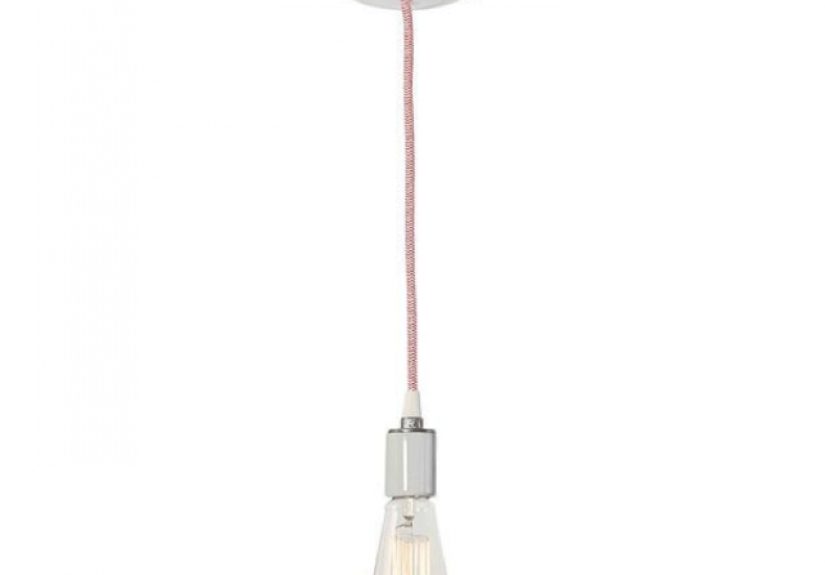
At its core, the Lewis Pendant is delightfully straightforward: a porcelain socket, a ceiling canopy, and a cord that lets the bulb take center stage. It’s “less fixture, more spotlight”literally.
Signature details that made it a classic
- Porcelain socket offered in black or white (the two neutrals that never get invited to drama).
- Playful cord options, including memorable red cloth-cord choices that brought a tiny hit of color overhead.
- Archive specs often cited for the Lewis (porcelain socket) version include a 5.5-inch canopy, 100W max, and an overall length around 25 inches (noting that cord/installation choices can change the real-world drop).
- Important safety footnote: some cloth cord options were noted as non-UL in archived descriptionsmeaning you should be extra careful about what you’re installing permanently in a ceiling.
The charm is that nothing’s hidden. The socket is the “hardware,” the cord is the “trim,” and the bulb is the “shade.” If you pick the right bulb, the Lewis Pendant looks intentional and elevated. Pick the wrong bulb…well, it will still be intentionaljust in the way a bad haircut is intentional.
Why the Lewis Pendant works in modern homes
Minimal pendants can feel cold, but the Lewis landed in that sweet spot: classic material (porcelain), a touch of workshop utility, and plenty of customization through cord and bulb choices. It can read farmhouse, modern, Scandinavian-cottage, loft-industrial, or “my house is a Pinterest board, but I promise I cook sometimes.”
It’s a rare design that plays nice with everything
- In a modern kitchen: it keeps sightlines clean and lets your counters and cabinets shine.
- In a vintage-leaning space: porcelain feels historically grounded, especially with globe-style bulbs.
- In a rental: it delivers personality without needing a full lighting redesign (assuming you’re allowed to swap fixtures).
The bulb is the “shade” herechoose like you mean it
Because the Lewis is essentially an exposed-socket pendant, your bulb choice does most of the visual (and comfort) work. Here’s how to pick one that looks great and feels great.
Brightness: think lumens, not watts
Brightness is measured in lumens. Watts tell you how much energy the bulb uses, not how bright it looks. As a practical reference, around 800 lumens roughly matches the brightness people associate with an old-school “60W” bulb, while 1,600 lumens is closer to a “100W” levelespecially helpful when you’re lighting work surfaces like islands.
Color temperature: warm for cozy, cooler for “let’s focus”
Color temperature changes the mood fast. Warm light feels softer and more inviting; cooler light feels crisper and more task-forward. With an exposed bulb, extremes get intenseso many people land somewhere warm-neutral for kitchens and dining areas, then use dimmers for flexibility.
Dimmers: the difference between “nice” and “wow”
If your Lewis-style pendants are on a dimmer, make sure your LED bulbs and dimmer are compatible. Flicker, shimmer, or “ghosting” often comes down to a mismatchnot your imagination and not a haunted breakfast nook.
Practical tip: if you’re already using a smart dimmer system, check the manufacturer’s compatibility guidance for the specific bulb model. It’s boring, but it’s the kind of boring that saves you from hate-texting your lights at midnight.
Where Lewis Pendants shine (and where they don’t)
Best uses
- Kitchen islands: great for a row of pendants that feels light, not bulky.
- Dining tables: one statement pendant, or multiples over a long table for symmetry.
- Entryways and hallways: simple, durable style that doesn’t overwhelm tight spaces.
- Bedroom corners: as a pendant “reading light” near a nightstand (with the right placement).
Use with caution
- Damp locations: exposed-bulb pendants aren’t automatically bathroom-safe. For bathrooms, you generally want fixtures rated for damp/wet areas depending on placement and local code.
- Low ceilings: the Lewis look can work, but you’ll need to manage drop length carefully so it doesn’t feel like the bulb is trying to join your book club.
Hanging height and placement: make it look effortless (with math)
Pendant placement is where good lighting becomes great lighting. A few widely used guidelines help you nail both function and proportion.
Over a dining table
A common guideline is to hang the bottom of a pendant or chandelier about 30–36 inches above the tabletop. In rooms with taller ceilings, you can typically raise the fixture a bit to keep the proportions feeling balanced.
Over a kitchen island
For islands, a frequently used starting point is also 30–36 inches above the countertop. If you’re using multiple pendants, spacing them roughly 2–3 feet apart (measured from the center of each fixture) helps avoid the “runway lights” look while still providing even coverage.
A quick real-world example
Imagine a 7-foot island. Two Lewis-style pendants can look clean and airy if you keep them centered over the work zones and spaced evenly. For a 9-foot island, three pendants often looks more proportionalespecially if you choose smaller, minimalist sockets where the bulb is the main visual element.
Styling the Lewis look: cords, contrast, and quiet confidence
Use the cord like an accessory
The Lewis Pendant became famous in part because cord choices weren’t an afterthought. A neutral cord blends in; a red cord becomes a tiny design wink. If your space is mostly white/wood/stone, one unexpected cord color can act like a “signature” without repainting a single wall.
Match porcelain to your room’s “outline”
- White porcelain: disappears into light ceilings and feels bright, classic, and clean.
- Black porcelain: adds graphic contrast and pairs beautifully with black hardware or steel-framed windows.
Balance exposed bulbs with softer materials
Because the Lewis is visually simple, it loves texture nearby: a wood island, linen curtains, handmade tile, a vintage runner. The pendant stays crisp, while the room keeps the warmth.
Safety and practicality: don’t let “cute” become “combustible”
The original Lewis listings and mentions included an important note: some cloth cord options were not UL-listed in archived descriptions. Translation: don’t assume every cord option is appropriate for a permanent, in-ceiling installation.
- When in doubt, choose UL-listed components and follow manufacturer instructions. If you’re unsure, hire a licensed electrician.
- LED bulbs help because they use less power for the same brightness and generally run cooler than traditional incandescentsuseful when you’ve got an exposed bulb design.
- Dimmer + bulb compatibility matters to avoid flicker, ghosting, or premature bulb failure.
Can you still buy the Lewis Pendant?
In many style roundups and kitchen features, the Lewis Pendant is now mentioned as no longer available. That doesn’t mean the look is gone. It just means you might need to hunt secondhand or recreate the vibe thoughtfully.
Three smart ways to get the look today
- Shop secondhand (and rewire responsibly). Vintage or discontinued fixtures can be fantastic, but have wiring inspected and updated as needed.
- Look for a current Schoolhouse alternative with a similar “honest socket + cord” spirit and a clean canopy.
- Build a Lewis-inspired setup using a UL-listed pendant cord set and a quality porcelain socketthen spend your energy on a great bulb. (This is where your electrician earns their keep.)
One more modern note: Schoolhouse has gone through big business changes recently, including a shift in ownership tied to industry consolidation. For shoppers, the practical takeaway is simple: always check current listings, specifications, ratings, and warranty details at the time you buy.
Experiences: living with the Lewis look (the part you don’t get from a spec sheet)
The funny thing about a minimalist pendant is that you don’t notice it…until you really notice it. The Lewis-style pendant has that stealth quality. On day one, it’s “nice lighting.” By week two, you’re timing your morning coffee so the bulb glow hits the countertop like a small, edible sunrise.
In kitchens, the experience is less about drama and more about rhythm. You flip the switch and the light lands exactly where you need it: the cutting board, the sink, the spot where mail mysteriously multiplies overnight. If you chose a warm bulb and added a dimmer, the same pendant that helps you find the paprika at 6 p.m. becomes a soft halo at 10 p.m. when the house is finally quiet and you’re “just going to have one cookie,” which is a lie, but a comforting one.
Over a dining table, a Lewis pendant can feel like it’s hosting. With an exposed bulb, conversation changes in a subtle waypeople naturally gather inside the circle of light, like the table is its own little campsite. The best part is how flexible it is: brighter for homework or game night, lower and warmer for dinner parties where everyone suddenly becomes an expert on olive oil.
The cord is where personality sneaks in. A neutral cord fades away and lets your room look calm and “finished.” A colored cordespecially something bold behaves like a visual inside joke. Guests notice it, smile, and then immediately ask where you found it. (This is when you get to casually say, “Oh, it’s a Schoolhouse-inspired thing,” as if you didn’t spend three evenings debating bulb shapes like it was a doctoral thesis.)
There’s also a practical, everyday satisfaction in porcelain. It feels sturdy. It doesn’t pretend to be precious. If you dust it, it looks brand new. If you don’t dust it, it still looks like it belongsjust with a little extra “authenticity,” which is a generous word for “I forgot again.”
And then there’s the moment every exposed-bulb owner learns: the bulb matters more than you think. The wrong bulb can feel glaring, cold, or weirdly interrogation-room adjacent. The right bulb makes the entire fixture feel intentional, like the room is exhaling. Once you get it right, you stop thinking about the pendant as a product and start thinking about it as part of how your home behavesbright when you need clarity, soft when you need comfort, and quietly stylish the whole time.
Conclusion
The Lewis Pendant became a Schoolhouse Electric favorite because it proves a point: great lighting doesn’t have to be complicatedit just has to be considered. With a porcelain socket, a well-chosen cord, and the right bulb, the Lewis look delivers function, charm, and flexibility in a form that works in almost any room. Whether you’re tracking down an original or recreating the style with today’s safer components, focus on the details that matter: placement, brightness, warmth, and compatibility. Do that, and you’ll end up with lighting that feels effortlessbecause you did the effort in the right places.