Table of Contents >> Show >> Hide
- What Sea Feather Medium Is (and Why It Feels So “Grown-Up Coastal”)
- Specs That Matter (Because Wallpaper Is Beautiful Math)
- Colorways and Mood: Pick Your “Sea Story”
- Where It Works Best (and Where It Might Start an Argument)
- Full Room vs. Feature Wall: Two Very Different Personalities
- A Styling Playbook That Won’t Fight the Pattern
- How Many Rolls Do You Need? A Practical Planning Method
- Installation Tips for a High-End Pattern (So It Looks Custom, Not “Close Enough”)
- Care and Maintenance: Keep It Beautiful Without Babying It
- Budget, Timing, and Ordering Strategy
- Conclusion: Why Sea Feather Medium Is Worth the Wall Space
- Experiences With Min Hogg Sea Feather Medium Wallpaper: What Living With It Can Feel Like
Some wallpapers whisper. Min Hogg’s Sea Feather Medium does that thing where it
politely clears its throat and suddenly the whole room pays attention. It’s coastal,
but not “gift-shop seashell.” It’s botanical, but not “grandma’s chintz.” Think: hand-drawn,
seaweed-inspired drama with a calm, collected backbonelike a beach house that reads
The World of Interiors and also knows where it left its sunglasses.
In this guide, we’ll break down what makes Sea Feather Medium special, how to style it without
turning your home into an aquarium-themed restaurant, how to plan quantities using its real
specs, and what to know before you commit to a high-impact, high-reward wallcovering.
What Sea Feather Medium Is (and Why It Feels So “Grown-Up Coastal”)
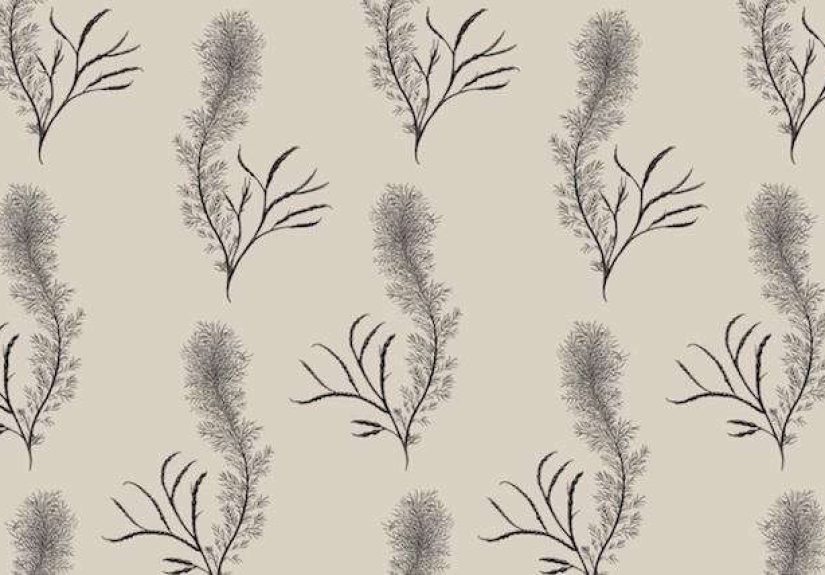
Sea Feather Medium is part of Min Hogg’s Seaweed Collectiona family of designs
that lean into undulating, underwater-ish motifs. The charm is in the tension: the pattern feels
organic and a little wild, but the repetition is disciplined, almost like a vintage engraving turned
into a modern statement. It’s the decorative equivalent of a messy bun that somehow looks
editorial.
The “Sea Feather” motif reads as seaweed fronds, feather-like botanicals, or coral-adjacent silhouettes,
depending on your lighting and your imagination. (And yes, imagination is allowed in home design.
This isn’t tax prep.)
Specs That Matter (Because Wallpaper Is Beautiful Math)
Wallpaper success is half taste, half geometry. Sea Feather Medium is sold as a luxury wallcovering,
and its measurements are part of the planning conversationnot an afterthought you discover while
holding a paste brush and regret.
Sea Feather Medium wallpaper specs at a glance
- Trimmed width: 52 cm (about 20.5 inches)
- Vertical repeat: 43 cm (about 16.9 inches)
- Sold by length: priced per 10 m (about 32.8 feet)
- Typical retail price: luxury-tier (often listed around £210 per 10 m, depending on colorway and timing)
Translation: this is a classic-width roll in premium territory, with a repeat that’s noticeable but not
ridiculously enormous. It’s “medium” in scale, but it doesn’t play small. If your room is the stage,
this wallpaper is showing up in a good outfit.
Colorways and Mood: Pick Your “Sea Story”
Sea Feather Medium is offered in multiple colorways, and the color choice changes the entire vibe:
airy and architectural in pale tones, moody and dramatic in deeper contrasts, and warmly traditional
in richer neutrals. When you’re choosing, don’t just ask “Do I like this?” Ask, “Do I want to live
in this feeling at 7 a.m. with coffee breath?”
Three styling directions that tend to work beautifully
-
Soft, quiet contrast: pale grounds with gentle ink-like detailing for bedrooms,
hallways, and “I want calm but not boring” spaces. -
Moody coastal: charcoal/stone-style pairings for dining rooms, libraries, or powder rooms
where you want a little theatricality. -
Warm heritage: chestnut-and-white style palettes that play nicely with antique woods,
brass, and linen upholstery.
Where It Works Best (and Where It Might Start an Argument)
Sea Feather Medium is a statement patternmeaning it can be breathtaking in the right place,
and exhausting in the wrong one. The trick is to put it where you want energy, story, and texture,
not where you’re already juggling visual noise.
Best rooms for Sea Feather Medium
-
Powder rooms: Small space, big payoff. This is the classic “confidence zone” where
wallpaper can go bold without taking over your entire life. - Entryways and stair landings: Transitional spaces love pattern because it creates instant identity.
- Dining rooms: Pattern adds intimacyespecially with warm lighting and darker paint on trim.
- Bedrooms (feature wall): Behind the headboard for “boutique hotel, but make it personal.”
Proceed thoughtfully in these spaces
-
High-humidity bathrooms: If you’re using a luxury paper wallcovering, prioritize ventilation
and follow the manufacturer’s guidance. A powder room is easier than a daily-steam situation. -
Busy kitchens: If your backsplash already has pattern, your counters are veined stone, and your
open shelves are full of colorful ceramics… your wallpaper may file a formal complaint.
Full Room vs. Feature Wall: Two Very Different Personalities
Sea Feather Medium can wrap a room like a tailored jacket, or act as a single accent that makes everything
else look more intentional.
Choose a full-room install if…
- You want an immersive, jewel-box feel (especially in small rooms).
- You’re willing to keep the rest of the décor relatively calm.
- Your trim, doors, and ceiling details can be simplified with paint to support the pattern.
Choose a feature wall if…
- You love the pattern but want the room to breathe.
- You’re working around art, shelving, or large windows.
- You’re styling a bedroom and want the wallpaper to “anchor” the bed wall.
A Styling Playbook That Won’t Fight the Pattern
The easiest way to make Sea Feather Medium look expensive (it is) rather than merely “busy”
is to give it supporting characters instead of competitors. Think solids, texture, and a few
well-chosen shapes.
Paint + trim ideas
- Soft white trim: crisp, classic, and lets the motif feel like artwork.
- Stone-gray trim: modern, calming, and quietly architectural.
- Inky trim (for drama): especially good in a powder room with warm brass lighting.
Materials that play nicely
- Brass and aged bronze: warms up the “underwater” mood.
- Natural woods: oak, walnut, or painted wood with visible grain keeps it grounded.
- Linen and cotton: soft texture that echoes the organic motif without shouting.
- Stone and ceramic: especially matte finishes; glossy surfaces can make the walls feel louder.
Two specific room examples (so you can picture it)
Example 1: Powder room drama. Sea Feather Medium on all walls, a simple white pedestal sink,
a vintage-style mirror with a thin brass frame, and a single sconce with warm light. Keep towels and
accessories mostly solid (white, charcoal, or one muted accent color). The wallpaper becomes the
“art,” and everything else behaves.
Example 2: Bedroom feature wall. Sea Feather Medium behind the headboard; the other walls
painted a soft off-white or pale gray. Add a textured linen duvet, a wool throw, and wood nightstands.
If you want pattern elsewhere, limit it to one small scalelike a subtle stripe on pillows. The result is
layered, not chaotic.
How Many Rolls Do You Need? A Practical Planning Method
Wallpaper ordering is not the moment to be optimistic. (Optimism is for movie montages, not dye lots.)
Use a conservative approach that accounts for pattern matching, trimming, and “oops.”
Step-by-step roll planning
- Measure wall widths for every wall you plan to cover and add them together.
- Measure wall height at the tallest point. Don’t deduct windows/doors up front; you’ll cut around them later.
-
Account for repeat: add the vertical repeat to your wall height to estimate
each strip length (this creates room for pattern alignment and trimming). - Estimate strips needed: total wall width ÷ roll width (round up).
- Estimate strips per roll: roll length ÷ strip length (round down).
- Calculate rolls: strips needed ÷ strips per roll (round up), then add an extra roll for insurance.
Quick example (using the Sea Feather Medium dimensions)
Let’s say you’re wallpapering a 10-foot wide wall with an 8-foot ceiling.
The roll width is about 20.5 inches (1.71 feet). You’ll need about 10 ÷ 1.71 ≈ 5.85,
so 6 strips.
Now add repeat to strip length: 8 feet + (16.9 inches ≈ 1.41 feet) ≈ 9.41 feet per strip.
Roll length is about 32.8 feet, so 32.8 ÷ 9.41 ≈ 3.48, meaning 3 usable strips per roll.
For 6 strips total, you’d need 6 ÷ 3 = 2 rollsand in real life you’d likely order a little more
if you’re doing corners, matching, or multiple walls.
Tip: if you’re papering a whole room (especially with repeats), it’s smart to build in extramany pros
suggest ordering more than you think you’ll need to cover pattern matching and mishaps.
Installation Tips for a High-End Pattern (So It Looks Custom, Not “Close Enough”)
Sea Feather Medium has enough personality that sloppy seams will show. The goal is clean alignment,
smooth adhesion, and a finish that looks intentional from every angleincluding the angle where your
mother-in-law squints and says, “Interesting.”
Prep like you mean it
- Start with smooth walls: fill dents, sand patches, and prime appropriately.
- Remove old wallpaper: layering new paper over old can cause bubbling and heartbreak.
- Turn off power before removing outlet/switch plates.
Don’t skip these pro habits
- Check dye lots/run numbers: keep rolls from the same batch to avoid subtle color shifts.
- Cut and plan strips ahead: pattern matching goes faster on a table than on a ladder.
- Use the right tools: smoothing tool, seam roller, sharp blade, level, sponge, and drop cloths.
- Wipe paste immediately: dried residue can leave shiny marks or damage finishes.
If your room has weird corners, out-of-plumb walls, or you’re wallpapering around a lot of trim,
a professional installer can be worth itespecially for luxury paper where mistakes get expensive fast.
Care and Maintenance: Keep It Beautiful Without Babying It
Maintenance is mostly about being gentle and consistent. Regular dusting (a soft brush attachment
on a vacuum works well) keeps the pattern crisp. If the wallcovering is washable, use mild soap and
water and avoid harsh cleaners. For paper or specialty finishes, treat it like artwork: minimal moisture,
no scrubbing marathons, and no “I’ll just use this magic sponge real quick” adventures.
Budget, Timing, and Ordering Strategy
Sea Feather Medium typically sits in the luxury category (often listed around £210 per 10 m, depending on
the colorway and when you’re buying). Because it’s often made to order, plan for lead time and shipping.
If you’re on a deadline (party, listing photos, existential crisis), order early and keep your installer booked.
Smart ordering checklist
- Order a sample (or at least confirm the colorway in the lighting of your home).
- Order all rolls at once so dye lots match.
- Buy at least one extra roll for future repairs.
- Store leftovers flat and dry, labeled with the colorway and batch info.
Conclusion: Why Sea Feather Medium Is Worth the Wall Space
Min Hogg’s Sea Feather Medium wallpaper is the kind of pattern that makes a room feel designedeven
if you’re still “deciding” on the rest of the décor. It’s organic without being messy, coastal without being
cliché, and bold without being cartoonish. If you want walls that feel collected, artistic, and quietly confident,
this is a standout choiceespecially in powder rooms, entries, dining rooms, or a bedroom feature wall
where it can shine without competing with the entire household.
Choose the colorway for the mood you want, plan your quantities with the repeat in mind, and treat installation
like a real project (because it is). Do that, and the wallpaper won’t just decorate your spaceit’ll define it.
Experiences With Min Hogg Sea Feather Medium Wallpaper: What Living With It Can Feel Like
People often talk about wallpaper like it’s a single decisionpick pattern, hang it, done. But with a design like
Sea Feather Medium, the experience tends to unfold in chapters. The first chapter is the “sample phase,” where
you tape a swatch to the wall and walk past it like you’re judging a tiny art exhibit. Morning light makes it feel
crisp and graphic; evening light makes it moodier, almost velvety. This is usually when someone in the house
says, “Is it… seaweed?” and someone else says, “It’s… sophisticated,” which is basically the interior-design version
of a family meeting.
The second chapter is the “commitment moment.” With Sea Feather Medium, the pattern repeat is noticeable enough
that you start appreciating the craft behind it. When the strips line up, the wall looks intentionallike the room
suddenly got dressed for a nice dinner. When they don’t line up (even slightly), your eyes find it immediately,
which is why people often describe the installation as the most emotionally intense part of wallpapering. It’s not
tragic, but it is the kind of project that rewards patience and punishes “close enough.” The upside is that once it’s
up and smoothed, it feels less like a “home improvement project” and more like a permanent design upgrade.
In day-to-day life, the pattern tends to behave like a background soundtrack: you notice it when you pause, but it
doesn’t demand attention every second. In a powder room, guests often react the same wayeyes widen, tiny smile,
then the classic line: “Okay, this is cool.” It’s a great conversation-starter because it’s recognizable as a nature motif
without being literal. It doesn’t scream “theme,” it suggests “story.” And because the design reads differently at a
distance than it does up close, people find themselves leaning in to look at the detailslike examining an etching.
The styling experience is usually where people feel the biggest “win.” Sea Feather Medium pairs beautifully with
simple, solid materialslinen, wood, matte ceramicsso even modest décor can look elevated. A basic white sink
suddenly looks more expensive. An ordinary mirror looks curated. If you add warm metals (brass, bronze), the room
feels less “coastal” and more “collected.” If you keep metals cool (nickel, chrome), it leans crisper and more graphic.
People who love layered interiors tend to enjoy how the wallpaper acts as a unifying textureespecially when the rest
of the palette stays calm.
Over time, the most common “experience note” is that the wallpaper becomes a reference point. You pick towels,
paint, and even art by asking, “Does it make the wallpaper look better?” That’s not a bad thing. It’s the definition of
a successful statement wallcovering: it anchors decisions, reduces decorating chaos, and makes the room feel like it has
a point of view. And if you’re the kind of person who likes a home to feel personal rather than showroom-perfect,
Sea Feather Medium tends to deliverquietly, confidently, and with just enough drama to keep it interesting.