Table of Contents >> Show >> Hide
- Why Finding a Pigeon Feels So Unexpected
- First Step: Observe Before You Intervene
- What My Mom Should Do If the Pigeon Looks Injured
- Why Pigeons Deserve More Respect
- Common Mistakes People Make After Finding a Pigeon
- Is It Safe to Touch a Pigeon?
- How to Tell If It Is a Baby Pigeon
- What If the Pigeon Is Tangled in String?
- The Emotional Side of a Small Rescue
- A Practical Checklist for Anyone Who Finds a Pigeon
- Experience Section: What This Kind of Walk Teaches You
- Conclusion: A Pigeon, A Walk, And A Better Way To Notice The World
There are ordinary walks, and then there are walks that suddenly turn into a tiny neighborhood wildlife rescue mission. One minute, your mom is getting her steps in, enjoying the breeze, possibly judging someone’s lawn ornaments. The next minute, she is standing on the sidewalk looking at a pigeon that clearly did not RSVP to the usual city-bird agenda.
“My mom found a pigeon while on a walk” sounds like the beginning of a sweet family story, and it can be. But it is also the kind of moment that raises practical questions very quickly. Is the pigeon hurt? Is it a baby? Should you pick it up? Will it fly away if you blink? Is it secretly fine and just being dramatic, as pigeons sometimes appear to be?
Pigeons are so common in American cities and suburbs that many people barely notice them. They strut through parks, patrol sidewalks for crumbs, and bob their heads with the confidence of tiny feathered executives. But when a pigeon is sitting still, unable to fly, tangled in string, or looking weak, it may need help. The trick is knowing the difference between “bird doing bird things” and “bird in real trouble.”
This guide turns that sidewalk surprise into a helpful, compassionate, and realistic story. It explains what to do if you find a pigeon while walking, how to respond safely, when to call a wildlife rehabilitator, and why these often-underappreciated birds deserve more kindness than they usually get.
Why Finding a Pigeon Feels So Unexpected
Pigeons live close to people, so we tend to assume they are tough, street-smart, and basically made of leftover pizza crust and determination. In many ways, they are remarkably adaptable. Rock pigeons, the familiar gray birds seen in many U.S. cities, are ground foragers that peck at seeds, grains, and human food scraps. They are social, alert, and comfortable around buildings, bridges, sidewalks, train stations, rooftops, and public squares.
Still, living near humans is not always easy for birds. Pigeons can be injured by window collisions, traffic, fishing line, thread, hair, predators, storms, and pollution. Their feet may become tangled in string or synthetic fibers. Young birds may end up on the ground before they are fully skilled at flying. A pigeon may also appear calm not because it is friendly, but because it is sick, exhausted, stunned, or frightened.
That is why your mom’s discovery matters. A person who pauses instead of walking past may be the difference between a bird getting help and a bird being left in danger. Compassion does not require turning your living room into a bird hospital. In fact, it should not. The best help is usually simple: observe carefully, contain the bird only if needed, keep it quiet, and contact someone trained to care for wildlife.
First Step: Observe Before You Intervene
The first rule of finding a pigeon is not “grab it.” The first rule is “look carefully.” A pigeon standing on the ground is not automatically injured. Pigeons spend plenty of time walking, feeding, resting, and pretending the sidewalk belongs to them personally.
Signs the pigeon may need help
A pigeon may need assistance if it cannot fly away when approached, has a visibly drooping wing, is bleeding, is caught in string or netting, is lying on its side, is shivering, appears very puffed up and weak, or is sitting in a dangerous location such as a road, parking lot, or busy doorway. A bird that has hit a window may sit stunned and motionless, needing a quiet, safe place while professional guidance is arranged.
Another warning sign is unusual stillness. A healthy adult pigeon usually tries to move away from people. If your mom can walk close enough to almost touch it and it barely reacts, something may be wrong. Pigeons are brave around sandwich crumbs, not usually brave around giant mammals in sneakers.
When the pigeon may be okay
If the bird is alert, walking normally, flying short distances, staying with other pigeons, or feeding actively, it may not need help. A young fledgling may also spend time on the ground while learning how to fly. In those cases, the best action may be to keep pets and people away, watch from a distance, and avoid unnecessary handling.
Helping wildlife often means resisting the urge to over-help. Good intentions are wonderful; too much handling, feeding, or indoor “rescuing” can create stress or make the situation worse.
What My Mom Should Do If the Pigeon Looks Injured
If the pigeon appears injured, weak, or trapped, the safest approach is calm and practical. This is not the moment for panic, dramatic music, or a family group chat titled “PIGEON EMERGENCY!!!” although, realistically, someone will probably create one.
1. Move the bird only if it is in immediate danger
If the pigeon is in the street, near a storm drain, beside heavy foot traffic, or within reach of a dog or cat, it may need to be moved. Approach slowly and quietly. If possible, use a lightweight towel, soft cloth, or your hands to gently contain the wings. The goal is not to squeeze the bird, but to prevent flapping that could worsen stress or injury.
2. Place it in a ventilated box
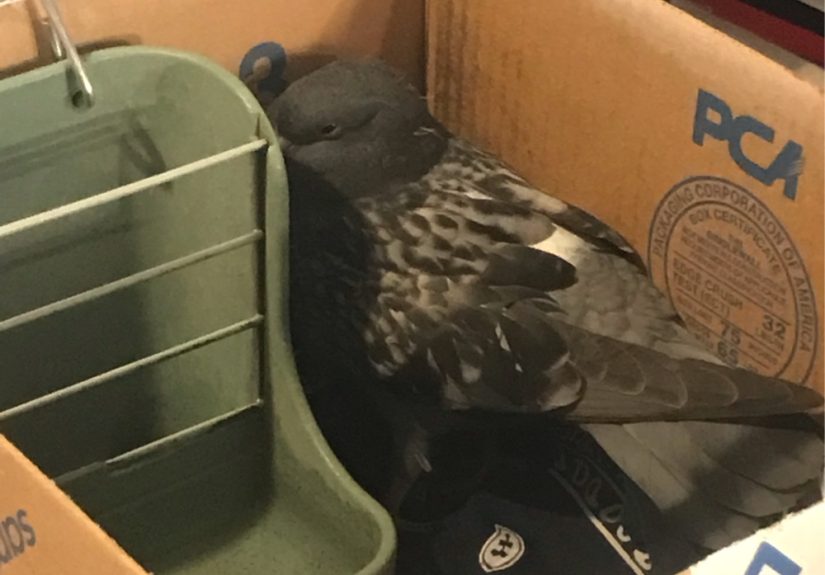
A cardboard box with small air holes and a soft paper towel or clean cloth on the bottom works well for temporary containment. The box should be secure enough that the bird cannot escape inside a car or house, but not airtight. Keep the box in a warm, quiet, dim place away from children and pets.
3. Do not feed it
This surprises many people. When we see a vulnerable animal, our first instinct is to offer food and water. With injured birds, that can be risky. A sick or stunned pigeon may not be able to swallow properly, digest food safely, or handle stress. Food and water can also interfere with professional care if the bird needs treatment. The better move is to contact a licensed wildlife rehabilitator or bird rescue as soon as possible.
4. Call a wildlife rehabilitator
A wildlife rehabilitator has the training, permits, equipment, and experience to evaluate the pigeon properly. In the United States, resources like Animal Help Now, local humane organizations, bird rescues, Audubon chapters, and state wildlife agency directories can help people find nearby assistance. Many cities also have specialized bird rescue groups that handle pigeons, songbirds, waterfowl, and other urban wildlife.
If a rehabilitator says to bring the bird in, follow their instructions for transport. Keep the car quiet, skip loud music, and avoid opening the box repeatedly to “check if it still looks cute.” It probably does. Let it rest.
Why Pigeons Deserve More Respect
Pigeons have a public relations problem. Doves get poetry. Eagles get national symbols. Owls get mystery. Pigeons get side-eye near park benches.
But pigeons are much more interesting than their reputation suggests. They are intelligent, social birds with strong homing ability and complex behaviors. They can recognize patterns, navigate familiar environments, and form pair bonds. In daily life, they show curiosity, caution, and cooperation. Watch them closely in a park and you will see more than random pecking. You will see tiny negotiations over space, food, status, and safety.
Historically, pigeons have also helped humans. Messenger pigeons carried important communications long before smartphones, group texts, and “sorry, just seeing this” excuses. Their ability to return home from long distances made them valuable partners in communication. Today, city pigeons remain reminders that wildlife is not only found in forests and national parks. Sometimes wildlife is standing under a hot dog cart, looking philosophical.
Common Mistakes People Make After Finding a Pigeon
Finding an injured pigeon can make anyone feel suddenly responsible. That feeling is good. The problem comes when people try to improvise wildlife care without guidance.
Mistake 1: Keeping the pigeon as a pet
Even when a pigeon seems calm, it should be evaluated by someone experienced. Some pigeons are domestic or banded birds that may have owners. Others are wild or feral pigeons that need rehabilitation and release if possible. Keeping a found bird without checking local rules, health needs, and rescue options can create problems for both the bird and the finder.
Mistake 2: Giving bread, milk, or random leftovers
Bread is not proper medical care, and milk is not suitable for birds. A pigeon does not need a snack buffet assembled from whatever is in the pantry. Injured birds need quiet, warmth, safety, and professional help.
Mistake 3: Letting pets investigate
Dogs and cats may be curious, but curiosity can terrify or injure a bird. Keep pets away from the pigeon and from the box where it is resting. Even a friendly pet can cause stress.
Mistake 4: Handling the bird too much
Repeated touching, photographing, and showing the bird to neighbors can increase stress. Take one quick photo only if a rehabilitator needs it for identification or triage. Otherwise, give the bird peace.
Is It Safe to Touch a Pigeon?
Basic caution is smart. Most everyday encounters with pigeons are not dangerous, but birds can carry germs, and droppings can create hygiene concerns. Wash your hands thoroughly after touching a bird, its box, or anything soiled. Keep the bird away from your face, kitchen counters, bedding, and food preparation areas.
People with weakened immune systems, very young children, elderly family members, or anyone with serious health concerns should avoid handling wildlife directly. Gloves or a towel can help reduce contact. The key is not fear; it is common sense. Treat the situation the way you would treat any unexpected animal rescue: calmly, cleanly, and with respect.
How to Tell If It Is a Baby Pigeon
Baby pigeons are rarely seen compared with adult pigeons, which is why people joke that pigeons simply appear in the world already wearing gray feathers and an attitude. Young pigeons stay in nests until they are fairly developed, so by the time they show up on sidewalks, they may look awkward but not tiny.
A young pigeon may have soft yellowish down, a shorter tail, darker eyes, or a clumsy posture. It may flap without flying well. If it is fully feathered, alert, and near adult pigeons, it may be a fledgling learning the ropes. If it is mostly bare, cold, weak, or clearly fallen from a nest, it needs help quickly.
For baby birds, the best step is to contact a rehabilitator before acting. Sometimes young birds can be returned to a nest or placed in a safer nearby spot. Other times, they need professional care. Guessing is less helpful than asking someone who handles these situations daily.
What If the Pigeon Is Tangled in String?
String injuries are sadly common in urban pigeons. Thread, hair, fishing line, balloon ribbon, and synthetic fibers can wrap around their toes or feet. Over time, the material may tighten and cause swelling or serious damage.
If your mom finds a pigeon with string around its feet, she should not attempt a complicated sidewalk surgery. If the bird can be safely contained, a rescue group or rehabilitator may be able to remove the material properly. Cutting too quickly or pulling the wrong way can hurt the bird. This is exactly the kind of problem experienced pigeon rescuers often handle better than well-meaning beginners.
The Emotional Side of a Small Rescue
There is something powerful about stopping for a small animal most people ignore. A pigeon is not rare. It will not make the evening news. No one is naming a conservation center after your mom because she noticed one quiet bird near the curb. But kindness does not need a spotlight to matter.
Moments like this remind us that compassion is often local, ordinary, and slightly inconvenient. It happens when someone changes their walking route, makes a phone call, finds a box, or waits with a bird until help is arranged. It happens when a person decides that a common animal still deserves care.
That is the real story behind “my mom found a pigeon while on a walk.” It is not only about the pigeon. It is about attention. It is about noticing. It is about refusing to let familiarity turn into indifference.
A Practical Checklist for Anyone Who Finds a Pigeon
Here is the simple version: observe first, act only if needed, keep the bird safe and quiet, avoid feeding it, wash your hands, and contact a wildlife rehabilitator or bird rescue. If the bird is in immediate danger, gently contain it in a ventilated box. If it is alert and behaving normally, give it space and monitor from a distance.
Do not assume every grounded pigeon is doomed. Do not assume every calm pigeon is fine. The best response sits between panic and indifference: careful attention, gentle action, and professional guidance.
Experience Section: What This Kind of Walk Teaches You
When my mom found a pigeon while on a walk, the experience became bigger than a single bird on the sidewalk. At first, it was just a pause. She noticed the pigeon because it did not move the way the others did. Nearby birds scattered, hopped, or fluttered away, but this one stayed low and still. That tiny difference changed the whole walk.
The first lesson was that observation matters. Most of us move through familiar places on autopilot. We pass the same trees, the same cracked pavement, the same corner store, and the same cluster of pigeons without really seeing any of it. But when you slow down, the neighborhood becomes full of small signals. A bird sitting too quietly. A nest under an awning. A patch of string where animals feed. A window that birds may strike because it reflects the sky.
The second lesson was that helping does not always look heroic. There was no dramatic rescue scene. No slow-motion music. No pigeon placing one grateful wing over its heart. The helpful things were ordinary: keeping people from crowding the bird, finding a box, calling for advice, washing hands, and staying calm. That is the funny thing about real kindness. It often looks like logistics.
The third lesson was that everyone suddenly has an opinion. One passerby may say, “Leave it alone.” Another may say, “Give it bread.” Someone else may insist their cousin once raised a parakeet and is therefore basically a bird doctor. In moments like that, the best approach is to listen politely but rely on trained wildlife guidance. Confidence is not the same as expertise, especially when the expert plan is usually quieter and less dramatic than the crowd’s suggestions.
The fourth lesson was that common animals can create uncommon feelings. Pigeons are everywhere, so people forget they are living creatures with fear, pain, habits, partners, and survival skills. Seeing one vulnerable on the ground changes that. Suddenly, the “sidewalk bird” becomes an individual. Its breathing matters. Its safety matters. Its chance to recover matters.
The fifth lesson was that a small rescue can change future walks. After that day, you notice more. You see the fishing line near the curb. You spot the open trash that attracts animals into risky spaces. You understand why clean sidewalks, safer windows, responsible pet control, and less litter are not just “nice ideas.” They are part of living alongside urban wildlife.
Most of all, the experience teaches a gentle kind of responsibility. You do not have to save every animal by yourself. You do not have to know everything. You only have to care enough to pause, learn the right next step, and connect the animal with people who can help. That is a pretty good lesson to find on an ordinary walk.
Conclusion: A Pigeon, A Walk, And A Better Way To Notice The World
When your mom finds a pigeon while on a walk, the best response is a blend of compassion and common sense. Look closely before intervening. Keep the bird safe if it is injured or in danger. Avoid feeding it. Contact a wildlife rehabilitator or bird rescue for guidance. Wash your hands and keep pets away. Most importantly, remember that even common animals deserve thoughtful care.
Pigeons may not have the glamour of hawks or hummingbirds, but they are part of the living city. They share our sidewalks, adapt to our buildings, and survive in environments we helped create. Helping one pigeon will not fix every urban wildlife problem, but it does make one moment better. Sometimes, that is exactly where kindness begins.
Note: This article is for general educational content and web publishing. For a real injured bird, always contact a licensed wildlife rehabilitator, local bird rescue, humane organization, or appropriate wildlife agency for location-specific instructions.