Table of Contents >> Show >> Hide
- Who Are the Massaco People?
- Why the New Images Matter
- “Leave Them Alone” Is Not a Catchphrase. It Is a Survival Strategy
- The Amazon Is Not Empty Land
- What the Mashco Piro Sightings Teach Us
- Why Protected Territories Work
- The Problem With Calling Them “Never-Before-Seen”
- What Threats Do Isolated Amazon Tribes Face?
- How Should the Public Respond?
- Why This Story Matters Beyond the Amazon
- Experience-Based Reflection: What This Story Teaches Us About Distance, Respect, and Wonder
- Conclusion
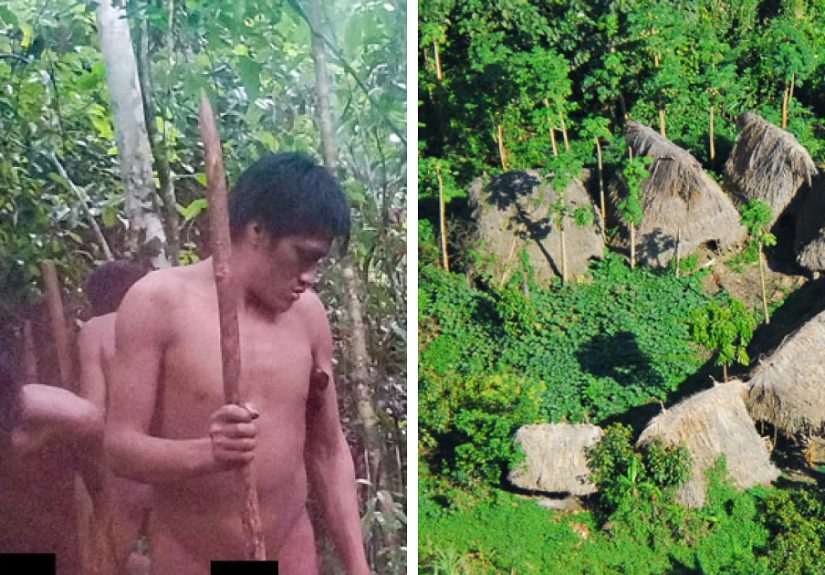
Every so often, the internet receives a photo that makes everyone stop scrolling for longer than three seconds, which, in modern terms, is basically a standing ovation. Recent images of an isolated Indigenous community in the Amazon did exactly that. Captured by automatic cameras deep in the Brazilian rainforest, the rare photographs offered a first clear glimpse of people widely referred to as the Massaco, a name taken from the river that runs through their territory.
The images are stunning, yes. But they are not a travel invitation, a mystery to be solved, or the opening scene of an adventure movie starring someone in impractical linen. They are a reminder that some of the world’s most vulnerable communities are not “lost.” They are living, choosing, adapting, defending, and surviving on their own terms. The message from Indigenous rights advocates is refreshingly simple: leave them alone.
That phrase may sound blunt, but in this case blunt is good. Blunt keeps people alive. For uncontacted Amazon tribes, outside contact can bring disease, violence, land theft, cultural disruption, and irreversible harm. The first glimpse should not become the first intrusion.
Who Are the Massaco People?
The Massaco are an isolated Indigenous community living in Rondônia, a Brazilian state near the border with Bolivia. Outsiders do not know what the group calls itself, which is important. “Massaco” is a label used by others, not necessarily their own name. That detail alone should slow us down. If we do not even know their self-chosen name, we should be very careful about pretending we understand their lives.
Brazil’s National Indigenous Peoples Foundation, known as Funai, has monitored the Massaco territory for decades without forcing direct contact. That matters because Brazil’s modern approach to isolated peoples was shaped by painful history. Earlier policies in South America often attempted to “pacify” or assimilate Indigenous communities. The results were frequently catastrophic: disease outbreaks, displacement, violence, and cultural loss.
Today, the better approach is protection without contact. It means researchers and government teams may monitor territory boundaries, analyze signs from a distance, and prevent invasions by loggers, miners, ranchers, or traffickers. But they do not walk into villages, shake hands, pass around snacks, or ask anyone to pose for a documentary. In other words, the strategy is not “discover them.” It is “protect their right not to be bothered.”
Why the New Images Matter
The newly publicized photographs were taken by automatic cameras installed for monitoring, not by tourists or thrill-seekers. They reportedly show men moving through the forest, carrying long wooden objects, and using defensive measures such as sharpened stakes. These details suggest something both fascinating and sobering: the Massaco are not passive figures hidden in a postcard-perfect jungle. They are actively managing their land and responding to threats.
For decades, Funai teams have found signs of Massaco life, including abandoned structures, tools, pathways, and hunting evidence. But the new images provide a clearer visual record of a community that has remained largely unseen by the outside world. They also suggest that the group may be growing. Estimates vary, but reports have placed the population in the hundreds, potentially more than double what observers believed in the early 1990s.
That is remarkable because Rondônia has been heavily affected by deforestation, agribusiness expansion, illegal logging, mining pressure, and land conflicts. In a region where forest loss can advance like a bad rumor at a family reunion, the survival and possible growth of an isolated community is not just a human story. It is an environmental one.
“Leave Them Alone” Is Not a Catchphrase. It Is a Survival Strategy
When people hear about an uncontacted tribe, curiosity kicks in. What language do they speak? What do they eat? What do they believe? What do they think of airplanes, cameras, or the modern world’s greatest invention, the group chat nobody asked for?
Curiosity is natural. Acting on it is the problem.
Uncontacted Indigenous communities are especially vulnerable to outside diseases. Even a common cold, flu, measles, or respiratory infection can be devastating when a community has not developed immunity through previous exposure. History across the Americas is full of examples in which outside contact brought epidemics that wiped out large portions of Indigenous populations.
Contact also creates social danger. A sudden encounter can be frightening for both sides. Misunderstanding can quickly become conflict. Outsiders may bring tools, food, alcohol, weapons, religion, labor exploitation, or dependency. Even when contact is presented as friendly, it often changes power dynamics immediately. The outsiders usually have the state, money, roads, and diseases behind them. The isolated community has its land, its knowledge, and its right to say no.
That is why “leave them alone” is not anti-human. It is deeply human. It recognizes autonomy. It says people do not need to be folded into the global economy to be considered real, valuable, or worthy of protection.
The Amazon Is Not Empty Land
One of the most dangerous myths about the Amazon is that remote forest is empty forest. It is not. The rainforest is home to Indigenous nations, isolated groups, riverside communities, animals, medicinal plants, ancient routes, sacred sites, and ecological relationships that outsiders often do not see until they have already damaged them.
For isolated peoples, land is not just property. It is grocery store, pharmacy, school, map, history book, and home rolled into one giant green masterpiece. Lose the forest, and the community does not simply move to a nice apartment with better Wi-Fi. Their entire world is disrupted.
That is why territorial protection is the center of the issue. The Massaco people have reportedly benefited from protected land and a no-contact policy. Where boundaries are respected and invasions are prevented, isolated communities have a chance to thrive. Where logging roads, illegal mines, ranching pressure, and land grabbing enter the picture, the risk of forced contact rises dramatically.
What the Mashco Piro Sightings Teach Us
The Massaco story is not the only recent example. In Peru, rare images of the Mashco Piro, one of the world’s largest uncontacted Indigenous peoples, drew global attention after members appeared near riverbanks close to logging concessions. Rights groups warned that these appearances were not casual sightseeing trips. They may have been signs of pressure from expanding logging activity and shrinking safe territory.
This is an important distinction. When isolated people appear near settlements, roads, or logging areas, it does not automatically mean they are asking to join modern society. It may mean outsiders are getting too close. Imagine sitting peacefully in your living room and noticing bulldozers in the hallway. If you step outside to see what is happening, that does not mean you wanted visitors.
The Mashco Piro case shows how quickly “rare glimpse” can become “urgent warning.” Photos can raise awareness, but they can also feed the wrong kind of fascination. The ethical response is not to chase closer footage. It is to ask why isolated communities are being pushed toward the edge of their territories in the first place.
Why Protected Territories Work
Protected Indigenous territories are among the strongest defenses against Amazon deforestation. When Indigenous land rights are respected, forests often remain healthier than surrounding areas exposed to unchecked commercial pressure. This is not magic. It is stewardship. Indigenous communities have managed rainforest landscapes for generations, often with knowledge systems that understand seasonal cycles, wildlife behavior, soil, water, and sustainable harvesting in ways outside industries rarely match.
In the Massaco territory, the apparent growth of the community suggests that protection can work when it is backed by monitoring, enforcement, and political will. The challenge is that protection is not a one-time event. A boundary on a map does not stop a chainsaw by itself. It needs people, funding, legal authority, patrols, satellite monitoring, and consequences for invaders.
That is the unglamorous part of conservation. The glamorous part is a stunning forest photo. The real work is budgets, court cases, patrol posts, fuel, maps, local alliances, and public pressure. Not exactly movie-trailer material, but extremely effective when done properly.
The Problem With Calling Them “Never-Before-Seen”
The phrase “never-before-seen Amazon tribe” grabs attention, but it needs context. These communities are not new. They are not suddenly appearing because the world finally remembered to look. They have histories, territories, relationships, and strategies for avoiding outsiders. In many cases, government agencies or neighboring Indigenous peoples have long known of their existence through signs, oral history, or indirect evidence.
So what is “new”? Usually, it is the outside world’s visual access. The people themselves are not newly real because a camera saw them. They were real before the image, and they would remain real if no image had ever been released.
This distinction matters for SEO, journalism, and basic decency. Words like “discovered” can accidentally erase Indigenous agency. Columbus did not “discover” a continent full of people, and modern cameras do not “discover” communities that have been living in their own homelands for generations. Better language includes “isolated,” “uncontacted,” “previously unphotographed,” or “rarely seen by outsiders.”
What Threats Do Isolated Amazon Tribes Face?
Illegal Logging
Logging roads can slice into remote forest and bring workers, vehicles, noise, disease, hunting pressure, and conflict. Even legal concessions can create danger when boundaries overlap with areas used by isolated peoples or when enforcement is weak.
Mining and Pollution
Illegal mining can contaminate rivers with mercury, destroy fish habitats, attract armed groups, and create permanent scars in forest ecosystems. For communities that depend on rivers, pollution is not an abstract issue. It enters food, water, and bodies.
Ranching and Land Grabbing
Forest clearing for cattle or speculative land claims is a major driver of Amazon deforestation. Once roads and fires enter an area, more pressure follows. The forest becomes fragmented, and isolated groups may be forced into smaller zones.
Disease From Contact
This is one of the most immediate dangers. A single encounter can introduce pathogens. Even well-meaning outsiders can cause harm without realizing it. Good intentions, unfortunately, do not come with built-in medical filters.
Climate Change
More extreme droughts, shifting rainfall, fires, and ecosystem stress can affect hunting, fishing, water availability, and plant cycles. Isolated communities are highly skilled at adaptation, but climate pressure combined with land invasion is a brutal double punch.
How Should the Public Respond?
The best public response is not to demand more footage. It is to support land protection, Indigenous rights, and ethical reporting. People can share accurate information, reject sensationalism, and avoid treating isolated communities like characters in a survival show.
Media outlets should avoid publishing exact locations that could encourage intrusion. Governments should fund agencies tasked with protecting isolated peoples. Conservation groups should work with Indigenous organizations rather than treating local communities as background scenery. Readers should remember that a beautiful image can carry a serious responsibility.
And yes, we can admire the photograph. We can feel wonder. Wonder is allowed. But wonder should lead to respect, not trespassing.
Why This Story Matters Beyond the Amazon
The story of the Massaco people forces a bigger question: Can modern society respect people who choose not to join it? That question makes many of us uncomfortable because we are trained to think connection is always good. More roads, more phones, more markets, more exposure, more content. But not every door needs to be opened. Not every community needs a profile. Not every mystery is ours to solve.
In a world addicted to access, the Massaco remind us that privacy is powerful. Their isolation is not backwardness. It is a boundary. And boundaries deserve respect whether they are drawn around a bedroom, a nation, or a rainforest territory.
Experience-Based Reflection: What This Story Teaches Us About Distance, Respect, and Wonder
Most people will never stand near the Massaco territory, and that is exactly how it should be. But the story still creates a powerful experience for readers because it challenges the way we consume the world from a screen. We are used to seeing everything instantly. A rare animal? Zoom in. A remote village? Drone shot. A private moment? Someone probably uploaded it before breakfast. The first lesson from this Amazon story is that not every glimpse should become a gateway.
There is a strange feeling that comes with seeing images of people who have intentionally remained separate from outside society. Part of us feels awe. Another part feels awkward, as if we have accidentally looked through a window without permission. That discomfort is useful. It reminds us that human beings are not content. Their lives are not raw material for our curiosity, no matter how poetic the headline sounds.
This topic also makes many people rethink the meaning of “progress.” In cities, progress often looks like faster internet, taller buildings, cashless payments, and refrigerators that judge us silently when we open them at midnight. In the forest, progress might look like clean rivers, intact hunting grounds, healthy children, protected territory, and the continued freedom to live without outside interference. Different worlds measure success differently.
For writers, educators, and readers, the experience is a lesson in language. Calling an isolated community “primitive” is lazy and inaccurate. Calling them “untouched” can sound romantic, but it ignores the pressure around them. Calling them “lost” is even worse because they are not lost. They know where they are. We are the ones who often misunderstand the map.
The most responsible emotional response is humble admiration. Admire the skill required to live in the rainforest. Admire the knowledge passed through generations. Admire the courage it takes to defend territory without press releases, lawyers, or viral hashtags. But keep that admiration at a respectful distance.
In the end, the Massaco images are powerful because they reveal so little. They do not give us names, biographies, interviews, recipes, or a ten-part streaming series. They give us just enough to understand that a community is there, alive and organized, and that our job is not to get closer. Our job is to make sure the forces threatening them stay farther away.
Conclusion
The rare first glimpse of the Massaco people is breathtaking, but its real message is not “look closer.” It is “protect better.” Uncontacted Amazon tribes are not relics from the past. They are living communities with rights, intelligence, history, and clear reasons to avoid outsiders. Their future depends on land protection, strong enforcement, ethical reporting, and public respect for their autonomy.
So when the world sees a never-before-seen Amazon tribe and collectively leans toward the screen, the best response is not to chase the next image. It is to step back. Let the forest remain their home, not our spectacle. Leave them alone, and defend their right to remain exactly as they choose to be.