Table of Contents >> Show >> Hide
- Why One-Bowl Chocolate Cake Works So Well
- One-Bowl Chocolate Cake Recipe
- Expert Tips for a Moist Chocolate Cake
- Flavor Variations
- Common Mistakes and How to Fix Them
- How to Serve One-Bowl Chocolate Cake
- Storage and Make-Ahead Tips
- Personal Experience: What Baking One-Bowl Chocolate Cake Teaches You
- Conclusion
There are cakes that require a stand mixer, three bowls, a laminated spreadsheet, and the emotional stamina of a pastry intern. Then there is One-Bowl Chocolate Cake: rich, soft, deeply chocolatey, and polite enough not to destroy your kitchen. It is the kind of dessert that says, “Yes, I taste like a special occasion,” while also whispering, “I only made you wash one bowl.” That, friends, is the energy we need.
This cake is built around simple pantry ingredients: flour, cocoa powder, sugar, eggs, oil, milk or buttermilk, vanilla, and hot water or coffee. The magic is not complicated, but it is smart. Hot liquid helps wake up the cocoa powder, oil keeps the crumb moist, and a quick whisk brings everything together without turning baking night into a cardio workout.
Whether you are making a birthday cake, a weeknight dessert, cupcakes for a school event, or a “because chocolate exists” snack, this easy chocolate cake recipe delivers big flavor with very little drama. The texture is tender, the flavor is bold, and the cleanup is mercifully short. Your sink may actually forgive you.
Why One-Bowl Chocolate Cake Works So Well
A one-bowl cake succeeds when the ingredients are balanced and the mixing method is gentle. Chocolate cake has a secret advantage: cocoa powder blends easily into dry ingredients, so you do not need to melt chocolate, temper anything, or perform a ritual under the full moon. The dry ingredients go in first, the wet ingredients follow, and hot liquid finishes the batter.
The batter may look thin, especially compared with vanilla cake batter. Do not panic. A thinner chocolate cake batter often bakes into a softer, moister cake because the extra liquid hydrates the flour and cocoa. As the cake bakes, the leaveners create lift, the eggs provide structure, and the oil keeps the crumb plush instead of dry.
The Role of Cocoa Powder
Cocoa powder gives this homemade chocolate cake its main flavor. Natural unsweetened cocoa brings a classic chocolate taste with a slight acidity, while Dutch-process cocoa is darker, smoother, and less acidic. Either can work in many modern cake formulas, especially when baking powder and baking soda are both involved, but the final flavor will change. Natural cocoa tastes brighter; Dutch-process cocoa tastes deeper and more mellow.
Why Hot Water or Coffee Makes Chocolate Taste Bigger
Hot liquid helps dissolve and “bloom” cocoa powder, which makes the chocolate flavor feel fuller. Hot water is perfectly fine, but hot coffee gives the cake extra depth without making it taste like a coffee shop moved into your dessert. Use decaf coffee if needed. The point is not to make mocha cake; the point is to make chocolate cake that tastes like it has been studying chocolate professionally.
Oil vs. Butter in Chocolate Cake
Butter brings flavor, but oil brings reliable moisture. For a one-bowl chocolate cake, oil is the low-maintenance hero. It stays liquid at room temperature, which helps the cake remain soft even after chilling. If you want more buttery flavor, save it for the frosting. The cake itself is happiest with a neutral oil such as vegetable, canola, or light olive oil.
One-Bowl Chocolate Cake Recipe
This recipe makes a moist two-layer chocolate cake, one 9-by-13-inch sheet cake, or about 24 cupcakes. The layer cake feels party-ready, the sheet cake is perfect for casual gatherings, and the cupcakes are excellent for people who believe frosting should be individually assigned.
Ingredients
- 1 3/4 cups all-purpose flour
- 1 2/3 cups granulated sugar
- 3/4 cup unsweetened cocoa powder
- 1 1/2 teaspoons baking soda
- 1 teaspoon baking powder
- 1 teaspoon fine salt
- 2 large eggs, room temperature if possible
- 3/4 cup buttermilk, or whole milk with 2 teaspoons vinegar stirred in
- 1/2 cup neutral oil
- 2 teaspoons pure vanilla extract
- 1 cup hot coffee or hot water
Optional Chocolate Frosting
- 1 cup unsalted butter, softened
- 3 1/2 cups powdered sugar
- 1/2 cup unsweetened cocoa powder
- 1/4 teaspoon salt
- 2 teaspoons vanilla extract
- 3 to 5 tablespoons milk or cream
Instructions
- Preheat the oven to 350°F. Grease two 9-inch round cake pans or one 9-by-13-inch pan. Line the bottom with parchment paper if using round pans.
- In a large mixing bowl, whisk together the flour, sugar, cocoa powder, baking soda, baking powder, and salt until evenly combined.
- Add the eggs, buttermilk, oil, and vanilla. Whisk until the batter looks smooth and glossy. Do not overmix; once the flour disappears, you are doing great.
- Slowly pour in the hot coffee or hot water while whisking. The batter will become thin. This is normal, not a baking emergency.
- Pour the batter into the prepared pan or pans. Bake round cakes for 28 to 34 minutes, a 9-by-13-inch cake for 32 to 38 minutes, or cupcakes for 18 to 22 minutes.
- The cake is done when the center springs back lightly and a toothpick inserted into the middle comes out with a few moist crumbs, not wet batter.
- Cool in the pan for 10 to 15 minutes, then turn layers onto a wire rack. Cool completely before frosting.
- For the frosting, beat butter until creamy. Add powdered sugar, cocoa, salt, vanilla, and milk gradually. Beat until fluffy and spreadable.
Expert Tips for a Moist Chocolate Cake
Measure Flour the Right Way
Too much flour is the fastest route to dry cake. Spoon the flour into the measuring cup, then level it off with a knife. Do not scoop directly from the bag unless you enjoy cake with the personality of a couch cushion. For best accuracy, use 210 to 220 grams of flour.
Do Not Skip the Salt
Salt does not make the cake salty. It sharpens the chocolate flavor and balances the sweetness. Without it, chocolate cake can taste flat, like it got all dressed up and forgot where it was going.
Use Room-Temperature Eggs
Room-temperature eggs blend more smoothly into the batter. If you forgot to take them out, place the eggs in a bowl of warm water for five minutes. Baking is forgiving, but it appreciates small acts of kindness.
Let the Cake Cool Completely Before Frosting
Warm cake plus frosting equals chocolate landslide. Delicious? Probably. Attractive? Depends on how emotionally attached you are to neat layers. Let the cake cool fully so the frosting stays fluffy and smooth.
Flavor Variations
Mocha One-Bowl Chocolate Cake
Use hot strong coffee instead of hot water and add 1 teaspoon of espresso powder to the dry ingredients. The cake will taste richer, not bitter. This version is excellent with chocolate buttercream or whipped cream.
Chocolate Peanut Butter Cake
Frost the cake with peanut butter frosting or add a thin layer of peanut butter between chocolate cake layers. Sprinkle chopped roasted peanuts on top for crunch. This is the cake equivalent of a confident handshake.
Chocolate Orange Cake
Add 1 tablespoon of fresh orange zest to the sugar before mixing. The citrus brightens the cocoa and gives the cake a bakery-style aroma. Finish with chocolate ganache or vanilla frosting.
Cookies-and-Cream Chocolate Cake
Fold crushed chocolate sandwich cookies into the frosting, not the batter. This keeps the cake texture tender while giving the finished dessert a playful crunch.
Common Mistakes and How to Fix Them
My Cake Sank in the Middle
A sunken middle usually means the cake was underbaked, the oven door was opened too early, or the leavening was old. Check baking soda and baking powder freshness before starting. Also, give the cake enough time in the oven; chocolate cake can look done before the center is fully set.
My Cake Tastes Dry
Dry chocolate cake often comes from overbaking or overmeasuring flour. Start checking for doneness a few minutes early. Remember, a toothpick with a few moist crumbs is better than a toothpick that looks like it just returned from the desert.
My Cake Is Too Bitter
Some cocoa powders are more intense than others. If your cake tastes bitter, use hot water instead of coffee next time, choose a milder cocoa powder, or pair the cake with a sweeter frosting. A little vanilla also helps round out the flavor.
My Frosting Is Too Thick
Add milk or cream 1 tablespoon at a time until it spreads easily. If it becomes too loose, add powdered sugar a few spoonfuls at a time. Frosting is basically edible negotiation.
How to Serve One-Bowl Chocolate Cake
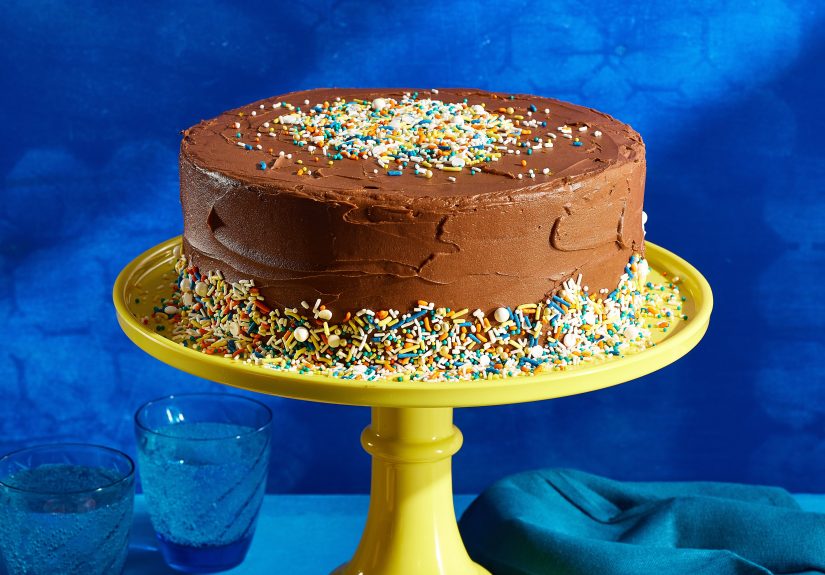
This cake is flexible enough for nearly any occasion. For birthdays, make it as a two-layer cake with chocolate buttercream and sprinkles. For potlucks, bake it in a 9-by-13-inch pan and spread frosting right on top. For a simple dessert, dust it with powdered sugar and serve with berries.
For an extra-special plate, warm a slice for 10 seconds and add a scoop of vanilla ice cream. The frosting softens, the cake becomes extra tender, and suddenly everyone at the table becomes suspiciously quiet. That is not awkwardness. That is dessert respect.
Storage and Make-Ahead Tips
Unfrosted cake layers can be wrapped tightly and stored at room temperature for one day or frozen for up to two months. Frosted cake can sit covered at room temperature for about a day if the room is cool, or it can be refrigerated for longer storage. For the best texture, let chilled cake sit at room temperature before serving.
If making the cake ahead for a party, bake the layers the day before, cool them completely, wrap them well, and frost the next day. This makes decorating easier and gives the crumb time to settle. Translation: future you will be calmer, and current you gets to feel organized for once.
Personal Experience: What Baking One-Bowl Chocolate Cake Teaches You
The first time you make a one-bowl chocolate cake, you may feel mildly suspicious. It seems too easy. You whisk dry ingredients, add wet ingredients, pour in hot liquid, and suddenly you have a batter that looks almost too thin to be trusted. Many bakers pause at this moment and wonder whether something has gone terribly wrong. It has not. That thin batter is part of the charm. It is the reason the cake bakes up soft, moist, and deeply chocolatey instead of heavy and stiff.
One of the best experiences with this cake is how forgiving it feels. You do not need professional equipment. A whisk works. A basic bowl works. A square pan works. Even if your frosting swoops are not magazine-perfect, the cake still tastes homemade in the best possible way. It has that cozy, familiar quality that makes people ask for “just a small piece” and then return with a plate that is clearly preparing for round two.
This recipe is also a great confidence-builder for new bakers. Because the steps are simple, you start noticing how ingredients behave. You see cocoa darken when hot coffee hits it. You feel the batter loosen as the liquid goes in. You learn that cake does not have to be complicated to be impressive. In fact, some of the most reliable desserts are the ones that respect your time.
Another real-life advantage is cleanup. Traditional layer cakes can leave behind bowls for dry ingredients, bowls for wet ingredients, bowls for melted chocolate, measuring cups, mixer attachments, and possibly a small feeling of regret. A one-bowl cake keeps the mess manageable. That matters when you are baking on a weeknight, cooking with kids, or making dessert after dinner because someone in the house said, “Do we have anything sweet?” in a tone that suggested cake would improve morale.
The cake also adapts beautifully to different moods. On a casual day, bake it as a sheet cake and frost it straight in the pan. For a birthday, stack it in layers and add sprinkles, candles, or chocolate curls. For a more grown-up dessert, use hot coffee, add a glossy ganache, and serve thin slices with berries. Same basic recipe, different personality. It is like the little black dress of chocolate desserts, except you can eat it.
Perhaps the most satisfying part is the reaction. One-bowl chocolate cake does not announce itself as “easy.” It just shows up tasting rich, tender, and celebration-worthy. People do not need to know you made it with minimal cleanup. That can be your secret. Or you can tell them proudly, because honestly, a cake this good from one bowl deserves applause and maybe a tiny parade.
Conclusion
One-Bowl Chocolate Cake proves that a memorable dessert does not need complicated steps or a mountain of dishes. With cocoa powder, hot coffee or water, oil, buttermilk, and a smart mixing method, you can create a moist chocolate cake that tastes rich, balanced, and completely homemade. It is easy enough for beginners, reliable enough for birthdays, and delicious enough to make your kitchen smell like excellent decisions.
Keep the method simple: whisk the dry ingredients well, add the wet ingredients, bloom the cocoa with hot liquid, and avoid overbaking. From there, you can dress it up with frosting, ganache, fruit, sprinkles, or a generous scoop of ice cream. One bowl, one cake, many happy people. That is not just efficient baking; that is chocolate diplomacy.