Table of Contents >> Show >> Hide
- Meet the Artwork: What “Still Life With a Fish” Usually Points To
- Why Picasso Took Still Life So Seriously (Even When It Looks Like Leftovers)
- So… Why a Fish?
- December 1936: Personal Turmoil, Public Fire
- Close Looking: How the Painting Builds Unease
- Materials Matter: Oil + Ripolin and the Modern “Kitchen Shine”
- The Backstory Reads Like a Noir Plot (Because It Kind of Is)
- How This Fish Still Life Fits Picasso’s Bigger Still-Life Obsession
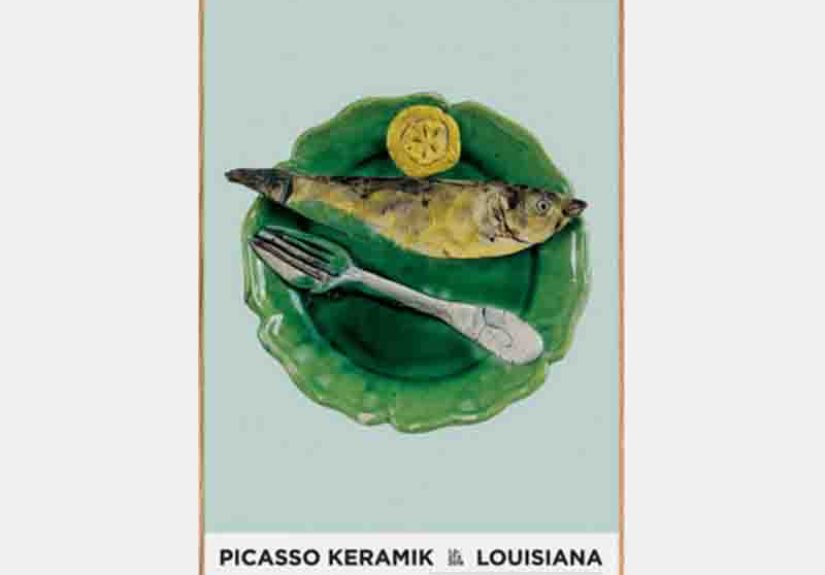
- Fish Beyond the Canvas: Picasso’s Playful Later Turns (Including Clay)
- How to Talk About “Still Life With a Fish” Without Sounding Like a Robot
- Conclusion: A Fish, a Pan, and a Masterclass in Turning the Ordinary into the Unforgettable
- of “Experience”: How to Really Spend Time with Picasso’s Fish Still Life
Picasso didn’t need a heroic subject to start a fight with tradition. Give him a tabletop, a few kitchen items, and one unlucky fish, and he’d turn dinner into a psychological drama with better lighting than most movies. That’s the sneaky power behind what’s often referred to in English as “Still Life With a Fish”a title that pops up in different translations and variations across Picasso’s work, but most memorably lands on a razor-sharp 1936 still life featuring fish alongside a frying pan.
If you came here expecting a calm bowl-of-fruit situation, Picasso has bad news for you: this is still life as tension, as autobiography, as a “why does this frying pan look like it’s judging me?” moment. Let’s break down what the work is, why it matters, and how to look at it without pretending you’re auditioning for a pretentious art documentary.
Meet the Artwork: What “Still Life With a Fish” Usually Points To
The clearest “fish still life” focal point in Picasso’s oeuvrewidely reproduced and discussed in auction scholarship and still-life studiesis the 1936 painting titled in French Nature morte. Poissons et poêle (often rendered in English as Still Life: Fish and Frying Pan, and sometimes shortened conversationally to Still Life With a Fish).
Here’s the quick ID, because Picasso fans love receipts:
- Artist: Pablo Picasso (1881–1973)
- Date: Executed in December 1936 (specifically dated 8 December 1936 on the work)
- Medium: Oil and Ripolin (a commercial enamel paint) on canvas
- Size: About 50 × 61 cm (roughly 19¾ × 24 inches)
- Subject: Fish + frying pan (and the uneasy feeling that the kitchen is not a neutral place)
Why this matters: when you anchor “Still Life With a Fish” to this 1936 work, you get a painting that’s not just about objects, but about how Picasso used objects to speaksometimes loudly, sometimes sidewaysabout desire, dread, domesticity, and a world sliding toward catastrophe.
Why Picasso Took Still Life So Seriously (Even When It Looks Like Leftovers)
Still life is basically the artist’s laboratory: you can control the lighting, the arrangement, and the drama. For Picasso, it was also a testing ground for entire visual languages. He could dismantle space, rebuild objects from angles that don’t logically coexist, and smuggle big emotions into small arrangementswithout needing to paint a single tear.
Early Cubism made still life famous for being “about” guitars, bottles, newspapers, and café culturebut really it was about how seeing works. Synthetic Cubism pushed that even further: collage, pasted materials, and the audacity to put “real” stuff into art so the painting could admit it’s a constructed thing, not a window onto reality.
A classic example is Picasso’s radical still life experiments where everyday surfaces and textures become part of the artwork’s argument: a tabletop isn’t just a tabletopit’s a stage where representation itself gets cross-examined.
So… Why a Fish?
A fish is the perfect still-life subject because it’s loaded with contradictions. It’s ordinary food and ancient symbol. It’s shiny, slippery, and hard to pin down visually. It can feel celebratory (a feast) or unsettling (a body, displayed). In Picasso’s hands, it also becomes a shape with excellent design features: curves, bones, a distinct silhouette, and a built-in sense of “this used to be alive.”
In the 1936 fish-and-frying-pan still life, the fish doesn’t behave like a polite object. It reads as present-tense. Even if you don’t buy any symbolic interpretation, the composition pushes you toward tension: the fish is vulnerable, the pan is blunt, and the whole setup feels more like a scene than a simple arrangement.
Here are a few grounded ways viewers often interpret Picasso’s fish still lifeswithout forcing a single “correct” meaning:
- Domestic realism: It’s a kitchen still lifefood, tools, and the unglamorous truth that meals involve bodies and blades.
- Psychological still life: The objects act like characters. The pan can feel aggressive; the fish can feel exposed.
- Formal experiment: Fish + pan is a gift of contrasting shapes: soft curves against hard geometry, shine against matte.
December 1936: Personal Turmoil, Public Fire
Picasso’s 1936 still lifes don’t exist in a vacuum (even if the fish looks like it’s being interrogated in one). This period is frequently described as chargedemotionally and historically. On the personal side, Picasso’s relationships and domestic arrangements were shifting, and the sense of introspection in his still lifes is often connected to that.
On the public side, Europe was already in a state of escalating crisis. Spain was in the Spanish Civil War (1936–1939), an event that would soon collide with Picasso’s art in one of the most famous political paintings of the twentieth century: Guernica (1937). The bombing of Guernica on April 27, 1937, and the international outrage that followed, became pivotal in Picasso’s wartime trajectory.
The point isn’t that a fish equals a headline. It’s that Picasso’s still lifesespecially in the late 1930soften carry the emotional pressure of a world turning dangerous. A kitchen table can become a place where anxiety sits down and refuses to leave.
Close Looking: How the Painting Builds Unease
If you stand in front of a Picasso still life like this (or study a high-quality reproduction), start with the simplest question: What am I actually seeing? Fish, pan, tabletop. Fine. Now the Picasso question: How is it put together?
1) The objects feel staged, not observed
Traditional still life often wants you to admire surfacesglassy grapes, velvety peaches, the artist flexing their ability to make paint look like light. Picasso flips that. The arrangement feels designed to communicate. The fish isn’t simply “rendered.” It’s posed.
2) Lines act like boundaries (and sometimes like bars)
Picasso’s outlines can be tender or brutal. In this kind of work, line often behaves like a fence: it separates forms, intensifies silhouettes, and makes objects feel trapped in their roles. The fish reads less like dinner and more like evidence.
3) The frying pan is not neutral
In a normal kitchen, a pan is a tool. In Picasso’s still life theater, a pan can become a shape with attitudeheavy, circular, almost emblematic. Put it near the fish and you get an instant narrative engine: contact, consequence, transformation. That’s still life turning into story.
Materials Matter: Oil + Ripolin and the Modern “Kitchen Shine”
One of the most modern (and underrated) aspects of this work is what it’s made of. Alongside oil paint, Picasso used Ripolin, a type of commercial enamel. This matters because it changes the look and the logic: enamel can read flatter, shinier, more industrialless like traditional painterly “craft” and more like a deliberate collision between fine art and the materials of modern life.
Conceptually, it’s perfect for a kitchen subject. A frying pan, a fish, a surface that feels scrubbed or slickRipolin helps the painting feel less like a nostalgic still life and more like a contemporary scene. Not romantic. Present. Slightly sharp around the edges.
The Backstory Reads Like a Noir Plot (Because It Kind of Is)
Works from Picasso’s era often come with complicated histories, and this one is no exception. Provenance records associated with the painting connect it to major twentieth-century art-world figures and to the upheavals of World War II-era looting and restitution.
One name that stands out is Paul Rosenberg, the influential dealer who played a major role in Picasso’s market and whose story intersects with the brutal art seizures of the period. Provenance trails like this don’t just tell you who owned the paintingthey tell you what kind of world the painting traveled through. It’s a reminder that “still life” objects can be calm while the artwork’s real life is anything but.
How This Fish Still Life Fits Picasso’s Bigger Still-Life Obsession
Picasso returned to still life over and over because it gave him a flexible vocabulary. A guitar could become a geometric puzzle. A bottle could become a standing figure. A skull could turn a tabletop into a meditation on mortality. Museums and exhibitions dedicated to Picasso’s still lifes repeatedly emphasize that these works aren’t side queststhey’re a central lane of his innovation.
Even when the subject matter changes, Picasso’s still lifes often share a few core moves:
- Objects as characters: A fork, a bottle, a skull, a fisheach becomes a role in a visual drama.
- Space as a construction: The table isn’t a table; it’s an invented platform where multiple viewpoints collide.
- Everyday life as high stakes: Domestic scenes carry psychological and historical weight.
Fish Beyond the Canvas: Picasso’s Playful Later Turns (Including Clay)
If the 1936 fish feels intense, Picasso’s later work shows how he could pivot from tension to playfulnesswithout ever becoming boring. In the postwar years, he made an enormous body of ceramic work in the South of France, experimenting with plates, pitchers, and forms where imagery (including animals and food motifs) could be both decorative and deeply Picasso.
When major museums in the United States showcased his ceramics, the framing often stressed the breadth and inventiveness of this phase: not a hobby, but a serious, sustained exploration of form, surface, and image. Fish imagery fits naturally hereMediterranean, iconic, and perfectly suited to plates, where “still life” becomes literal: the object is the scene.
How to Talk About “Still Life With a Fish” Without Sounding Like a Robot
If you’re writing a blog post (or explaining this painting to a friend who didn’t ask for homework), try this approach:
Start with what’s real
It’s a fish and a frying pan. It’s dated December 1936. It uses oil and enamel paint. Those are solid anchors.
Then describe what it feels like
Not “Picasso explores liminality.” More like: “This kitchen scene feels like a courtroom.” Or: “The objects look like they’re in a standoff.” Emotional clarity beats jargon every time.
Finally, connect it to the bigger Picasso story
Still life is where he tested Cubist logic, modern materials, and later, entirely new mediums like ceramics. The fish is the hook, but the real story is Picasso using humble objects to do heavyweight thinking.
Conclusion: A Fish, a Pan, and a Masterclass in Turning the Ordinary into the Unforgettable
“Pablo Picasso – Still Life With a Fish” isn’t just a titleit’s an invitation to watch Picasso transform the everyday into a psychological arena. In the 1936 fish-and-frying-pan still life, the objects feel staged, the materials feel modern, and the mood carries the pressure of its moment. It’s domestic, but not cozy. It’s simple, but not quiet.
And that’s the Picasso trick that keeps working: he takes a subject you think you already understandfood on a tableand makes you realize you were only seeing the surface. Underneath is structure, autobiography, history, and a visual language that still feels startlingly alive.
of “Experience”: How to Really Spend Time with Picasso’s Fish Still Life
If you want a more personal-feeling connection to Still Life With a Fish (without pretending you’re Picasso’s best friend from 1936), try approaching it like an experience instead of a puzzle. First: give yourself permission to react like a human. A fish next to a frying pan can feel funny, blunt, even a little dark. That reaction is part of the point. Picasso didn’t choose objects like this because they were “pretty.” He chose them because they carry meaning the way fingerprints carry identityquietly, inevitably.
Next, do the “kitchen test.” Imagine this exact setup on your own counter: fish, pan, table surface. Now ask what changes when Picasso gets involved. In real life, it’s dinner. In Picasso’s version, it becomes a stage. The pan feels heavier. The fish feels less like an ingredient and more like a presence. That shiftordinary to theatricalis a great way to understand what modern still life does. It’s not about showing off perfect technique; it’s about changing how you see the everyday.
Try a slow-looking routine that takes five minutes:
- Minute 1: Identify what you recognize. Don’t interpretjust name objects and shapes.
- Minute 2: Trace the main outlines with your eyes. Notice where line feels gentle vs. where it feels harsh.
- Minute 3: Look for “impossible space”places where the tabletop, objects, or perspective don’t behave like real physics.
- Minute 4: Notice the surface quality. Does it feel glossy, flat, industrial, scrubbed? That’s where modern materials change mood.
- Minute 5: Ask what emotion the arrangement creates: tension, humor, unease, stillness, defiancepick one and justify it visually.
If you’re a creatorwriter, designer, photographersteal one practical lesson (Picasso would approve; he famously believed good artists borrow and great artists steal, and he did plenty of borrowing). The lesson is: arrangement is storytelling. A fish alone is a fish. A fish next to a pan is a narrative. A fish next to a pan, outlined with force, painted with modern sheen, dated in a volatile momentnow you have atmosphere. You can apply that to anything: a product photo, a recipe post, a brand shoot, even a short story scene. Objects carry character when you place them like you mean it.
Finally, treat the painting like a mirror. Not “what does the fish symbolize in universal myth?” but “why does this arrangement hit me the way it does?” Picasso’s still lifes are sneaky that way: they don’t just show you a tablethey show you how quickly a familiar place can turn strange, and how much emotion can hide inside ordinary things. Once you feel that, you’re not just looking at Picasso. You’re practicing a new kind of attention.