Table of Contents >> Show >> Hide
- Why podiatrists keep name-dropping Vionic
- What “supportive shoes” actually mean (and how to spot them fast)
- The Vionic styles worth stalking on Amazon right now
- How to shop Vionic deals at Amazon without getting overwhelmed
- Fit tips: how to break them in (without breaking your feet)
- When shoes aren’t enough (and what to do instead)
- Real-world experiences: what Vionic deal-shoppers usually notice (the good, the weird, and the “oh wow”)
- Final thoughts: a smarter way to shop the sale
Your feet do a truly unreasonable amount of work. They carry you to meetings, through airports, around the grocery store, and into that “quick” errand that somehow becomes a two-hour side quest. So when a shoe brand gets labeled “podiatrist-loved,” it’s worth a closer lookespecially when those supportive styles are discounted at Amazon.
Vionic has built its reputation around comfort features that show up again and again in foot-health advice: real arch support, a stabilizing heel cup, and cushioning that doesn’t collapse into a sad pancake by lunchtime. Add in the fact that many Vionic styles have earned the American Podiatric Medical Association (APMA) Seal of Acceptance, and you’ve got a pretty strong “my feet would like to file a thank-you note” situation.
Below is a practical, podiatrist-minded guide to shopping Vionic deals at Amazonwhat makes the shoes different, which styles are worth stalking, and how to pick a pair that won’t make your toes feel like they’re riding in economy on a seven-hour flight.
Why podiatrists keep name-dropping Vionic
Let’s translate “podiatrist-loved” into plain English: the design details line up with what foot specialists typically want you to wear when your feet are cranky. Vionic centers much of its lineup around supportive technology meant to promote stable, comfortable movement, with built-in features like contoured arch support, a deep heel cup, and shock-absorbing cushioning. In other words, it’s not just “soft”it’s structured.
Supportive structure, not just squishy comfort
Many people confuse “comfortable” with “pillowy.” But ultra-soft shoes can actually make some foot issues worse if they allow too much rolling or collapse under pressure. A more supportive shoe tends to combine cushioning with stabilitythink a steady base, a secure heel, and an arch that doesn’t vanish the moment you stand up.
The APMA Seal of Acceptance: what it signals
The APMA Seal of Acceptance is awarded to products that are found to be beneficial in promoting foot health. Vionic highlights that many of its products carry the Seal, which is one reason you’ll see the brand show up in “podiatrist-approved” roundups. This isn’t a magic cure for pain, but it is a meaningful signal that the footwear is designed with foot health in mind.
What “supportive shoes” actually mean (and how to spot them fast)
If you’ve ever bought “supportive” shoes that felt amazing for 20 minutes and then betrayed you like a sitcom villain, you’re not alone. Here’s what to look forwhether you’re shopping Vionic or any comfort-forward brand.
1) A real arch (matched to your foot)
Arch support isn’t one-size-fits-all. Some people need a more pronounced arch; others do better with gentler support. A helpful rule: your arch should feel “held,” not poked. If you have plantar fasciitis or recurring heel pain, medical guidance often emphasizes supportive shoes with good arch support and cushioningespecially instead of flats or walking barefoot on hard surfaces.
2) A stable heel cup and a firm heel counter
The heel cup is the cradle that helps keep your heel centered. Stability here can reduce that sloppy side-to-side motion that makes feet work overtime. This is especially useful if you overpronate (your foot rolls inward) or if your ankles feel wobbly by the end of the day.
3) Cushioning that absorbs impact without collapsing
You want impact absorption, not marshmallow chaos. Many foot-health resources recommend shoes with thick soles, extra cushioning, and solid supportparticularly for plantar fasciitis. The goal is to reduce repetitive pounding while still keeping you aligned.
4) A toe box that respects your toes’ personal space
If your toes can’t spread naturally, your forefoot may feel pinched, and you might compensate in ways that annoy your knees, hips, and back. When you try shoes on, your longest toe should not touch the front. Your toes deserve a little room to exist without negotiating a lease.
The Vionic styles worth stalking on Amazon right now
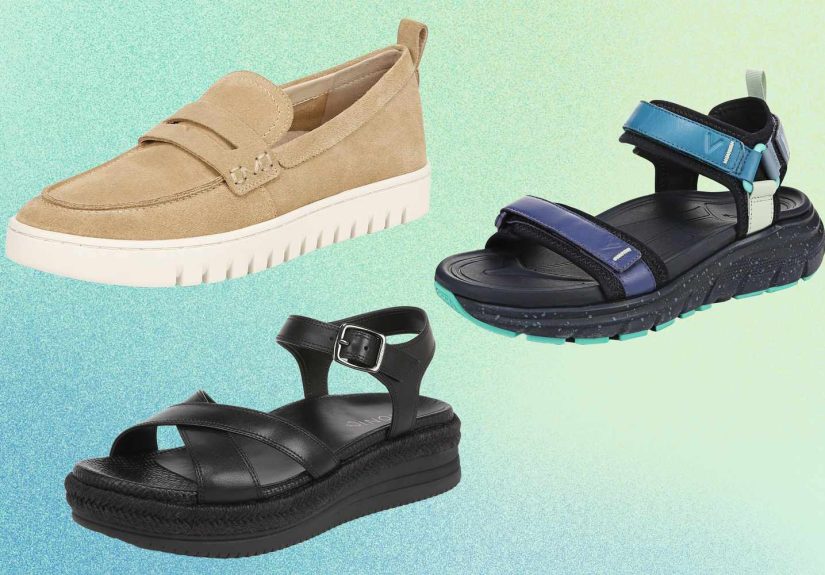
Amazon discounts can change quickly by size and color, but Vionic deals pop up frequently across categoriessneakers, loafers, flats, sandals, and slippers. If you’re shopping the sale, it helps to start with the category that matches your real life (not your fantasy life where you only walk on soft moss and never stand in line anywhere).
Supportive sneakers for everyday walking
- Slip-on sneakers: Great for errands, commuting, and “I need shoes right now” moments. Look for options with built-in arch support and a secure heel so your foot isn’t sliding around.
- Walking sneakers: These tend to be the sweet spot if you log lots of steps, travel often, or stand for work. If heel pain is part of your story, prioritize cushioning plus structure (not just softness).
- Trend-meets-support picks: Comfort trends like ballet sneakers can be a smart compromise for people who want a sleeker look without giving up support.
Loafers and flats that don’t feel like a punishment
Flats can be tricky because many are truly flatmeaning little support. Foot-health guidance often warns that very flat shoes can aggravate plantar fasciitis. If you want the look of a loafer or ballet flat, focus on pairs that include arch support and a more supportive sole. Vionic frequently shows up in deal roundups for supportive loafers and flats because it bakes those features in.
Sandals that act like real shoes (yes, really)
Warm weather doesn’t cancel foot mechanics. If you live in sandals, choose pairs with arch support, a low heel, and straps that hold the foot securelyrather than flip-flops that force your toes to grip for dear life. If you plan on lots of walking, athletic shoes may still be the better call, but supportive sandals can work well for casual days.
Slippers for hard floors and early-morning heel pain drama
If you wake up and your first steps feel like your heel is filing a complaint, consider supportive slippers. Multiple medical sources recommend avoiding barefoot walking on hard surfaces when plantar fasciitis is a concern. A supportive house shoe can reduce that harsh impact during the day’s first steps.
How to shop Vionic deals at Amazon without getting overwhelmed
Use “your problem” as the filter
Shopping gets easier when you name your goal. Here are a few common “shoe missions” and what to prioritize:
- Standing all day: stable base + cushioning + arch support + breathable upper
- Heel pain / plantar fasciitis support: arch support + thick sole + extra cushioning + supportive heel cup
- Travel: secure fit + shock absorption + easy on/off + socks-friendly interior
- Wide feet or bunions: roomy toe box + width options (if available) + soft, forgiving uppers
Check returns, sellers, and sizing notes
On Amazon, make sure you’re comfortable with the return policyespecially if you’re between sizes or testing a new style. Scan reviews for patterns (runs narrow, runs long, tight across the toes). Don’t obsess over one angry review from someone who clearly tried to hike a mountain in ballet flats.
Don’t chase the biggest discountchase the best fit
A 60% markdown is exciting… until you realize the only size left is “one foot only.” Prioritize the shoe that matches your needs first. If that style is discounted today, great. If not, Vionic deals come around often enough that patience can pay off.
Fit tips: how to break them in (without breaking your feet)
Start small: 1–2 hours, then increase
Even supportive shoes can feel “different” at firstespecially if you’ve been wearing flat, unsupportive pairs. Wear them for short stretches, then increase time over a few days. Your feet need time to adapt to better alignment, kind of like switching from a floppy mattress to one that actually supports your spine.
Use the sock test
If you plan to wear socks (or thicker travel socks), test the fit that way. A shoe that feels perfect barefoot can feel tight with socks, and toes get grumpy when they’re crowded.
Orthotics and inserts: know when to add vs. when to stop stacking
Some people do best with custom orthotics; others prefer built-in support. In general, if a shoe already has a structured footbed, adding a thick insert can make the fit too tight or change the way your heel sits. If you use orthotics, look for shoes with enough depth and a removable footbed (when possible).
When shoes aren’t enough (and what to do instead)
Supportive footwear can help reduce stress on your feet, but shoes can’t solve everything. If you have persistent heel pain, numbness, swelling, or pain that changes the way you walk, it’s worth checking in with a clinician. For plantar fasciitis, conservative care often includes supportive shoes, avoiding thin or hard soles, and targeted stretching. The big idea: don’t just “power through” if pain keeps escalating.
Real-world experiences: what Vionic deal-shoppers usually notice (the good, the weird, and the “oh wow”)
Since you’re buying online, it helps to know what people commonly experience when switching into a more supportive shoe like Vionicespecially if they’re coming from flat sneakers, flimsy sandals, or anything described as “basically a sock with hopes and dreams.”
Experience #1: The “wait, my arch exists?” moment.
Many first-time wearers notice the arch support right away. If you’ve been wearing flatter shoes, that support can feel surprisingly present at firstalmost like the shoe is giving your midfoot a polite but firm handshake. For most people, the best sign is that it feels supportive without feeling like a hard lump pressing into one spot. A common pattern is: day one feels “different,” day three feels “normal,” and by week two you start side-eyeing your older shoes like they owe you money.
Experience #2: Less end-of-day foot fatigue for “standing jobs.”
Teachers, nurses, retail workers, and event staff often describe the same victory: less foot burnout after long shifts. The reason is usually the combination of cushioning and stabilityyour feet don’t have to work as hard to keep you aligned. People who stand on hard floors especially tend to appreciate shoes with thicker soles and shock absorption, because every step is basically a tiny physics experiment.
Experience #3: Travel days feel less punishing.
Airports are a perfect storm: long walks, hard surfaces, and standing in security lines while holding your life choices. Wearers who snag Vionic sneakers on sale often call out two travel perks: (1) the shoes feel supportive even late in the day, and (2) the fit feels more secure, so there’s less foot sliding and fewer hot spots. That secure heel-and-midfoot feeling can matter when you’re rushing to a gate like it’s an Olympic event.
Experience #4: The “my heel doesn’t hate mornings as much” effect.
While shoes aren’t a medical treatment, many shoppers who are trying to be kinder to achy heels say that supportive footwearespecially supportive slippers or house shoesmakes mornings easier. This lines up with common guidance to avoid barefoot walking on hard floors when heel pain is an issue. People often describe the biggest difference at home: slipping into a supportive slipper instead of padding around barefoot can reduce that sharp, cranky first-step feeling.
Experience #5: Break-in is usually more about your feet adapting than the shoe “softening.”
With structured shoes, the materials don’t always need to “break in” as much as your gait does. Some wearers find that easing in (a couple hours the first day, then increasing) works better than going full-day immediately. If someone reports discomfort, it’s often because the fit is slightly off (too narrow, too short, not right for their arch height) rather than because the shoe is “bad.”
Experience #6: The style surprise.
People who assume supportive shoes must look “medical” are often pleasantly surprised by how normal Vionic styles can lookespecially loafers, flats, and trendy comfort hybrids. The usual reaction is: “Wait… these are the supportive ones?” That’s the sweet spot: shoes you’ll actually wear, with the features your feet have been begging for.
Experience #7: The honest downsidesupport is personal.
Not everyone loves the same arch shape. Someone with very flat feet might prefer a different style than someone with high arches, and a shoe that feels perfect to one person can feel “too much” to another. The best move is to treat Amazon’s return policy like a safety net: order the size you think you are, test indoors on a clean floor, and keep the packaging until you’re sure.
Final thoughts: a smarter way to shop the sale
If you want supportive shoes and you’d like to spend less money doing it, Vionic’s Amazon discounts are worth a look. Focus on the features that match your day-to-day lifestable heel, real arch support, cushioning that holds upand you’ll end up with a pair that feels good beyond the “ooh, it’s on sale” dopamine hit.
Your future selfstanding in line, commuting, traveling, or just doing the world’s most intense activity (walking across your kitchen)will appreciate it.