Table of Contents >> Show >> Hide
- What Does “Resonates with Me” Mean?
- How to Use “Resonates with Me” Naturally
- Grammar and Structure: “It Resonates with Me” vs. “I Resonate with It”
- “Resonates with Me” Examples You Can Steal (Respectfully)
- Alternative Phrases: What to Say Instead of “Resonates with Me”
- Tone Guide: When “Resonates with Me” Sounds Great (and When It Doesn’t)
- Common Mistakes and Quick Fixes
- How to Make Your Writing “Resonate” (Without Trying Too Hard)
- Final Thoughts
- Experiences That Make “Resonates with Me” Feel Real (500+ Words)
You’ve seen it everywhere: in comment sections, group chats, therapy memes, and the occasional corporate email that somehow manages to say nothing in three paragraphs. “That resonates with me.” It sounds thoughtful, right? Like you’re sipping iced coffee while nodding slowly at the universe. But what does it actually mean? When should you use it? And what can you say instead when you don’t want to sound like you’re auditioning for a “Brand Voice Synergy” meeting?
Let’s break down “resonates with me” in plain American Englishmeaning, grammar, tone, and the best alternativesso you can use it naturally, confidently, and without making your friends quietly mute the conversation.
What Does “Resonates with Me” Mean?
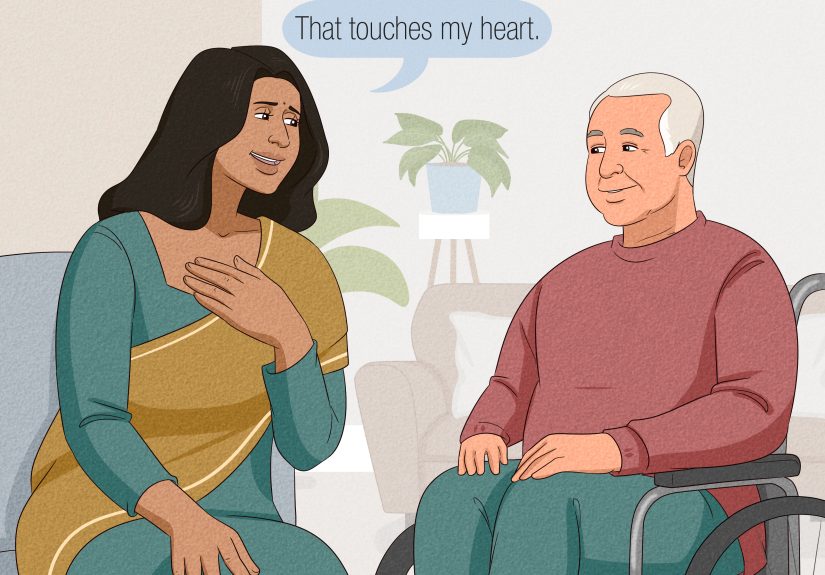
In everyday conversation, “That resonates with me” means: I feel a strong connection to that idea, story, message, or experience. It “hits” emotionally or mentally. It feels familiar, true, personal, or important in a way that sticks.
The literal meaning (the nerdy-but-useful origin)
The verb resonate originally comes from sound: something “resonates” when it vibrates or echoes with a rich, continuing tone. Think: a bell, a guitar string, or your neighbor’s subwoofer at 1:00 a.m.
The figurative meaning (how we actually use it)
Figuratively, we borrow the sound metaphor: an idea “vibrates” inside you because it matches something you’ve felt, believed, or lived through. So if someone says, “I grew up feeling like I had to be the responsible one,” and you reply, “Wow, that resonates with me,” you’re saying: “Same. I get it. That feels personal.”
In short: resonates with me = it connects with me deeplyemotionally, personally, or intellectually.
How to Use “Resonates with Me” Naturally
The phrase works best when you’re reacting to something that carries meaning: a story, a belief, a lesson, a piece of art, or someone’s experience. It’s especially useful when you want to express connection without turning the moment into a full autobiography (unless that’s the vibe).
Common real-life situations where it fits
- Personal stories: “That part about moving a lot as a kid really resonates with me.”
- Values and beliefs: “The idea of choosing progress over perfection resonates with me.”
- Work and leadership: “The feedback about clearer communication resonates with me.”
- Art, books, music: “This song resonates with me every single winter.”
- Social issues: “That message resonates with a lot of people right now.”
What makes it sound genuine (instead of “LinkedIn-core”)
The secret ingredient is simple: add one specific reason. Even a short detail makes it human.
- Vague: “That resonates with me.”
- Better: “That resonates with meespecially the part about feeling behind while everyone else looks fine.”
- Even better: “That resonates with me. I used to think I was the only one who felt that way.”
Grammar and Structure: “It Resonates with Me” vs. “I Resonate with It”
Here’s the grammar pattern you’ll see most often in standard usage:
- Most common: “It resonates with me.” (The thing affects you.)
- Also used: “I resonate with it.” (You connect with the thing.)
Which one sounds more natural in American English?
In everyday American usage, “It resonates with me” is generally the more idiomatic choice. The “thing” (an idea, message, story) is what “resonates,” and you are the person it lands with.
“I resonate with it” is understandable and increasingly commonespecially onlinebut some readers still find it a little less traditional because it flips the metaphor. (Not wrong, just a slightly different feel.)
Tense and agreement (quick and painless)
- “That resonates with me.” (present)
- “That really resonated with me.” (past)
- “If you tell it that way, it will resonate with more people.” (future/conditional)
“Resonates with Me” Examples You Can Steal (Respectfully)
Need a few ready-to-go examples that don’t sound robotic? Here are options for different tones and settings.
Casual
- “Oof. That resonates with me more than I’d like to admit.”
- “Yepthis resonates. Especially the part about overthinking texts.”
- “That resonates with me. I’ve been there.”
Supportive / empathetic
- “That resonates with me. Thanks for putting it into words.”
- “I hear youwhat you said really resonates with me.”
- “That resonates. You’re not alone in that.”
Professional (without sounding like a press release)
- “That resonates with meespecially the focus on clearer priorities.”
- “This resonates. I think the customer impact point is spot on.”
- “That feedback resonates with me, and I’m going to apply it going forward.”
Alternative Phrases: What to Say Instead of “Resonates with Me”
Sometimes “resonates with me” is perfect. Other times you want a phrase that’s more specific, more casual, or less “I read this on a motivational mug.” Here are strong alternatives, grouped by meaning.
When you mean “I relate to that”
- “I can relate to that.” (direct, friendly)
- “I’ve been there.” (empathetic)
- “I know that feeling.” (warm, validating)
- “That’s so familiar.” (casual)
When you mean “That feels true”
- “That rings true.” (clear and confident)
- “That checks out.” (casual, slightly witty)
- “That makes a lot of sense.” (neutral)
- “That’s exactly it.” (strong agreement)
When you mean “That hit me emotionally”
- “That hits home.” (classic, emotional)
- “That really got to me.” (honest)
- “I felt that.” (modern, concise)
- “That one landed.” (casual, punchy)
When you mean “That connects to a deeper theme”
- “That speaks to me.” (reflective)
- “That strikes a chord.” (musical metaphor cousin)
- “That connects with something I care about.” (clear, personal)
- “That captures what I’ve been trying to say.” (writer-friendly)
When you want to sound more specific (and less generic)
If you’re worried about sounding vague, swap in a phrase that names what connected:
- “The part about burnout really hit home.”
- “Your point about boundaries rings true for me.”
- “That story connects with my experience of starting over.”
Tone Guide: When “Resonates with Me” Sounds Great (and When It Doesn’t)
It sounds great when…
- You’re responding to something meaningful and you add a detail.
- You’re showing empathy without centering yourself.
- You’re acknowledging a message, lesson, or insight.
It sounds less great when…
- It’s used as a filler: “Thanks! This resonates.” (Resonates with what? A spreadsheet?)
- It replaces actual feedback: “Love it. Resonates.” (Okay…but why?)
- It shows up five times in one meeting: (At that point it’s not resonance, it’s a chorus.)
Tip: If you’re in a professional setting, you can keep the phrase but anchor it in action: “That resonates with me, and I’m going to adjust how I prioritize next sprint.”
Common Mistakes and Quick Fixes
Mistake 1: Using it without context
If your sentence could be copied and pasted under literally any post on the internet, it’s probably too generic. Add the “why,” even briefly.
Mistake 2: Confusing it with “agree”
“Resonate” often includes an emotional or personal component. You can agree with a statistic without it resonating. If you simply mean agreement, try: “I agree,” “That’s a solid point,” or “That makes sense.”
Mistake 3: Overusing it in formal writing
In essays or reports, “resonate” can feel vague unless you define what you mean. Consider more precise alternatives: “This aligns with…,” “This supports…,” “This reflects…,” or “This illustrates…”
Mistake 4: Treating it like a magic spell for connection
“This will resonate with everyone” is a bold claim. People are wonderfully inconsistent. If you’re writing for an audience, it’s safer (and smarter) to be specific about who and why.
How to Make Your Writing “Resonate” (Without Trying Too Hard)
The irony is that the best way to make something resonate is to stop chasing a vague “universal message” and start telling the truth clearly. Messages resonate when readers feel, “Yessomeone understands this.”
Simple techniques that create resonance
- Be concrete: Swap “hard times” for “opening your banking app and immediately closing it.”
- Show the moment: A specific scene beats a general statement every time.
- Name the feeling: “relief,” “shame,” “pride,” “uncertainty”emotion is the shortcut to connection.
- Respect the reader: Don’t over-explain. Let them meet you halfway.
- Match your audience: The same message can resonate differently depending on context and tone.
If you want a sentence that resonates, try this formula: Specific situation + honest feeling + small insight. It’s basically the emotional version of a three-point turnawkward at first, smooth once you practice.
Final Thoughts
“Resonates with me” is popular for a reason: it’s a quick, flexible way to express genuine connection. Used well, it signals empathy, recognition, and shared understanding. Used lazily, it can sound like conversational wallpaper.
Keep it human: add one detail, choose alternatives that match your tone, and don’t be afraid to say the simpler thing when it fits. Sometimes the most resonant phrase is just: “I get it.”
Experiences That Make “Resonates with Me” Feel Real (500+ Words)
You usually don’t say “That resonates with me” when you’re having a normal, average, nothing-burger moment. You say it when something unexpectedly taps you on the shoulderlike, “Hey. That’s you. That’s your life. Surprise!”
One of the most common “resonates with me” experiences happens when someone describes a feeling you assumed was just your personal glitch. Maybe a friend says, “I get weirdly anxious when my calendar is empty,” and suddenly your brain stands up and applauds. You weren’t being dramatic. You weren’t “bad at relaxing.” You were experiencing a real kind of uncertainty that other people have too. That’s resonance: not just agreement, but recognition.
Another classic moment is the “too accurate” line in a book, show, or song. You’re casually listening, minding your business, and then a lyric drops: “I keep people at a distance so I don’t have to be disappointed.” Excuse me? Who gave you access to my internal documents? That’s when “resonates” becomes the polite version of “I feel personally attacked, thank you.”
Resonance also shows up in work situationsoften when someone finally names the thing everyone has been tiptoeing around. For example: “We keep adding priorities, but we don’t remove any.” If you’ve ever watched a team try to do twelve ‘top priorities’ at once, that sentence doesn’t just make sense; it hits home. It resonates because it explains the frustration you’ve been carrying in your shoulders since Tuesday.
There’s also the quieter kind of resonance: when advice doesn’t feel like advice, but like permission. Someone says, “You don’t have to earn rest,” and you realize you’ve been treating relaxation like a reward you unlock after suffering enough. That’s not merely “good guidance.” That’s a message that touches a belief system you’ve had for years. In those moments, “resonates with me” is shorthand for “This is rearranging my furniture.”
Sometimes resonance is even more practical than emotional. A friend explains their system for managing overwhelm: “If it takes under two minutes, do it now.” You might not cry, but you might feel a sudden wave of relief because it matches how your brain actually works. The phrase resonates because it offers a solution that aligns with your realitynot an ideal version of you who wakes up early, drinks green juice, and never loses chargers.
And yes, resonance can be social. You see a post about feeling behind in life because everyone else looks like they’re thriving, and you think, “Oh, so we’re all pretending. Cool.” That’s why the phrase shows up so often online: it’s a fast way to say, “This isn’t just interestingthis is connected to my experience.” In a world where people feel isolated even while scrolling through thousands of updates, resonance becomes a tiny bridge.
Ultimately, the most authentic use of “resonates with me” is when it points to a shared frequency: the place where someone else’s words match something you’ve felt but haven’t fully named. If you add a detailwhat part, what feeling, what memoryyou turn a trendy phrase into a real moment of connection. And that, ironically, is what makes it resonate.