Table of Contents >> Show >> Hide
- Table of Contents
- Quick Verdict (Pros, Cons, Who It’s For)
- What Is Ritual, Exactly?
- Ritual Products Overview
- Ingredient Philosophy: “Notice Something Missing?”
- Benefits vs. Evidence: What You Can Realistically Expect
- Quality, Testing, and What “USP Verified” Means
- How to Choose the Right Ritual Product
- How to Take Ritual (Without Hating Your Life)
- Ritual vs. Other Multivitamins
- FAQs
- Final Take: Should You Buy Ritual Vitamins?
- Real-World Experiences (Extra Detail)
Vitamins are the adult version of “I’ll start on Monday.” You buy them with the purest intentions, take them for
three days, then they quietly move into that kitchen cabinet with the lonely chia seeds. Ritual is built
for the people who actually want to keep the streak goingclear capsules, minty scent, subscription convenience,
and a “less-but-better” formula that tries to cover common nutrient gaps without turning your daily vitamin into a
nine-tablet situation.
This review breaks down Ritual’s most popular products, what they’re designed to do, what the science can (and
can’t) promise, and how to decide if the brand fits your needs and budget. (Spoiler: it’s not a magic potion, but
it’s also not just expensive confetti.)
Friendly note: This article is for educational purposes and doesn’t replace medical advice. If you’re pregnant, nursing, taking medications, or managing a condition, ask your clinician what makes sense for you.
Quick Verdict (Pros, Cons, Who It’s For)
The short version
Ritual is a premium, subscription-friendly supplement brand best known for its clear-capsule multivitamins (Women
18+, Women 50+, Men 18+) and its life-stage formulas like Prenatal and Postnatal. The formulas are intentionally
streamlineddesigned to target nutrients many people fall short onrather than aiming to be a “kitchen sink”
multivitamin.
What people tend to like
- Transparent ingredient sourcing: Ritual leans hard into traceability and ingredient forms (like methylated B vitamins and algae-based DHA).
- Easy-to-take design: Delayed-release capsules, plus a mint or citrus tab in many products, can make the daily routine less… medicinal.
- Targeted formulas: If you don’t want megadoses or a label that reads like a novel, the minimalist approach can feel refreshingly sane.
- Third-party verification and testing: Some Ritual products carry recognized certifications (more on this below).
What people tend to dislike
- Price: It’s not drugstore-cheap. If your budget is tight, you’ll feel it.
- Not “complete” for everyone: Because it’s streamlined, it may not cover every nutrient you personally need.
- Omega-3 aftertaste is possible: Even algae-based DHA can sometimes taste or smell “fishy” to sensitive folks.
- Subscription model: Convenient for some, annoying for others (though you can typically pause/skip/cancel).
What Is Ritual, Exactly?
Ritual is a U.S.-based supplement brand that positioned itself as the anti-mystery-meat multivitamin: fewer
ingredients, clear labels, and “traceable” sourcing so you can see where key nutrients come from and why they’re
included. It’s also heavily optimized for habit-buildingmonthly delivery, minimalist packaging, and capsule
design meant to be easier on the stomach.
The brand’s whole vibe is: “We’re not here to sell you 87 ingredients you can’t pronounce; we’re here to cover
the nutrients you’re most likely missing.” Whether that’s the perfect approach or an underpowered one depends
on your diet, your life stage, and what your clinician recommends.
Ritual Products Overview
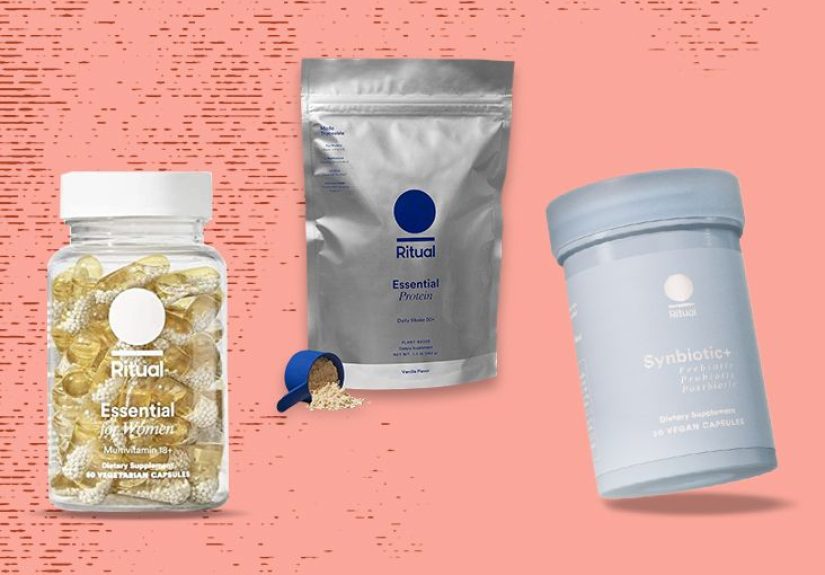
Ritual is best known for multivitamins, but the product lineup extends into gut health, skin, protein, and sleep.
Here’s the practical breakdownwhat it is, who it’s for, and what stands out.
1) Essential Multivitamins
Ritual’s core multivitamins are life-stage targeted rather than “one formula for everyone.” In plain English:
different formulas for different needs (including iron/no iron).
Essential for Women 18+
Designed for women roughly 18–49, this is Ritual’s flagship. It’s known for a targeted ingredient list that
includes vitamin D, vitamin E, methylated folate, methylated B12, iron (as a gentle chelated form), omega-3 DHA
from algae, plus supportive minerals like magnesium and boron. It also includes vitamin K2 in the formula. The
brand specifically calls out that it intentionally leaves out calcium and vitamin C (more on why
in the ingredient philosophy section).
Essential for Women 50+
A menopause/post-menopause focused formula. Compared with the Women 18+ multi, this one typically removes iron
and emphasizes nutrients associated with bone and healthy aging support (for example, vitamin D, K2, magnesium,
boron, and omega-3 DHA). If you’re not post-menopause, iron needs can differ, so this is the kind of choice worth
confirming with your clinician.
Essential for Men 18+
A streamlined men’s formula designed around similar principles: focus on common gaps and use bioavailable forms.
It’s often discussed as a good fit for men who want a simple daily baseline without a “maximalist” label.
2) Prenatal and Postnatal
Essential Prenatal
Ritual’s Prenatal includes nutrients commonly emphasized during pregnancy (think folate, DHA, and other
pregnancy-relevant essentials). Ritual also highlights delayed-release capsule design intended to dissolve in the
small intestine, plus clinical-study messaging about tolerability and certain biomarker outcomes. Practically:
it’s built for the pregnancy experiencenausea risk, sensitivity to smells, and the “I will cry if I taste one
more chalky pill” phase.
Essential Postnatal
Postpartum and lactation are their own nutrient chapter, not an epilogue. Ritual’s Postnatal is formulated for
the postpartum window and breastfeeding support, with a more expanded nutrient list than the standard multi.
3) Synbiotic+ (Gut Health)
Not a vitamin, but frequently purchased alongside them. Synbiotic+ combines prebiotics, probiotics, and a
postbiotic in one capsule, and it’s designed for daily use without refrigeration. If your gut has been
staging a daily protest, this is the product Ritual wants you to try.
4) Other Ritual supplements you might see
- Essential Protein Daily Shake: plant-based protein powder positioned for muscle recovery/strength and “clean” ingredient preferences.
- HyaCera (Skin Hydration): a beauty-focused supplement with clinically-studied ingredients for hydration and wrinkles (per brand messaging).
- Sleep BioSeries Melatonin: melatonin-based sleep support with a timed-release angle (again, per product positioning).
If you came here for vitamins, you can ignore thesebut it’s useful to know Ritual is trying to become a broader
wellness cabinet, not just a multivitamin brand.
Ingredient Philosophy: “Notice Something Missing?”
Ritual’s defining move is what it doesn’t include. Many multivitamins try to cover everything, sometimes
with tiny “label-friendly” doses that may not meaningfully change intake. Ritual takes the opposite approach:
include fewer nutrients, choose forms they argue are more bioavailable, and focus on gaps that show up commonly in
real diets.
Why Ritual leaves out calcium and vitamin C
In Ritual’s own materials, they note leaving out calcium and vitamin C “for a reason.” Translation: those
nutrients are often easier to get through food, and calcium in particular can compete with absorption of certain
minerals (and it can make capsules bigger and harder to tolerate). Whether you personally need supplemental
calcium or vitamin C is very individualizeddiet, labs, and medical guidance matter here.
The forms matter (sometimes)
Ritual frequently highlights methylated B vitamins (like methylated folate and methylated B12) and algae-based
omega-3 DHA. The “forms” conversation can be genuinely relevant for certain people (for example, those who prefer
vegan DHA sources, or who are specifically advised on folate type), but it’s also easy to get lost in marketing.
The main point: Ritual wants to be intentional about what goes in the capsule, not just how long the label looks.
Benefits vs. Evidence: What You Can Realistically Expect
Let’s talk expectationsbecause vitamins are not a personality transplant, and they won’t make your inbox empty.
The most realistic benefit of a multivitamin is helping correct or prevent nutrient shortfalls. That matters more
for some people than others.
What Ritual can plausibly help with
- Filling common gaps: vitamin D is a frequent “low” on labs, and omega-3 intake can be low in people who don’t eat fatty fish (or who avoid fish entirely).
- Life-stage coverage: prenatal/postnatal formulas can help support key pregnancy/lactation nutrient needs when diet alone is tough (hello, nausea and food aversions).
- Consistency: a “pleasant” vitamin you actually take beats a perfect formula that lives unopened in a drawer.
Biomarkers: the strongest claim you’ll see
Ritual has promoted clinical-trial results showing increased vitamin D and omega-3 DHA levels after consistent use
of its Women 18+ multivitamin over about 12 weeks. That’s meaningful in a limited but real way: if you take a
vitamin containing D and DHA, your blood levels can rise. The key nuance is that improved biomarkers don’t
automatically translate into dramatic health outcomes for everyoneespecially if you weren’t deficient to begin
with.
What the bigger research landscape says about multivitamins
Major evidence reviews and preventive health guidance have generally found limited benefit for vitamin/mineral
supplementation in preventing chronic diseases for the general population, with some areas of uncertainty and
exceptions depending on nutrient, population, and baseline deficiency. In other words: multivitamins are most
compelling as a “nutrient insurance policy” for gapsnot as a guaranteed shield against heart disease or cancer.
Quality, Testing, and What “USP Verified” Means
Supplements live in a weird regulatory universe: they’re widely available, but they don’t go through the same
pre-market approval process as prescription drugs. That’s why third-party verification and quality standards are
a big deal in the supplement world.
FDA reality check (why third-party testing matters)
In the U.S., manufacturers are responsible for ensuring dietary supplements are not adulterated or misbranded,
and the FDA does not generally approve dietary supplement labeling/claims before products go to market. That
doesn’t mean supplements are “wild west,” but it does mean consumers benefit from reputable brands and credible
quality verification.
USP Verified: what it signals (and what it doesn’t)
When a supplement carries the USP Verified mark, it indicates the product has been independently
evaluated for things like: containing the ingredients listed on the label in the declared potency, not having
harmful levels of certain contaminants, and being made according to good manufacturing practices. It’s not a
stamp that the product will “work miracles,” but it is a meaningful quality signal in a category where quality
varies.
Ritual’s approach to testing and traceability
Ritual emphasizes batch testing and third-party testing for things like identity, purity, and contaminants, plus
supply-chain visibility. The practical value here is confidence: you’re paying for a product that’s trying to be
measurable and verifiable, not mysterious and vibes-based.
How to Choose the Right Ritual Product
Here’s a simple way to decide without needing a PhD in Supplement Label Interpretation:
Step 1: Pick by life stage
- Women 18–49: Women 18+ is the “baseline” multi with iron.
- Post-menopause: Women 50+ is designed for that stage and typically excludes iron.
- Men 18–49: Men 18+ is the targeted baseline for men.
- Pregnant or trying to conceive: Prenatal is built for pregnancy needs (and tolerability).
- Postpartum/breastfeeding: Postnatal targets that specific window.
Step 2: Check “iron yes or no” (this matters more than most people think)
Iron can be helpful for people who need it and annoying (or unnecessary) for people who don’t. If you’re unsure,
this is a great place to use labs and medical advice rather than internet guesswork.
Step 3: Consider diet patterns
- Vegan/vegetarian: Ritual’s algae-based DHA and vegan-friendly positioning can be attractive if you avoid fish.
- Low dairy: If you don’t consume much dairy, calcium and vitamin D status deserve attention (but Ritual’s multivitamins intentionally don’t include calcium).
- Restricted diets: If you’re very limited in food variety, you may want a broader-spectrum multivitaminor clinician-guided supplementationrather than a minimalist formula.
Step 4: Medication and condition check
If you take anticoagulants (blood thinners), thyroid medication, certain antibiotics, or you have conditions like
kidney disease, your clinician may recommend specific dosing or timingor avoiding certain nutrients. Vitamins
can interact with medications, especially minerals and vitamin K.
How to Take Ritual (Without Hating Your Life)
Ritual’s capsules are designed to be taken daily, usually in a small number of pills (often two capsules for many
multivitamin formulas). A few practical tips can make the experience smoother:
- Take with food if you’re sensitive: Iron and omega-3s can be rough on an empty stomach for some people.
- Don’t panic if you notice a smell: Some people perceive a fishy note even with algae-based DHA; the mint/citrus tab helps, but your nose might still have opinions.
- Be consistent: If you’re using it to improve nutrient status, “most days” beats “heroically once a week.”
- Use the subscription to your advantage: If you’re forgetful, auto-delivery can help. If you’re not, set it to pause/skip so you don’t become a vitamin hoarder.
Ritual vs. Other Multivitamins
The easiest way to compare multivitamins is to ask: Do you want targeted or comprehensive?
If you want targeted (Ritual’s lane)
Ritual’s approach makes sense if you:
- prefer fewer ingredients in meaningful forms,
- care about traceability and third-party verification,
- already eat a reasonably balanced diet,
- want a vitamin you’ll actually take consistently.
If you want comprehensive (not Ritual’s main goal)
Some people genuinely do better with a broader-spectrum multivitamin/mineralespecially if diet variety is low,
absorption is an issue, or a clinician has identified multiple deficiencies. In those cases, you might compare
Ritual with more “complete” multis from well-established brands that also emphasize quality testing.
FAQs
Are Ritual vitamins actually “worth it”?
“Worth it” depends on what you value. If you care about ingredient sourcing transparency, third-party verification,
and habit-friendly design, Ritual can justify its premium price. If you just want basic coverage at the lowest
cost, you’ll likely find cheaper options.
Will Ritual make me feel different?
Maybebut not always. If you’re correcting a deficiency (like low vitamin D) or your diet is missing key nutrients,
you may notice benefits over time. If your diet is already strong and your nutrient status is normal, you might
feel no dramatic changeand that’s not a failure; it’s biology being boring and responsible.
Can I take a prenatal vitamin if I’m not pregnant?
It’s not automatically dangerous, but it’s not always appropriateprenatals can contain higher amounts of certain
nutrients (like iron) that some people don’t need. If you’re trying to conceive, pregnant, or breastfeeding,
prenatal/postnatal formulas may be appropriate. Otherwise, talk to a clinician before using a prenatal as your
everyday multivitamin.
Is Ritual good for vegans?
Many Ritual formulas emphasize vegan-friendly choices (like algae-based DHA). But “good for vegans” also depends
on what your diet lackssome vegans may need additional nutrients not emphasized in a minimalist multivitamin.
What’s the biggest downside to Ritual?
Price and minimalism. You’re paying for a curated formula, verification, and brand transparencybut if you need a
more comprehensive nutrient panel, you may end up supplementing on top of your supplement (which is both
expensive and faintly ironic).
Final Take: Should You Buy Ritual Vitamins?
Ritual isn’t trying to be the multivitamin that does everything. It’s trying to be the multivitamin you’ll
actually takebuilt around common nutrient gaps, transparent sourcing, and quality signals that matter in a
category where standards vary.
If you’re the kind of person who values simplicity, traceability, and third-party verificationand you want a
habit you can stick withRitual is a strong contender. If you want the lowest cost, the most comprehensive
formula, or you have complex medical needs that require precise dosing, it’s worth comparing other options and/or
working with your clinician on a targeted plan.
Bottom line: Ritual can be a smart, premium “nutrient gap” choiceespecially for people who want clean, verified,
habit-friendly supplementation. Just don’t expect it to replace a balanced diet, good sleep, and the radical act
of drinking water like a responsible mammal.
Real-World Experiences (Extra Detail)
Below is a “day in the life” style look at what taking Ritual often feels like in practicebased on commonly
reported themes from reviewers, dietitians, and typical supplement user behavior. Think of this as the
experience layer: the part that rarely makes it onto the Supplement Facts label but absolutely determines
whether you’ll keep taking something past day four.
The first week: the “Wait… this doesn’t taste terrible?” moment
A lot of multivitamins fail the simplest test: they’re hard to swallow, smell like a tackle box, or come with
enough burps to power a small accordion band. Ritual’s design aims to make the first impression more pleasant.
Many people notice the mint tab (or citrus scent in prenatal-style formulas) immediately, and the clear capsules
can feel less intimidating than large opaque tablets. The “two capsules daily” routine is also psychologically
manageablesmall enough to remember, big enough to feel like you’re doing something.
That said, omega-3 DHAyes, even algae-basedcan still create a lingering “ocean-adjacent” aftertaste for some
users, especially if taken on an empty stomach. If you’re sensitive, taking it with food is often the
difference between “this is fine” and “why is my mouth haunted by a ghost salmon?”
Weeks two to six: the reality check (and the habit test)
Most people don’t feel a dramatic “vitamin high.” And that’s normal. The more realistic wins are subtle:
confidence that you’re covering a gap, fewer missed doses because the routine is easy, and (for some) improved
tolerance compared with harsher formulas. This is also where the subscription model either becomes your best
friend or your personal villain.
If you love routines, monthly delivery feels like a helpful nudgeone less errand, one less “I ran out and now I
give up.” If you hate subscriptions, you may feel mildly annoyed even if the product is solid. The good news is
that flexible controls (pause, skip, adjust delivery) can prevent you from accidentally building a vitamin tower
that future archaeologists will label “Late Capitalism, Early 21st Century.”
Months two to three: where evidence and expectations meet
If you’re using Ritual primarily to improve nutrient status, this is the window where labs and biomarkers can
start to reflect consistencyespecially for nutrients like vitamin D or omega-3s. Some people choose to confirm
this with blood work (often through a clinician) rather than relying on “I feel different” as the only measure.
That’s a smart move because energy, mood, and sleep are influenced by a thousand thingsvitamins are just one
supporting actor, not the entire cast.
For pregnant users, experience tends to hinge on tolerability. Prenatal vitamins can be notorious for nausea,
and people frequently experiment with timing (morning vs. night), taking them with food, and avoiding them on an
already queasy stomach. A prenatal that is “gentler” can matter a loteven if the formula isn’t the most
comprehensive on paperbecause the best prenatal is the one you can reliably keep down.
Long-term use: why people stay (or leave)
People who stick with Ritual long-term often cite a few recurring reasons: trust in traceable sourcing, the
simplicity of a curated formula, third-party verification signals, and a taking experience that doesn’t feel like
a punishment. People who leave typically leave for one of three reasons: cost, wanting a more comprehensive
formula, or deciding they’d rather target specific nutrients based on labs (for example, taking vitamin D alone
if that’s the only consistent gap).
The most honest long-term takeaway is this: Ritual won’t replace food, sleep, and basic health habitsbut it can
be a well-designed tool for people who want consistent, verified supplementation without the clutter. If that’s
your goal, the experience tends to feel supportive rather than burdensome, which is basically the highest praise
any routine can earn.