Table of Contents >> Show >> Hide
If you love hummus, Moroccan food, or just the feeling of turning a bag of humble chickpeas into
something that tastes like a cozy hug, you’re going to get along very well with serrouda.
This traditional Moroccan chickpea puree is silky, gently spiced, and surprisingly simple:
just chickpeas, onion, saffron, a touch of turmeric, salt, pepper, and good olive oil or butter.
Depending on how much liquid you add, you can serve it thick as a dip or looser as a comforting
Moroccan chickpea soup.
Serrouda is everyday food in the best sense of the phrase. It shows up at breakfast with warm bread,
at lunch next to grilled meats, or at night as a soothing bowlful when you’re tired and want something
nutritious that doesn’t make a fuss. Think of it as hummus’s Moroccan cousin: a little warmer in flavor,
a little more rustic, and incredibly versatile.
What Is Serrouda?
Serrouda is a traditional Moroccan recipe in which dried chickpeas are soaked, peeled, and simmered
with onion and spices like saffron, turmeric, salt, and black pepper until very soft. The mixture is
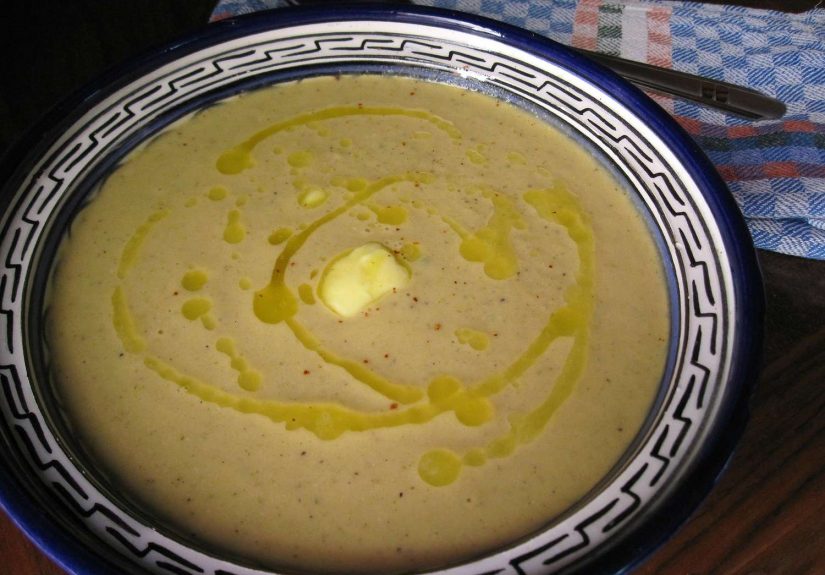
then blended into a smooth puree and finished with a drizzle of olive oil or a knob of butter. Some cooks
dust the top with cayenne or paprika and a pinch of cumin for extra warmth and aroma.
The texture is luxurious and creamy without any dairy, which makes serrouda naturally vegetarian
and, if you use oil instead of butter, vegan. In Morocco, it’s enjoyed either as:
- A thick chickpea dip served with flatbread or crusty bread for scooping.
- A thin, spoonable puree closer to a simple chickpea soup, especially at breakfast or on cool days.
Chickpeas (known as pois chiches in French and hummus in Arabic) are a staple in Moroccan cooking,
showing up in stews, salads, and other purees like bessara. Serrouda fits right into that family of
hearty, protein-rich dishes that keep you full for hours.
Ingredients for Serrouda
Traditional serrouda uses a short, honest ingredient list. Here’s what you’ll need for about
4 servings as a side or 2–3 generous bowls as a main:
Core Ingredients
- Dried chickpeas – About 1 1/2 cups dried (roughly 4 cups once soaked and peeled). Canned chickpeas work in a pinch, but the flavor and texture of dried are closer to the traditional dish.
- Onion – One medium, coarsely chopped. Yellow or white onion are both fine.
- Saffron threads – A pinch, crumbled. This brings gentle floral notes and a golden color.
- Turmeric – Just a pinch for color and warmth.
- Salt and black pepper – Essential for seasoning the cooking liquid and final puree.
- Olive oil or butter – To enrich the puree and drizzle on top before serving.
Optional Flavor Boosters
- Cumin – A classic Moroccan spice that pairs beautifully with chickpeas.
- Cayenne or paprika – For a gentle kick and a pretty red dusting on top.
- Garlic – Not always traditional, but a clove or two can add depth if you love garlic.
- Vegetable or chicken broth – Instead of water, for a slightly richer “chickpea soup” style serrouda.
This recipe is naturally gluten-free and full of plant-based protein and fiber, making it a smart addition
to your weekly meal rotation.
Step-by-Step: How to Make Serrouda
1. Soak and Peel the Chickpeas
The only “inconvenient” part of serrouda is also its secret weapon: peeling the chickpeas.
Start by rinsing the dried chickpeas, then soak them overnight (8–12 hours) in plenty of water.
The next day, drain, rinse, and gently rub them between your palms or in a clean dish towel.
Many skins will slip right off; pick them out and discard.
Peeling is optional if you’re short on time, but removing the skins gives you a noticeably smoother,
silkier pureemore like a restaurant-style hummus than a rustic mash.
2. Simmer with Onion and Spices
Add the soaked (and ideally peeled) chickpeas to a large pot with:
- The chopped onion
- A pinch of saffron threads, crumbled in your fingers
- A pinch of turmeric
- Salt and black pepper
- Enough water or broth to cover the chickpeas by about 2 inches
Bring to a boil, then reduce to a gentle simmer. Cook until the chickpeas are very tender
you should be able to press one easily between your fingers. This may take 60–90 minutes on the stove,
less in a pressure cooker or Instant Pot.
3. Puree Until Silky
Once the chickpeas are soft, remove the pot from the heat. Use an immersion blender directly in the pot,
or transfer the mixture in batches to a blender. Puree until completely smooth. If the mixture looks too thick,
add a splash more hot water or broth. If you prefer a thick dip, keep the liquid on the lighter side.
Taste and adjust salt and pepper. This is also a good time to add a pinch of ground cumin if you’d like
more earthy depth.
4. Finish with Fat and Heat
Ladle the serrouda into bowls or a wide serving dish. Drizzle generously with olive oil or dot with small
pieces of butter that will melt into the hot puree. Sprinkle the surface lightly with cayenne or paprika
and another pinch of cumin or black pepper, if you like a stronger spice note.
Serve immediately while warm, with bread for dipping or spoons for scooping. If it thickens as it sits,
you can whisk in a bit more hot liquid to bring it back to a smoother, soupier consistency.
How to Serve Serrouda
One of the best things about this Moroccan chickpea puree recipe is how flexible it is at the table.
Here are a few classic and fun ways to enjoy it:
-
As a breakfast bowl – Serve warm in deep bowls with a drizzle of olive oil, a dusting of cumin and
paprika, and plenty of fresh bread. It’s high in protein and fiber, so it keeps you full for hours. -
As a dip or mezze – Present serrouda in a shallow dish, garnish with olive oil and spices,
and surround it with pita wedges, flatbread, or raw veggies. It’s a great alternative to hummus on a mezze platter. -
As a soup starter – Thin it with extra broth until it reaches a smooth, velvety soup consistency.
Add a squeeze of lemon and a sprinkle of chopped cilantro or parsley for brightness. -
Alongside grilled meats or roasted vegetables – Use it like a creamy, protein-rich side dish.
A spoonful of serrouda next to roasted carrots, lamb skewers, or spicy chicken is a beautiful combination.
If you’re cooking for guests, you can present serrouda in a colorful Moroccan-style bowl,
swirl the top with a spoon, then drizzle olive oil in a spiral and finish with a pinch of paprika.
It looks like you tried very hard. Only you and the chickpeas know the truth.
Variations and Flavor Twists
Traditional serrouda is intentionally simple, but you can play with the formula without losing its soul.
Try one of these twists:
-
Garlic & lemon serrouda – Add 1–2 cloves of garlic to the pot and finish the puree
with a squeeze of lemon juice for a brighter, tangier flavor. -
Smoky paprika version – Use smoked paprika instead of regular for a subtle grilled note that
pairs well with roasted vegetables. -
Extra-creamy serrouda – Stir in a spoonful of tahini or a splash of cream (not traditional,
but delicious) for an even richer texture. -
Spicy harissa swirl – Top each bowl with a tiny dollop of harissa stirred into a bit of olive oil.
This adds heat and a gorgeous red streak across the pale puree.
If you’re balancing a menu of Moroccan dishes, serrouda sits nicely next to other chickpea-based recipes,
chickpea stews, or breads made with chickpea flour such as kalinti and chickpea flatbreads.
Nutrition and Benefits
Serrouda is one of those recipes that feels like comfort food but quietly acts like health food.
Chickpeas are packed with plant-based protein, fiber, and minerals like iron, magnesium, and potassium.
A serving of chickpea puree can help keep blood sugar steadier, support digestion, and keep you satisfied
longer than a simple carb-heavy breakfast.
Using olive oil instead of butter keeps the dish dairy-free and boosts heart-healthy monounsaturated fats.
Spices like turmeric and saffron may add small antioxidant and anti-inflammatory benefits, making the bowl
feel nourishing in more ways than one.
Make-Ahead, Storage, and Reheating Tips
Serrouda is a perfect make-ahead recipe for busy weeks:
- Refrigerator: Store in an airtight container for up to 4 days.
- Freezer: Freeze in smaller containers for up to 2–3 months. Thaw overnight in the fridge before reheating.
- Reheating: Warm gently on the stove over low heat, adding a bit of water or broth if it becomes too thick. Stir frequently to avoid scorching.
- Texture rescue: If the puree separates or looks grainy after freezing, hit it with the immersion blender again and add a drizzle of olive oil.
You can also cook a large batch of chickpeas once and portion them out for multiple recipes:
serrouda one night, salad or stew another, and chickpea soup on the weekend. Your future self will be grateful,
and your pantry will feel mysteriously organized.
Common Questions About Serrouda
Can I use canned chickpeas?
Yes, you can make a quick version of serrouda with canned chickpeas. Rinse and drain them well, cook them briefly
with the onion, saffron, turmeric, salt, and pepper, then puree. The texture will be slightly different and you
won’t need as long a simmer, but it still makes a satisfying Moroccan-inspired chickpea puree when you’re short on time.
Do I really have to peel the chickpeas?
Not absolutely, but if you’re after a velvety, restaurant-smooth puree, peeling helps a lot.
For a more rustic texture, you can skip the peeling step. The flavor will still be wonderful.
Is serrouda the same as hummus?
No, but they are cousins. Hummus typically includes tahini and lemon and is usually served as a cold dip.
Serrouda is generally served warm, seasoned mainly with saffron, turmeric, and basic spices, and can easily
cross from dip to soup territory. Moroccan kitchens have their own chickpea soups and dips, such as chickpea
soups with broth and spices, but serrouda stands out for its simplicity and saffron aroma.
Experiences and Serving Ideas with Serrouda (Extra Inspiration)
Once you’ve made serrouda a couple of times, you start to realize how adaptable it is to real life
not just to perfect recipe photos. Here are some experience-based ideas and scenarios where this
Moroccan chickpea puree recipe shines.
Weeknight Rescue Meal
Picture this: you come home, you’re tired, and the only exciting thing in your fridge is a jar of pickles.
But you do have dried chickpeas in the pantryor a couple of cansplus an onion and spices. In less time than
it takes to order delivery and regret it, you can have a pot of warm serrouda on the stove and bread toasting
in the oven.
The trick is to think of serrouda as a base. Add a squeeze of lemon, scatter some chopped herbs, maybe top it
with a few roasted vegetables or leftover shredded chicken, and suddenly you have a complete bowl meal.
It’s also the kind of dish that makes a plain salad and some olives feel like a real dinner.
The Crowd-Pleaser at Potlucks
If you’ve ever taken hummus to a potluck and watched it disappear in 10 minutes, serrouda is your next
upgrade. Make the puree thicker so it holds up on a plate, drizzle with plenty of olive oil, and decorate
with a zigzag of harissa, a sprinkle of paprika, and maybe a few whole chickpeas on top.
People will ask, “Is this hummus?” and you get to say, “Sort of, but Moroccanand with saffron.”
Congratulations, you are now the interesting food person at the party.
Breakfast with a Moroccan Twist
In many Moroccan homes, chickpeas and other legumes show up at breakfast as warm, savory dishes served with bread.
Try serving warm serrouda in small bowls with a drizzle of olive oil and a pinch of cumin, alongside
sweet mint tea and simple toppings like olives, hard-boiled eggs, or fresh tomatoes. It’s a completely
different vibe from sugary cereal and coffee, and it keeps you satisfied through a busy morning.
Kid-Friendly Comfort Food
If you have picky eaters who aren’t thrilled by visible beans or vegetables, serrouda can be a quiet hero.
Its smooth texture is similar to mashed potatoes or a creamy soup, and you can keep the spices mild.
Serve it with toasted pita triangles and invite kids to “dip and scoop.” Sometimes giving food a fun name
“golden chickpea dip”is all it takes to make a new dish less intimidating.
Date-Night but Make It Cozy
For a low-key date night at home, serrouda works beautifully as a starter. Serve it in a shallow bowl,
garnish with chili oil or smoked paprika, and set it next to olives, marinated feta, roasted peppers,
and warm bread. You get all the charm of a mezze spread with very little last-minute stress, because the
puree holds well and reheats easily.
Meal Prep Magic
Cook a big batch of chickpeas over the weekend and divide them three ways: one portion becomes serrouda,
another goes into a salad, and the last one becomes a stew later in the week. Because serrouda freezes
well, you can keep a “chickpea emergency kit” in your freezer. Future-you, staring into the fridge on
a Thursday night, will be very grateful.
However you serve itdip, soup, breakfast, or party snackserrouda captures the heart of Moroccan home
cooking: simple ingredients, slow gentleness on the stove, and flavors that make you want to tear off
another piece of bread and go back for one more bite.