Table of Contents >> Show >> Hide
- The Short Answer: Usually Leave It Alone
- Why Blisters Happen in the First Place
- When You Should Not Pop a Blister
- When It May Be Okay to Drain a Blister
- How to Drain a Blister More Safely
- Signs Your Blister Might Be Infected
- Blisters You Should Treat Differently
- How to Help a Blister Heal Faster
- How to Prevent Blisters in the Future
- So, Should You Pop a Blister?
- Experience-Based Examples: What People Often Learn the Hard Way
Blisters are the skin’s version of bubble wrap: annoying, oddly fascinating, and surprisingly good at protecting what is underneath. If you have ever stared at one on your heel and thought, “This thing has ruined my day, and I would like revenge,” you are not alone. The big question is whether popping a blister is smart first aid or just a shortcut to a bigger mess.
In most cases, the answer is simple: no, you should not pop a blister. An intact blister acts like a natural bandage. The skin on top helps shield the raw, tender layer underneath from bacteria, friction, and further injury. That said, life is not always neat. Some blisters are large, painful, and sitting in exactly the spot where every step feels like a personal insult. In those cases, careful draining may be reasonable.
This guide breaks down when to leave a blister alone, when draining may make sense, how to do it more safely, and when a blister is your cue to call a healthcare professional instead of playing home dermatologist.
The Short Answer: Usually Leave It Alone
If your blister is small, closed, and not too painful, the best move is usually to protect it and let it heal on its own. That fluid-filled pocket is not there to ruin your weekend for fun. It is there to cushion damaged skin and create a protected space for healing.
When people pop a blister too early, they remove that natural barrier. Once the blister roof tears away, the sensitive skin underneath is exposed. That can mean more pain, more rubbing, and a higher risk of infection. So while popping may feel satisfying for about six seconds, the aftermath can be much less charming.
Why Blisters Happen in the First Place
Most everyday blisters happen because of friction. Your shoe rubs your heel, your rake handle grinds against your palm, or your new sandals decide they are enemies of peace. Repeated rubbing causes the upper layers of skin to separate, and fluid collects in the space between them.
But not all blisters come from shoes or tools. They can also be caused by:
- Minor burns and sunburns
- Cold sores caused by herpes simplex virus
- Allergic reactions or skin irritation
- Dyshidrotic eczema, which often causes tiny itchy blisters on hands and feet
- Blood trapped under the skin after pinching or impact, creating a blood blister
- Less common autoimmune or inherited blistering disorders
That is why the question is not just “Should I pop it?” but also “What kind of blister is this?” A friction blister on your heel is very different from a cluster of painful blisters on your lip or unexplained blisters that keep showing up.
When You Should Not Pop a Blister
There are plenty of situations where the best policy is a hard no.
1. The blister is small and intact
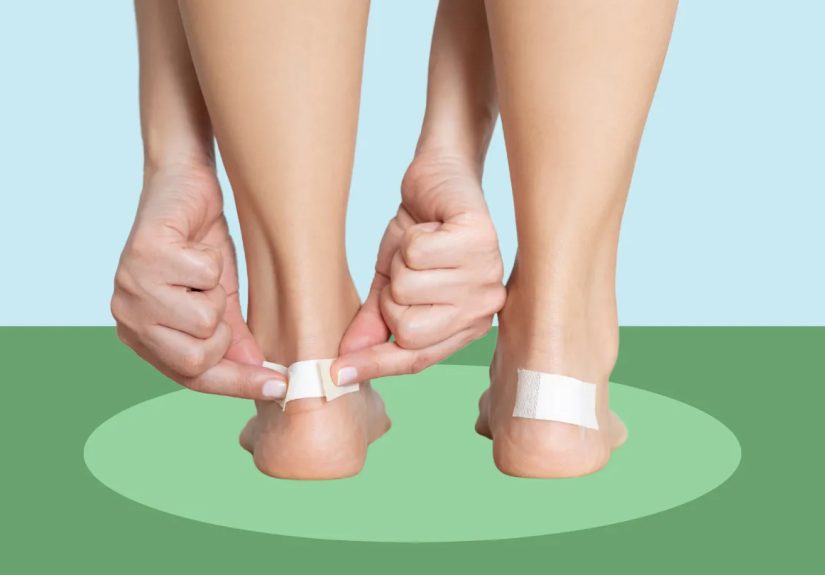
If it is not causing major pain and is still closed, cover it and leave it alone. Use a bandage, blister pad, or moleskin to reduce rubbing. If the blister is on your foot, changing shoes or socks may matter more than anything else.
2. It is a burn or sunburn blister
Burn blisters and sunburn blisters are usually better off unpopped. They help protect injured skin while it heals. If one breaks on its own, keep the area clean and covered, but do not peel away the top skin just because it looks ragged.
3. It is a blood blister
Blood blisters can look dramatic, but they often heal without being opened. Popping them can increase the risk of infection and irritation. Unless one is extremely large or directed otherwise by a clinician, it is usually smarter to protect it and wait.
4. You do not know what caused it
If the blister appeared without obvious friction, heat, or minor trauma, pause before touching it. Unexplained blisters can be related to infections, eczema, medication reactions, or autoimmune skin problems. A needle is not a diagnosis.
5. You have diabetes, poor circulation, or reduced sensation
If you have diabetes, neuropathy, or circulation problems, especially in your feet, do not casually self-treat a blister. What looks small can become a bigger wound if healing is slow or you do not notice early signs of worsening. In these cases, a healthcare professional should guide treatment.
When It May Be Okay to Drain a Blister
Now for the gray area. If a blister is large, very painful, or likely to burst on its own because of where it sits, careful draining may help reduce discomfort. Think of the giant heel blister that makes walking feel like you are stepping on a hot marble every three seconds.
Even then, the goal is not to rip the blister open like a party balloon. The goal is to drain the fluid while keeping the overlying skin in place. That top layer still protects the healing skin beneath it.
A common real-world example is a runner who develops a large friction blister on the back of the heel the day before work, errands, and general adult responsibilities. If every step is forcing the blister to swell and threaten to pop inside a shoe anyway, sterile draining may be more practical than pretending gravity and life plans do not exist.
How to Drain a Blister More Safely
If you decide a blister truly needs draining, do it carefully. “Carefully” is doing a lot of work here.
Step 1: Wash your hands and the blister
Use soap and water. Clean skin lowers the chance of pushing germs into the area.
Step 2: Sterilize a small needle
Use rubbing alcohol on the needle. Do not use a random pin from the junk drawer and hope for the best.
Step 3: Puncture the edge, not the center
Make a small hole near the edge of the blister so the fluid can drain. You may need one or two tiny openings.
Step 4: Let the fluid out gently
Apply light pressure with clean gauze. Do not tear off the roof of the blister. Leave that skin flap in place.
Step 5: Protect the area
Apply a thin layer of petroleum jelly or follow the advice of your healthcare professional about whether an ointment is appropriate. Then cover the blister with a clean, nonstick bandage.
Step 6: Change the dressing daily
Keep it clean and dry. If the dressing gets sweaty, dirty, or soaked, change it sooner.
If the overlying skin becomes dead, loose, and obviously dirty later on, some people are told to trim it with clean scissors. But if you are unsure, or the blister is on a high-risk area like the foot in someone with diabetes, let a clinician make that call.
Signs Your Blister Might Be Infected
A blister should gradually become less painful, not more dramatic. Watch for these signs that it may be infected:
- Increasing redness around the blister
- Warmth, swelling, or throbbing pain
- Pus or cloudy yellow-green drainage
- Bad odor
- Fever or chills
- Red streaking or rapidly worsening tenderness
If you notice any of those symptoms, do not keep experimenting at home. Get medical advice promptly.
Blisters You Should Treat Differently
Cold sore blisters
These are caused by a virus, not friction. Popping them will not solve the problem and may spread the virus to other areas or other people. Cold sores are better managed with good hygiene and, in some cases, antiviral treatment.
Dyshidrotic eczema blisters
These tiny, itchy blisters often show up on the hands or feet and can be linked to eczema, moisture, allergens, or stress. They are not the same as a shoe blister, and treatment often focuses on calming inflammation rather than draining fluid.
Autoimmune blistering conditions
If you develop repeated, widespread, or painful blisters without a clear cause, especially on the skin or inside the mouth, get evaluated. Conditions such as pemphigus vulgaris, bullous pemphigoid, or dermatitis herpetiformis need medical care, not home puncture techniques.
How to Help a Blister Heal Faster
You cannot force skin to heal on your personal schedule, but you can stop making things worse.
- Reduce friction by changing shoes, gloves, socks, or activity
- Use cushioning such as moleskin or padded blister bandages
- Keep the area clean and dry
- Do not peel off blister skin
- Protect broken blisters with a nonstick dressing
- Give weight-bearing blisters a break when possible
Most simple friction blisters improve over a few days. A blood blister may take about a week or so. If a blister is not healing, keeps reopening, or starts looking angry, that is your sign to stop self-managing and get help.
How to Prevent Blisters in the Future
Blister prevention is not glamorous, but it works. A few small changes can save you from limping around like you just lost a duel with your loafers.
Choose shoes that fit
Shoes that are too tight create pressure. Shoes that are too loose create rubbing. Both are basically blister internships.
Wear moisture-wicking socks
Sweaty skin is more vulnerable to friction. Dry feet are happier feet.
Break in new shoes gradually
Do not buy new boots and then immediately take them on a heroic ten-mile walk unless you enjoy preventable suffering.
Use protective barriers early
If you know your heel or toe is a problem spot, use moleskin, tape, or blister pads before the rubbing starts.
Use gloves for repetitive hand work
Gardening, raking, rowing, lifting, and home improvement projects can all create hand blisters. Gloves are cheaper than regret.
So, Should You Pop a Blister?
Usually, no. Most blisters heal best when they stay intact and protected. If a blister is small and manageable, cover it and let your skin do its job.
If a blister is large, very painful, and almost certain to burst from continued friction, careful draining may be reasonable. But the key is to do it cleanly, gently, and without removing the top layer of skin.
And if the blister is from a burn, keeps coming back, looks infected, or appears in the setting of diabetes, poor circulation, or unexplained illness, skip the home experiment and get medical advice. Skin may be forgiving, but it also has a way of sending invoices for bad decisions.
Experience-Based Examples: What People Often Learn the Hard Way
One of the most common blister stories starts with new shoes and overconfidence. Someone buys a great-looking pair, ignores the tiny rub on the heel, and keeps walking because “it’s probably fine.” Three hours later, there is a bubble on the back of the foot roughly the size of a jellybean and the mood has shifted dramatically. In that situation, many people discover that the smartest move would have been early prevention: better socks, a blister pad, or simply changing shoes before the friction became a full-blown event.
Another classic case is the runner who feels a hot spot during a workout but decides to power through. That small area of irritation turns into a large, tense blister by the end of the run. Runners often report that the worst mistake is not the blister itself, but ignoring the first warning signs. A hot spot is basically your skin sending a text message that says, “Please intervene now.” If you act early with tape, padding, or a shoe adjustment, you may avoid the blister entirely.
Hand blisters tell a similar story. Weekend gardeners, first-time rowers, and ambitious DIY fans often earn them through repetitive gripping. Many people make the mistake of peeling off blister skin because it looks loose and unhelpful. Then they are surprised when the exposed area stings, catches on everything, and takes longer to calm down. What they usually learn is that the blister roof was doing useful work all along.
There are also the people who pop every blister immediately because they hate the look of it. Some get away with it. Others end up with more pain, a raw patch that sticks to their sock, or a small infection that turns a minor problem into a weeklong annoyance. The lesson is not that every drained blister becomes a disaster. It is that casually opening skin removes one of the body’s best built-in protections.
People with diabetes often describe a different experience altogether. A blister that might seem minor to someone else can be more concerning because healing may be slower, sensation may be reduced, and infection risk is higher. In those cases, the most important lesson is not bravery or toughness. It is caution. A small foot blister is not something to “wait out” carelessly if you have underlying risk factors.
Then there are sunburn blisters, which tend to arrive with an extra side of regret. Many people assume popping them will speed recovery, but what they usually learn is that healing skin wants gentle care, cool treatment, and protection, not more trauma. The same idea applies to mysterious or recurring blisters. If they are not clearly caused by friction, the best experience-based advice is simple: do not guess. Get them checked.
Across all these examples, the pattern is clear. The people who do best are usually the ones who protect the blister, reduce friction, keep the skin clean, and know when a “small problem” is no longer small. In other words, blister care is less about dramatic action and more about boringly effective choices. Annoying? Yes. Effective? Also yes.