Table of Contents >> Show >> Hide
- What Is Sigmund Freud’s Eyeglass Case, Exactly?
- The Man Behind the Case: Why Freud Still Has Cultural Gravity
- From Berggasse 19 to Museum Object
- Why This Object Feels So Deeply Freudian
- The Design Appeal: Why People Want It Now
- More Than a Gift-Shop Curiosity
- What the Case Says About Legacy
- Experiences Related to “Sigmund Freud’s Eyeglass Case”
- Conclusion
Some objects arrive with a drumroll. Others slip into history quietly, the way a good analyst slips into a room and lets the patient do the talking. Sigmund Freud’s eyeglass case belongs to the second category. It is not a grand couch, a famous manuscript, or one of the antiquities that crowded Freud’s study. It is a small, practical thing meant to protect another practical thing: a pair of glasses. And yet that is exactly why it is so fascinating.
Sigmund Freud’s Eyeglass Case sits at the crossroads of design, biography, and cultural memory. On the surface, it is a leather accessory associated with one of the most influential and controversial thinkers of the modern age. Beneath the surface, it tells a bigger story about how ordinary personal items become museum objects, how style can carry history, and why people remain endlessly drawn to Freud’s world. It turns out that even a glasses case can develop a second life as a symbol.
This article explores what makes Sigmund Freud’s eyeglass case so compelling: the object itself, the life around it, the museum context that keeps it relevant, and the design appeal that gives it a surprisingly modern afterlife. In other words, this is not just about where Freud may have stored his spectacles. It is about why anyone still cares. Spoiler: because objects are excellent gossips.
What Is Sigmund Freud’s Eyeglass Case, Exactly?
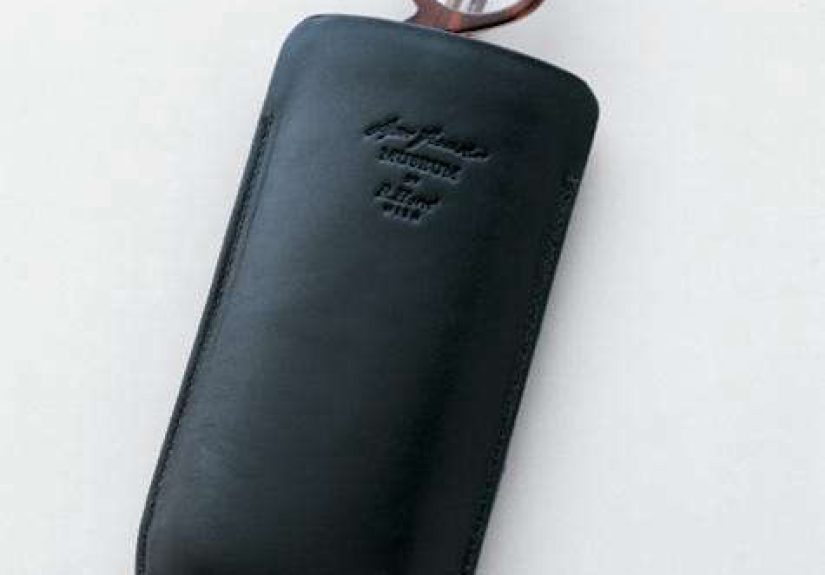
In today’s design and museum marketplace, the phrase Sigmund Freud’s Eyeglass Case most commonly refers to a leather case produced by R. Horn’s Vienna and sold through cultural design channels such as Neue Galerie in New York. The product is presented as a reproduction authorized by the Sigmund Freud Museum in Vienna and modeled after the eyeglass case belonging to Freud that is displayed there.
That detail matters. This is not a random novelty item with Freud’s name slapped onto it like a mustache on a teacup. It is tied to an actual museum object and framed as a design reproduction. In other words, it occupies that delicious middle ground between merchandise and material history. It is functional enough to hold your glasses, but storied enough to make you feel like you should also be carrying a theory about dreams.
The case is typically described as hand-sewn, made from full-grain or calf-skin leather, and compact in size. Its craftsmanship is part of the attraction. A leather eyeglass case already suggests a certain old-world seriousness, but one associated with Freud adds an extra layer of intellectual theater. It says, “Yes, I have reading glasses. And yes, I may also have opinions about repression.”
The Man Behind the Case: Why Freud Still Has Cultural Gravity
To understand why a small leather case can hold such interest, you have to understand the man attached to it. Sigmund Freud was born in 1856 and became the founder of psychoanalysis, the discipline that helped introduce the modern idea that hidden thoughts, desires, fears, and memories shape behavior. Whether one sees him as a genius, a provocateur, or the world’s most famous over-interpreter, Freud remains culturally enormous.
He spent most of his life in Vienna, where he lived and worked for decades. His consulting rooms at Berggasse 19 became one of the best-known addresses in intellectual history. There he saw patients, developed psychoanalytic theory, wrote major works, and built the atmosphere now associated with Freudian thought: rugs, antiquities, books, ritual, and the feeling that every object might secretly know something about your childhood.
Freud’s influence extended far beyond clinical psychology. His ideas shaped literature, criticism, visual culture, film, and everyday language. Terms such as repression, denial, ego, and Freudian slip escaped the therapist’s office and entered ordinary conversation. That long cultural afterlife helps explain why even his personal effects continue to fascinate people. The public no longer sees only a pair of spectacles or a leather case. It sees a portal into a mind that changed how modern culture talks about the self.
From Berggasse 19 to Museum Object
Freud lived and worked at Berggasse 19 for nearly half a century before fleeing Vienna in 1938 under Nazi pressure. That address is now home to the Sigmund Freud Museum, a place that preserves not just his fame but the texture of his daily world. Museums are experts at turning the ordinary into the meaningful. A walking stick becomes evidence of age. A notebook becomes a trace of thought. A glasses case becomes an invitation to imagine the habits of a person whose ideas still echo through culture.
There is something especially intimate about eyewear and its container. A desk can impress. A couch can mythologize. But glasses are personal. They sit close to the face, mediate vision, and accompany reading, writing, and observation. A case for those glasses is even more private: a protective shell for an instrument of seeing. If Freud’s theories ask us to look beneath appearances, then an object associated with literal sight feels almost too perfectly symbolic. At this point the symbolism is practically winking.
Museum culture loves this kind of object because it bridges history and daily life. Visitors may admire Freud’s manuscripts from a respectful distance, but they instantly understand a glasses case. It is relatable. It is portable. It belongs to the category of things people themselves use every day. That everyday quality makes the connection feel personal rather than abstract.
Why This Object Feels So Deeply Freudian
It is about seeing
Glasses are instruments of perception. Freud built an intellectual empire on the premise that what people see consciously is only part of the story. The eyeglass case, then, becomes an accidental metaphor for hidden meaning: a small exterior protecting the tool that helps one interpret the world. If a novelist invented this symbolism, an editor would probably say it was too obvious. But history occasionally enjoys a little drama.
It is about concealment
A case conceals what it contains. Freud’s work was obsessed with what is hidden, deferred, displaced, or disguised. The unconscious was not gone; it was tucked away, waiting to be opened. A case is a perfect mini-stage for that logic. Open it, and something useful emerges. Keep it closed, and meaning rests in reserve.
It is about ritual
Small personal accessories often become ritual objects. You take them out, put them away, return them to a pocket, a table, or a bag. Freud’s world was full of ritualized attention: the scheduled session, the arranged room, the repeated act of speaking and listening. A leather eyeglass case fits easily into that atmosphere of habit and deliberate handling.
The Design Appeal: Why People Want It Now
Part of the popularity of Sigmund Freud’s eyeglass case comes from the object’s design credentials. This is not flashy, trend-hopping design. It is restrained, tactile, and almost stubbornly classic. Leather, hand-sewn construction, and compact form all signal durability and craft. In a marketplace full of disposable accessories, a case associated with Freud offers something more romantic: permanence with personality.
Design lovers are often drawn to pieces that carry a story, and this one arrives with a very good story indeed. It is tied to Vienna, museum culture, intellectual history, and a recognizable name. It works as a gift, a conversation piece, and a small piece of cultivated eccentricity. You do not need to subscribe to every Freudian theory to appreciate the charm of carrying an object that feels half practical tool, half literary prop.
There is also the matter of aura. Objects connected to famous thinkers often gain a quiet glamour because they suggest a life of reading, writing, and intense observation. Freud’s eyeglass case taps into that aura without becoming ostentatious. It is not costume. It is closer to a whisper than a costume drama. It says taste, not theatrics. Well, tasteful theatrics.
More Than a Gift-Shop Curiosity
It would be easy to dismiss the case as clever museum-shop merchandising, but that would miss the larger point. Reproductions like this perform a cultural function. They allow people to participate in history through use rather than mere admiration. Instead of seeing a historical object behind glass and moving on, a buyer can adopt a version of that object into daily life.
That move from display to use is powerful. It transforms cultural memory into routine experience. Each time someone opens the case, places glasses inside, or sets it on a desk, the object lightly reenacts its historical association. It does not recreate Freud’s life, of course. No leather accessory can grant instant psychoanalytic insight. If only. But it does create a tactile link to a world of books, analysis, and old Vienna.
The object also invites reflection on how museums preserve not only masterpieces but habits. Personal effects reveal scale. They make great figures feel physical and specific. Freud was not just a theorist floating above the twentieth century; he was a person who read, aged, used glasses, stored them somewhere, and moved through rooms filled with objects. The eyeglass case helps make that reality visible.
What the Case Says About Legacy
Freud’s legacy remains complicated. His influence is undeniable, but so are the criticisms of his methods, assumptions, and conclusions. Modern psychology has moved beyond many of his claims while still acknowledging the enormous impact he had on talk therapy, the study of the unconscious, and the cultural understanding of desire and memory.
That complexity makes the eyeglass case even more interesting. It is not a monument pretending the past was simple. It is an intimate relic orbiting a difficult, brilliant, disputed figure. That tension actually strengthens the object. It becomes less like a shrine and more like a conversation starter. Why does Freud still matter? What part of his legacy survives? How do objects carry memory when ideas remain contested? A little leather case cannot answer all of that, but it can ask the questions very stylishly.
Experiences Related to “Sigmund Freud’s Eyeglass Case”
The most interesting experience connected to Sigmund Freud’s Eyeglass Case is not necessarily owning it. It is encountering the strange intimacy of an object that feels both ordinary and charged. Imagine walking through a museum devoted to Freud’s life and work. You move past the grand story first: psychoanalysis, Berggasse 19, the upheaval of 1938, the intellectual legacy, the heavy furniture, the images of his study. Then, somewhere in the orbit of all that seriousness, you notice a smaller object tied to daily routine. That shift can be surprisingly moving. History suddenly shrinks to human size.
For many visitors and readers, that is the real experience: realizing that a person remembered through giant theories also had tiny habits. He needed glasses. He needed somewhere to put them. He handled an accessory that had nothing to do with the id, ego, or dream symbolism and everything to do with being a working human being. The effect is grounding. It replaces abstraction with texture.
There is also a design experience wrapped into the historical one. Leather objects invite touch even when museums politely insist that your hands keep their enthusiasm to themselves. A reproduction of Freud’s eyeglass case carries that tactile appeal into everyday life. It feels structured but personal, formal but warm. Using it can create a small ritual: opening it before reading, placing glasses inside after writing, setting it beside a notebook, a lamp, or a favorite armchair. Suddenly a routine object begins to stage-manage the mood of a room.
Another experience is conversational. Unlike a generic glasses case, one associated with Freud tends to provoke curiosity. Someone notices it and asks about it. That question opens the door to a wider discussion about Vienna, museum culture, psychoanalysis, bookish style, or the afterlife of historical objects. In that sense, the case functions almost like a portable museum label. It carries narrative wherever it goes.
There is a quieter emotional experience as well. Objects linked to famous people often invite fantasy, but this one encourages reflection more than fandom. It can make a person think about aging, observation, scholarship, and the way personal items survive long after their owners are gone. Eyeglasses are associated with reading and close attention; a case preserves that instrument of focus. The symbolism is gentle but effective. You are not just holding an accessory. You are holding a reminder that thought itself has a material life.
And then there is the museum-shop paradox, which is honestly part of the fun. You can stand in a space dedicated to one of the most influential thinkers in modern history and leave with a leather case for your reading glasses. That sounds faintly absurd until you realize it is also completely appropriate. Freud spent a lifetime arguing that everyday things are rarely as simple as they look. A museum-authorized eyeglass case proves the point beautifully. It begins as a practical accessory and ends as a compact lesson in memory, identity, design, and cultural storytelling.
So the experience related to Sigmund Freud’s eyeglass case is layered. It is historical, because it connects to Berggasse 19 and the life of Freud. It is aesthetic, because craftsmanship and material matter. It is personal, because glasses are personal. And it is intellectual, because the object invites interpretation without demanding reverence. You can appreciate it as design, read it as symbol, or simply enjoy the wonderfully odd fact that one of the twentieth century’s most analyzed minds has inspired a very handsome place to store your spectacles.
Conclusion
Sigmund Freud’s Eyeglass Case is proof that cultural meaning does not always arrive in monumental form. Sometimes it comes in leather, stitched neatly, sized for a pocket or desk, and connected to a life that continues to fascinate generations later. As a reproduction tied to the Sigmund Freud Museum in Vienna, the case offers more than utility. It offers access to a story: Freud the thinker, Freud the reader, Freud the resident of Berggasse 19, Freud the exile, and Freud the enduring cultural presence.
That is why the object works. It is practical enough to use, elegant enough to admire, and rich enough to interpret. In a world crowded with empty “iconic” products, this one earns the adjective. Sometimes a glasses case is just a glasses case. And sometimes it is a compact biography with very good stitching.