Table of Contents >> Show >> Hide
- Why Bianca Censori’s style keeps becoming a flashpoint
- 10 Bianca Censori looks that raised concerns
- 1. The church-service cocoon dress that made the internet ask, “What is this dress doing?”
- 2. The all-black “goth egg” silhouette
- 3. The Italy-era tights-with-almost-nothing-else formula
- 4. The shoeless night out in Italy
- 5. The Florence hotel-pillow look
- 6. The transparent raincoat with almost nothing underneath
- 7. The giant-trench-coat-and-fur-hat reversal around the kids
- 8. The Disneyland barefoot look
- 9. The 2025 Grammys coat-drop “invisible dress”
- 10. The 2025 Grammys afterparty sheer bodysuit
- What these looks really tell us
- The viewer experience: why following these looks feels so strange
- Final thoughts
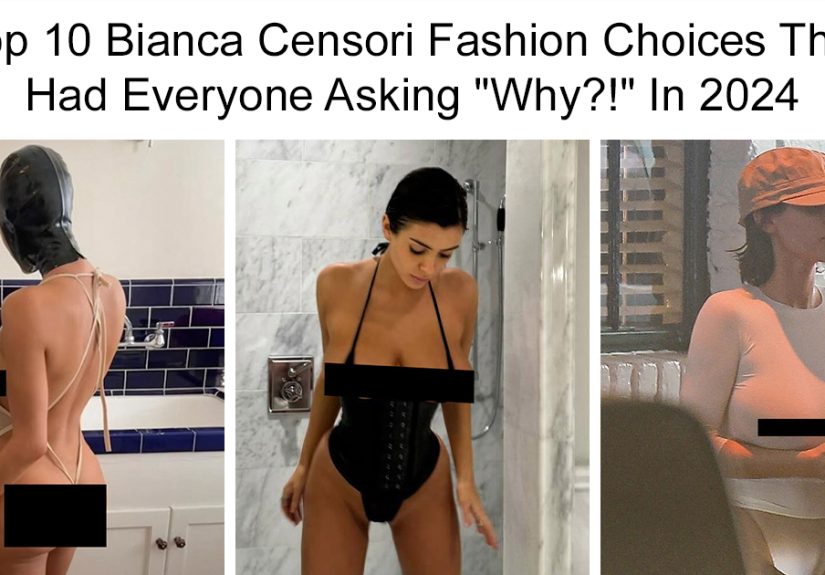
There are celebrity outfits, and then there are celebrity outfits that send the internet into full emergency-broadcast mode. Bianca Censori has become the face of the second category. Over the last few years, her wardrobe has inspired everything from fashion think-pieces to moral panic to the kind of social media commentary usually reserved for UFO sightings and awards-show slap incidents. Somewhere between performance art, shock styling, celebrity branding, and old-school paparazzi theater, her looks stopped being just clothes and became a running public argument.
That argument is what gives this story its charge. The phrase in the headline reflects the reaction that has echoed across comment sections, entertainment coverage, and social feeds whenever Censori steps out in a barely-there, highly stylized, or frankly bewildering ensemble. It is not a factual claim about her private life. In fact, recent reporting has added an important layer of complexity: Censori herself has said her style choices are collaborative and voluntary. But that has not stopped the concern, the speculation, or the endless debate over what these outfits mean.
And really, that is the heart of it. People are not just reacting to fabric, or lack thereof. They are reacting to context. They are reacting to the way these looks appear in public spaces, around families, at formal events, at tourist attractions, and beside one of the most controversial celebrities on earth. Fashion does not happen in a vacuum, and Bianca Censori’s style has rarely felt like a vacuum-sealed moment of pure aesthetic experimentation. It feels loaded. It feels staged. It feels like it wants a reaction and then acts surprised when it gets one.
Why Bianca Censori’s style keeps becoming a flashpoint
Plenty of celebrities wear sheer dresses, body-conscious silhouettes, and headline-hungry fashion. That alone is not unusual. What makes Bianca Censori different is the combination of repetition, escalation, and mystery. Again and again, the public has seen outfits that appear less like one-off fashion risks and more like installments in a larger visual campaign. That is why the discussion around her looks often drifts into questions about autonomy, provocation, celebrity power, and whether the public is witnessing self-expression, calculated spectacle, or a messy cocktail of both.
There is also the Ye factor, and that is impossible to ignore. Kanye West, now Ye, has a long history of shaping the visual presentation of the women around him, at least in the public imagination. Whether fair or not, that history hangs over every outfit Censori wears. So when she steps out in a transparent dress, no shoes, or a sculptural black garment that looks like it was designed by a futuristic funeral home, the conversation instantly becomes bigger than style. It turns into a referendum on agency, image-making, and the strange economics of attention in celebrity culture.
10 Bianca Censori looks that raised concerns
1. The church-service cocoon dress that made the internet ask, “What is this dress doing?”
One of the earliest Bianca Censori fashion moments to really detonate online was the now-famous black church-service look: sheer, architectural, constricting, and deeply committed to making everyone uncomfortable in at least three different ways. It had a pillowy, collar-like structure, a stocking-like upper layer, and an overall effect that landed somewhere between avant-garde fashion experiment and sleep paralysis demon in couture.
This look mattered because it was the first time many casual observers realized Censori’s style was not merely revealing. It was conceptual. The problem, at least for the public, was that the concept seemed to be “What if a human being wore a fashion thesis and lost the ability to use her arms?” It was bizarre enough to invite jokes, but it also opened the door to more serious questions about function, comfort, and whether the outfit was meant to express anything beyond pure disorientation.
2. The all-black “goth egg” silhouette
Not every controversial look relied on nudity. Some of the most unsettling reactions came from outfits that felt unnervingly sealed off. One all-black ensemble from the early phase of her public relationship with Ye became memorable precisely because it turned her into an object first and a person second. The internet dubbed it strange, ominous, and unintentionally comic. The shorthand was brutal but unforgettable: she looked like a “goth egg.”
That description stuck because it captured the emotional effect of the styling. The concern here was not indecency. It was erasure. Rather than presenting Censori as a personality with taste, the look gave the impression of a body being used as a surface for an idea. That is a familiar trick in high fashion, but in a celebrity setting it can feel different. People start wondering whether the point is artistry or disappearance.
3. The Italy-era tights-with-almost-nothing-else formula
If the black sculptural looks made people nervous, the Italy era sent that nervousness into overdrive. This was the period when Censori became associated with tights, sheer bodysuits, barely-there coverage, and outfits that seemed to dare bystanders to pretend everything was normal. More than one outlet noted that these looks pushed public tolerance in places not exactly famous for shrugging at near-nudity in broad daylight.
This phase triggered concern because it felt relentless. It was not just one revealing outfit; it was a visual pattern. When a celebrity repeatedly shows up in body-baring looks in ordinary public spaces, the spectacle starts to feel less like fashion and more like provocation as a daily routine. At that point, people stop saying, “That’s daring,” and start asking, “What is the goal here?”
4. The shoeless night out in Italy
There is something especially chaotic about a look that suggests shoes have become optional, but only in the most inconvenient possible context. During the much-discussed Italy stretch, both Censori and Ye were reported to have gone shoeless on a night out, with Censori’s styling leaning into the now-familiar pantyhose-as-wardrobe philosophy.
This raised concern for a simple reason: public space exists. Streets are not runways. Sidewalks are not spa flooring. The shoeless styling made the whole aesthetic feel less like provocative fashion and more like an exercise in overriding basic social logic. That may sound funny, and honestly it is a little funny, but it also feeds the broader sense that these looks are designed to break context on purpose.
5. The Florence hotel-pillow look
At some point, celebrity fashion crossed paths with the universal experience of panic-dressing after hearing someone at the door, and thus the Florence hotel-pillow look entered the chat. Censori was seen in a nude bodysuit while clutching a hotel pillow over her chest, which made the outfit instantly iconic, instantly memeable, and instantly controversial.
On one hand, it was absurd enough to invite laughter. On the other, it intensified the concern that Bianca Censori’s public style had become a long-running exercise in simulated undress. The pillow made the look feel self-aware, but it also made it seem even more like a stunt. People were not just reacting to skin; they were reacting to the theatricality of pretending a pillow counted as a sensible fashion solution.
6. The transparent raincoat with almost nothing underneath
There are sheer looks, and then there is the transparent raincoat moment, which managed to turn outerwear into an argument. Raincoats are supposed to say, “I came prepared.” This one said, “I came to make every pedestrian in a ten-block radius deeply confused.” The styling fit neatly into the broader Bianca Censori playbook: technically dressed, spiritually naked.
What made this look especially polarizing was that it framed exposure as utility. A coat is practical. A transparent coat with almost nothing under it is practical only if your job description includes triggering discourse before lunch. That gap between the garment’s normal purpose and the way it was used is exactly why the public response skewed from fascination to concern.
7. The giant-trench-coat-and-fur-hat reversal around the kids
One of the oddest twists in the Bianca Censori style saga is that when she has been photographed around Ye’s children, coverage has often noted that she appears dramatically more covered up. Think giant trench coats, oversized fur hats, and silhouettes so obscuring they nearly erase the person inside them. It is the exact opposite of her most viral public looks.
That contrast raised concern in a totally different way. It suggested that the revealing outfits were not random acts of personal style but part of a specific public-facing performance. When someone swings from nearly nude to almost cartoonishly concealed depending on context, people naturally wonder which version is authentic, if either one is. The whiplash keeps the scrutiny alive.
8. The Disneyland barefoot look
Few combinations say “we are operating on our own planet” like showing up at Disneyland apparently barefoot, especially when the park has a posted dress code that explicitly prohibits bare feet. This was not a fashion week sidewalk or a private compound. This was Disneyland, home of strollers, churros, confused dads, and rules that are definitely not written for avant-garde celebrity exemptions.
That is why this look drew such strong reactions. It was not just visually odd; it bumped into public policy. The concern moved beyond aesthetics and into plain old appropriateness. When style crosses into a setting built for families and regulated behavior, people tend to stop treating it as an art piece and start treating it as a disregard-for-other-people issue.
9. The 2025 Grammys coat-drop “invisible dress”
This is the Bianca Censori look that became impossible to ignore. At the 2025 Grammys, she arrived in a dark fur coat, then dropped it to reveal a completely sheer minidress with no visible undergarments underneath. It was less a red carpet reveal than a controlled detonation. The internet exploded. News outlets sprinted. Comment sections combusted. And for a few days, the entire pop culture machine seemed to revolve around one question: how did this even happen at the Grammys?
The concern here came from every direction at once. There were questions about dress codes, broadcast standards, public decency, and whether the stunt was meant to mirror imagery associated with Ye’s work. There were also the more human questions: was this empowering, exploitative, calculated, hilarious, dystopian, or all of the above? Even people who defend sheer fashion in principle seemed unsure what to do with this one. It did not feel like a dress. It felt like an event.
10. The 2025 Grammys afterparty sheer bodysuit
Just when it seemed the Grammys look had already reached peak discourse, Censori followed it with another nearly naked afterparty ensemble: a completely sheer black bodysuit paired with boots. That second appearance mattered because it erased any lingering fantasy that the first look had been a one-off stunt or spontaneous burst of red carpet insanity. No, this was the night’s whole thesis.
And that is what turned concern into fatigue for some observers. The afterparty look read like a doubling down, the fashion equivalent of saying, “Oh, you thought we were done? That is adorable.” It was provocative, yes, but also strangely strategic. The repetition made the spectacle feel less accidental and more industrial, like attention itself had become the garment.
What these looks really tell us
The easiest way to write about Bianca Censori is to make it all about scandal. The smarter way is to recognize that her most talked-about looks sit at the intersection of fashion, fame, control, mystery, and the economics of shock. These outfits do not just reveal skin. They reveal how quickly the public turns style into psychology, and how difficult it is to separate a woman’s wardrobe from the power structures around her when she is standing beside one of the most polarizing figures in entertainment.
That does not mean every worried comment is fair, or that every revealing outfit deserves a rescue narrative. Censori has said she participates willingly in the creation of these looks, and that matters. But it is also true that clothing communicates, especially when it is deployed so deliberately and repeatedly in highly public settings. Once fashion becomes performance, the audience will interpret it. Loudly. Often badly. And always with confidence they may or may not have earned.
The viewer experience: why following these looks feels so strange
Part of what makes Bianca Censori’s style story so gripping is the experience of watching it happen in real time. It does not feel like following ordinary celebrity fashion. It feels more like logging onto the internet and stumbling into a cultural argument already happening at full volume. One minute you are minding your business, possibly looking up something innocent like a pasta recipe or awards-show winners, and the next minute your feed is wall-to-wall debate over whether a pair of tights counts as an outfit, whether a fur coat reveal belongs on a red carpet, and whether everyone involved knows exactly what they are doing.
That experience is both absurd and revealing. It shows how modern celebrity works now. We no longer consume famous people in neat little boxes labeled music, film, style, and gossip. Everything collapses together. An outfit becomes a statement. A statement becomes a theory. A theory becomes a moral panic. Then the cycle resets by morning, unless another outfit arrives first, which in Bianca Censori’s case has happened often enough to make the whole thing feel serialized.
There is also a weird emotional tension in watching the public react to her. Some people see confidence. Others see spectacle. Others see a woman being projected onto so aggressively that the projections become the actual story. That is why the reactions can feel messy and contradictory. People are not only responding to what she is wearing. They are responding to the silence around it, the mystery around it, and the history surrounding the man next to her. In that sense, every look becomes bigger than itself before the cameras have even cooled down.
For viewers, that creates a kind of cultural whiplash. You can laugh at the sheer absurdity of a hotel pillow functioning as pseudo-topwear and still feel uneasy about the machinery of attention behind it. You can appreciate that fashion is supposed to provoke and still think, “Okay, but at Disneyland? Barefoot? Really?” You can believe a woman has the right to dress however she wants and still wonder why these particular images keep being staged in ways that seem engineered to scramble the line between empowerment and exhibition.
That is why the Bianca Censori discourse keeps coming back. It taps into a very current anxiety about what is real, what is performance, and whether we are watching style, branding, relationship dynamics, internet bait, or some hybrid monster made out of all four. The looks themselves may be minimal, but the reaction to them is enormous. And maybe that is the point. In a culture where attention is currency, the strongest outfit is not always the most beautiful one. Sometimes it is the one that makes everybody stop, stare, argue, and accidentally advertise the spectacle for another week.
Final thoughts
Bianca Censori’s most controversial looks did not become infamous because they were merely skimpy, weird, or over-the-top. Plenty of celebrity fashion checks those boxes. These moments became cultural flashpoints because they arrived wrapped in ambiguity. They invited concern without confirming its cause. They played with vulnerability, control, public space, and visibility in ways that made people uncomfortable and curious at the same time.
That is a powerful formula, and also an exhausting one. Whether you see Censori as an agent of her own aesthetic chaos, a performance artist working through celebrity culture in real time, or the center of a spectacle the public cannot stop analyzing, one thing is clear: her looks are never just looks. They are prompts. They are pressure points. And they are a master class in how modern fame can turn getting dressed into a global argument before dessert.