Table of Contents >> Show >> Hide
- Why Fan Insertions Fit the Show’s DNA
- What “Being in an Episode” Can Actually Mean
- An Early Classic: The Charity Auction Kid Who Became “Alex”
- 2009’s “South Park Citizen” Hunt: A Fan Insertion Disguised as a Game
- 2017’s Omaze Campaign: Meet the Creators, Get Drawn In, Record Dialogue
- A Make-A-Wish Moment: A Fan Cameo During “The Pandemic Special”
- 2025’s “Permanent Resident” Sweepstakes: Not Just a CameoA Long-Term Neighbor
- How the Show Avoids Turning Fan Cameos into Distractions
- The “Unofficial” Ways Fans Still Get InsertedEven Without Winning
- What Other Shows Can Learn from South Park’s Fan-Cameo Playbook
- Conclusion: A Weirdly Sweet Tradition in a Very Un-sweet Show
- Fan Experiences: What It Feels Like When the Show Lets Real People In (About )
Plenty of TV shows say they “love the fans.” South Park occasionally proves it in the most literal way possible:
by turning real, actual humans into animated residents of its famously chaotic little mountain town.
One day you’re a person with a normal haircut; the next, you’re a two-dimensional fourth-grader with a parka
and a destiny to shuffle across the background while something absurd happens off-screen.
This isn’t a new gimmick, and it isn’t just a cute marketing stunt. For years, South Park has used fan insertions
as a weirdly wholesome pressure valvemixing charity, community, and inside jokes into a show that’s otherwise built
on surprise, speed, and a willingness to poke at just about everything.
If you’ve ever wondered how a series known for being sharp and fast also makes room for real people,
the answer is simple: they’ve been doing it forever, and they’ve gotten good at it.
Why Fan Insertions Fit the Show’s DNA
South Park has always treated the audience like an accomplice. The show’s humor works best when viewers feel like
they’re in on the jokespotting visual gags, catching references, and noticing the tiny details that flash by in the
blink-and-you-miss-it rhythm of an episode. When you build that kind of relationship, it’s only a small step from
“Did you catch that Easter egg?” to “Congratsyou are the Easter egg.”
The production style helps, too. South Park is famous for its tight, last-minute workflowan approach that keeps it
culturally responsive and gives the creators flexibility to change things late in the process. In a world where some
animated series bank episodes months (or years) ahead, South Park can still squeeze in an extra detail when it matters.
That nimbleness makes one-off fan moments possible without turning the whole season into a slow, expensive logistics puzzle.
What “Being in an Episode” Can Actually Mean
When people hear “I got into South Park,” they might imagine a full speaking role and a plotline built around them.
In reality, fan insertions usually fall into a few categories:
- Background cameo: Your likeness appears as a town resident in a scene (the classic “I’m in the crowd!” moment).
- Quick featured moment: You get a short beatmaybe a line, maybe a reaction shotsomething noticeable but not story-breaking.
- Opening sequence inclusion: Your character gets placed into the intro, which is basically South Park immortality.
- “Permanent resident” status: A newer twist: you’re not just a one-episode cameo; you can become a recurring background character.
The consistent rule is that the show stays the show. Even when real fans appear, they’re added in a way that supports the episode
rather than hijacking it. The cameo is the cherry on topnot the entire sundae.
An Early Classic: The Charity Auction Kid Who Became “Alex”
One of the most cited early examples is a character named Alex, who appears in the Season 7 episode “Red Man’s Greed.”
According to the official South Park wiki, Alex Glick voiced himself and earned the cameo by winning a contest as the
highest bidder at a charity auction benefiting AIDS research. In the episode, the character is visually distinct and
explicitly framed as “Alex,” leaning into the meta-joke that he’s a special guest dropped into the town for a moment.
What makes this example feel so “South Park” is the mix of sincerity and wink-at-the-camera absurdity:
the show does something legitimately meaningful (tying an appearance to charity), while also making sure the cameo reads like
a playful intrusion into the worldnot a polished, corporate cameo designed by committee.
2009’s “South Park Citizen” Hunt: A Fan Insertion Disguised as a Game
In 2009, South Park ran a contest that turned watching the live broadcast into a scavenger hunt.
The show instructed viewers to watch Comedy Central airings and look for a hidden alienthen enter for prizes.
The kicker? The grand prize wasn’t just merchandise. The winner’s likeness would be added to the opening sequence for the Season 14 premiere.
There’s a delightfully old-school energy to this idea. It rewarded appointment viewing (the live TV era’s love language),
it nudged fans to pay attention to details, and it created a shared weekly ritual: “Did you see it? Where was it? Rewind!”
And the contest rules made the hunt feel special: the hidden alien wouldn’t appear in the online version during the entry period,
meaning the broadcast audience had a unique experience.
Why the “Broadcast-Only” Detail Was a Big Deal
That limitation did two smart things at once. First, it made the contest feel fair: everyone had to hunt in the same place, at the same time.
Second, it gave the live airing a unique “you had to be there” qualitysomething increasingly rare in modern streaming culture.
In other words, South Park wasn’t just inserting fans into the show; it was inserting the show into fans’ weekly routines.
2017’s Omaze Campaign: Meet the Creators, Get Drawn In, Record Dialogue
Fast-forward to 2017 and the fan-insertion concept got a modern upgrade: an Omaze campaign that let fans support a cause and
potentially become an animated character in a future episode. The pitch was straightforward and extremely tempting:
fly the winner (and a guest) to the studio, meet Trey Parker and Matt Stone, have an artist draw the winner’s likeness into a character,
and record dialogue. Donations benefited NEXT for AUTISM.
What’s notable here is how “hands-on” the prize sounds. This isn’t just “we’ll stick your face in the crowd.”
It’s a behind-the-scenes immersion into how an episode is assembledlike a golden ticket for animation nerds who want to see
how the show’s quick-turnaround engine actually works.
The charity angle also matters. When fan insertions are tied to fundraising, the cameo becomes a kind of celebratory thank-you
a playful reward that doesn’t feel like the show is “selling” itself. It feels like the show is using its cultural power to move money
toward something bigger, then giving one fan a once-in-a-lifetime story as a bonus.
A Make-A-Wish Moment: A Fan Cameo During “The Pandemic Special”
One of the most human examples of the show inserting a real fan came through the Make-A-Wish Foundation.
In 2020, a Texas fan named Sef Furman had a character based on him featured in South Park: The Pandemic Special.
A local report described how the experience gave him a huge boost, and noted that the creators went out of their way
to create a memorable moment for him and his family.
This is the version of “fan insertion” that cuts through the cynicism. Regardless of what you think of the show’s style,
the gesture is simple: take someone who loves the series, and give them a joyful piece of the world they’ve spent years watching.
No snark required. Just a creative team using their craft to deliver something kind.
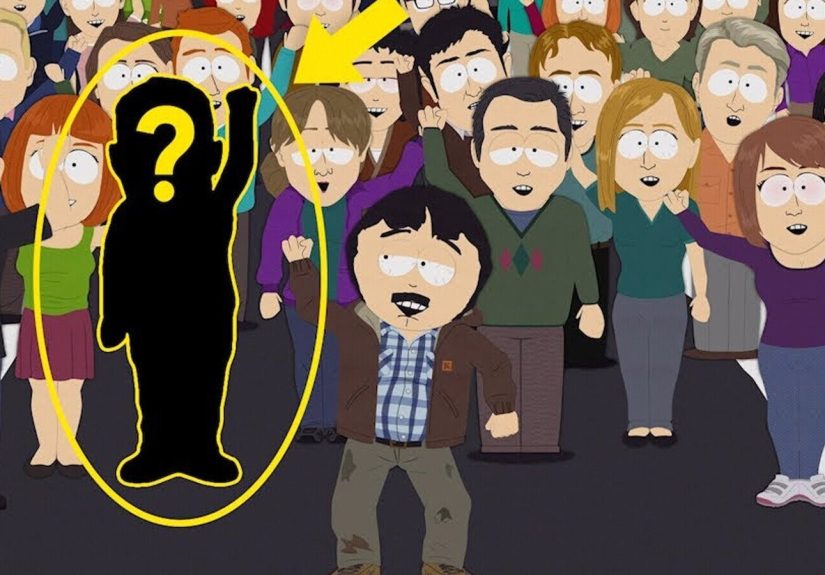
2025’s “Permanent Resident” Sweepstakes: Not Just a CameoA Long-Term Neighbor
The newest evolution of the idea is bolder than a one-off appearance: a campaign offering fans the chance to become a
“permanent resident” of South Park. In 2025, a fundraising sweepstakes tied to the SoCal Fire Fund promoted a prize where the winner
would be animated into a custom character for the upcoming seasonplus receive a signed poster featuring their new character alongside
the main kids.
The phrase “permanent resident” is doing a lot of work here. It suggests the winner won’t just pop up once and disappear;
they could become part of the show’s everyday visual ecosystem. That’s a clever update because it matches how fans actually watch:
rewatching episodes, pausing frames, scanning crowds, and collecting tiny details like they’re Pokémon.
A recurring background character gives a fan something to look for season after season.
Why “Permanent” Is the Ultimate Fan Flex
One cameo is a brag. A recurring resident is a legend. It’s also a subtle promise from the creators:
“We’ll keep you around, but we’ll keep the show intact.” The best version of this prize is when the fan character feels
like they truly belongan ordinary South Park townsperson who just happens to be based on a real person.
The joke is that it’s not a joke at all: the town has always been full of oddballs, and now one of them can be you.
How the Show Avoids Turning Fan Cameos into Distractions
If fan insertions were handled poorly, they’d break the illusion. Viewers would think, “Oh, that’s the contest winner,”
and suddenly they’re watching a promotion instead of an episode. South Park generally dodges that trap in three ways:
- Placement over spotlight: Many fan characters live in crowds, classrooms, and town scenes where they fit naturally.
- Meta-awareness: When the cameo is obvious, the show often treats it like a winkacknowledging the oddity without derailing the plot.
- Story comes first: The episode’s satire and pacing remain the priority; the cameo is seasoning, not the meal.
That’s the secret sauce: the show makes fan appearances feel like part of the world rather than an intrusion into it.
When the cameo is subtle, fans can spot it and feel rewarded. When it’s obvious, the show can make the obviousness the joke.
The “Unofficial” Ways Fans Still Get InsertedEven Without Winning
Not every fan gets animated, but South Park has long treated fandom as raw material. The show’s fast turnaround means it can
react to cultural moments that fans are already arguing about online. It also builds recurring visual traditionslike hidden details
and background gagsthat practically beg fans to become detectives.
In other words: the show doesn’t just insert fans into episodes. It inserts fan behavior into the structure of the viewing experience.
It trains the audience to look closer, rewatch, compare notes, and keep the conversation goingthen occasionally rewards that behavior with
the ultimate prize: “Congratulations, you’re not just watching the town. You live here now.”
What Other Shows Can Learn from South Park’s Fan-Cameo Playbook
A lot of series flirt with fan service, but fan service works best when it’s rooted in a real relationship. South Park has two advantages:
a long-running community of viewers who love to hunt for details, and a creative process that can accommodate surprise additions.
The bigger lesson is this: if you’re going to include fans, give it a purpose. Tie it to charity. Tie it to community.
Tie it to a tradition that rewards attention. Make the fan cameo feel like a thank-younot like a product placement with a human face.
Conclusion: A Weirdly Sweet Tradition in a Very Un-sweet Show
South Park will always be the show that moves fast, swings hard, and trusts the audience to keep up.
But beneath that chaos is a long-running thread of community participationcharity auctions, scavenger-hunt contests,
fundraising campaigns, and one-time moments where a real fan becomes an animated neighbor.
The result is a tradition that feels uniquely South Park: a little messy, a little meta, occasionally surprisingly heartfelt,
and always delivered with the implicit promise that the show won’t stop being itself just because it invited you inside.
Fan Experiences: What It Feels Like When the Show Lets Real People In (About )
For fans, the idea of being animated into South Park lands somewhere between “dream come true” and “wait… is this real?”
The show’s style is so recognizable that even imagining yourself as a simplified character can feel strangely officiallike you’ve been
inducted into a secret society where the membership card is a flat circle of paper with dot eyes.
The experience often starts the same way it does for any fan community: with chatter. Someone spots an announcement, shares it,
and the group reaction splits into three classic responses. First: the optimists (“This is my moment!”).
Second: the practical folks (“Read the rules, check eligibility, don’t get scammed.”).
Third: the comedians (“If I get in, please draw me as the person quietly leaving the scene before anything goes wrong.”).
That mixhope, caution, and jokespretty much describes the entire South Park fandom vibe in miniature.
What’s most fun is how these contests turn ordinary viewing habits into a kind of sport. The scavenger-hunt style promotions,
like the hidden-alien hunt, activate the same brain as a great mystery: you’re scanning corners, comparing notes,
and suddenly rewatching a scene not because the plot demands it, but because your eyes are doing a background sweep like a security camera.
It creates a shared language among fans: “Did you catch it?” becomes “Where was it?” then “Prove it,” and finally “Okay, I’m rewatching.”
The show becomes a place where the community plays together, not just something everyone consumes separately.
When the cameo is tied to charity, the emotional tone changes in a good way. Fans still get excited about the prize,
but the excitement carries an extra layer of meaning: you’re not just entering a sweepstakes, you’re helping fund something.
That makes the potential cameo feel like a celebration of generosity rather than a pure flex. And even for people who never win,
there’s a small satisfaction in knowing the show is using its platform to turn fandom into support for real-world needs.
For winners, the afterglow can last for years. Most people don’t just say, “I was on TV.”
They say, “I’m in South Park,” which is a different kind of cultural currencyone that prompts instant follow-up questions:
“Which episode?” “Where are you in the scene?” “Do you have lines?” “Can I pause it and find you?”
Friends and family become temporary super-fans, hunting for the cameo like it’s a family heirloom hidden in a cartoon.
And for the wider fandom, these moments reinforce a comforting idea: no matter how massive a show becomes,
it can still treat the audience like a community of individuals. In a media world obsessed with scale and metrics,
a single real person becoming an animated resident feels delightfully personallike the town has one more neighbor,
and everybody’s invited to notice.