Table of Contents >> Show >> Hide
- Quick Table of Contents
- Why Table Manners Still Matter (and Always Will)
- Before You Sit: The Guest & Host Checklist
- Place Settings Without Panic
- Napkin Etiquette (Your Fabric Sidekick)
- Utensils, Bread, and “What Do I Do With My Hands?”
- Core Table Rules During the Meal
- Conversation Etiquette That Doesn’t Feel Forced
- Restaurant Etiquette: Be a Great Guest (Not the Main Character)
- Business Dining Etiquette (Your Fork Is Part of Your Resume)
- Hosting Etiquette: Make It Easy for Everyone
- Awkward Moments: What to Do (Without Panicking)
- Teaching Kids Table Manners (Without Starting a War)
- Conclusion: The Real Point of Dining Etiquette
Table manners and etiquette are basically the “operating system” of eating with other humans. They keep the meal running smoothly, prevent accidental fork jousting, and help everyone feel comfortablewhether you’re at a backyard cookout, a business lunch, or a wedding where the place setting has more cutlery than your kitchen drawer.
This guide breaks dining etiquette into practical, real-world moves you can use immediately. No stiff “finishing school” vibejust clear rules, modern updates, and a few friendly reminders that the goal is to make others feel at ease (not to earn a gold star from an imaginary etiquette referee).
Why Table Manners Still Matter (and Always Will)
Dining etiquette isn’t about being fancy. It’s about being considerate. Good table manners reduce friction: people can talk, pass food, and enjoy the moment without dodging elbows or wondering why someone is narrating their chewing like it’s an audiobook.
Even “small” etiquette choiceswaiting until everyone is served, putting your phone away, keeping conversation inclusivesignal respect for the host, the effort behind the meal, and the people sharing it with you. The best manners are usually the quiet kind: the ones that make everyone feel comfortable without drawing attention to themselves.
Before You Sit: The Guest & Host Checklist
For guests
- RSVP like an adult: Prompt responses help hosts plan seating, food, and timing. If you’re unsure, askdon’t guess.
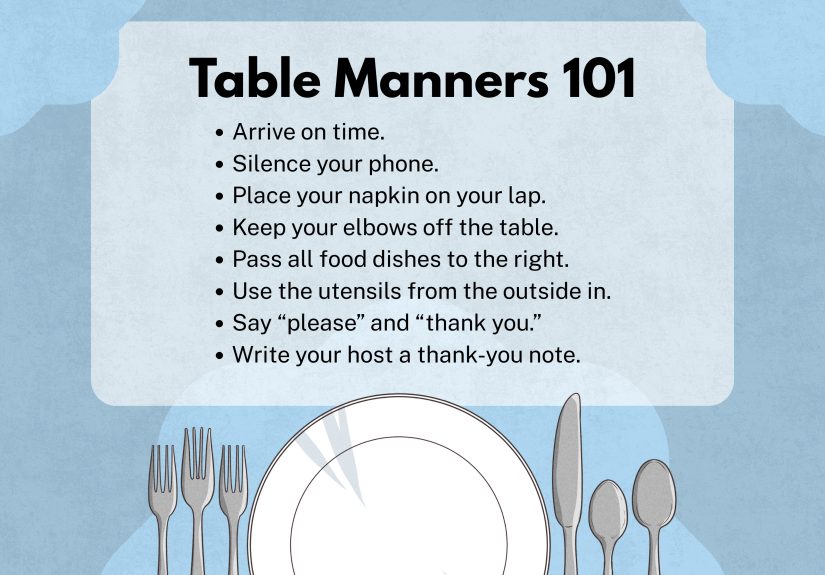
- Arrive on time: Not painfully early, not fashionably late. “On time” is the sweet spot.
- Flag allergies early: Mention dietary needs before the meal, not after you’ve been served a surprise peanut parade.
- Bring the right energy: Compliments are welcome. Critiquing the food like a reality show judge is not.
For hosts
- Make guests feel oriented: Greet them, offer a drink, and point out essentials (yes, the restroom counts as an essential).
- Think comfort first: A beautiful table should still allow people to see each other and actually eat.
- Give clear cues: If it’s buffet-style, say so. If you’ll start together, say so. Mystery is great for novels, not mealtimes.
Place Settings Without Panic
The point of a place setting is simple: it organizes the meal so you don’t have to. Once you learn a few basics, even a formal table setting becomes less “maze” and more “map.”
Basic / casual place setting
For everyday meals and relaxed gatherings, you can keep it simple: plate in the center, fork to the left, knife and spoon to the right, and the water glass above the knife area. Napkin usually goes left of the fork or on the plateeither is commonly acceptable depending on the host style.
Formal place setting (the “wedding reception” level)
Formal dining adds more pieces: salad plate, bread plate, multiple glasses, and extra utensils for different courses. The good news? You don’t need to memorize a diagram.
The one rule that saves you every time: outside-in
If there are multiple forks/spoons/knives, use the outermost utensils first and move inward with each course. This single guideline covers 90% of real-life “Which fork is mine?” moments.
Quick placement reminders
- Knife blades face the plate (not your neighbor).
- Forks left; knives and spoons right.
- Glasses generally sit above the knives on the upper right.
- Centerpieces should never block eye contact across the tableyour flowers don’t need to photobomb human conversation.
Napkin Etiquette (Your Fabric Sidekick)
Napkins are not decorative origami you’re afraid to touch. They’re there to keep you tidy and the table civilized.
When to put it on your lap
In many settings, you place your napkin on your lap shortly after sitting. In more formal situations, a classic cue is to follow the host’s lead. Either way, the goal is the same: napkin in lap before food starts arriving so you’re not scrambling mid-bite.
How to use it without making it a magic trick
- Unfold quietly: Don’t snap it like you’re starting a bullfight.
- Dab, don’t wipe: A gentle blot is the move.
- Leaving temporarily: Place the napkin on your chair (or loosely to the side) rather than on the plate.
- End of meal: Loosely fold and set it near your plateno need to refold it into factory corners.
Utensils, Bread, and “What Do I Do With My Hands?”
American vs. Continental style (a.k.a. “fork switching”)
In the U.S., you’ll see two common styles:
- American style: Cut food with knife in right hand and fork in left, then set the knife down and switch the fork to the right to eat.
- Continental style: Fork stays in the left hand, knife stays in the right, and you eat with the fork in the left (often tines down).
Both are widely seen. The “best” choice is whichever you can do neatly and confidently. Etiquette is about ease, not gymnastics.
Bread etiquette in one minute
- Bread plate: It’s usually above your fork area (upper left).
- Butter: Don’t butter the whole slice like you’re painting a fence. Break off a bite-sized piece, butter that piece, eat, repeat.
- Passing bread: Ask for it to be passed rather than reaching across the table like you’re going for the last helicopter out.
Salt & pepper are a duo
If someone asks for salt, pass both salt and pepper together. They’re basically a packaged deallike earbuds and the tiny rubber tips you immediately lose.
Core Table Rules During the Meal
Starting and pacing
- Wait to start: In many hosted meals, it’s polite to wait until everyone is served and/or the host begins.
- Eat at the group’s tempo: You don’t need to match bites, but avoid finishing far ahead of everyone unless there’s a reason.
Chewing, posture, and the classics
- Chew with your mouth closed and swallow before speaking. Your story can wait; your audience will thank you.
- Take smaller bites: It’s easier to talk, easier to chew, and far less likely to lead to “I regret everything” coughing.
- Elbows: The modern reality is nuanced. Many households still prefer elbows off the table while eating, but a relaxed elbow between courses is rarely scandalous. When in doubt, follow the tone of the table.
- Hands: Rest hands lightly on your lap or at the edge of the table when not using utensilsavoid drumming, fidgeting, or playing percussion on the bread plate.
Passing food and shared dishes
- Ask, don’t reach: “Could you pass the salad?” beats leaning across someone’s water glass like a human drawbridge.
- Pass to the right or leftjust be consistent: Different households have different habits. The key is smooth flow.
- Serving yourself: Use the serving utensil, not your personal fork. Your fork has been places. The serving spoon deserves better.
Conversation Etiquette That Doesn’t Feel Forced
Dining conversation should be shared, not monopolized. Think “good playlist,” not “single song on repeat.”
Make conversation inclusive
- Spread the talk: Avoid creating a “two-person podcast” while everyone else silently auditions for the role of wallpaper.
- Use easy on-ramps: “What’s been the best part of your week?” works across ages and doesn’t invite controversy by default.
- Host trick: If conversation stalls, ask a broad, positive question and redirect attention gentlylike turning a boat, not yanking a wheel.
Topics to avoid (unless you know the table loves them)
- Graphic medical stories, bathroom adventures, and anything that makes people suddenly fascinated by their napkins.
- Work gossip or intense debates that hijack the mood.
- Repeated critiques of the food. Even if you’re right, it’s not the moment.
Restaurant Etiquette: Be a Great Guest (Not the Main Character)
Restaurant dining etiquette is a team sport: you, your group, and the staff are all trying to create a pleasant experience. Your mission is to be easy to take care ofcalm, clear, and respectful.
Ordering with grace
- Ask questions early: If you need modifications, mention them upfront.
- Table requests: It’s fine to ask for a different table if possible, but accept “no” without acting like the restaurant personally betrayed your family lineage.
- Phones and photos: A quick snap is one thing; turning dinner into a lighting setup is another. Read the room.
Getting a server’s attention
Avoid snapping, clapping, waving both arms, or doing the “I’m drowning” signal. A brief eye contact plus a small hand gesture works. If you truly can’t connect, politely address any staff member passing by.
Should you stack plates?
This surprises a lot of well-meaning people: in many sit-down restaurants, aggressively stacking plates can actually make clearing harder or less safe. If you want to help, a gentle move like nudging plates closer is often enoughthen let staff do it their way.
Business Dining Etiquette (Your Fork Is Part of Your Resume)
Business meals aren’t about showing off. They’re about building trust. Professional dining etiquette signals self-awareness, patience, and social skills which, inconveniently, are still highly employable.
Ordering strategy
- Don’t order the messiest item on the menu if you’re trying to make a polished impression (looking at you, saucy ribs).
- Match the formality: If everyone’s ordering salads and sandwiches, ordering a three-course feast can feel out of sync.
- Alcohol: If you drink, keep it conservative and context-appropriate. When in doubt, skip it.
The phone rule (yes, still)
Your phone should be off the table and out of your hands. If there’s an urgent situation, tell the group in advance and step away to handle it briefly. “SorryI need 60 seconds for a family thing” is both human and professional.
Hosting Etiquette: Make It Easy for Everyone
Hosting is basically hospitality with logistics. Your job isn’t perfectionit’s comfort. People remember how they felt, not whether your forks were aligned to a millimeter.
Table setup that actually works
- Visibility matters: Make sure centerpieces don’t block sightlines across the table.
- Napkin placement: Keep it accessible. (Hiding it under forks can create noise and awkward fumbling.)
- Candles: Unscented is best so the meal doesn’t compete with “Ocean Breeze” for attention.
- Seating: Place talkative connectors near quieter guests; it’s like arranging a friendly group chat in real life.
Phone etiquette for modern hosting
If you want a device-free meal, set the tone gently: “Let’s keep phones away and enjoy dinner together.” People usually appreciate the permission to unplug.
Awkward Moments: What to Do (Without Panicking)
You dropped a utensil
Don’t pick it up and keep eating (unless you’re at home with your dog as the only witness). In a restaurant or formal setting, let a server/host replace it. If you must retrieve it at home, do so quickly and discreetly.
You need to step away
At a home dinner, a simple “Excuse me for a moment” is enough. Place your napkin on your chair, not wadded on the plate like a surrender flag.
Something is wrong with your food
Mention it early and calmly. Waiting until the end of the meal to announce “This wasn’t right” helps no one and just raises the emotional temperature.
You’re done eating before everyone else
Pause. Sip water. Engage in conversation. Don’t stack your plate, don’t start cleaning like you’re closing the restaurant, and don’t announce “I’m so full” ten times like it’s your new personality.
Teaching Kids Table Manners (Without Starting a War)
Kids learn manners best through modeling and repetition, not lectures delivered like courtroom arguments. Keep expectations age-appropriate and focus on progress, not perfection.
High-impact basics to teach first
- “Please” and “thank you” as default language.
- Ask to have items passed instead of reaching across the table.
- Small bites, mouth closed (and a napkin in lap when they’re ready).
- Wait your turn to speak and don’t interrupt like a tiny talk show host.
- Electronics off for meals when possiblepresence is a skill, too.
Make it doable
Try “one manners goal” per week: maybe napkin use first, then passing dishes, then conversational turn-taking. When kids succeed, name it: “Thanks for asking to have that passedthat was thoughtful.” Specific praise sticks.
Conclusion: The Real Point of Dining Etiquette
The best table manners and etiquette rules aren’t about being fancythey’re about being kind. If you remember just three things, you’ll do great: be present (phones down), be considerate (share space and conversation), and be calm (mistakes happen; handle them gracefully).
Whether you’re navigating a formal place setting, trying to master restaurant etiquette, or teaching kids table manners, the goal is always the same: make the table feel welcoming. Good manners are basically a shortcut to making people feel respectedwithout needing a speech.
Bonus: Real-Life Table Manners Experiences (About )
Years ago, I watched a perfectly nice person accidentally turn a business lunch into a one-person stress testwithout meaning to. They arrived a little late, sat down breathless, immediately ordered the messiest dish on the menu, and then kept checking their phone “just for a second” every few minutes. No one at the table said anything, because adults are polite and also slightly terrified of awkwardness. But you could feel the mood shift: the meal became less conversation and more coping.
The funny part? None of it was “illegal” in a dining etiquette sense. Being late can happen. Phones buzz. Sauce exists. Yet the accumulation told a story: “I’m not fully here.” That’s the real etiquette lessonmanners are less about specific rules and more about the message your behavior sends. When that person later started waiting until everyone had their food before eating, kept their phone off the table, and ordered simpler dishes, the lunches instantly felt easier. Same human, better signals.
Another time, at a home dinner party, a guest tried to be helpful by stacking plates into a wobbly tower the moment the main course ended. It was sweet and totally understandablemany of us were raised to “help clean up.” But the host had a system: they were clearing from the right, keeping utensils separate, and moving glasses last to avoid spills. The plate tower forced an awkward re-sort in the kitchen, and everyone did the polite dance of pretending it was fine while quietly calculating the odds of a gravy avalanche. The takeaway: good intentions are wonderful, but in someone else’s space, it’s often better to ask, “How can I help?” and follow their lead.
I’ve also seen “conversation etiquette” rescue a table in real time. At a holiday meal, two relatives drifted toward a debate topic that had the emotional warmth of an icicle. You could feel half the table go silent, fork mid-air, as if everyone’s internal monologue said, “Not today, please.” A guest stepped in with an inclusive questionsomething like, “Okay, new rule: everyone share one thing that made you laugh this week.” It wasn’t forced or preachy. It was a gentle redirect, and it worked like flipping a light switch. People relaxed, the clinking of glasses returned, and dinner went back to being dinner. That moment taught me that etiquette isn’t about controlling peopleit’s about protecting the mood.
And finally: mistakes happen to everyone. I once knocked over a water glass at a restaurant and felt my soul leave my body. The server arrived with a towel and the calm energy of someone who has seen far worse, said, “No worries,” and fixed it in seconds. The etiquette move wasn’t “never spill.” It was: apologize, don’t make it a dramatic spectacle, and let people help you. If you can do that, you’ve basically mastered the most realistic kind of table mannersthe kind that keeps everyone comfortable even when life gets a little sloshy.