Table of Contents >> Show >> Hide
If you spend enough time off-road, eventually you’re not “stuck” – you’re just “testing your recovery gear.”
The difference between a funny trail story and a very expensive tow bill often comes down to one humble hero:
a good recovery strap (or snatch strap) and the know-how to use it.
In this guide, we’ll walk through what makes a great recovery strap, then break down our picks for the
five best recovery straps and snatch straps on the market right now. We’ll look at strength ratings,
materials, lengths, and real-world use cases, plus share some hard-earned lessons from the trail so you can
choose gear that actually matches your 4×4, truck, or SUV.
What to Look for in a Recovery Strap or Snatch Strap
Before we dive into specific products, it helps to understand the basic jargon. When you see “recovery strap,”
“tow strap,” “snatch strap,” or “kinetic recovery rope,” they’re all designed to move a stuck vehicle – but
they don’t behave the same way.
Strength Ratings: MBS vs. WLL
The two numbers you’ll see most often are:
- MBS (Minimum Breaking Strength): The load at which the strap actually failed in testing.
- WLL (Working Load Limit): A conservative rating that builds in a safety factor so you’re not operating at the edge all the time.
Many quality brands list both. As a rule of thumb, you want a strap whose MBS is at least 2–3 times your
vehicle’s gross weight, especially for snatch/kinetic recoveries where dynamic forces can spike well above
static weight. Oversizing a bit is safer than undersizing, but don’t go cartoonishly huge – a strap that’s too
strong and too stiff won’t stretch correctly and can transmit harsh shock loads into recovery points and frames.
Length and Width
Most general-purpose recovery straps for light trucks and SUVs fall into the 2–4 inch width and 20–30 foot
length range. Wider straps spread the load over a larger area and usually have a higher MBS. Around 20 feet
is a nice “do-everything” length:
- Shorter (8–10 feet): Great as tree savers, winch extensions, or short bridging links.
- 20 feet: Most common tow and recovery strap length.
- 30 feet: Better for spanning deep mud holes, ditches, and getting the pulling vehicle onto firm ground.
Material and Stretch: Tow Strap vs. Snatch Strap vs. Kinetic Rope
The material is where the real personality of a strap comes from:
- Polyester tow straps: Low stretch (typically under 7%). Great for steady, controlled pulls, towing, and winch extensions.
- Nylon snatch straps: More stretch (often around 20%). Designed to store energy and “snap” a stuck vehicle free with a gentle slingshot effect.
- Kinetic recovery ropes: Even more stretch (often around 30%). These work like a bungee, smoothing out shock loads and making soft, progressive recoveries.
In practice, many off-roaders carry both: a stiffer tow strap for controlled pulls and a stretchy snatch strap
or kinetic rope for deep sand, mud, or snow where you need momentum.
Construction Details That Matter
- Reinforced loops/eyes: Extra layers at the ends prevent premature wear where shackles connect.
- Protective sleeves: Neoprene or fabric guards around the eyes help protect from abrasion.
- High-visibility color: Makes it easier to see the strap under mud, snow, or low light.
- Clear labeling: Good gear prints MBS/WLL and usage instructions directly on the strap.
- Warranty: Lifetime or multi-year warranties are a strong vote of confidence in the product.
The 5 Best Recovery Straps & Snatch Straps (2025 Reviews)
With those basics out of the way, let’s look at five standout recovery straps and snatch straps you can
confidently throw in your rig.
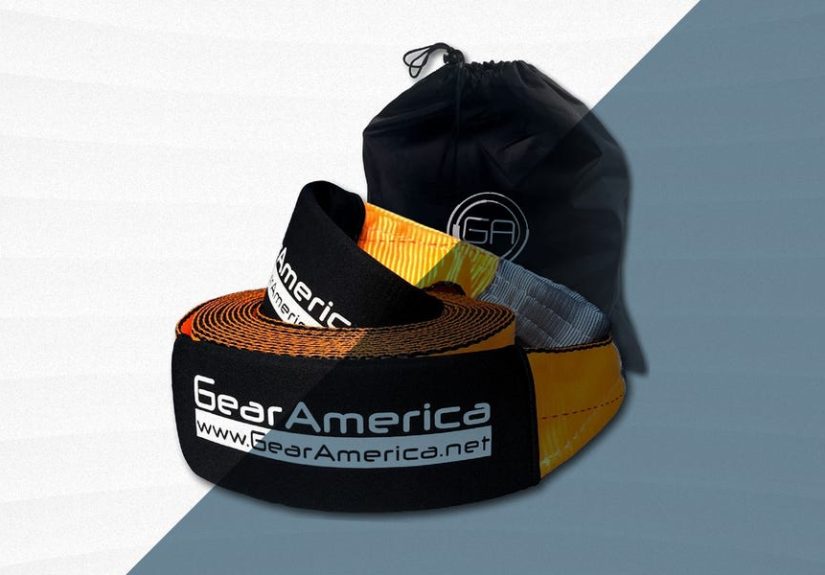
1. GearAmerica Heavy Duty Recovery Tow Strap (3″ x 20′)
Best all-around tow strap for trucks and SUVs
GearAmerica’s heavy duty recovery tow strap has become a go-to choice in the off-road and overlanding world.
The 3 inch x 20 foot polyester strap is rated around 30,000 pounds minimum breaking strength with
a working load limit near 10,000 pounds, which comfortably covers most half-ton and three-quarter-ton trucks
when used correctly. It’s designed for less than about 7% stretch, so it behaves like a sturdy tow strap rather
than a slingshot.
Reinforced loops, protective sleeves, and clearly printed specs help you stay organized, and many versions
are backed by a lifetime replacement promise from the brand. That’s a big plus for gear that spends its life
dragging vehicles out of mud and snow.
Best use cases: Controlled recoveries on firm ground, towing a disabled vehicle, winch extension,
and as a general-purpose strap to live in your truck 365 days a year.
- Pros: Excellent strength-to-price ratio, low stretch, versatile length, durable construction, strong warranty.
- Cons: Not a true “snatch strap” – if you want that stretchy bungee feel, you’ll want a kinetic option too.
2. Rhino USA 3″ Ultimate Recovery Tow Strap
Best for buyers who want heavy duty gear with a lifetime guarantee
Rhino USA has built a reputation in the U.S. off-road community for recovery gear that mixes burly construction
with bold, high-visibility styling. Their 3 inch tow straps are typically offered in 20-foot lengths with
high breaking strengths tailored to trucks, Jeeps, and SUVs, and they’re backed by a
lifetime warranty from a family-owned American business.
The Rhino tow straps use heavy-duty polyester webbing with reinforced loops and come as part of many recovery
kits that also include shackles or a hitch receiver block. The branding is loud – green, black, or gray straps
with bold logos – but the performance is what matters: strong, predictable pulls and clear specs on strength.
Best use cases: Everyday recovery strap for trail rigs, Jeep and Bronco owners, and anyone who
likes to buy once and keep the receipt forever “just in case.”
- Pros: Strong ratings for its size, lifetime guarantee, high visibility, widely available in the U.S.
- Cons: Like other tow straps, it doesn’t stretch as much as a true snatch strap or kinetic rope.
3. ARB 705 Snatch Strap (30′ x 2 3/8″, 17,600 lb)
Classic nylon snatch strap for serious off-road recoveries
ARB is one of the most respected names in 4×4 gear, and their snatch straps have been used on trails around
the world for decades. The ARB705 model is a 30 foot by 2 3/8 inch strap with a
17,600 pound breaking strength and about 20% stretch, designed specifically as
a snatch strap rather than a plain tow strap.
That stretch is the secret: it allows the strap to store kinetic energy when the pulling vehicle gently
accelerates, then release it smoothly to “pop” a stuck vehicle free. Enthusiasts often describe the ARB snatch
strap as feeling soft and controlled, with far less violent jerking than a stiff strap when used correctly.
It’s also tested to strict lab standards and covered by a multi-year warranty. ARB recommends the 17,500–17,600
lb version for most typical 4WD vehicles, with heavier models available for large trucks and loaded rigs.
Best use cases: Sand, mud, and snow where you need momentum and a controlled “yank” to free
a bogged 4×4.
- Pros: True snatch strap with real stretch, decades-long reputation, lab-tested, excellent trail manners when used correctly.
- Cons: You must learn proper snatch recovery techniques; it’s not meant for static towing.
4. Rhino USA Kinetic Recovery Rope (1″ x 30′)
Best for ultra-smooth, high-energy recoveries
If snatch straps are the “stretchy” cousins of tow straps, kinetic recovery ropes are their gym-rat siblings.
Rhino USA’s 1 inch x 30 foot kinetic recovery rope is a nylon-based rope rated at roughly
34,000+ pounds minimum breaking strength with around 30% elasticity.
That extra stretch lets the rope soak up energy and release it gradually, creating a very smooth pull compared
to a stiff strap. Many drivers find kinetic ropes ideal for deep sand and mud where you need some speed – the
rope turns that speed into controlled pulling force instead of violent shock loads. It’s also easier on your
recovery points, frames, and passengers’ necks when used correctly.
Rhino backs this rope with a lifetime guarantee as well, which is reassuring given the abuse kinetic ropes see
in heavy off-road use.
Best use cases: Soft recoveries in sand, snow, and mud; situations where you can get a run-up
and want to avoid harsh jolts while recovering heavier rigs.
- Pros: Very smooth recoveries, high strength, great for heavy trucks and loaded overland rigs.
- Cons: More expensive than a basic strap; not needed for simple on-road towing.
5. TGL 3″ x 20′ Heavy Duty Tow Strap (30,000 lb)
Best budget-friendly workhorse strap
TGL’s 3 inch x 20 foot heavy duty tow strap is a favorite among budget-conscious drivers who still want a
serious recovery tool. The polyester strap is rated around 30,000 pounds break strength and
includes reinforced loop ends plus a handy storage strap so it can dry out instead of molding in a sealed bag.
It doesn’t have some of the premium bells and whistles of higher-priced brands, but it consistently punches
above its weight for light truck and SUV recovery, and it’s widely available through big retailers in the
United States.
Best use cases: Emergency kit in a daily driver, occasional off-road trips, and as a backup
strap for more serious rigs.
- Pros: Strong for the price, simple design, easy to store, high capacity for most common uses.
- Cons: Not a true kinetic/snatch strap; long-term durability and warranty support are more basic than premium brands.
Safety & Sizing Tips for Recovery Straps
Regardless of which recovery strap or snatch strap you buy, using it correctly matters more than the logo on
the label. A few non-negotiables:
- Only attach to rated recovery points: Never, ever hook a strap to a tow ball, bumper hole, or anything not specifically rated for recovery. Tow balls can become deadly projectiles if they fail under load.
- Use proper shackles: Pair your straps with rated bow shackles or soft shackles sized for the strap and load. Don’t improvise with hardware store bits.
- Add a damper: A recovery damper, heavy jacket, or blanket draped over the strap can help keep it down if something breaks.
- Clear the area: Everyone not in the vehicles should stand well away, out of the line of pull.
- Match strap to vehicle class: A strap that’s ideal for side-by-sides or compact SUVs might be undersized for a fully loaded ¾-ton diesel truck.
When in doubt, consult the vehicle’s gross weight and choose a strap whose breaking strength is safely above
that, then practice gentle, progressive pulls rather than “full send” heroics on the first attempt.
Real-World Recovery Strap Stories and Lessons (Experience Section)
It’s one thing to read specs on a product page; it’s another to be nose-down in a mud hole, staring at a
rapidly approaching sunset, and hoping your strap is as strong as the marketing copy said it was. Here are a
few experience-based lessons that capture what really matters when choosing and using recovery straps.
Picture this: a group of friends out for a casual trail ride, one mildly ambitious hill climb, and a
full-size truck that sinks a little farther than expected into wet clay. The driver has four-wheel drive,
lockers, and confidence. What he doesn’t have is traction. After a few polite digs of the tires, the truck is
resting on the frame and everyone is suddenly very interested in recovery gear.
The first attempt uses a generic, no-name tow strap that’s been living under a seat for years. On paper, it
“says” it’s strong enough, but the label is faded and there’s no visible working load limit. The pulling vehicle
eases forward, tension builds, and the strap goes tight like a steel cable. There’s no give, no stretch – just a
hard jolt that rattles both vehicles and barely moves the stuck truck an inch. Everyone agrees that this feels
wrong, and wisely, they stop before something fails.
Round two swaps in a proper nylon snatch strap with a known breaking strength and recommended vehicle weight
range. The drivers talk through the plan: gentle run-up, no wheel-spinning heroics, recovery dampers in place,
and bystanders clear of the line of fire. The pulling truck rolls forward, the strap stretches, and instead of a
violent jerk, there’s a smooth, elastic pull that loads the system, then releases in a controlled “pop.” The
bogged truck climbs out of the rut as if someone finally found the “easy” button.
That moment tends to convert people permanently to quality snatch straps and kinetic ropes. You feel the
difference immediately – not only in how the vehicles move, but in how much less stress you put on recovery
points and frames. It also drives home why the ratings on the label matter. When you know the minimum breaking
strength and how it compares to your vehicle’s weight, you’re not guessing; you’re working within a sane margin
of safety.
Another common lesson comes from the “I’ll just tow my buddy home” scenario. A stiff, high-capacity tow strap
like the GearAmerica or Rhino USA models is fantastic here. Instead of grabbing whatever rope or chain is lying
around, a proper polyester strap gives you predictable behavior, clear ratings, and reinforced loops that
connect cleanly to recovery points or a receiver shackle. If you’ve ever towed a vehicle with a sketchy chain
that clanks its way down the road, switching to a quality tow strap feels like suddenly discovering power
steering.
Then there’s the learning curve with kinetic recovery ropes. Many drivers start with tow straps and later add
a 1 inch or 7/8 inch kinetic rope once they graduate to deeper sand or mud. The first time you feel a kinetic
rope stretch and then gently sling a stuck vehicle forward, you understand why so many off-roaders swear by
them. The key is respect: use rated recovery points, keep speeds reasonable, and remember that extra stretch
means extra stored energy, which has to be managed responsibly.
Over time, most seasoned trail drivers settle into a simple setup: one or two quality tow straps for controlled
pulls and on-road towing, plus a good snatch strap or kinetic rope for the truly stuck moments. They know the
ratings, they’ve practiced safe techniques in low-risk situations, and they inspect their straps after each
outing for frays, cuts, or melted fibers. The goal is never to see how far you can push the gear – it’s to make
recoveries so boring and predictable that they barely rate a mention in the trip report.
The bottom line from real-world experience is this: a good recovery strap or snatch strap is cheap insurance.
Compared to the cost of a tow, a broken bumper, or a ruined weekend, investing in quality recovery gear makes
more sense than any other accessory you can bolt onto your rig. Choose a strap with honest ratings, match it to
your vehicle class, and treat it with respect, and it will quietly save the day more times than you can count.
Conclusion: Build a Recovery Kit You Actually Trust
The best recovery strap for you isn’t just the one with the biggest number on the label – it’s the one that
matches your vehicle, your terrain, and your style of driving. For most drivers, a solid polyester tow strap
like GearAmerica or Rhino USA, plus a stretchy snatch strap or kinetic rope from ARB or Rhino USA, creates a
flexible, safe recovery toolkit. Add in proper shackles, rated recovery points, and a bit of training, and
suddenly getting stuck becomes an inconvenience, not a disaster.
Whether you’re building your first off-road recovery kit or upgrading from that mystery strap that came with
the truck, the five options above cover a wide range of budgets and use cases. Pick the right combination, keep
it in your rig, and the next time someone buries their vehicle up to the axles, you’ll be the calm one saying,
“No worries, I’ve got the strap for this.”