Table of Contents >> Show >> Hide
- From Longnecks to Long Blacks: Why the Old Formula Is Changing
- What the New Biker Bar Actually Looks Like
- Designing the Vibe Without Turning It Into Costume Theater
- Why This Concept Works for Motorcycle Culture
- The Business Case: Why Espresso Makes Sense
- The Future of the Biker Bar: Softer Edges, Stronger Identity
- 500 More Words From the Saddle: What This Experience Feels Like
- Conclusion
There was a time when the phrase biker bar summoned one very specific image: neon beer signs, a jukebox that sounded like it had been in three arguments already, chrome shining under low light, and a bartender who looked like he could rebuild a carburetor with one hand and judge your life choices with the other. It was loud, masculine, gloriously rough around the edges, and usually powered by whiskey, draft beer, and a healthy disregard for tomorrow morning.
But tomorrow morning has arrived, and it wants a double espresso.
Across the broader American hospitality scene, something interesting has been happening. Coffee shops have learned how to act like bars after dark. Bars have learned how to welcome guests who aren’t drinking alcohol. Restaurants have become all-day community spaces instead of single-purpose dinner rooms. Meanwhile, motorcycle culture itself has been shifting from a caricature of rebellion to a more layered identity: style-conscious, experience-driven, mechanically curious, and increasingly interested in community over cliché.
Put those trends together and you get a compelling new idea: the biker bar reimagined as a smarter, more inclusive, all-day destination where espresso is as essential as bourbon, where a rider can show up at 8 a.m. for a cortado, return at 2 p.m. for a sandwich, and come back at 8 p.m. for a zero-proof nightcap or a proper cocktail. It is less “stumble in, shout over Skynyrd” and more “hang out, swap stories, admire the bikes, and maybe order an espresso tonic because you’re not twenty-two anymore.”
From Longnecks to Long Blacks: Why the Old Formula Is Changing
The classic biker bar was built for one very specific kind of socializing: nighttime, alcohol-forward, and heavily coded as a rugged clubhouse. That still works for some places, and there is nothing inherently wrong with a cold beer and a row of parked Harleys outside. But culture changes, and good hospitality changes with it.
Today’s riders often meet for coffee before a ride, not just drinks after one. Morning routes and weekend loops naturally begin with caffeine. Touring culture has also long embraced roadside cafés, diners, and coffee stops as part of the ritual. The ride is the event, yes, but so is the pause: the place where helmets come off, maps come out, and someone points at a suspicious rattle near the left peg like it just insulted their family.
That rhythm matters. It means a rider hangout no longer has to exist only in the hours traditionally reserved for alcohol. In fact, limiting a motorcycle venue to bar hours misses the richest parts of rider culture: the planning, the maintenance talk, the gear gossip, the route recommendations, the “what are you riding these days?” conversations, and the glorious fifteen-minute debate over whether anyone actually needs another jacket.
Then there is the broader hospitality shift. Modern consumers increasingly gravitate toward spaces that serve multiple needs at once. They want places where they can work, meet, snack, linger, socialize, and transition from daytime to evening without changing zip codes. The rise of all-day cafés and hybrid coffee-cocktail spaces proves there is real appetite for rooms that don’t force people into one identity or one pace. A biker bar with espresso fits that model beautifully. It says: come as a rider, stay as a person.
What the New Biker Bar Actually Looks Like
1. Coffee Is Not a Side Character
In the reimagined biker bar, coffee cannot be an afterthought dumped from an exhausted drip pot near the register. It has to be part of the personality. Espresso in particular makes sense because it matches the motorcycle ethos: concentrated, technical, stylish, and best appreciated by people who enjoy arguing about details that outsiders consider alarming.
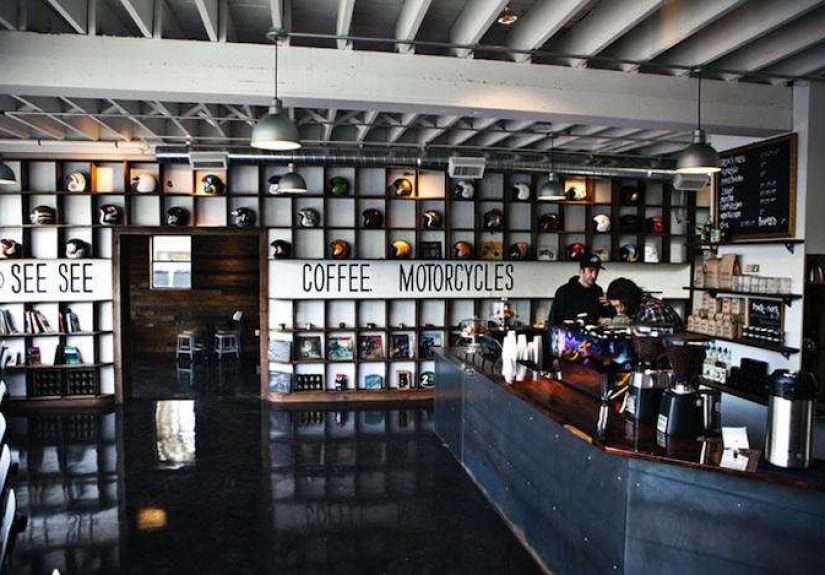
The motorcycle world already offers real hints of this crossover. Some rider-oriented spaces have blended wrenching, lounge culture, and serious coffee service, proving that machines and caffeine belong in the same sentence. That combination works because both worlds value craft. A rider who cares about suspension setup is not emotionally opposed to discussing grind size. They may even enjoy it more than is socially advisable.
A good espresso program changes the room. It broadens the customer base beyond drinkers. It gives early hours a purpose. It signals quality. And it creates a meeting point that feels social without requiring intoxication. A biker bar that serves flat whites, Americanos, iced espresso drinks, and a rotating seasonal special immediately tells guests this place is awake, not just open.
2. The Space Works From Morning to Midnight
The next-generation biker bar should function like an all-day clubhouse. Morning belongs to riders, remote workers, and neighborhood regulars. Afternoon welcomes lunch, meetings, and route planning. Evening shifts into dinner, events, live music, or cocktails. Late night can still keep a little grit, because no one asked the place to turn into a yoga studio with exhaust pipes.
This day-to-night flexibility is part of the appeal. It allows the venue to become a genuine third place rather than a narrowly defined bar. A true gathering place is not built only around consumption; it is built around repeat presence. People return because they feel recognized, because the room allows them to exist comfortably, and because there is always a socially acceptable reason to be there.
That is what the old biker bar did well, even if imperfectly. The reimagined version keeps the sense of belonging but updates the operating system. It is less gatekeeper, more host. It is still cool, but it no longer acts like coolness is a hostage situation.
3. The Menu Respects the Ride Home
One of the smartest shifts in contemporary hospitality is the growth of nonalcoholic and low-alcohol drinks that are treated with genuine care rather than pity. This matters even more in a rider-focused environment, because motorcycles and over-serving have never exactly been soulmates.
A biker bar with espresso is perfectly positioned to build a smarter beverage menu. Classic cocktails can stay, but they should share the stage with excellent coffee drinks, zero-proof serves, spritz-style options, sparkling bitters-and-soda builds, cold brew tonics, espresso-based mocktails, and night-friendly drinks that deliver complexity without wrecking anyone’s ride home.
This is not about sterilizing the venue. It is about giving guests options that feel intentional. If someone wants a beer after a long ride, great. If someone wants an espresso martini, also great. If someone wants a black coffee at 7 p.m. because they are starting the ride back to the city and still have ninety miles to go, they should not feel like the weirdest person in the room. Frankly, they might be the smartest.
Designing the Vibe Without Turning It Into Costume Theater
The biggest risk in building a modern biker bar is overdoing the theme. There is a fine line between authentic motorcycle atmosphere and a room that looks like a denim-themed escape room designed by someone who has never scraped a footpeg in their life.
The best version of this concept borrows from garage culture, café culture, and neighborhood hospitality without drowning in props. Yes, use real materials: steel, leather, wood, concrete, tile, worn brass, vintage signage, workshop lighting, maybe a bike or two on display. But let the details breathe. You are creating texture, not a museum dedicated to performative toughness.
Acoustics Matter More Than Ego
Traditional biker bars often confuse volume with atmosphere. The updated version should remember that conversation is one of the main products being sold. Riders want to hear each other. Coffee drinkers want to read or work. Dates want to flirt without yelling like they are hailing a tugboat. Good acoustics are not soft; they are civilized.
Lighting Should Change With the Day
Morning wants daylight, warm neutrals, and visual clarity. Evening can turn moodier with amber light, shadows, and a little cinematic drama. A biker bar that serves espresso must understand the arc of the day. At 9 a.m., guests want energy. At 9 p.m., they want atmosphere. One room can do both if it is designed with intention.
Food Should Be Better Than It Has to Be
This is where many themed venues fall apart. They assume the concept itself excuses mediocre food. It does not. A modern biker bar should serve a tight, satisfying menu that suits both riders and locals: breakfast sandwiches, pastries, quality burgers, chili, grain bowls, grilled vegetables, pie, excellent fries, and one or two dishes that become legends. Not twenty-seven forgettable items. Five to ten strong ones. Precision beats bulk.
Why This Concept Works for Motorcycle Culture
Motorcycle culture has always been more diverse than its stereotypes. It includes touring couples, city commuters, café-racer obsessives, ADV riders with enough luggage to survive a minor collapse of civilization, vintage tinkerers, new riders, women-led communities, queer riders, and people who love bikes but are deeply tired of spaces that seem built to exclude them.
The reimagined biker bar reflects that broader reality. It keeps the emotional magnetism of a rider clubhouse while removing the pressure to perform a narrow version of motorcycling. You can show up in full leathers, office clothes, work boots, or a waxed jacket you definitely bought because it made you feel like the lead in an expensive streaming drama. The room still works.
That inclusivity is not just ethically better; it is culturally smarter. A motorcycle venue that welcomes more kinds of riders builds a stronger community. More stories, more perspectives, more return visits, more events, more commerce, and more durability. Hospitality, when done well, expands the tribe without flattening its character.
The Business Case: Why Espresso Makes Sense
Let’s be blunt: espresso is not just romantic. It is practical.
A biker bar with coffee opens earlier, serves more dayparts, and attracts customers who may never have visited a traditional alcohol-only venue. It creates multiple revenue streams from one footprint: morning coffee, lunchtime food, afternoon snacks, evening cocktails, events, merch, maybe even retail gear or branded beans. The room earns its keep for more hours of the day.
It also strengthens identity. Plenty of bars sell drinks. Plenty of cafés pour espresso. Fewer spaces merge motorcycles, coffee, community, and thoughtful nightlife in a way that feels coherent. That distinctiveness matters in a crowded market. It gives people a reason to remember the place, photograph the place, recommend the place, and plan their weekend around the place.
And perhaps most importantly, coffee changes frequency. Guests may come to a whiskey bar once a week. They might come to a coffee-driven rider space three or four times in that same span. Repeat traffic is where culture becomes habit, and habit is where a venue stops being a novelty and becomes part of local life.
The Future of the Biker Bar: Softer Edges, Stronger Identity
The phrase “reimagined biker bar” does not mean replacing soul with polish. It means keeping the soul and editing out the nonsense. Keep the machines. Keep the stories. Keep the patina, the attitude, the route maps, the jackets on hooks, the weathered stools, the bartender who knows your usual, and the sense that everyone in the room has either ridden through something dramatic or is at least willing to exaggerate convincingly.
But add excellent espresso. Add thoughtful food. Add low-proof and zero-proof options. Add daytime hospitality. Add better design. Add room for more people to belong. Suddenly the biker bar is not a relic or a stereotype. It is one of the most appealing hospitality concepts around: emotional, visual, practical, and full of stories before anyone has even ordered.
In other words, the biker bar does not need to become less biker. It just needs to become more human. And maybe a little more caffeinated.
500 More Words From the Saddle: What This Experience Feels Like
Imagine pulling in just after sunrise, the kind of morning where the air still has teeth and your gloves smell faintly of last weekend’s rain. The bikes outside are lined up at imperfect angles, which is how you know the place is real. Nobody with actual motorcycle friends parks in a neat little showroom grid unless they are being photographed for a catalog. You kill the engine, swing a leg off, and hear the soft ticking sound of hot metal cooling down. It is one of the great tiny sounds in life, right up there with a match striking and the first hiss of espresso hitting the cup.
You step inside and the room does exactly what a good room should do: it tells you what kind of day you’re allowed to have. There is music, but it is not trying to win a fistfight. There is coffee in the air, and toast, and leather, and a trace of gasoline from the jackets hanging by the door. Someone at the bar is talking about tires with the seriousness usually reserved for legal testimony. Two people at a corner table are planning a weekend ride with the intensity of generals moving tiny armies across a map. At another table, a woman in office clothes is typing on a laptop next to a helmet and half-finished cortado. Nobody thinks this is strange. That is the whole point.
You order an espresso and something warm to eat. Maybe it is a breakfast sandwich with enough structure to survive one-handed eating. Maybe it is a pastry that flakes onto your jeans in the noble tradition of all worthwhile pastries. The coffee arrives with the kind of crema that suggests someone behind the counter actually cares. Not “cares” in the corporate slogan sense. Cares in the dangerous, detail-obsessed sense. The same kind of care a rider gives chain tension or brake feel.
By noon, the room has changed its tempo. More locals drift in. A couple who do not ride ask about the vintage Triumph by the front window. A rider coming off a backroad loop orders fries, black coffee, and a sparkling bitter drink because there is still an hour of riding left and wisdom has finally caught up with enthusiasm. Someone buys a bag of beans on the way out. Someone else buys a T-shirt they absolutely do not need but will later describe as a practical purchase.
At night, the place darkens just enough. The espresso machine still hisses, but now it shares the stage with glassware, cocktail shakers, and the low hum that means people are comfortable enough to stay. This is where the concept really sings. You can have a proper drink if you want one. You can also have a coffee cocktail, an NA spritz, a cold brew and tonic, or another straight espresso because tomorrow’s ride starts early and your self-control has matured into something almost respectable.
What makes the experience stick is not novelty. It is recognition. The room understands that motorcycles are not only about rebellion, noise, or image. They are also about ritual, pause, conversation, route-making, appetite, weather, fatigue, friendship, and the little luxury of arriving somewhere that feels earned. A reimagined biker bar with espresso understands the full day of riding, not just the final drink. It gives the culture a headquarters that fits how people actually live now. And that may be the smartest upgrade of all.
Conclusion
The biker bar of the future does not abandon its roots; it refines them. It takes the camaraderie, visual drama, and mechanical romance that made rider hangouts special in the first place and pairs them with the habits modern guests actually have: coffee in the morning, better food all day, thoughtful drinks at night, and a real desire for spaces that feel welcoming rather than performative. Add espresso, and suddenly the whole concept snaps into focus. It is still a biker bar. It is just one that knows when to pour a bourbon, when to pull a shot, and when to make room for the next kind of regular.