Table of Contents >> Show >> Hide
- Why This Award Matters in Charleston
- The Project at the Center of the Honor
- More Than a TV House: A Real Preservation Story
- Charleston’s Preservation Culture Raises the Stakes
- What the Award Says About the Restoration Approach
- Lessons for Homeowners Restoring Historic Houses
- Why This Story Resonates Beyond Charleston
- The Bigger Meaning of the Prestigious Preservation Award
- Related Experiences: What a Preservation Win Like This Really Feels Like
- Conclusion
- SEO Tags
If you know This Old House, you know the show loves a challenge. Give the crew a crooked floor, a cranky foundation, and a wall that appears to be held together by optimism and 1970s paneling, and they are basically on vacation. But the Charleston project was more than television-friendly chaos. It was the kind of restoration that had to satisfy a city famous for guarding its architectural soul. So when the This Old House Charleston project earned a prestigious preservation award, the recognition landed with real weight.
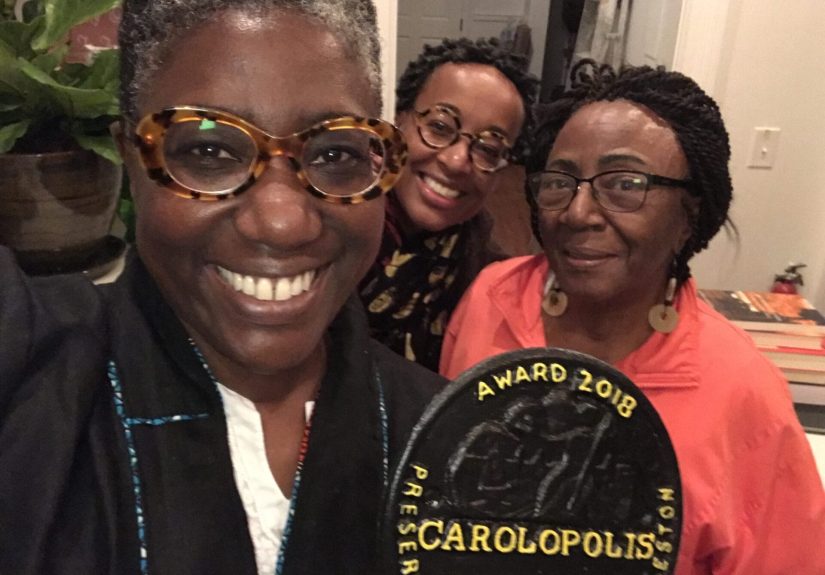
This was not a case of slapping on a fresh coat of paint and calling it “historic charm.” The honored house, a circa-1890 Victorian in Charleston’s Elliotborough neighborhood, had stood vacant for decades and suffered severe deterioration before its rehabilitation. The restoration demanded structural stabilization, careful exterior repair, and a level of respect for original character that Charleston takes very seriously. In a city where preservation is practically a second language, winning a Carolopolis Award says one thing loud and clear: this project did the hard work right.
That is what makes this story so compelling for homeowners, preservation fans, and anyone who has ever binge-watched a renovation series while shouting, “Please don’t rip out the original windows!” The award honors more than a finished facade. It celebrates craft, patience, historical sensitivity, and the rare ability to make an old house live well in the present without erasing the past.
Why This Award Matters in Charleston
Charleston does not hand out preservation praise like free samples at a warehouse store. The Carolopolis Awards, presented by the Preservation Society of Charleston, have recognized exceptional preservation work for more than 70 years. These awards are not for routine upkeep. They are reserved for meaningful projects in preservation, rehabilitation, restoration, and compatible new construction that protect the historic resources of Charleston and the Lowcountry.
That context matters. Charleston is one of America’s most preservation-minded cities, and not by accident. The city’s preservation culture runs deep, shaped by early civic activism, nonprofit advocacy, and local design oversight that helped make Charleston a model for historic district protection. The Board of Architectural Review has long played a major role in reviewing visible changes to historic properties. In other words, this is a place where bad decisions on an old house do not simply raise eyebrows. They raise meetings, reviews, standards, and probably a strongly worded opinion from someone who knows exactly how a piazza bracket should look.
So when a project wins a Carolopolis Award for exceptional exterior restoration, it signals that the work achieved something more important than mere curb appeal. It means the restoration respected the building’s historic identity, contributed positively to the streetscape, and met the expectations of a community that knows the difference between preservation and pretty demolition wearing vintage clothes.
The Project at the Center of the Honor
The award-winning This Old House Charleston project focused on a two-story Victorian wood-frame house owned by Judith Aidoo-Saltus and her wife, Julia. Built around 1890, the house had deep family meaning as well as architectural value. It was not just another old structure with nice bones. It was memory-filled, neighborhood-rooted, and worth saving for reasons that went beyond aesthetics.
Before rehabilitation, however, the home was in rough shape. “Rough shape” may even be too polite. The house had been vacant for roughly 30 years, and the result was widespread deterioration in siding, trim, and framing. Water intrusion and age had taken their toll. There was leveling and stabilization to address. Wood elements were failing. The kind of problems that make preservationists nervous and contractors suddenly interested in very strong coffee were all there.
What makes the project notable is how the team approached those problems. According to This Old House, the rehabilitation included removing a structurally unsound 1960s addition, shoring up historic roof framing, and replacing a failing roof with a new hand-crimped metal roof. Severely deteriorated wood siding and windows were preserved where possible or replaced in kind when salvage was no longer realistic. Porch members with failing trim were carefully measured so reconstructed pieces could follow the original profiles rather than some generic “close enough” version from a big-box shelf.
That last point is the difference between restoration with discipline and renovation with vibes. Preservation work often succeeds or fails in the details: the profile of trim, the decision to repair rather than replace, the willingness to match historic materials and proportions, and the understanding that old houses carry their significance in specific elements, not just in a vague aura of quaintness.
More Than a TV House: A Real Preservation Story
Television can sometimes flatten restoration into a tidy montage: demo day, design reveal, happy homeowners, end credits. The Charleston project pushed against that shortcut. During This Old House Season 39, the Charleston series followed two local houses, including a brick 1840s single house and this 1890s family home in Elliotborough. The Victorian restoration was such an extensive undertaking that the finished result was not fully ready during the original TV season and later received its own reveal.
That delay tells you something useful. Good preservation rarely operates on the timeline of instant gratification. Old houses do not care about production schedules. They reveal problems layer by layer, usually at the exact moment a project manager hoped for simpler news. A wall gets opened, and suddenly there is hidden rot. A repair begins, and the “small” issue turns out to be connected to a much larger structural problem. Historic rehabilitation is less like assembling furniture and more like solving a mystery with wood dust.
In this case, the result was worth the patience. The project showed that preservation is not about freezing a house in time. It is about giving it a future without severing it from its history. That is especially meaningful in a city like Charleston, where the built environment is part of the civic identity. Houses are not isolated objects. They participate in the look, memory, and rhythm of the neighborhood around them.
Charleston’s Preservation Culture Raises the Stakes
To understand why this award feels significant, it helps to understand Charleston itself. The city has long been a national reference point for preservation. Official and nonprofit institutions alike have spent decades protecting buildings, districts, and architectural character. The city’s review systems and preservation standards are designed to ensure that historic structures are not casually altered beyond recognition.
Charleston’s famous “single house” offers a good example of how specific local architecture can be. This house type, strongly associated with the city, typically presents its narrow side to the street and places long piazzas along the side of the lot. It developed in response to Charleston’s climate, urban form, and evolving needs. Even when the award-winning Elliotborough house was not itself the classic single house featured elsewhere in the season, it still sat inside a larger architectural culture where proportions, materials, orientation, and streetscape relationships matter enormously.
That means preservation in Charleston is rarely just about one homeowner’s taste. It is about compatibility with neighborhood context, respect for historic patterns, and acknowledgment that every successful restoration helps keep the city from becoming a theme park version of itself. The best projects protect authenticity while still making room for real life: better function, better durability, and better comfort for the people who actually live there.
What the Award Says About the Restoration Approach
The Carolopolis recognition points to several qualities that preservation professionals and smart homeowners should notice.
1. The project treated the exterior as historic fabric, not disposable skin.
When siding, windows, trim, and rooflines are handled carelessly, an old house can lose its identity in one fast-moving renovation cycle. This project succeeded because it emphasized repair where feasible and in-kind replacement where necessary. That is preservation logic at its best: save original material whenever possible, and when you cannot, replace it with work that honors the original form and intent.
2. Structural rescue came before cosmetic victory.
Nothing says “responsible restoration” quite like stabilizing a house before chasing photogenic finishes. The honored work dealt with leveling, framing, and roofing challenges that were essential to the building’s survival. That foundation-first mindset is one reason preservation awards matter. They remind us that beauty in an old house is often built on unseen acts of discipline.
3. The project respected the building’s story.
This was a family-connected home in a neighborhood with history and change layered together. Preserving it meant more than creating a nice before-and-after image. It meant reclaiming a place tied to memory, identity, and community continuity. The best historic home restoration projects understand that houses are both physical artifacts and emotional containers.
Lessons for Homeowners Restoring Historic Houses
Even if you are not restoring a Victorian in Charleston under the gaze of preservation experts and TV cameras, this project offers practical lessons.
Know what is worth saving
Preservation-minded remodelers often focus on the elements that carry the strongest historic character: windows, trim, millwork, masonry, floors, doors, and roof forms. Some pieces can be repaired. Others may require custom replication. The point is to make those decisions intentionally, not out of convenience.
Do not confuse new materials with better materials
Old houses were often built with dense, durable wood and crafted details that are hard to replicate cheaply today. Replacing everything with new products can actually downgrade both character and quality. Sometimes the smartest move is not “upgrade everything.” Sometimes it is “save what still has something to teach the house.”
Respect context, not just the building
Historic houses live in neighborhoods, not vacuum-sealed Instagram grids. Exterior choices should reflect the architectural language around them. In Charleston, that standard is especially visible, but the principle applies almost anywhere. A house can be beautifully renovated and still feel wrong if it no longer belongs to its street.
Why This Story Resonates Beyond Charleston
There is a reason stories like this travel far beyond local preservation circles. Americans remain fascinated by old houses because they offer something new construction often cannot: layers. Layers of material, memory, craftsmanship, regional identity, and plain old stubborn survival. When a restoration succeeds, it gives people hope that character and livability do not have to be enemies.
The This Old House Charleston project also resonates because it models a healthier renovation mindset. It does not treat the past as a design obstacle. It treats history as an asset that can guide better decisions. That philosophy has become more attractive as homeowners tire of one-size-fits-all flips and start craving homes with texture, soul, and specificity.
And yes, there is also the deeply satisfying drama of seeing a neglected house make a comeback. Humans love a redemption story. Add historic architecture, a beloved television franchise, and an award from one of the country’s most respected local preservation organizations, and suddenly you have more than a renovation update. You have a restoration with civic significance.
The Bigger Meaning of the Prestigious Preservation Award
At its core, this award says the Charleston project did something many renovations promise and few truly accomplish. It preserved history without turning the house into a museum piece. It repaired damage without wiping away identity. It improved performance and stability while keeping the exterior character that made the house worth saving in the first place.
That is the sweet spot. Not nostalgia for nostalgia’s sake. Not modernization that bulldozes meaning. Just smart, careful, respectful restoration.
For This Old House, the award reinforces the show’s best legacy: demonstrating that old homes deserve rigor, not shortcuts. For Charleston, it adds another chapter to a long preservation tradition. And for everyone else watching from the comfort of a sofa that probably also needs restoration, it is a reminder that craftsmanship still matters, details still matter, and old houses are often at their best when the people working on them know when to intervene and when to listen.
Related Experiences: What a Preservation Win Like This Really Feels Like
A story like this is not only about permits, trim profiles, and award plaques. It is also about experience. The experience of walking through a historic neighborhood and sensing, almost immediately, when a house belongs to its place and when it has been renovated into blandness. The experience of seeing an exterior that still carries the rhythm of its era: the porch proportions, the window spacing, the shadows cast by moldings that were shaped with care instead of downloaded from a catalog of “historic-ish” options.
For homeowners, a project like the This Old House Charleston restoration often becomes an emotional roller coaster disguised as construction. First comes optimism. Then discovery. Then the moment someone says the words “water damage” in a tone that suggests your budget just learned how to scream. But when the work is guided by preservation values, the frustration starts to transform into something more meaningful. You are not just fixing damage. You are recovering a building’s dignity.
For neighbors, these projects can change the feeling of a block. A long-neglected house often casts a strange kind of silence. People pass it and imagine what it used to be, or what it could become, or whether anyone will step in before the damage becomes irreversible. When restoration finally happens, the house re-enters neighborhood life. It stops being a cautionary tale and becomes a point of pride.
For viewers of renovation television, the experience is a little different but still powerful. You get to watch expertise slow down the urge to oversimplify. You see why preservation is not fussy nostalgia but a practical discipline. You begin to understand that “replace everything” is usually the least imaginative move in the room. A house with age has instructions embedded in it, and the most skilled teams learn to read them.
There is also a sensory side to historic rehabilitation that rarely gets enough credit. The sound of old wood underfoot. The way restored windows change the quality of light in a room. The visual calm of exterior details that are proportioned correctly. Even people who cannot name a cornice or define in-kind replacement usually recognize the result when they see it. The house feels right. Comfortable, grounded, and believable.
That may be the most rewarding experience tied to this award. It reminds us that preservation done well is not stiff or precious. It is deeply human. It allows memory and daily life to share the same address. Kids can run through spaces shaped by earlier generations. Families can cook dinner under roofs that were worth repairing. A city can grow without forgetting what made it itself. And a once-fragile house can stand there, looking calm and inevitable, as if it had never spent years waiting for someone to believe it could be saved.
Conclusion
This Old House Charleston Project Wins Prestigious Preservation Award is more than a feel-good headline. It is proof that preservation, when done with rigor and humility, can rescue an endangered structure, honor neighborhood history, and create a livable home that still looks like it belongs in the story of Charleston. The Carolopolis Award did not simply celebrate a makeover. It recognized a restoration that understood the stakes, respected the craft, and delivered the rare result every old-house lover hopes for: a future built without deleting the past.