Table of Contents >> Show >> Hide
- What “Three-Way” Actually Means (And Why It’s Confusing)
- How a Three-Way Dimmer Switch Works
- Meet the Wires: Line, Load, Travelers, Neutral, Ground
- Choosing the Right Three-Way Dimmer Switch
- Safety First: The Boring Part That Prevents the “Shocking” Plot Twist
- Installing a Three-Way Dimmer: The Practical Overview
- Common Problems (And Fixes That Don’t Require a Time Machine)
- Real-World Example: The Classic Staircase Setup
- DIY vs. Hiring an Electrician
- Conclusion: The “Right” Three-Way Dimmer Is the One That Plays Nice With Your Home
- Extra: of Real-World Experiences Homeowners Commonly Run Into
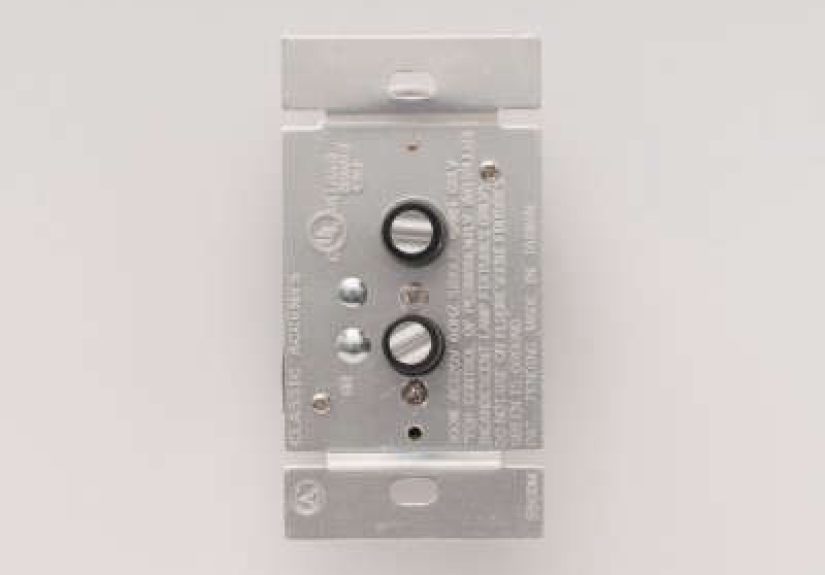
A three-way dimmer switch is basically a “volume knob” for your lightsexcept you can adjust it from two different locations. Think staircases, long hallways, big living rooms with multiple entrances, or any place where walking across the house just to change the vibe feels like an unnecessary cardio session.
This guide breaks down what a three-way dimmer is, how it works, what to buy (especially for LEDs), and how to avoid common DIY facepalms like “why does the light only work when the other switch is up?” You’ll get practical tips, real-world examples, and troubleshooting advicewritten in plain American English, not in “ancient electrician rune.”
What “Three-Way” Actually Means (And Why It’s Confusing)
In U.S. wiring terms, a three-way setup means two switches control one light. The “three” doesn’t mean three switches. (Yes, this naming system has the same energy as “why do we park in a driveway and drive on a parkway?”)
A standard three-way circuit uses:
- Two 3-way switches (one at each location)
- Two traveler wires connecting those switches
- A common connection on each switch (this is the key piece)
If you have three or more locations controlling the same light, that’s usually a 4-way setup in the middle (with two 3-way switches on the ends). Many modern “multi-location” dimmers handle this with companions/remotes, which can be simpler than traditional 4-way wiring.
How a Three-Way Dimmer Switch Works
In a normal on/off three-way circuit, each switch routes power through one of two traveler paths. Flip either switch, and the circuit changes statelight on or off.
A three-way dimmer adds one more job: it controls how much power reaches the light (the “dimming” part). In most common installations, you’ll use:
- One dimmer (the “primary” control)
- One matching 3-way switch or companion at the other location
Important: with many systems, you can’t put a full dimmer at both ends unless the manufacturer explicitly supports it. Instead, you use a companion/remote that talks to the master dimmer. That’s why product descriptions sometimes say “3-way capable” but then quietly require a “companion.” (Sneaky? A little. Common? Very.)
Meet the Wires: Line, Load, Travelers, Neutral, Ground
Before you pick a dimmeror touch anything in the boxyou need to understand the five usual suspects:
1) Line (Hot)
This is the incoming power from your panel (breaker). In a typical three-way, the line is connected to the common screw on one of the switches.
2) Load
This is the wire going to the light fixture. In a typical three-way, the load is connected to the common on the other switch.
3) Travelers
These are the pair of wires that run between the two switches. On a traditional 3-way switch, travelers connect to the two brass-colored screws. Travelers are “either/or” pathwaysand yes, they cause 90% of three-way confusion.
4) Neutral
Neutral wires are usually bundled in the back of the box. Many smart dimmers require a neutral connection to power their electronics. Traditional mechanical dimmers often do not. If your switch box has no neutral bundle, your product choices may shrink dramatically.
5) Ground
The bare copper or green wire is the equipment ground. Connect it as directed by the dimmer’s instructions. Grounding isn’t optional “extra credit.”
How to Identify the “Common” Wire Without Guessing
On a standard 3-way switch, the common terminal is usually:
- A darker (black) screw, different from the traveler screws
- Or labeled COM / COMMON on the switch body
The wire attached to that odd-colored screw is the common. Label it. Take a photo. Write it down. Tattoo it on your memory. Just don’t rely on “I’ll remember which one it was.” You won’t.
Choosing the Right Three-Way Dimmer Switch
The best dimmer is the one that matches your wiring, your bulbs, and your expectations. Here’s what to check before buying.
Bulb Type and Compatibility (LEDs Are the Main Character Here)
Incandescent and halogen loads are generally forgiving. LEDs are… not. An LED that’s “dimmable” can still flicker or buzz with the wrong dimmer. When shopping:
- Confirm your bulbs are labeled dimmable.
- Choose a dimmer rated specifically for LED loads (not just incandescent).
- Check minimum/maximum load ratingssome dimmers don’t like tiny LED loads.
- Look for published compatibility lists if available (especially for smart dimmers).
Single-Pole vs. Three-Way vs. Multi-Location
Many dimmers can be wired as either single-pole or three-way. But “multi-location” can mean different things:
- Traditional 3-way: one dimmer + one 3-way switch (or companion).
- 3+ locations: often requires a compatible system (companion switches or remotes).
- Wireless remotes: can add extra “locations” without running new traveler wires.
Neutral Wire Requirement (Especially for Smart Dimmers)
If you’re going smartapp control, schedules, voice assistantscheck whether the dimmer needs a neutral. Older homes sometimes don’t have neutral in the switch box, which can turn “quick upgrade” into “unexpected drywall cameo.”
Wattage, Derating, and the “Multi-Gang Box Surprise”
Dimmers generate heat. When multiple devices share the same wall box (a multi-gang setup), many dimmers must be derated (allowed wattage reduced), especially if side fins are removed or spacing is tight. Always read the manufacturer’s specs.
Forward Phase vs. Reverse Phase (ELV/MLV)
Some lighting systemsespecially electronic low-voltage driversperform better with reverse-phase (ELV) dimmers. If your fixture uses a transformer or a fancy driver, don’t guess. Look up the fixture requirements and match the dimmer accordingly.
Safety First: The Boring Part That Prevents the “Shocking” Plot Twist
Working on a switch involves line-voltage wiring. If you’re not comfortable, hire a licensed electrician. If you are comfortable, still follow basic safety steps:
- Turn off power at the circuit breaker (not just the switch).
- Verify power is off using a proper tester.
- Confirm your wiring connections are tight and secure before restoring power.
- If anything looks burned, melted, or brittle, stop and call a pro.
Also: if your wall box is crammed tighter than a carry-on suitcase, do not force the dimmer in. Crowded boxes can stress connections, create heat issues, and generally ruin your day.
Installing a Three-Way Dimmer: The Practical Overview
Because three-way circuits can be wired in multiple legitimate ways (line in one box, load in the other, power feeding through the fixture, etc.), there is no single universal “connect red to X always” recipe that’s safe to publish for every home. The good news: manufacturers include wiring diagrams for each supported scenario.
Here’s the general approach that works with most standard three-way dimmer upgrades:
Step 1: Choose Which Location Gets the Dimmer
Typically, you place the dimmer where you want the “main control” (often the most-used entrance). In many systems, only one location uses the dimmer, and the other location remains a standard 3-way switch or a companion control.
Step 2: Label the Common and Travelers Before Disconnecting Anything
Pull the existing switch out gently and identify:
- Common wire: attached to the darker/odd-colored screw.
- Traveler wires: attached to the two matching screws (often brass-colored).
- Ground: bare copper/green.
Label them with tape. Take a clear photo. Future-you will be grateful.
Step 3: Follow the Dimmer’s Diagram Exactly
Your dimmer will specify terminals/leads such as Line/Hot, Load, and Traveler (sometimes two traveler connections), plus Neutral (if required) and Ground. Match your labeled wires to the dimmer’s diagramnot to a random internet diagram that “looked close enough.”
Step 4: Handle the Companion Side Correctly
On the non-dimmer location, you’ll either:
- Keep a standard 3-way switch, or
- Install a manufacturer-approved companion/remote (common with smart dimmers)
This is where many installs go sideways: mixing a master dimmer with an incompatible companion can cause weird behavior, flicker, limited dim range, or complete non-function.
Step 5: Reassemble Carefully and Test
Carefully tuck wires back (no sharp kinks), mount the dimmer, install the faceplate, restore power, and test from both locations:
- On/off from each location
- Dimming control from the dimmer location
- No buzzing, flicker, or “ghost glow” when off
Common Problems (And Fixes That Don’t Require a Time Machine)
Problem: The Light Works Only in One Switch Position
This is a classic traveler/common mix-up. In a three-way circuit, the common matters a lot. Re-check that the wire you labeled as common is actually on the dimmer’s specified common/line/load terminal as required by the diagram.
Problem: LEDs Flicker, Drop Out, or Won’t Dim Smoothly
Usually caused by incompatibility between the dimmer and the LED driver, or by operating outside the dimmer’s supported load range. Fixes often include:
- Confirm bulbs are dimmable (not “bright idea, bad execution” LEDs).
- Use an LED-rated dimmer with an appropriate minimum load.
- Try a different LED bulb brand/model known to dim well.
- If supported, adjust low-end trim/calibration on the dimmer.
Problem: Buzzing or Humming
Some mild noise can occur, but loud buzzing is usually a mismatch (bulb/driver/dimmer) or a loose connection. Verify connections are tight and confirm the dimmer is designed for your load type (LED, ELV, etc.).
Problem: Smart Dimmer Won’t Power On
Many smart dimmers require a neutral. If your box has no neutral bundle, the dimmer may not power up at all. Also check that you installed the correct companion device (if required) and that line/load are correctly identified.
Problem: The Switch Box Is Too Small
Dimmers can be physically larger than standard switches, and box-fill rules still apply. If it’s a tight squeeze, a deeper box or professional help may be the safest fix.
Real-World Example: The Classic Staircase Setup
Imagine a stairwell with a switch at the bottom and another at the top. You want:
- Lights on when you enter downstairs
- Lights off when you reach the top (or dimmed for “don’t wake the house” mode)
A three-way dimmer lets you put the dimmer at the location you use most (often the bottom), and keep a standard 3-way switch or companion at the top. The result: brightness control where you want it, convenience everywhere, and fewer late-night stumbles.
DIY vs. Hiring an Electrician
If you’re comfortable identifying wires, using a tester, and following a manufacturer’s diagram, this can be a manageable DIY upgrade. But if your wiring is unfamiliar (no neutral, crowded multi-gang box, aluminum wiring, odd color combinations, or signs of overheating), hiring a pro is the smarter move.
Cost-wise, a basic switch swap is usually cheaper than a dimmer install, and smart dimmers can add complexity. In many U.S. markets, homeowners commonly see dimmer installation (including labor) land roughly in the low hundreds per switch, depending on the device type and site conditions.
Conclusion: The “Right” Three-Way Dimmer Is the One That Plays Nice With Your Home
A three-way dimmer switch is one of those upgrades that feels smalluntil you live with it for a week and wonder how you tolerated “blinding overhead light at 10 p.m.” for so long.
The keys to success are simple:
- Identify the common wire correctly (seriously, label it).
- Buy a dimmer that matches your bulb type (LED compatibility matters).
- Follow the manufacturer’s wiring diagram for your exact setup.
- Use the correct companion/remote if the dimmer requires one.
- Prioritize safetybecause the only thing that should be “lit” is your room, not your fingertips.
Extra: of Real-World Experiences Homeowners Commonly Run Into
If you read enough homeowner Q&A threads, manufacturer support pages, and DIY how-tos, you start noticing the same three-way dimmer stories popping up like sitcom rerunscomforting, predictable, and occasionally chaotic.
The most common experience is the “I replaced the switch and now nothing makes sense” moment. It usually starts innocently: someone removes the old 3-way switch, sees three insulated wires plus ground, and thinks, “Easy. Three wires. Three holes. What could go wrong?” Then the light works only when the other switch is in a specific position, or it turns on but refuses to turn off from the second location. The lesson that shows up again and again: the common wire isn’t optional trivia. It’s the VIP pass that tells the dimmer where power comes in (line) or where it needs to go (load), depending on the circuit layout. Labeling the common before disconnecting is the difference between a 30-minute project and a three-hour “why do I even own a house” spiral.
Another classic experience is the “my LEDs are possessed” phase. Homeowners install a dimmer rated for LEDs, screw in dimmable LED bulbs, and still get flicker at low levels, a tiny glow when “off,” or a buzz that sounds like a mosquito with a gym membership. What’s happening is usually not paranormalit’s compatibility. LED drivers vary, and some dimmers simply behave better with certain bulb models. Many people end up trying one or two bulb brands before they find the sweet spot. The happiest endings tend to involve either (1) switching to a dimmer with a better LED reputation, or (2) choosing bulbs from a known compatibility list.
Smart dimmers introduce a new chapter: the “Where’s the neutral?” storyline. Folks buy a modern smart dimmer because app control is fun, only to discover the switch box has no neutral bundle. That’s not a failure of skillit’s a common reality in older homes. The experience often ends in one of three ways: picking a smart dimmer designed to work without neutral (if available), moving the install to a box that does have neutral, or calling an electrician to rework the wiring safely.
Finally, there’s the physical comedy of the wall box itself. Dimmers are often bulkier than standard toggles, and many homeowners discover their box is packed like a closet before a yard sale. The “solution experience” here is usually practical: use a deeper box if feasible, reduce crowding where code allows, or hire a pro to avoid stressing connections. The recurring theme across all these experiences? Three-way dimmers are fantasticwhen you respect the wiring, the bulb compatibility, and the limits of the box you’re stuffing them into.