Table of Contents >> Show >> Hide
- What Happened After the Proposal News Broke
- Why Kayla Nicole “Sparks Buzz” So Easily in This Story
- A Fact-Based Timeline Behind the Headlines
- The Real Story Isn’t Just the BuzzIt’s the Media Machine
- A More Grounded Read on Kayla Nicole’s Public Presence
- What This Means for Celebrity Coverage Going Forward
- Shared Experiences Around This Kind of Celebrity Buzz (Extended Section)
- Conclusion
Celebrity news moves fast. Celebrity plus NFL news moves faster. And celebrity-plus-NFL-plus-Taylor-Swift news? That moves at the speed of Wi-Fi in a stadium suite.
When Travis Kelce and Taylor Swift announced their engagement in August 2025, the internet did what it always does when two mega-famous worlds collide: it celebrated, analyzed, theorized, memed, and absolutely refused to log off. In the middle of that wave, Kayla NicoleKelce’s ex and a media personality in her own rightonce again became a trending talking point. Not because she held a press conference. Not because she named names. But because online audiences, entertainment sites, and algorithm-hungry feeds zeroed in on her posts, past comments, and every possible subtext.
This is where the story gets more interesting than a basic “who posted what” headline. The buzz around Kayla Nicole after the Taylor Swift proposal says a lot about modern celebrity culture, social media behavior, parasocial fandoms, and how women tied to headline-making men are often pulled into stories they didn’t ask to lead.
So let’s unpack what happened, why it trended, and what it reveals about the way entertainment news works in 2025 and 2026without turning this into a conspiracy board made of red string and screenshots.
What Happened After the Proposal News Broke
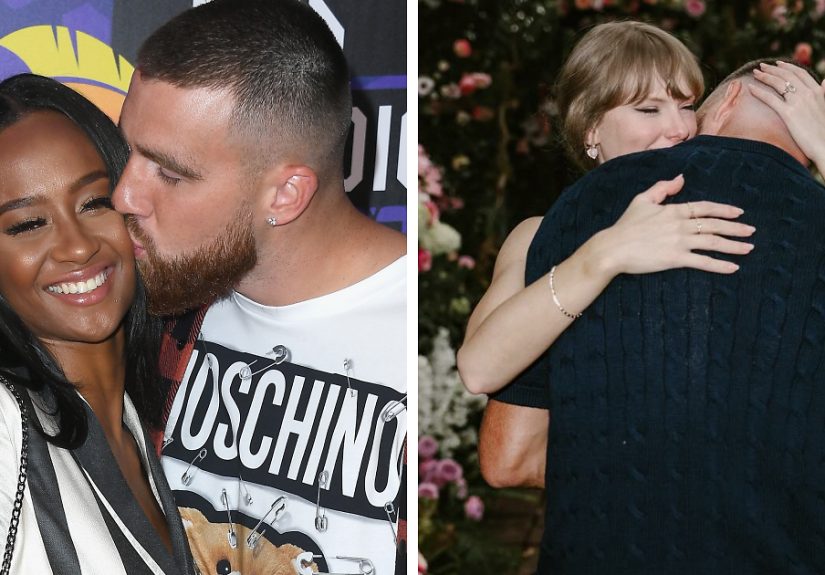
Travis Kelce and Taylor Swift publicly announced their engagement with a high-impact Instagram post featuring romantic garden photos and a playful caption that instantly became internet shorthand for the couple’s brand: sweet, self-aware, and highly shareable. Coverage exploded across mainstream news, entertainment media, music outlets, sports reporting, and even media-analysis sites. In other words, this was not just a celebrity announcementit was a full-scale content event.
That matters because when a story reaches massive crossover status (music fans, NFL fans, pop culture watchers, general news audiences), it creates “orbit stories.” These are the spin-off headlines around family reactions, ring details, proposal logistics, social media responses, and yes, exes. Kayla Nicole became one of those orbit stories almost immediately.
Entertainment coverage highlighted a post she shared after the engagement announcement: a clip about “choosing joy.” On its own, that kind of post could mean many thingsself-reflection, mood-setting, motivation, or just a message she liked. But in a highly charged celebrity ecosystem, ambiguity is practically a sport. Online speculation kicked in, and media headlines followed.
That sequence is key for understanding why this topic continues to rank in search and trend on social platforms: the original engagement announcement was huge, but the side conversations kept the story alive for daysand in some cases, months.
Why Kayla Nicole “Sparks Buzz” So Easily in This Story
1) She’s already a public figure, not just “someone’s ex”
Kayla Nicole is a host, media personality, and sports commentator with her own audience and career. But in viral coverage cycles, nuance often gets flattened. A woman with an established platform can still be reduced to a relationship label if the headline is hot enough.
That reduction is exactly what makes these stories sticky and uncomfortable at the same time. The public is curious, but the framing can become repetitive: every post, every interview, every outfit, every joke is interpreted through the lens of a past relationship.
2) She has openly discussed the emotional toll of online trolling
Kayla Nicole has spoken candidly in interviews and reality TV-related coverage about the pressure, trolling, and constant comparisons that followed the breakup and Kelce’s later relationship with Swift. Those comments gave audiences contextbut they also gave entertainment media a new angle to revisit whenever the Swift-Kelce story surged again.
In practical SEO terms, this creates a recurring keyword cluster: Kayla Nicole + Travis Kelce + Taylor Swift + backlash + social media reaction. Once that search pattern is established, every new momentproposal news, interviews, songs, ads, fan theoriescan reignite interest.
3) The internet treats vague posts like courtroom evidence
Let’s be honest: social media users love decoding. A repost about joy? “Message.” A neutral quote? “Shade.” A funny ad cameo? “Clapback.” A silence? Somehow also “shade.”
This habit turns ordinary posting behavior into headline fuel. It also creates a feedback loop where audiences expect hidden meaning, media outlets report on the expectation of hidden meaning, and then more audiences pile in. Welcome to the celebrity content spiral, where everyone is a detective and no one has enough sleep.
A Fact-Based Timeline Behind the Headlines
To understand why the post-proposal conversation around Kayla Nicole got so much traction, it helps to zoom out.
Kayla Nicole and Travis Kelce’s history
Multiple outlets have described Kelce and Nicole’s relationship as on-and-off over several years before their split in 2022. That long timeline matters because the public often reacts more strongly to stories involving a significant relationship history than a short-lived celebrity pairing. The longer the shared history, the easier it is for internet audiences to project unfinished narratives onto both people.
Kelce and Swift became a culture-wide story
Kelce and Swift’s romance was never just tabloid material. It became a giant crossover topic that touched sports ratings, pop culture discourse, fan communities, meme culture, and mainstream political and media commentary. By the time the engagement happened, the relationship had already been covered as a cultural phenomenon.
That means the engagement didn’t simply generate “congrats” coverage. It triggered a second wave of explainers, timelines, reactions, and “what this means” pieces. In that environment, old connections resurface quicklyand Kayla Nicole became one of the most searchable names attached to that prior chapter.
Proposal details added a fresh wave of stories
After the public announcement, outlets reported more details about the proposal timeline and setting, including reporting tied to comments from Ed Kelce and later remarks from Swift about how the proposal was planned. Each new detail added fresh content hooks: when it happened, where it happened, how it was staged, what the ring looked like, and how Swift later described it in interviews.
And every fresh hook creates fresh search behavior. That renewed attention naturally pushed “related names” back into circulationespecially someone the public already associated with Kelce.
The Real Story Isn’t Just the BuzzIt’s the Media Machine
If you’re publishing content on this topic, the biggest mistake is treating the story as only a relationship triangle headline. The better angle is the media ecosystem itself: why some celebrity stories expand beyond the original news and become a multi-day frenzy.
Why this topic performs so well in search
- Cross-audience interest: NFL fans, Swift fans, pop culture readers, and casual news audiences all overlap here.
- Recurring names: Travis Kelce, Taylor Swift, and Kayla Nicole are all individually searchable.
- Emotional triggers: engagement, exes, reaction posts, and “did she mean that?” style speculation drive clicks.
- Evergreen + news hybrid: the relationship timeline is evergreen, while new posts/interviews keep the topic current.
- Social virality: screenshot-friendly content spreads faster than long-form context.
This is exactly why the story kept spawning content across entertainment magazines, news wires, local Kansas City reporting, music outlets, and journalism-trade commentary. It wasn’t just a celebrity eventit was a masterclass in how a single post can become a many-headed content franchise.
A More Grounded Read on Kayla Nicole’s Public Presence
Here’s the responsible takeaway: Kayla Nicole “sparking buzz” does not automatically mean she is intentionally trying to insert herself into the engagement narrative. Sometimes a post is just a post. Sometimes an interview answer about past relationships is exactly what it sounds like: reflection, not performance.
That distinction matters for readers and for publishers. The internet tends to reward certainty (“This is definitely shade!”), but good reporting and good writing should leave room for ambiguityespecially when discussing someone’s emotions, relationships, and online harassment.
In fact, one reason this topic resonates is that it blends glamour with something very real: the exhausting experience of being publicly compared to someone else over and over again. Strip away the celebrity names, and plenty of readers understand that feeling immediately. That’s part of why the story gets engagement: it taps into recognizable human insecurity, resilience, and image management in the age of comments sections.
What This Means for Celebrity Coverage Going Forward
The Swift-Kelce engagement era has changed the scale of celebrity relationship coverage. It’s no longer enough for outlets to report the main event. The modern content cycle now expects:
- Main announcement coverage
- Reaction roundups
- Timeline explainers
- Family/friend commentary
- Ring and proposal breakdowns
- “Internet reacts” stories
- Ex-related buzz stories
- Follow-up interview analysis
For SEO publishers, that means the winning strategy is context-rich reporting, not just recycled headlines. Readers are getting smarter about clickbait. They still click, surebut they also bounce if the article promises fireworks and delivers one Instagram Story and a shrug.
A better approach is what you’re reading here: report the buzz, explain the mechanics, and give readers a useful framework for understanding why the topic exploded. Add nuance. Add media literacy. Add a little humor. (Maybe not too much. This is still a story involving real people, not a fantasy football draft for gossip.)
Shared Experiences Around This Kind of Celebrity Buzz (Extended Section)
One reason the headline “Travis Kelce’s ex Kayla Nicole sparks buzz after his proposal to Taylor Swift” keeps pulling attention is that it mirrors a very familiar digital experience: watching a huge news moment turn into dozens of side stories before you’ve even finished your coffee.
For a lot of readers, the experience starts innocently. You see the engagement announcement. You smile, or gasp, or send it to a friend with a “Well, that escalated in the most Taylor Swift way possible.” Then the algorithm gets to work. Suddenly your feed is full of reaction clips, ring close-ups, timeline threads, lip-reading videos, sports commentary, and “someone noticed this” posts that make you feel like the internet has appointed itself head of forensic romance investigations.
Then comes the second wave: people connected to the headline get pulled into the conversation, whether they actively comment or not. This is where many readers start to feel conflicted. On one hand, curiosity is normal. On the other hand, it becomes obvious how easily online culture can reduce someone to a past chapter in another person’s story. That tensionbetween curiosity and empathyis part of what makes this kind of coverage so emotionally sticky.
There’s also the group-chat experience. If you’ve been online during any major celebrity story, you know the rhythm. One friend is excited for the couple. One friend is suspicious of every quote. One friend insists the media is doing too much. And one friendusually the funniest onesays, “I’ve learned more against my will than I did in high school chemistry.” That mix of fascination, skepticism, and humor is basically the unofficial soundtrack of modern pop culture consumption.
For fans, these stories can feel personal because fandom communities are emotional communities. People don’t just follow artists or athletes anymore; they build shared languages, inside jokes, and emotional timelines. So when a major milestone happens, the reaction is not simply “news.” It feels like a communal event. The downside is that communal events can blur boundaries, especially when every social post gets analyzed like a hidden chapter.
For casual readers, the experience is different but just as intense. Even if you don’t follow every detail, the scale of coverage can make the story unavoidable. It pops up in entertainment sites, sports pages, local news, trend reports, and social feeds. You start with one headline and end up understanding proposal geography, ring styles, podcast timing, and internet culture theory. You may not have planned to become an expert, but here we are.
And for people who have ever been compared to an ex, a new partner, or an idealized version of someone else online or offline, this topic hits a nerve. The celebrity names may be bigger, but the emotional mechanics are familiar: comparison loops, unwanted commentary, and trying to protect your peace while strangers narrate your life from a distance. That’s why the best coverage of stories like this doesn’t just chase buzzit also makes room for humanity.
In that sense, the “experience” tied to this topic is bigger than celebrity gossip. It’s the experience of living on an internet that never stops refreshing, where one announcement can become a thousand interpretations, and where the smartest thing a reader can do is enjoy the story, keep perspective, and remember that not every repost is a coded message from the universe.
Conclusion
Yes, Kayla Nicole sparked buzz after Travis Kelce’s proposal to Taylor Swiftbut the bigger story is why that buzz forms so fast and lasts so long. This topic sits at the intersection of celebrity romance, sports fame, fandom culture, online speculation, and algorithm-driven media. That’s a powerful mix, and it guarantees attention.
The most accurate way to cover it is also the most useful for readers: acknowledge the viral moments, separate confirmed details from fan interpretation, and treat everyone involved like actual people instead of plot devices. In a content landscape built on hot takes, that kind of clarity is surprisingly refreshingand, frankly, much better for long-term SEO.