Table of Contents >> Show >> Hide
- 1. Octopuses Are Geniuses With Built-In Self-Destruct
- 2. Anglerfish Romance Is Just… Attachment Issues, Forever
- 3. Orphaned Elephants Grieve Like We Do
- 4. Polar Bears Are Losing Their Frozen Hunting Grounds
- 5. Koalas Are Cute, Cuddly… and Fighting a Hidden Epidemic
- 6. Pangolins Are Adorable, Armored… and the World’s Most Trafficked Mammal
- 7. Sea Turtle Hatchlings Lose Their Way Because of Beach Lights
- 8. Parrots Sometimes Pluck Their Own Feathers From Stress
- 9. Sloths Can Starve to Death on a Full Stomach
- 10. Orcas in Captivity Often Show Visible Signs of Distress
- Why These Weird Animal Facts Feel So Heavy
- What You Can Do With Your New Sad Animal Knowledge
- Experiences and Reflections: Living With These Sad Animal Facts
Animals are usually our go-to pick-me-up. Cute dog videos, sleepy red pandas, a baby elephant tripping over its own trunk instant mood boost. But once you dig into the science of how some species live, love, and survive, things get dark fast. Nature is brilliant and beautiful, but it can also be heartbreaking, especially when weird animal facts reveal just how fragile many creatures really are.
In this guide to weird animal facts that will make you sad, we’ll look at cool-but-crushing truths about octopuses, anglerfish, elephants, koalas, pangolins, parrots, polar bears, sea turtles, sloths, and even orcas. You’ll learn how evolution sometimes writes brutal scripts, how human behavior adds extra plot twists, and what you can actually do to help.
1. Octopuses Are Geniuses With Built-In Self-Destruct
If there were a standardized test for ocean intelligence, octopuses would crush the curve. They solve puzzles, open jars, and escape aquariums like tiny, slippery Houdinis. Yet their love life ends in a tragic glitch: most octopuses die shortly after mating.
Scientists have found that a gland near the octopus’s eyes the optic gland pumps out a cocktail of hormones after reproduction. Those chemicals shut down the animal’s appetite, disrupt its body, and trigger a rapid decline known as senescence. Instead of living a long, wise-cephalopod life, the adult essentially self-destructs once its reproductive mission is complete.
For females, it’s even more intense. A mother octopus stays with her eggs constantly, fanning and cleaning them while refusing to eat. In experiments where scientists removed the optic gland, the females stopped their obsessive brooding and started eating again, which shows how hardwired this process is. Without that hormone surge, they could live much longer but then they’d likely abandon their eggs. Nature chose “devoted parent who dies young” over “so-so mom who lives longer.” That’s a tough trade-off for such a smart animal.
The Deep-Sea Octopus Plot Twist
Some deep-sea octopus species take parental commitment even further, brooding eggs for years in cold, dark water with almost no food. Their whole adult life is one long sacrifice for the next generation. It’s an incredible example of extreme parenting and also a little heartbreaking once you know the price they pay for those tiny baby octopuses.
2. Anglerfish Romance Is Just… Attachment Issues, Forever
Deep in the ocean, where sunlight is a rumor, anglerfish glow with their famous bioluminescent “fishing rod.” The females are the big, terrifying ones you’ve seen in ocean documentaries, with huge teeth and a creepy lantern on their head. The males, on the other hand, look like they were ordered from the “fun-size” section tiny, fragile, and not built to live solo for long.
In several deep-sea anglerfish species, when a male finds a female, he bites her and releases enzymes that fuse their tissues together. Over time, his body is absorbed into hers. He loses his eyes, fins, and pretty much everything except his testes, which remain wired into her circulatory system. He becomes a permanent, living sperm donor attached to her body.
It’s evolution’s answer to the problem of finding a mate in a huge, dark ocean: once you meet “the one,” you literally never let go. From a survival perspective, it’s clever. From an emotional perspective, it reads like the world’s most extreme codependent relationship one that ends the male’s independent existence entirely.
3. Orphaned Elephants Grieve Like We Do
Elephants are famous for their memory, but their emotional world is just as striking. When adult elephants are killed by poachers or in human–wildlife conflict, their calves are often left behind, confused and terrified. At sanctuaries in Africa and Asia, keepers report that orphaned elephants show clear signs of grief and trauma: trouble sleeping, loss of appetite, and clinging behavior around their human caregivers.
Some sanctuaries even have staff members sleep near the calves, tucking them in with blankets or standing by for nighttime feedings so they don’t wake up alone and panic. It’s comforting to know people step in and devastating to remember why the calves are there in the first place.
The hopeful part? Many orphans eventually rebuild normal social lives when they’re reintroduced to wild herds. Their resilience shows how powerful care, companionship, and time can be, even for an animal that has lost almost everything.
4. Polar Bears Are Losing Their Frozen Hunting Grounds
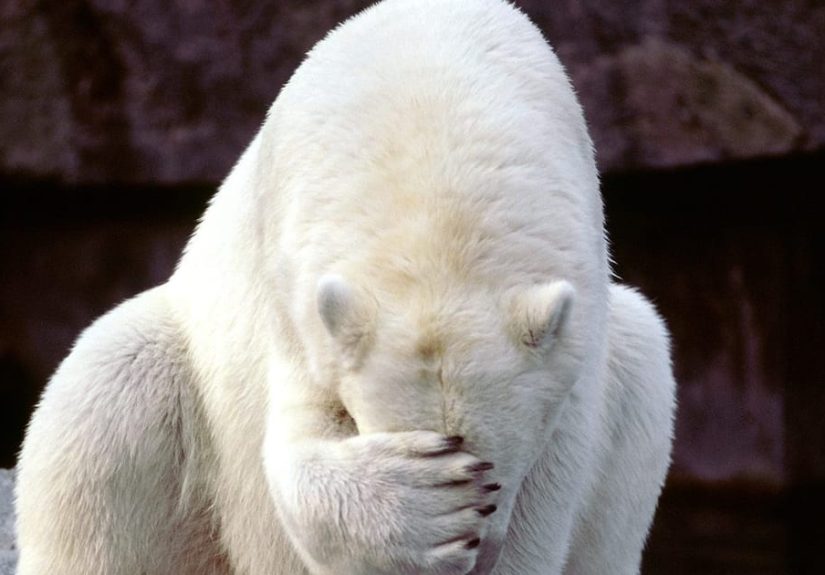
Polar bears evolved to live on sea ice. They travel across frozen oceans to hunt seals, store fat, and raise cubs. But because of rapidly warming temperatures, that ice is melting earlier in the spring and returning later in the fall. As a result, bears spend more time stranded on land, fasting or searching for scraps instead of hunting efficiently on the ice.
Research has shown that less time on the ice means fewer calories, thinner bears, and lower chances of survival, especially for cubs. Some bears swim long distances between shrinking ice floes, burning precious energy just to stay alive. Others end up near human settlements, where conflicts and starvation become more common.
The weird, sad fact is that one of the planet’s top predators is being undermined not by another animal, but by the invisible chemistry of our atmosphere. Polar bears didn’t change. Their environment did quickly.
5. Koalas Are Cute, Cuddly… and Fighting a Hidden Epidemic
Koalas look like sleepy, eucalyptus-scented teddy bears. Underneath all that fluff, many of them are battling a serious disease: chlamydia. Unlike the human version people joke about awkwardly, koala chlamydia can cause severe illness, infertility, and even blindness. In some populations, a majority of koalas test positive, and the infection is a major driver of decline.
Infected koalas may develop painful urinary tract problems, reproductive cysts, and eye infections that leave them unable to find food or avoid predators. Wildlife hospitals treat some animals with antibiotics, but not all survive, and long courses of medication can disrupt their sensitive digestive systems, which rely on gut bacteria to process eucalyptus leaves.
Recently, researchers have made progress on a chlamydia vaccine for koalas, which could dramatically reduce deaths and infertility over time. It’s a rare bright spot in an otherwise heavy story but it also underscores how hard we now have to work to save an animal that once seemed completely secure in its eucalyptus forests.
6. Pangolins Are Adorable, Armored… and the World’s Most Trafficked Mammal
Pangolins look like someone crossed an anteater with a pinecone. They’re shy, nocturnal insect-eaters covered in overlapping keratin scales the same material as your fingernails. When threatened, they curl into a ball, which is excellent against natural predators and tragically useless against humans.
Over the past few decades, pangolins have been poached in staggering numbers for their scales and meat. Conservation groups estimate that more than a million pangolins were taken from the wild in just ten years, making them one of the most heavily trafficked mammals on Earth. Their scales are used in some traditional medicines and luxury products, despite a lack of scientific evidence that they offer health benefits.
International agreements now prohibit pangolin trade, but illegal trafficking continues. The saddest part is that pangolins are gentle, slow-breeding animals. They don’t stand a chance against high demand and organized poaching without strong enforcement and global cooperation.
7. Sea Turtle Hatchlings Lose Their Way Because of Beach Lights
Picture this: a tiny sea turtle breaks out of its egg on a moonlit beach. Instinct tells it to crawl toward the brightest horizon usually the reflection of moon and stars over the ocean. But on many tourist-heavy coasts, the brightest lights come from hotels, streetlamps, and beach houses.
Artificial lighting disorients hatchlings, luring them away from the water and toward roads, pools, or dry sand where they can die of exhaustion, dehydration, or predators. Even adults can be affected, with nesting females avoiding overly lit beaches altogether, which shrinks their available nesting habitat.
Conservation programs now encourage “turtle-friendly lighting,” window tinting, and seasonal light restrictions to help hatchlings find the sea. It’s a reminder that sometimes tiny changes in human behavior flipping a switch, closing blinds, shielding a bulb can decide whether a baby turtle lives or dies.
8. Parrots Sometimes Pluck Their Own Feathers From Stress
Parrots are social, vocal, and highly intelligent. In the wild, they fly long distances, forage for complex diets, solve problems, and interact with large flocks. In captivity, especially when kept alone in small cages, many parrots develop a behavior called feather-plucking.
Feather-plucking is just what it sounds like: birds chew, bite, or yank out their own feathers, sometimes leaving bald patches or irritated skin. Veterinarians and behavior experts link it to a mix of medical issues and psychological stress boredom, isolation, lack of mental stimulation, or frustration with their environment.
For the bird, it’s often a coping mechanism gone wrong. For the human caregiver, it’s heartbreaking to watch a colorful, curious animal literally strip away its own plumage. The good news is that enriched environments, social interaction, and proper veterinary care can reduce or even reverse the behavior in some cases.
9. Sloths Can Starve to Death on a Full Stomach
Sloths are the unofficial mascots of “take it slow.” They move so carefully that algae grows on their fur, and they can hang from tree branches for hours without much effort. Their chilled-out lifestyle isn’t laziness it’s survival strategy.
Sloths eat mostly tough, fibrous leaves that are low in calories and hard to digest. Their huge, multi-chambered stomachs can take weeks to process a single meal, and that slow digestion means they have a very limited energy budget. They can’t afford to move quickly, regulate body temperature efficiently, or burn lots of calories searching for food.
In extreme cases, a sloth’s stomach can be full of undigested leaves while the animal still loses weight because it can’t extract enough energy fast enough. It’s a weird, sad twist: they can be “full” and starving at the same time, trapped by the slow-motion design that usually keeps them alive.
10. Orcas in Captivity Often Show Visible Signs of Distress
In the wild, orcas (killer whales) travel vast distances, hunt cooperatively, and live in tight-knit family pods. In marine parks, their world shrinks to a tank. One of the most visible signs something is off is the collapsed dorsal fin you see in many captive males. In the ocean, fully folded fins are rare; in captivity, they’re common.
Researchers suggest that limited space, repetitive swimming patterns, stress, and altered water conditions can change the structure of the fin over time, causing it to bend. It isn’t just a cosmetic issue it hints at deeper physical and psychological strain.
Over the years, publicized incidents, documentaries, and news reports have highlighted how confinement can affect orca behavior and welfare, including aggression, abnormal swimming patterns, and shortened lifespans. As more people learn about these facts, the debate over whether large whales belong in tanks has become louder and more urgent.
Why These Weird Animal Facts Feel So Heavy
Taken one by one, these cool animal facts are fascinating: self-destructing octopuses, fusion-based anglerfish romance, leaf-powered sloths, glow-in-the-dark turtle hatchlings. But once you zoom out, a pattern emerges. Many of the saddest details either come from evolutionary trade-offs nature choosing reproduction over comfort or from human activity pushing animals into unhealthy, unnatural situations.
The emotional hit comes from the gap between what animals need and what they actually get. Octopuses need stable ocean ecosystems but face pollution and warming seas. Polar bears need sea ice that sticks around each year. Koalas need healthy forests and disease-free mates. Parrots need social, stimulating lives instead of solitary cages. When that gap widens, suffering sneaks in.
Knowing these facts can hurt, but it also equips you to act. Weird animal trivia becomes a tool: something you can share with friends, kids, or social media followers to spark conversations about conservation, responsible tourism, and better pet care.
What You Can Do With Your New Sad Animal Knowledge
- Support reputable wildlife organizations. Look for groups that focus on habitat protection, anti-poaching efforts, and ethical rehabilitation for species like elephants, pangolins, and polar bears.
- Choose responsible travel and entertainment. Avoid attractions that keep large, wide-ranging animals (like orcas or big cats) in cramped conditions or encourage unnatural interactions.
- Practice “turtle-friendly” behavior near beaches. Turn off or shield lights during nesting season, keep distance from nests, and follow local guidelines.
- Adopt smarter pet habits. If you own parrots or other exotic animals, work with avian vets and behavior experts to create enriched, social environments.
- Use your voice. Share what you learn. The more people know about these strange, sad truths, the harder it is to ignore them.
You don’t have to quit enjoying cute animal videos or fun animal facts. Just let a few of these heavier truths sit in the background. They can nudge everyday choices from what you buy to where you travel in a direction that quietly helps the creatures behind the trivia.
Experiences and Reflections: Living With These Sad Animal Facts
It’s one thing to read about cool things about animals on a screen and another to feel those facts land in real life. Imagine standing at a seaside conservation center at night, surrounded by red-filtered flashlights and whispered instructions. Volunteers huddle around a nest of sea turtle eggs that has just erupted like popcorn. Dozens of tiny hatchlings thrash their flippers in the sand, trying to orient themselves. When someone briefly forgets and turns on a white flashlight, all the hatchlings jerk toward the beam instead of the ocean. It only takes a few seconds for everyone to see just how powerful light pollution can be and how easy it is for humans to become the problem without meaning to.
Or picture a guided tour at a reputable elephant sanctuary. A keeper explains how each orphan arrived: one lost to poaching, another to conflict with farmers, another discovered wandering alone near a dried-up waterhole. While the elephants splash in mud and jostle each other like oversized toddlers, their backstories hang in the air. The keeper talks about waking up every few hours to bottle-feed a calf, or standing nearby all night so the baby doesn’t panic. It’s hard not to feel that elephants’ grief and resilience mirror our own the way they can be deeply wounded by loss and yet still learn to trust again.
At zoos and aquariums that prioritize welfare, the mood is more complicated than simple fun. A visitor might watch a parrot in a large, enriched aviary shredding toys, flying short distances, and chattering at flock-mates. It’s bright, busy, and loud a good sign. Then, in a smaller exhibit elsewhere, another parrot sits quietly, chest partly bare from feather-plucking. Signs explain the bird’s history and the ongoing work to reduce stress and encourage natural behaviors. These two birds tell the same story in different chapters: how environment and enrichment can turn the volume up or down on mental health, even in non-human animals.
Learning about octopus senescence or anglerfish fusion can also change how you watch nature documentaries. Instead of seeing a dramatic mating scene as a happy ending, it becomes more like the final act. When the narrator mentions a mother octopus guarding her eggs without food for weeks or months, it’s impossible not to think about what comes next for her. Suddenly, the “wow” moment carries a shadow of “oh no.”
Even everyday choices start to feel different. Buying seafood might spark questions about how fishing practices impact octopus populations and other marine life. Booking a cruise or polar tour might bring up concerns about how extra ships affect sea ice, noise levels, and wildlife. Sharing a cute koala photo might come with an added caption about disease, habitat, and the importance of conservation work.
None of this means you have to carry constant sadness about animals. Instead, think of it as building a more honest, layered relationship with the natural world. The joy of watching a sloth hang upside down or a penguin waddle doesn’t disappear when you learn the hard parts of their stories. It just becomes richer and more grounded. Weird animal facts that make you sad can also motivate action, generosity, and empathy powerful forces that help shift the future for the very creatures that broke your heart in the first place.
In the end, “cool things about animals” and “sad things about animals” aren’t opposite categories. They’re two sides of the same reality. The more you know, the more you’re able to enjoy wildlife in a way that honors both wonder and responsibility. And that might be the most meaningful fact of all.