Table of Contents >> Show >> Hide
- What Are Collaboration Skills?
- Why Collaboration Skills Matter
- The Core Collaboration Skills You Actually Need
- What Collaboration Skills Look Like in Real Life
- How to Improve Your Collaboration Skills
- Common Mistakes That Hurt Collaboration
- Experiences That Show Collaboration Skills in Action
- Conclusion
Some people hear the phrase collaboration skills and immediately picture a cheerful team high-fiving around a conference table while one person says, “Let’s circle back.” Real life is usually less cinematic and more like this: five tabs open, three opinions in the chat, one deadline breathing down everyone’s neck, and a strong need for somebody to explain what exactly is happening.
That is where collaboration skills come in. They are the practical, human abilities that help people work well together toward a shared goal. They make group work less chaotic, meetings less painful, and projects more likely to finish without turning into a passive-aggressive email museum. In today’s workplace, collaboration is no longer a “nice extra.” It is a core skill for employees, managers, freelancers, students, and just about anyone who has ever had to coordinate with another living person.
This article breaks down what collaboration skills are, why they matter, which ones count the most, how they show up in real life, and how you can improve them without becoming the office motivational poster.
What Are Collaboration Skills?
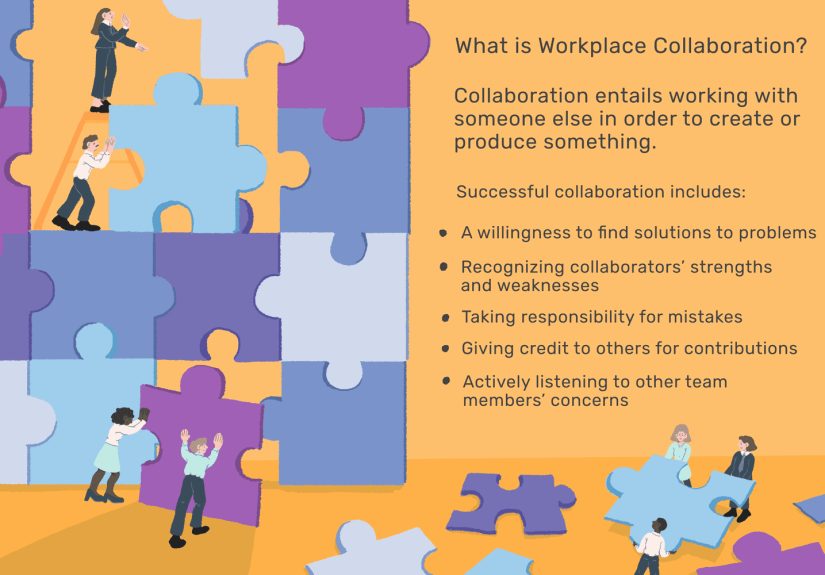
Collaboration skills are the abilities that help you work effectively with other people to complete tasks, solve problems, share ideas, and reach common goals. They include communication, active listening, emotional intelligence, adaptability, accountability, conflict resolution, and organization.
In simple terms, collaboration skills help you do more than just “work near people.” They help you work with people. That distinction matters. Sitting in the same meeting does not mean a team is collaborating. True collaboration means people exchange information clearly, respect different strengths, coordinate their efforts, and stay aligned on the outcome.
Collaboration is closely related to teamwork, but the two are not identical. Teamwork is the broader idea of functioning as part of a group. Collaboration is often the active process inside that group: discussing, building, adjusting, problem-solving, and making decisions together. If teamwork is the vehicle, collaboration is the engine that keeps it moving.
Why Collaboration Skills Matter
Strong collaboration skills matter because very little meaningful work happens in total isolation. A marketer depends on a designer. A nurse depends on the next shift. A teacher depends on administrators and families. A software developer depends on product managers, testers, and customer feedback. Even roles that look independent usually rely on shared information, coordinated timing, and trust.
When collaboration works well, teams tend to communicate more clearly, make fewer mistakes, solve problems faster, and produce stronger results. People also feel more engaged because they understand their role and believe their contributions matter. Good collaboration can improve morale, reduce friction, and create a healthier work culture where ideas travel instead of getting stuck behind silos.
When collaboration goes badly, the opposite happens. People duplicate work, misunderstand priorities, miss deadlines, hoard information, or quietly resent each other in document comments. Projects stall not because the team lacks talent, but because the talent never gets coordinated.
That is why employers consistently value collaboration. Technical knowledge may help you do your part, but collaboration skills help everyone connect their parts into one useful result.
The Core Collaboration Skills You Actually Need
1. Communication
Communication is the foundation of collaboration. It includes speaking clearly, writing clearly, asking questions, sharing updates, and knowing when to stop typing paragraphs that belong in a meeting instead of a chat thread. Good collaborators make expectations visible. They explain what they need, what they are doing, and what comes next.
Strong communication is not about sounding impressive. It is about being understandable. A teammate who says, “I’ll send the draft by 3 p.m., and I need your edits by noon tomorrow,” is more helpful than someone who writes a dramatic novella with no actual decision in it.
2. Active Listening
Listening is not merely waiting for your turn to talk while mentally composing your counterargument. Active listening means paying attention, asking clarifying questions, and making sure you understand what someone else is actually saying. It helps teams avoid unnecessary conflict and prevents the classic workplace problem of six people agreeing to six different versions of the same plan.
When people feel heard, they are more likely to contribute honestly. That improves idea quality and builds trust over time.
3. Emotional Intelligence
Emotional intelligence is your ability to recognize and manage your own emotions while also understanding how others may be feeling. In collaborative settings, this matters more than many people realize. Teams are made of humans, and humans bring stress, pride, anxiety, enthusiasm, and the occasional terrible Monday.
A collaborator with emotional intelligence notices tension before it becomes a full-blown disaster. They read the room, choose the right tone, and respond thoughtfully instead of reacting impulsively. They do not treat every disagreement like a personal attack or every suggestion like a threat to their identity.
4. Empathy
Empathy allows you to consider another person’s perspective, workload, communication style, and constraints. It helps you collaborate with people who think differently from you, work in another department, or come from a different background. Empathy makes space for better questions, better feedback, and more inclusive decision-making.
In practice, empathy can look surprisingly simple: asking a quieter teammate for input, giving context before assigning a task, or recognizing that a delayed response may signal overload rather than laziness.
5. Accountability and Reliability
Collaboration falls apart quickly when people cannot count on each other. Being accountable means following through, owning mistakes, communicating delays early, and respecting the fact that your unfinished task may block someone else’s progress.
Reliable teammates are collaborative gold. They do not disappear when things get messy. They keep promises realistic, meet deadlines when possible, and raise a flag before a problem grows teeth.
6. Adaptability
Plans change. Priorities shift. New information shows up five minutes after everyone thought the strategy was settled forever. Adaptability helps you adjust without derailing the entire group. In collaborative environments, rigid thinking can create bottlenecks. Flexible thinking helps teams respond to change, test new ideas, and move forward when conditions evolve.
This is especially important in remote and hybrid work, where collaboration often happens across time zones, platforms, and communication styles.
7. Problem-Solving
Collaboration is not just about being nice. It is about getting somewhere together. That requires problem-solving: identifying challenges, evaluating options, gathering perspectives, and choosing workable solutions. Great collaborators do not only point out issues. They help move the team toward answers.
Good problem-solvers also know when to invite more voices and when to simplify. Too little input leads to blind spots. Too much input leads to the kind of over-collaboration where a simple decision somehow needs four meetings and a spreadsheet.
8. Conflict Resolution
Any team with smart people will have disagreements. That is normal. In fact, a total lack of disagreement can mean people are withholding ideas. Conflict resolution is the skill of addressing tension constructively so the team can move forward without bitterness or confusion.
Healthy conflict resolution involves focusing on the issue, not attacking the person. It also means being willing to compromise, clarify misunderstandings, and return to shared goals when emotions start driving the bus.
9. Organization and Coordination
Collaboration gets romanticized as brainstorming, but a huge part of it is coordination. Who owns what? What is the deadline? Where is the latest version? Which updates belong in email, chat, or a project tool? Organized collaborators help reduce noise and make work easier to track.
In modern workplaces, this includes digital collaboration skills: documenting decisions, using shared tools well, and respecting communication norms so people are informed without being buried alive in notifications.
What Collaboration Skills Look Like in Real Life
Collaboration skills show up in ordinary moments, not just major presentations. A product manager and engineer negotiating scope before launch are collaborating. A teacher and counselor creating support plans for a student are collaborating. A restaurant team coordinating a packed dinner rush is collaborating. A hospital staff member giving a clear shift handoff is collaborating.
Here is a simple workplace example: a marketing team is launching a campaign. The writer creates the message, the designer builds visuals, the analyst tracks performance, and the manager keeps deadlines and approvals on track. If everyone communicates clearly, respects each role, and adjusts based on feedback, the campaign moves smoothly. If the writer changes the headline without telling design, design uses the wrong dimensions, and the analyst never receives the final links, the launch turns into chaos wearing business casual.
That is the real power of collaboration skills: they turn individual effort into shared progress.
How to Improve Your Collaboration Skills
Know Your Patterns
Start with self-awareness. Do you dominate discussions? Stay quiet too long? Avoid conflict until it becomes dramatic? Forget to update people? Collaboration improves when you notice your habits honestly. You do not need to become a different person, but you do need to understand how your style affects others.
Practice Clearer Communication
Try being more direct and specific. Replace vague comments with useful ones. Instead of “I’ll get to it soon,” say “I can send this by Thursday morning.” Instead of “This doesn’t work,” say “The timeline is too tight because we still need approval from legal.” Clarity is kindness in team settings.
Ask Better Questions
Good collaborators ask questions that reduce confusion and invite insight. Questions like “What does success look like here?” “What risks are we missing?” and “Who else needs visibility on this?” can save teams from expensive misunderstandings.
Build Trust Through Small Actions
Trust is not built by one dramatic speech. It is built through consistency. Show up prepared. Credit other people’s work. Respond respectfully. Keep commitments. Admit mistakes without writing a five-act tragedy around them. Small reliable actions make people more willing to collaborate openly with you.
Get Comfortable With Feedback
Collaboration becomes much easier when feedback is treated as part of the process, not as a personal insult wrapped in bullet points. Ask for feedback regularly, receive it without becoming defensive, and offer it in a way that is useful rather than theatrical. The goal is improvement, not emotional property damage.
Learn to Work Across Styles
Some teammates think out loud. Others think quietly and send brilliant notes later. Some want structure. Others need space to explore. Effective collaboration means adapting enough to work across those styles without assuming your preference is the only sane one.
Common Mistakes That Hurt Collaboration
One major mistake is confusing activity with alignment. A team can have nonstop meetings and still have no shared understanding of priorities. Another mistake is poor role clarity. When nobody knows who owns a task, everybody assumes somebody else is handling it. That is how deadlines become urban legends.
Other common problems include withholding information, avoiding difficult conversations, failing to document decisions, and prioritizing personal credit over team outcomes. Over-collaboration can also become a problem. Not every decision needs a committee. Good collaboration includes knowing when to consult widely and when to move.
Experiences That Show Collaboration Skills in Action
One of the clearest examples of collaboration skills appears during a new employee onboarding process. Imagine a new hire joining a company on Monday. Human resources handles paperwork, IT prepares equipment, the direct manager sets expectations, and teammates explain workflows. If each person does their part without coordination, the employee may spend the week confused, locked out of systems, and wondering whether the company hired them by accident. But when those people collaborate well, the experience feels seamless. The new hire gets the right tools, understands priorities, and becomes productive faster. That kind of smooth start is not magic. It is communication, planning, empathy, and accountability in action.
Another great example comes from healthcare. During a shift change, one nurse may pass patient information to another. That handoff requires accuracy, listening, organization, and trust. If details are rushed or unclear, the consequences can be serious. In this setting, collaboration is not a vague corporate buzzword. It is a practical skill that protects quality and safety. The same principle applies in other industries too. When important information moves between people, collaboration determines whether the next step is effective or risky.
A third common experience happens in cross-functional office projects. Picture a sales team asking marketing for a presentation deck while product is still updating features. Sales wants speed, marketing wants accuracy, and product wants no promises made too early. This kind of setup can create frustration fast. The teams that handle it well usually do a few things right: they clarify who makes the final call, agree on a shared timeline, define what is still in draft form, and keep everyone updated as changes happen. Nobody gets everything exactly their way, but the team still produces something useful because they stay focused on the shared goal rather than departmental turf.
Even school group projects reveal a lot about collaboration skills. Most people remember one teammate who vanished until presentation day like a mysterious legend. But strong student groups often succeed because someone organizes tasks, someone checks in on progress, someone helps resolve disagreements, and someone notices when a quieter member has a strong idea that deserves space. Those experiences matter because they mirror professional life. Collaboration skills develop long before a formal job title appears on a LinkedIn profile.
What all these experiences have in common is simple: collaboration works best when people communicate clearly, respect each other’s contributions, and stay committed to a shared result. Fancy tools can help, but they cannot replace the human habits that make teamwork effective.
Conclusion
So, what are collaboration skills? They are the mix of communication, listening, empathy, adaptability, accountability, problem-solving, and coordination that allows people to work well together. They help teams move from scattered effort to shared progress. They also make workplaces more productive, more creative, and far less likely to collapse into confusion over who was supposed to update the spreadsheet.
The good news is that collaboration is not a talent reserved for extroverts, managers, or people who enjoy icebreakers. It is a learnable skill set. The more intentionally you practice clear communication, trust-building, role clarity, and respectful problem-solving, the better collaborator you become. And in a world where work is increasingly cross-functional, fast-moving, and connected, that matters more than ever.