Table of Contents >> Show >> Hide
- Country-Cured Ham, Explained
- How Country-Cured Ham Is Made
- What Does Country-Cured Ham Taste Like?
- Country Ham vs. City Ham
- Why Is Country-Cured Ham So Salty?
- Do You Have to Cook Country-Cured Ham?
- How to Cook Country-Cured Ham
- How Is Country-Cured Ham Usually Served?
- Is Country-Cured Ham Shelf-Stable?
- Why Country-Cured Ham Still Matters
- So, What Is Country-Cured Ham?
- The Experience of Country-Cured Ham: Why People Remember It
- SEO Tags
If you have ever bitten into a slice of country-cured ham and thought, “Wow, that is salty, intense, and somehow fancy and old-school at the same time,” congratulations: you met one of America’s boldest pork traditions. Country-cured ham is not the mild, juicy holiday ham that politely sits on the buffet next to pineapple rings. It is deeper, drier, more concentrated, and much more dramatic. In food terms, it does not knock on the door. It kicks it open.
So, what is country-cured ham, exactly? In simple terms, it is pork leg that has been preserved with salt, often seasoned with sugar and spices, sometimes smoked, and then aged for months until it develops a firm texture and a concentrated flavor. It is most closely associated with Southern food traditions, especially in states like Virginia, Kentucky, North Carolina, and Tennessee. Depending on how long it ages and how it is prepared, country-cured ham can be chewy, silky, smoky, funky, nutty, sweet-salty, or all of the above in a single bite.
This is the kind of food that makes people loyal. Fans will argue over the best producer, the best biscuit pairing, the best glaze, and whether soaking is essential or borderline culinary cowardice. Country-cured ham inspires that kind of passion because it is not just a product. It is a process, a tradition, and for many families, a memory wrapped in brown paper and hung in a cool room.
Country-Cured Ham, Explained
Country-cured ham is the dry-cured hind leg of a pig. The key phrase there is dry-cured. Unlike city ham, which is usually wet-brined or injected with a curing solution, country-cured ham is rubbed with a dry cure made primarily of salt. Producers may also use brown sugar, red pepper, black pepper, nitrates or nitrites, and other seasonings depending on the regional style and house recipe.
After curing, the ham rests so the salt can work its way through the meat. Then it dries and ages. That aging period is where the magic happens. Moisture leaves the ham, flavor concentrates, texture firms up, and the meat develops the savory depth that makes people compare it to prosciutto. That comparison is useful, although country-cured ham has its own American personality: louder, saltier, and often smokier.
Under U.S. standards, a ham sold as country ham or dry-cured ham must meet specific curing and drying requirements. In plain English, it has to lose a serious amount of moisture. That is a big reason the flavor feels so concentrated. You are not tasting watered-down pork. You are tasting pork with the volume turned way up.
How Country-Cured Ham Is Made
1. The Cure
The process starts with a fresh pork leg. The ham is rubbed with salt and other curing ingredients, especially around the bone and thick muscle areas. Salt pulls moisture from the meat, which helps preserve it and creates the dense, meaty texture country ham is known for.
2. Equalization
After the initial cure, the ham rests in a controlled environment so the salt can distribute more evenly. This step matters because a ham is not a tiny cutlet. It is a large, heavy piece of meat, and flavor has to travel through it slowly.
3. Drying and Aging
Next comes drying and aging. Some country-cured hams age for about three months, while others go much longer. Premium hams may age for a year or more, and long-aged hams often develop a stronger aroma and more complex flavor. Some producers smoke the ham with hardwood during the process, while others let salt, time, and airflow do most of the talking.
That long aging time is why country-cured ham tastes less like ordinary ham and more like a preserved delicacy. Time changes everything. It changes texture. It changes color. It changes the way the fat tastes. It even changes the smell. A country-cured ham can smell a little funky before cooking, which is normal. Think “aged cheese energy,” not “panic immediately.”
What Does Country-Cured Ham Taste Like?
The short answer: salty, rich, savory, and deeply porky. The longer answer is more fun. Country-cured ham often tastes nutty, smoky, slightly sweet, and almost buttery around the fat. Thin slices can feel silky on the tongue. Thicker slices can be intensely chewy and very salty, which is why most experts prefer paper-thin carving.
The aging process gives the ham umami depth, while the cure creates a firm, almost steak-like structure. If city ham is friendly and approachable, country-cured ham is a moody Southern poet with great boots and strong opinions.
Flavor varies by region and producer. A Kentucky country ham may lean robust and traditional. A Virginia-style ham may feel elegant, old-fashioned, and deeply tied to historic curing methods. Some North Carolina producers favor salt-and-pepper styles. Some hams are noticeably smoky; others are more about the pure cured flavor of the pork itself.
Country Ham vs. City Ham
This is where confusion usually shows up. Many shoppers see the word ham and expect one general experience. That is not how ham works. Country-cured ham and city ham are cousins, not twins.
Country-Cured Ham
- Dry-cured with salt
- Aged for months
- Usually drier, firmer, and saltier
- Sometimes smoked
- Often sliced very thin
- Strong, concentrated flavor
City Ham
- Usually wet-brined or injected
- Often sold fully cooked
- Moister and milder
- Typically easier for everyday use
- Better suited to thick holiday slices
If city ham is a soft sweater, country-cured ham is a leather jacket. Both have their place. Only one arrives with swagger.
Why Is Country-Cured Ham So Salty?
Because salt is the point. Salt is what preserves the meat, shapes the flavor, and helps produce the texture people expect. During curing and aging, moisture leaves the ham, so the remaining flavor becomes more concentrated. That means the salt does not just sit on the surface. It becomes part of the whole experience.
This is also why many cooks soak country-cured ham before baking or simmering it. A long soak in cool water can help draw out some of the surface salt and make the final flavor more balanced. Not everyone does it the same way. Some people soak for four to twelve hours. Others go longer for older hams. Some skip soaking and just serve tiny slices. Country ham is a food with rules, but also a food with grandparent-level opinions.
Do You Have to Cook Country-Cured Ham?
Sometimes yes, sometimes no. A whole country-cured ham is often sold uncooked and meant to be soaked, scrubbed, and then simmered or baked. But thin slices can also be pan-fried, warmed in a skillet, or served in prepared dishes. Some aged, properly cured hams can be sliced and eaten more like a dry-cured charcuterie, depending on the style and producer instructions.
The safest move is simple: follow the label. Country-cured ham is a traditional food, but tradition still appreciates basic reading comprehension.
How to Cook Country-Cured Ham
Cooking country-cured ham is less about showing off and more about respecting the product. Here is the usual approach:
Clean It
Aged country hams may develop surface mold during storage and aging. That can sound scary if you are new to dry-cured meats, but a light surface mold is common on this type of ham. Before cooking, people usually scrub the outside well and rinse it.
Soak It
Soaking helps reduce surface salt. Depending on the age of the ham and the recipe, cooks may soak it anywhere from several hours to overnight or longer in the refrigerator, changing the water if desired.
Cook It Low and Slow
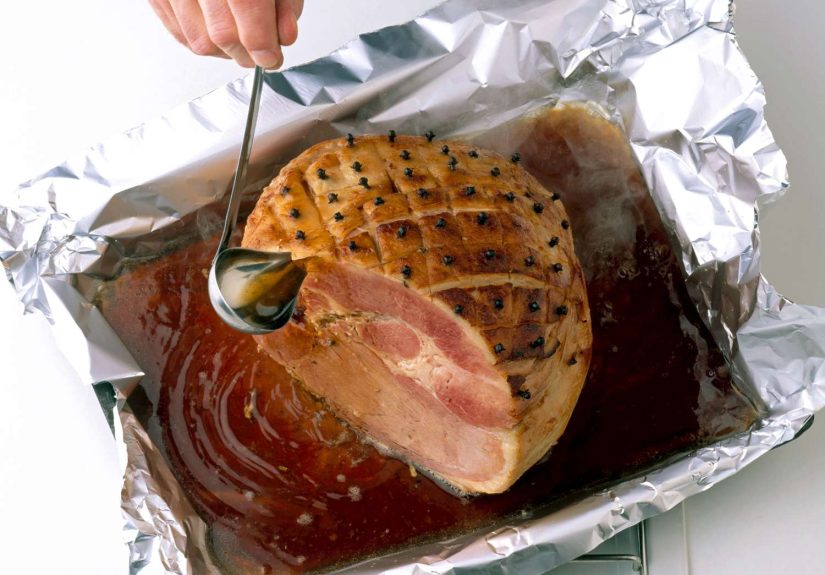
Many traditional methods call for simmering or gentle baking. The goal is to warm and tenderize the ham without drying it out even more. After cooking, some people remove the skin, score the fat, add a brown sugar glaze, and return it briefly to the oven for color.
Slice It Thin
This part is not optional if you want the best texture. Thick slices of country-cured ham can be aggressively salty. Very thin slices let the flavor shine without overwhelming your mouth. Country ham is not a “cut me like a roast” situation. It is more of a “respect the blade” situation.
How Is Country-Cured Ham Usually Served?
In the South, one of the most beloved ways to serve it is inside a biscuit. Country ham biscuits are salty, buttery, rich, and deeply satisfying. They are also proof that biscuits were invented because somebody knew pork this powerful needed a soft landing.
Other common ways to serve country-cured ham include:
- With red-eye gravy and biscuits
- Alongside eggs and grits
- On a biscuit board or brunch spread
- Shaved thin on a charcuterie plate
- Fried in slices for breakfast
- Used in beans, greens, or other savory Southern dishes
It also plays well with sweet flavors. Biscuits with preserves, glazed ham, sweet potato casserole, and fruit chutneys all work because the salty richness loves contrast.
Is Country-Cured Ham Shelf-Stable?
A whole, uncut dry-cured country ham can often be stored without refrigeration for a long period, which is one reason the food became so important before modern refrigeration. Once cut or sliced, though, it should be refrigerated. In other words, the whole ham is a durable old soul. The sliced ham is more high-maintenance.
That shelf-stable quality comes from the same two forces that define country-cured ham overall: reduced moisture and heavy salting. Less available water means fewer opportunities for bacteria to grow. That is not kitchen wizardry. That is preservation science wearing a Southern hat.
Why Country-Cured Ham Still Matters
Country-cured ham matters because it preserves more than meat. It preserves technique. It preserves regional identity. It preserves a slower way of thinking about food. In an era of speed, convenience, and microwave optimism, country ham asks you to wait, soak, scrub, carve, and pay attention.
It also tells a story about American cooking. The tradition stretches back through Southern farm culture, historic preservation methods, and generations of families who knew how to turn winter hog killing season into food that would last well into the year. Today, producers still keep that knowledge alive, whether through long-established smokehouses, family-owned businesses, or extension programs that teach the craft.
That is why country-cured ham keeps showing up at holidays, Sunday breakfasts, roadside stores, and Southern weddings. It is delicious, yes. But it is also ceremonial. It tastes like effort, patience, and place.
So, What Is Country-Cured Ham?
It is dry-cured pork with a strong sense of identity. It is salt, time, air, and tradition working together until a plain ham becomes something memorable. It is firmer than city ham, saltier than most first-time eaters expect, and more layered in flavor than its humble name suggests.
If you love bold foods, cured meats, regional American specialties, or anything that rewards careful cooking, country-cured ham is worth trying. Start with a biscuit, a thin slice, and maybe a second biscuit just in case. This is not the moment to pretend restraint is your core personality.
The Experience of Country-Cured Ham: Why People Remember It
The experience of country-cured ham starts before the first bite. It starts when you open the wrapping and catch that unmistakable aroma: salty, savory, a little smoky, and just funky enough to make you pause. People who grew up around it usually smile at that smell right away because it signals something bigger than breakfast. It signals a ritual. For many families, country ham means holidays, guests, big breakfasts, or a grandparent in the kitchen telling everyone not to touch anything yet.
Then comes the prep, and that is part of the experience too. Country-cured ham is not convenience food. You do not casually toss it in the oven while half-watching television. You scrub it. You soak it. You decide whether it needs a longer bath. You argue, gently or loudly, about the correct method. Somebody says the old way is best. Somebody else says that advice came from a man who also thought every problem could be solved with black coffee and duct tape. This is how country ham brings personality into the room.
When it cooks, the kitchen changes. The smell becomes warmer and rounder. The saltiness softens. The fat begins to smell rich and sweet. By the time it is ready to carve, everyone is suddenly “just walking through the kitchen” every three minutes. Nobody is fooling anyone.
The first bite is usually what converts people. A thin slice gives you a rush of salt first, then pork richness, then a deep cured flavor that lingers longer than regular ham ever does. It is not bland, and it is definitely not shy. With a biscuit, the experience gets even better. The soft, buttery bread calms the salt and lets the ham shine without overwhelming your taste buds. Add a little honey, jam, or red-eye gravy and now you are having the kind of breakfast that makes people stare at the plate for a second after the last bite, just to process their feelings.
There is also a tactile side to country-cured ham that fans love. The slices can be silky if shaved thin enough, almost like a Southern answer to charcuterie. The edges may have a little chew. The fat can feel creamy rather than greasy. Every part of the bite reminds you that this is aged food, not generic deli meat.
What people remember most, though, is the mood around it. Country-cured ham tends to appear when people slow down and gather. It is breakfast after a family wedding. It is Christmas morning with biscuits on a towel-lined basket. It is a road trip stop at a country store where everybody suddenly decides they are hungry again. Even when people disagree about the best producer or the perfect soak time, those arguments are usually affectionate. Country ham creates stories almost as reliably as it creates cravings.
That is why the experience sticks. You are not just eating preserved pork. You are tasting a tradition that asks for time, rewards patience, and turns one salty slice into a full memory. Very few foods have that kind of staying power. Country-cured ham absolutely does.