Table of Contents >> Show >> Hide
- Why Pregnancy Weight Gain Matters (It’s Not Just “Baby Weight”)
- The Gold Standard: Healthy Weight Gain Based on Pre-Pregnancy BMI
- Healthy Weight Gain by Trimester (Because Pregnancy Is Not Linear)
- How Many Extra Calories Do You Actually Need?
- What to Eat for Healthy Pregnancy Weight Gain (Quality Beats Quantity)
- Healthy Weight Gain When You’re Underweight, Overweight, or Have Obesity
- What About Twins (or More)?
- How to Track Pregnancy Weight Gain Without Losing Your Mind
- Exercise and Healthy Weight Gain: The Sweet Spot
- Red Flags: When to Call Your Provider
- Quick Examples (Because Charts Are Nice, But Life Is Messy)
- FAQ: Healthy Weight Gain During Pregnancy
- Conclusion: Healthy Pregnancy Weight Gain Is a Range, Not a Rulebook
- Real-Life Experiences: What Healthy Pregnancy Weight Gain Can Feel Like (About )
If you’ve ever stared at a pregnancy app and thought, “So I’m building a human… and also a whole new organ… and everyone’s acting like the only thing that matters is the number on the scale?”welcome. Let’s make pregnancy weight gain feel a lot less mysterious (and a lot less judge-y).
Healthy weight gain during pregnancy isn’t about “eating for two” like you’re feeding a second full-grown adult. It’s about giving your baby the nutrients to grow, giving your body the supplies to do the growing, and keeping you as healthy as possible along the way.
Quick note: This article is educational, not medical advice. Your OB-GYN or midwife may recommend a different plan based on your health history, your baby’s growth, and how your pregnancy is going.
Why Pregnancy Weight Gain Matters (It’s Not Just “Baby Weight”)
Pregnancy weight gain supports a lot more than the baby. Your body is expanding blood volume, building placenta, increasing fluids, growing breast tissue, and storing energy for late pregnancy and breastfeeding. In other words, your body is basically running a construction site and a 24/7 logistics operation.
Where does the weight go?
People are often relieved to learn that “the baby” is only part of the total. A common breakdown at term looks something like this:
- Baby: about 7–8 pounds (varies widely)
- Placenta: around 1.5 pounds
- Amniotic fluid: around 2 pounds
- Increased blood volume: about 3–4 pounds
- Increased fluid volume: about 2–3 pounds
- Larger breasts: about 1–3 pounds
- Larger uterus: about 2 pounds
- Fat stores (helpful for late pregnancy and postpartum energy needs): about 6–8 pounds
So yessome of the weight is “stores,” but plenty of it is just… pregnancy infrastructure.
The Gold Standard: Healthy Weight Gain Based on Pre-Pregnancy BMI
In the U.S., widely used guidance ties recommended weight gain to your pre-pregnancy Body Mass Index (BMI). BMI is not a perfect health measure (it can’t tell muscle from fat, and it doesn’t capture everything about risk). But it’s a practical starting point for setting weight gain ranges in pregnancy.
How to calculate BMI (if you’re curious)
If you want to estimate your BMI using U.S. units:
BMI = (weight in pounds ÷ height in inches²) × 703
Example: 150 lb and 64 inches tall → BMI ≈ (150 ÷ 4096) × 703 ≈ 25.8 (overweight range).
Pregnancy weight gain chart (one baby)
These ranges are for a singleton pregnancy (one baby). If you’re carrying twins or more, jump to the multiples section.
| Pre-pregnancy BMI | BMI Category | Recommended Total Gain | Typical Rate in 2nd & 3rd Trimesters |
|---|---|---|---|
| < 18.5 | Underweight | 28–40 lb | About 1.0–1.3 lb/week |
| 18.5–24.9 | Normal weight | 25–35 lb | About 0.8–1.0 lb/week |
| 25.0–29.9 | Overweight | 15–25 lb | About 0.5–0.7 lb/week |
| ≥ 30.0 | Obesity | 11–20 lb | About 0.4–0.6 lb/week |
Important: If you started pregnancy with obesity, your clinician may individualize targets based on your overall health, previous pregnancy outcomes, and your baby’s growth pattern. The goal is a healthy pregnancynot a perfect spreadsheet.
Healthy Weight Gain by Trimester (Because Pregnancy Is Not Linear)
Your weight gain usually doesn’t arrive in neat, equal installments. Many people gain very little early on (thanks, nausea), then gain more steadily later.
First trimester (weeks 1–12): usually small changes
For many pregnancies, total first-trimester gain is modestoften a couple pounds, sometimes up to about 4–5 pounds. Some people even lose a bit due to nausea and vomiting. Mild changes can be normal, but if you can’t keep fluids down, are losing weight steadily, or feel weak and dehydrated, call your clinician.
Second trimester (weeks 13–27): the “steady gain” era
This is when many people feel better and appetite returns. Weight gain often becomes more consistent, and your weekly target depends on your starting BMI (see the chart above).
Third trimester (weeks 28–40): still steady, sometimes bumpy
Some people gain at a similar pace to the second trimester, while others slow down late in pregnancy due to heartburn, early fullness, or simply running out of room for big meals. What matters most is overall trend and your baby’s growth on exam and ultrasound.
A reality check: the scale can jump for reasons that aren’t “fat”
Water retention is common, especially later on. A sudden or dramatic increaseparticularly with swelling of the face/hands, headache, or vision changesshould be reported right away, because it can be a warning sign for conditions like preeclampsia.
How Many Extra Calories Do You Actually Need?
“Eating for two” is one of the most persistent myths in pregnancyright up there with “you can predict the baby’s sex by the shape of your bump.” Most people don’t need extra calories in the first trimester.
Typical energy needs (singleton pregnancy)
- First trimester: often no additional calories are needed (many people just aim for tolerance and hydration)
- Second trimester: about +340 calories/day
- Third trimester: about +450 calories/day
That’s not a license to count every bite with a calculatorthink of it as “one solid snack” more than “two extra meals.” Examples of ~300–450-calorie nutrient-dense additions:
- Greek yogurt + berries + granola
- Whole-grain toast + peanut butter + banana
- Hummus + pita + a cheese stick
- Oatmeal made with milk + chia seeds + walnuts
- Egg-and-avocado breakfast taco
What to Eat for Healthy Pregnancy Weight Gain (Quality Beats Quantity)
Healthy weight gain during pregnancy is less about chasing a number and more about consistently choosing foods that deliver protein, fiber, healthy fats, and key micronutrients.
Build a “growth-friendly” plate
- Protein: supports fetal growth and helps keep you full (eggs, beans, poultry, fish low in mercury, tofu)
- Fiber-rich carbs: steady energy and digestion support (oats, brown rice, whole-grain bread, lentils, fruit)
- Healthy fats: brain-building and satisfying (avocado, olive oil, nuts, seeds)
- Colorful produce: vitamins, minerals, and antioxidants (aim for “eat the rainbow,” no tie-dye required)
Key nutrients that often need extra attention
- Folate/folic acid: crucial early in pregnancy (prenatal vitamins, leafy greens, beans)
- Iron: supports increased blood volume (lean meats, beans, fortified cereals; pair plant iron with vitamin C)
- Calcium + vitamin D: bone support (dairy, fortified alternatives, leafy greens, safe sun exposure as advised)
- Choline: important for fetal brain development (eggs, meats, some legumes)
- Omega-3s (DHA/EPA): brain and eye development (salmon, sardines, DHA supplements if recommended)
If nausea or heartburn is running the show, go smaller and more frequent: mini-meals, bland-but-nourishing foods, and “whatever you can tolerate today” is sometimes the correct answer.
Healthy Weight Gain When You’re Underweight, Overweight, or Have Obesity
Starting BMI changes both the recommended gain and the strategy. The goal isn’t to “game the scale”it’s to reduce risks while supporting fetal growth.
If you started pregnancy underweight
You may need a higher total gain. Focus on calorie-dense nutrient-dense additions (nuts, nut butters, avocado, olive oil, full-fat yogurt if tolerated). A registered dietitian can be incredibly helpful if appetite is low or nausea is severe.
If you started pregnancy overweight
Your recommended range is lower, and steady gain matters more than fast gain. You don’t need to “diet,” but you may do best emphasizing protein + fiber (which naturally regulates appetite) and keeping sugary drinks and ultra-processed snacks as occasional visitors, not roommates.
If you started pregnancy with obesity
Many people do well with slower, consistent gain and a strong focus on nutrition quality. Your clinician may monitor growth carefully and may recommend personalized targets. If you have concerns about body image or a past eating disorder, tell your care team there are supportive strategies (including “blind weigh-ins”) that can reduce stress while keeping care safe.
What About Twins (or More)?
Multiple pregnancies have higher nutrient and energy demands, and weight gain recommendations are typically higher for twins. (For triplets or higher-order multiples, guidance is more individualized.)
Typical total gain ranges for twins
| Pre-pregnancy BMI | Recommended Total Gain (Twins) |
|---|---|
| 18.5–24.9 (Normal weight) | 37–54 lb |
| 25.0–29.9 (Overweight) | 31–50 lb |
| ≥ 30.0 (Obesity) | 25–42 lb |
With twins, your clinician may talk about earlier and slightly higher rates of gain because “building two” can compress the timeline.
How to Track Pregnancy Weight Gain Without Losing Your Mind
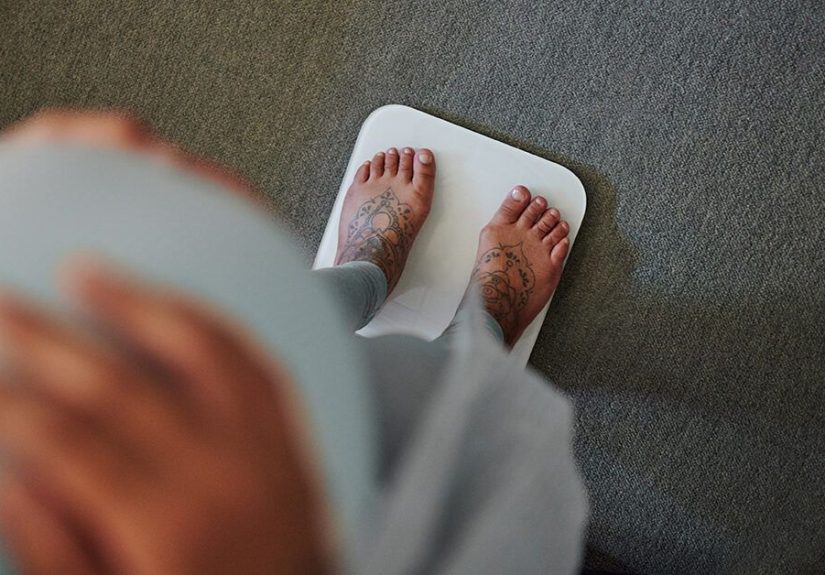
Think trend, not trivia. One salty dinner can make the scale jump. One week of nausea can make it drop. Your care team looks at the overall pattern.
Practical tracking tips
- Weigh at most once a week at the same time of day (if weighing stresses you out, ask for “blind weigh-ins”).
- Use your BMI category to set a range, then aim for a gentle trend.
- Pair weight tracking with a “how am I eating and feeling?” check-inenergy, hydration, protein, fiber, sleep.
- Remember that swelling and constipation can temporarily increase weight without reflecting fat gain.
Exercise and Healthy Weight Gain: The Sweet Spot
For most uncomplicated pregnancies, moderate activity supports healthy weight gain, mood, sleep, digestion, and blood sugar. It’s not about training for the Olympics. It’s about keeping your body comfortable and resilient.
General guideline
Many U.S. medical/public health guidelines suggest aiming for about 150 minutes per week of moderate-intensity activity (think brisk walking where you can talk but not sing a power ballad).
Low-drama options that often work well
- Walking
- Swimming or water aerobics
- Stationary cycling
- Prenatal yoga
- Light strength training with good form (as cleared by your clinician)
Always ask your clinician about restrictions if you have bleeding, placenta concerns, signs of preterm labor, certain heart/lung conditions, or other complications.
Red Flags: When to Call Your Provider
Weight is just one signal. Call your provider if you notice:
- Sudden, dramatic weight gain over a short period plus swelling of face/hands, severe headache, or vision changes
- Ongoing weight loss or inability to keep fluids down
- Very little weight gain with concerns about baby’s growth or reduced fetal movement
- Strong anxiety around food/weight, or relapse of disordered eating behaviors
It’s always appropriate to ask: “Is my weight gain pattern healthy for my pregnancy?” That’s not being “difficult.” That’s being informed.
Quick Examples (Because Charts Are Nice, But Life Is Messy)
Example 1: Normal BMI, steady appetite
Taylor starts pregnancy at BMI 22. Recommended total gain: 25–35 lb. In the first trimester, Taylor gains 3 lb (mostly because crackers became a food group). In the second and third trimesters, Taylor aims for roughly 0.8–1.0 lb/week on averagesome weeks none, some weeks morewhile focusing on balanced meals and daily walks.
Example 2: Overweight BMI, mindful “snack upgrade”
Jordan starts pregnancy at BMI 27. Recommended total gain: 15–25 lb. Jordan’s strategy: keep meals normal-sized, add a second-trimester snack that’s actually helpful (protein + fiber), and swap sugary drinks for flavored seltzer. Weight gain trends slower and steadier, and baby’s growth checks out. Win-win.
Example 3: Underweight BMI, appetite challenges
Sam starts pregnancy at BMI 17.9. Recommended gain: 28–40 lb. Because nausea makes big meals impossible, Sam uses “micro-meals” every 2–3 hours: yogurt, smoothies, nut butter toast, trail mix, and soups with added beans or chicken. A dietitian helps Sam hit nutrient needs without turning eating into a full-time job.
FAQ: Healthy Weight Gain During Pregnancy
Is it okay if I’m a few pounds above or below the range?
Often, yesespecially if your baby’s growth and your health markers (blood pressure, glucose, labs) look good. The ranges are guides, not courtroom verdicts. Still, if you’re trending far outside the range, it’s worth discussing adjustments with your clinician.
Should I try to lose weight during pregnancy?
Generally, intentional weight loss is not recommended in pregnancy unless specifically guided by your clinician for a medical reason. Focus on nourishing foods, steady activity, and appropriate gain.
What if I gained a lot early?
Don’t panic. Early gain can reflect nausea coping foods, fluid shifts, or constipation. Talk to your provider and shift toward protein-forward meals, fiber, and regular movement. Most pregnancies have time for course correction.
Conclusion: Healthy Pregnancy Weight Gain Is a Range, Not a Rulebook
Healthy weight gain during pregnancy depends on your starting BMI, whether you’re carrying one baby or multiples, and how your body responds across trimesters. Aim for a steady trend, prioritize nutrient-dense foods, and move your body in ways that feel safe and sustainable. Most importantly: use your care team as your co-pilotnot your critic.
Real-Life Experiences: What Healthy Pregnancy Weight Gain Can Feel Like (About )
People rarely talk about how emotionally weird pregnancy weight can be. Not just “I’m gaining weight,” but “my body is changing in public, and the world suddenly thinks it has a comment section.” Here are common experiences many pregnant people reportplus what tends to help.
1) The First-Trimester Plot Twist
Some people expect to gain right away… and then spend weeks living on toast, ginger tea, and whatever doesn’t trigger nausea. The scale might not move, or it might dip slightly. For many, this is normal. What people say helps: focusing on hydration, eating small portions more often, and choosing “gentle nutrition” (soups, smoothies, yogurt, bananas, rice, eggs) instead of forcing perfect meals.
2) The Second-Trimester “Where Did This Appetite Come From?” Moment
When nausea eases, hunger often returns like it’s been waiting in the parking lot. People describe feeling ravenousand also confused, because they’ve been told “don’t eat for two,” yet their stomach is acting like it’s hiring for a second shift. A practical fix many find: add one planned snack (protein + fiber + healthy fat), so hunger doesn’t turn into accidental “snack chaos.” Think: apples + peanut butter, cheese + whole-grain crackers, or Greek yogurt + fruit.
3) The Scale Jump That Was Actually Water
Later pregnancy can bring swelling, especially after salty meals, long days on your feet, or hot weather. Many people notice sudden jumps that disappear a few days later. What helps: hydration, gentle movement, elevating feet, and tracking symptomsnot just pounds. And if swelling is sudden or comes with headaches or vision changes, people are often glad they called their provider quickly.
4) The Comparison Trap
One friend gains 18 pounds. Another gains 40. Social media claims one number is “perfect.” Real life says: bodies vary, babies vary, and medical history varies. People who feel calmer often stop comparing and start asking better questions: “Is baby growing well?” “How’s my blood pressure?” “Am I getting enough protein, iron, and fiber?” These questions steer you toward health instead of anxiety.
5) The Postpartum Reality Check
Many are surprised that weight doesn’t vanish at delivery. Some of it does (baby, placenta, fluids), but recovery takes time, and sleep deprivation is a real plot villain. The most helpful mindset people report is: “My job is healing and feeding (myself and baby), not ‘bouncing back.’” Gentle walking, consistent meals, and follow-up care tend to beat pressure, guilt, and crash dieting every time.