Table of Contents >> Show >> Hide
- What Is White Pizza?
- Why This Recipe Works
- Ingredients
- Step-by-Step White Pizza Recipe
- White Pizza Variations (Because You’re a Genius and You Deserve Options)
- Pro Tips for the Best White Pizza
- Make-Ahead, Storage, and Reheating
- FAQ
- Kitchen Stories & Real-Life Experiences with White Pizza
- Conclusion
Red sauce has had a long, glorious reign. But sometimes you want pizza that’s a little more… luxe.
A little more “I moisturize.” That’s where white pizza (aka pizza bianca) walks in,
wearing a silky robe made of ricotta, mozzarella, and garlicky olive oil.
This white pizza recipe gives you two legitimate paths to happiness:
(1) the classic garlic-and-olive-oil base with ricotta dollops and stretchy mozzarella,
and (2) an optional, slightly richer creamy white sauce if you want your pizza to feel like a warm hug
from a dairy farm. You’ll also get pro tips for crisp crust, smart cheese ratios, and variations that keep it exciting.
What Is White Pizza?
White pizza is simply pizza made without tomato sauce. Instead, the “sauce” is usually one of these:
a slick of olive oil + garlic, a ricotta-based spread, or a cream/cheese white sauce.
From there, it’s all about cheese (mozzarella, Parmesan, Pecorino, fontinabring your best curds),
herbs, and sometimes a fresh finish like arugula or basil.
Why This Recipe Works
- High heat + preheated surface (stone or steel) helps you get that crisp “under-carriage” without drying out the top.
- Ricotta done right: mixing and/or draining it prevents watery puddles that steam your crust into sadness.
- Layering strategy: cheese placement matters more than you think. You’re building a pizza, not a dairy avalanche.
- Flavor balance: garlic, salt, herbs, and a little sharp cheese keep white pizza from tasting “just… pale.”
Ingredients
For 1 large (12–14 inch) white pizza
- Pizza dough: 12–16 oz store-bought or homemade (room temperature so it stretches easily)
- Olive oil: 2–3 tbsp (plus a little for finishing)
- Garlic: 2–4 cloves, finely minced or grated (adjust to your garlic bravery)
- Whole-milk ricotta: 3/4 to 1 cup (drained if it seems wet)
- Mozzarella:
- 8 oz low-moisture shredded mozzarella (best melt), or
- 6–8 oz fresh mozzarella (best flavor) patted very dry
- Parmesan or Pecorino Romano: 1/4 to 1/2 cup finely grated
- Italian herbs: 1–2 tsp (oregano, thyme, rosemary, or a mix)
- Red pepper flakes: optional, to taste
- Salt + black pepper: to taste
- Fresh basil or arugula: for finishing
- Lemon zest: optional, but a tiny bit makes everything taste “awake”
Optional: Creamy White Sauce (for extra richness)
Use this if you want a more “white sauce pizza” vibe. If you prefer the classic olive-oil base, skip it.
- 1 tbsp butter
- 1 tbsp flour
- 3/4 cup milk or half-and-half
- 1 clove garlic, grated (or 1/2 tsp garlic powder in a pinch)
- 2–3 tbsp Parmesan
- Salt + pepper
Step-by-Step White Pizza Recipe
1) Preheat the oven like you mean it
Put a pizza stone or baking steel in the oven and preheat to 500°F (or your oven’s max)
for at least 30 minutes, ideally closer to 45 minutes.
This is the difference between “crispy” and “why is my pizza floppy like a sad greeting card?”
No stone/steel? Use an upside-down heavy baking sheet and preheat it too. It’s not the same,
but it’s a strong “I did my best” energy.
2) Make the garlicky base
In a small bowl, stir together 2–3 tbsp olive oil with minced garlic,
a pinch of salt, and a few cracks of black pepper.
Let it sit 5 minutes while you prep the cheese. Garlic infuses fastlike gossip.
3) Prep the ricotta mixture
If your ricotta looks watery, spoon it into a fine mesh strainer (or cheesecloth) for 10 minutes.
Then mix ricotta with:
- 1/4 tsp salt (start small; cheese is salty too)
- 1 tsp dried herbs (or 1 tbsp chopped fresh)
- 1–2 tbsp grated Parmesan/Pecorino
- Optional: pinch of red pepper flakes
- Optional: tiny bit of lemon zest
You’re aiming for ricotta that tastes seasoned, not like it’s waiting for instructions.
4) Optional: Make the creamy white sauce
In a small saucepan, melt 1 tbsp butter. Whisk in 1 tbsp flour and cook 60 seconds.
Slowly whisk in milk/half-and-half. Add garlic, Parmesan, salt, and pepper.
Simmer until it coats a spoon, 2–3 minutes. Cool slightly before using.
5) Stretch the dough (without fighting it)
Let dough sit at room temp 30–60 minutes if it was refrigerated.
On a lightly floured surface (or with a dusting of semolina/cornmeal),
gently stretch into a 12–14 inch round.
If the dough keeps shrinking back, it’s telling you it’s tense. Let it rest 10 minutes, then try again.
Dough responds well to boundaries and breaks. Same.
6) Assemble the pizza
- Transfer dough to a floured peel or parchment (parchment makes launching easier).
-
Brush or drizzle on the garlic olive oil (or spread a thin layer of the creamy white sauce).
Keep it lightwhite pizza should feel rich, not swampy. - Add mozzarella (shredded low-moisture melts evenly; fresh mozzarella needs to be very dry).
- Dollop the seasoned ricotta across the pie. Don’t smear it fullylittle clouds of ricotta are the point.
- Finish with a snowfall of Parmesan or Pecorino and a pinch of herbs and pepper.
7) Bake hot and fast
Slide pizza onto the hot stone/steel and bake 8–12 minutes,
until the crust is deeply golden and the cheese is bubbly with a few browned spots.
Ovens vary, so start checking at 8 minutes.
8) Finish like a pro
Right after baking, add:
- Fresh basil or arugula (arugula + lemon + olive oil is a classic white pizza move)
- A drizzle of olive oil
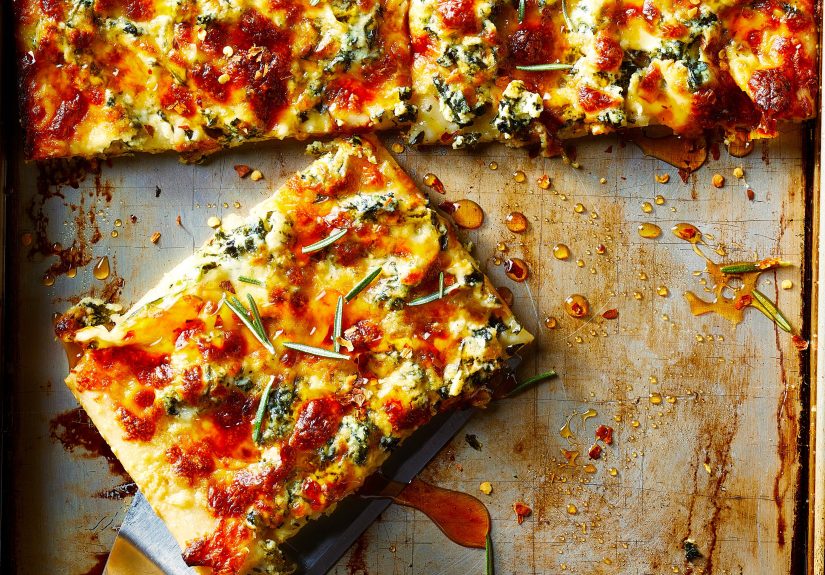
- Optional: hot honey (yes, sweet + salty + dairy works)
Rest 2 minutes, slice, and enjoy the sound of your kitchen suddenly feeling like a pizzeria.
White Pizza Variations (Because You’re a Genius and You Deserve Options)
1) Spinach-Artichoke White Pizza
Add sautéed spinach (squeezed dry) and chopped artichokes. Finish with extra Parmesan.
It tastes like the world’s most socially acceptable way to eat spinach dip for dinner.
2) Garlic Mushroom White Pizza
Sauté sliced mushrooms until they release moisture and brown.
Add to pizza with thyme and a little fontina for extra melt.
3) Pesto White Pizza
Swirl pesto into ricotta or spread a thin layer on the dough, then top with mozzarella and shaved veggies
(zucchini/asparagus work great). Finish with a fresh, peppery green.
4) Hot Honey White Pizza
Bake the classic ricotta-mozzarella version, then drizzle hot honey and sprinkle crushed red pepper.
This is the “I have my life together” pizza, even if you’re eating it over the sink.
Pro Tips for the Best White Pizza
-
Dry your fresh mozzarella: slice it, press between paper towels, and change towels once.
Moisture is the #1 reason white pizza turns into a steamy situation. - Season the ricotta: ricotta is a blank canvas. Give it salt, herbs, pepper, and a little sharp cheese.
-
Go lighter than you think on “sauce”: olive oil and cream are both powerful.
Too much = greasy top + soggy center. - Use a hot surface: a preheated stone/steel gives you better spring and crispness than a cold pan.
-
Don’t overload toppings: white pizza is about clean flavor and texture.
It’s not a casserole wearing a crust.
Make-Ahead, Storage, and Reheating
- Make-ahead: Mix ricotta topping up to 24 hours ahead; keep covered in the fridge.
- Store: Refrigerate leftover slices in an airtight container for up to 3 days.
-
Reheat (best): a skillet over medium heat with a lid for 2–4 minutes crisps the bottom and melts the top.
Oven/toaster oven at 375°F also works. - Microwave: works in an emergency, but your crust will file a complaint.
FAQ
Is white pizza the same as Alfredo pizza?
Not exactly. Alfredo pizza usually uses a thicker, buttery cream sauce (very “pasta night”).
White pizza is broader: it might be olive oil + garlic, ricotta-based, or a lighter white sauce.
What cheese is best for white pizza?
A combo is ideal: mozzarella for melt + ricotta for creaminess +
Parmesan/Pecorino for salty, sharp flavor. Fontina is a great optional “extra credit” cheese.
How do I prevent a soggy center?
Preheat your stone/steel, go easy on wet ingredients (fresh mozzarella, watery ricotta),
and don’t overload toppings. If your dough is very thick in the center, stretch it more evenly.
Can I use store-bought dough?
Absolutely. Let it come to room temperature so it stretches without tearing.
Great pizza is about technique, not suffering.
Kitchen Stories & Real-Life Experiences with White Pizza
White pizza has a funny way of making people very confident right before it humbles them.
It’s not difficult, but it is honest: if you rush the preheat, the crust tells on you. If you ignore moisture,
the center gets soft and you’ll find yourself doing that awkward fold-and-pray maneuver that only works
if you pretend it’s “New York style.”
One common first-timer moment: someone goes all-in on fresh mozzarella because it feels fancy (and it is!),
then forgets that fresh mozzarella is basically delicious water wearing a cheese costume.
The result isn’t “ruined,” but it’s more like a creamy cheese soup on bread.
The fix is simple and surprisingly dramatic: pat those slices dry like they’re your phone after dropping it in the sink.
Suddenly, the pizza bakes instead of steams, and your crust stops acting like a damp sponge.
Another classic experience is “The Garlic Incident.” White pizza invites garlic to the partypractically begs.
But garlic has two personalities: friendly and aromatic when lightly baked, and aggressively bitter if it burns.
Minced garlic directly on top can scorch in a ripping-hot oven, especially near the edges.
A lot of home cooks end up learning a gentle trick: let garlic sit in olive oil for a few minutes first,
or tuck it into the ricotta mixture, where it’s protected by dairy.
That way you get flavor without turning dinner into a vampire-proofing ceremony.
White pizza is also a secret weapon for “mixed crowd” nights.
Someone wants meat, someone wants vegetarian, someone wants “just cheese,” and someone is suspicious of joy.
A base white pizza can split the difference:
half gets mushrooms and thyme, half gets pepperoni and hot honey, and everyone suddenly acts like you run a restaurant.
The best part is how adaptable the finishing touches are. A handful of arugula tossed with olive oil and a pinch of salt
can make the same pizza feel fresh and “adult,” while basil and extra Parmesan keeps it comfort-food classic.
Then there’s the equipment learning curve. The first time someone uses a pizza stone or steel,
they often discover two truths: (1) preheating matters, and (2) launching a pizza is a skill, not a personality trait.
If the dough sticks to the peel, it’s not because the universe hates youit’s because friction exists.
A dusting of semolina or flour helps, parchment helps even more, and a quick “shake test” before launching
saves you from creating a modern art piece called “Pizza, but Make It Abstract.”
Finally, white pizza tends to become a “signature” because it’s forgiving in flavor.
Maybe one night you add lemon zest and rosemary and it tastes bright and fancy.
Another night you swirl pesto into ricotta and top with shaved zucchini and it feels like farmers-market energy.
Once you nail the core techniquehigh heat, balanced moisture, seasoned cheeseyou can riff forever.
It’s the kind of recipe that turns into a tradition: not because it’s complicated,
but because it reliably makes people happy and quiet for a few minutes. Which, honestly, is priceless.
Conclusion
A great white pizza recipe is all about smart simplicity:
high heat, a garlicky base (with or without a creamy white sauce),
well-seasoned ricotta, and a melty cheese blend that browns just enough to taste toasty.
Once you’ve got the basics down, you can customize endlesslygreens, mushrooms, pesto, hot honey,
or a peppery arugula finish that makes your pizza feel like it has a passport.