Table of Contents >> Show >> Hide
- Introduction: UFOs, UAPs, and the Government’s Poker Face
- What the Government Actually Says About UFOs
- Reason One: National Security Is the Government’s Default Language
- Reason Two: Classified Sensors Make Public Answers Awkward
- Reason Three: Some Cases Are Unexplained Because the Data Is Bad
- Reason Four: The Government Has a Long UFO History It Cannot Easily Escape
- Reason Five: Congress Is Demanding More Transparency
- Reason Six: Whistleblower Claims Raised the Stakes
- Reason Seven: Aviation Safety Is a Real Issue
- Reason Eight: The Government Does Not Want to Feed Panic or Fantasy
- Reason Nine: “No Evidence of Aliens” Is Not the Same as “Nothing Happened”
- What Would Real Transparency Look Like?
- Experiences and Reflections: Why This Topic Feels So Personal to the Public
- Conclusion: The Real Reason the Government Sounds Cagey
Note: This article is based on publicly available U.S. government records, official UAP reports, NASA materials, National Archives releases, congressional transparency efforts, and reputable U.S. reporting.
Introduction: UFOs, UAPs, and the Government’s Poker Face
Ask the government a simple UFO question and you may receive an answer so carefully worded it sounds as if it was assembled by three lawyers, a radar engineer, and a nervous public affairs officer trapped in a windowless conference room. That cautious tone is exactly why the subject continues to fascinate the public. People are not only asking, “Are UFOs real?” They are asking, “Why does the government act so weird whenever the topic comes up?”
Today, the official phrase is usually UAP, or unidentified anomalous phenomena, rather than UFO. The new term sounds less like a drive-in movie poster and more like a PowerPoint slide at a defense briefing, which is precisely the point. UAP can refer to unexplained observations in the air, near space, or other domains, and it gives officials a broader, less sensational vocabulary. Still, the public hears “UAP” and thinks, “Nice rebrand, but is there a flying saucer in the garage?”
The truth is less cartoonish and more complicated. The U.S. government is cagey on UFO matters because UAP reports sit at the messy intersection of national security, aviation safety, classified sensors, military technology, public distrust, scientific uncertainty, and decades of cultural mythology. In other words, it is not one locked door. It is a whole hallway of locked doors, some marked “classified,” some marked “embarrassing,” and some probably marked “we honestly do not know yet.”
What the Government Actually Says About UFOs
The modern U.S. government position is not that every UFO sighting is imaginary. It is that unexplained does not automatically mean extraterrestrial. The Department of Defense created the All-domain Anomaly Resolution Office, known as AARO, to detect, identify, and reduce surprise from UAP near national security areas. That mission is framed around security and intelligence, not little green visitors asking for directions to Nevada. The Defense Department describes AARO’s job as minimizing technological and intelligence surprise by detecting and mitigating UAP near sensitive areas, in coordination with the intelligence community.
That wording matters. The government’s main concern is not whether a blurry object looks spooky on a podcast. Its concern is whether something unknown is operating near military bases, aircraft carriers, restricted airspace, nuclear facilities, or training ranges. A drone, spy platform, balloon, satellite reflection, software glitch, or foreign surveillance system can be a serious problem even if it has absolutely nothing to do with aliens.
The Office of the Director of National Intelligence and the Department of Defense released the Fiscal Year 2024 Consolidated Annual Report on UAP in November 2024. The report covered hundreds of cases, including reports from military pilots, commercial pilots, and ground observers. Reporting increased, but the official conclusion remained cautious: many incidents were eventually explained as balloons, birds, drones, aircraft, or satellites, while others remained unresolved because the available data was incomplete.
Reason One: National Security Is the Government’s Default Language
When civilians see something strange in the sky, they may think of extraterrestrials. When defense officials see something strange in restricted airspace, they think of surveillance, intrusion, sensor gaps, and potential adversaries. That difference explains a lot of the government’s guarded behavior.
A mysterious object near a military exercise could reveal weaknesses in U.S. radar coverage. A cluster of unknown lights near a base could involve drones operated by a foreign state, a private group, or someone testing boundaries. Even if investigators later discover the object was harmless, the original report may still contain sensitive information: where U.S. sensors were pointed, what they detected, how quickly officials responded, and what systems were used to track the target.
This is why the government often refuses to release the most interesting details. It may not be hiding aliens. It may be hiding sensor capabilities. A high-resolution military image can reveal the power of a camera. Radar data can reveal range and accuracy. Infrared footage can reveal what platforms were nearby. To intelligence professionals, even a “nothing burger” can leak the recipe for the kitchen.
Reason Two: Classified Sensors Make Public Answers Awkward
Many UAP cases begin with military sensors: radar, infrared cameras, satellite systems, or aircraft targeting pods. These systems are designed to collect information in environments where precision matters. They are also often classified. That creates an obvious problem: the best evidence may be the evidence officials are least willing to release.
Imagine the government says, “We know what the object was, but we cannot show you how we know.” To the public, that sounds like a dodge. To a defense analyst, it may be routine. The explanation might require revealing classified collection methods, which could help adversaries learn how to avoid detection next time.
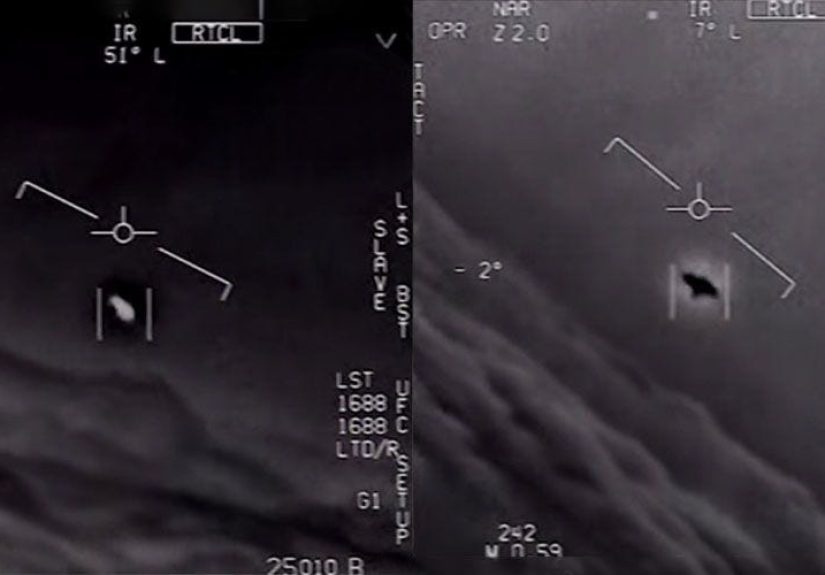
This secrecy also creates a public-relations trap. When officials release a short video clip without the surrounding data, viewers see a mystery. When officials hold back the surrounding data, skeptics suspect a cover-up. The government may be trying to protect methods, but the result often looks like a magician refusing to show both hands.
Reason Three: Some Cases Are Unexplained Because the Data Is Bad
One of the least glamorous truths about UFO matters is that “unidentified” often means “not enough information.” A sighting can remain unresolved because it happened quickly, was captured from a difficult angle, lacked distance data, or came from a single sensor. A white dot on a black screen is not much to work with, even when the dot has a fan club.
NASA’s independent UAP study emphasized that progress depends on better data collection, stronger scientific methods, and more standardized reporting. That is a polite way of saying that viral clips and campfire stories are not enough. If researchers want to understand UAP, they need reliable metadata, calibrated instruments, multiple sensor angles, environmental context, and repeatable analysis.
This is where the government’s cagey tone becomes partly understandable. Officials cannot always turn a low-information event into a satisfying answer. The public wants a clean label: drone, balloon, aircraft, alien craft, secret program, or weather phenomenon. Reality often says, “The camera angle was terrible, the range was uncertain, the object was observed briefly, and the file arrived with fewer details than a suspicious restaurant receipt.”
Reason Four: The Government Has a Long UFO History It Cannot Easily Escape
The U.S. government’s UFO baggage did not appear yesterday. From 1947 to 1969, the Air Force investigated UFO reports through programs that eventually included Project Blue Book. According to the Air Force, Project Blue Book collected 12,618 sightings, of which 701 remained unidentified. The official conclusion was that no investigated UFO represented a national security threat, no evidence showed technology beyond modern scientific knowledge, and no evidence indicated extraterrestrial vehicles.
That conclusion did not end public suspicion. In fact, it helped create a long-running pattern: the government investigates, releases limited findings, declares no alien evidence, and the public says, “That is exactly what you would say.” Around and around it goes, like a Ferris wheel operated by the Freedom of Information Act.
Historical secrecy around real military programs made the problem worse. During the Cold War, classified aircraft and reconnaissance systems sometimes generated strange sightings. When secret technology is tested in the sky, the public may see something it cannot identify. Officials, unable to say “that was our classified aircraft,” may give vague answers or no answers at all. Over time, even legitimate secrecy creates an atmosphere where every denial sounds suspicious.
Reason Five: Congress Is Demanding More Transparency
Congress has played a major role in pushing UFO matters back into the national spotlight. Lawmakers from both parties have asked for more reporting, better whistleblower protections, and greater access to historical records. The proposed UAP Disclosure Act and related efforts aimed to create a stronger presumption of disclosure for UAP records and to build a dedicated records collection at the National Archives.
The National Archives has established a UAP Records Collection under the 2024 National Defense Authorization Act. Records are being transferred and digitized on a rolling basis. That matters because it moves the issue away from rumor-only territory and into a more formal archival process. It also shows that public pressure has changed the government’s behavior. UFO transparency is no longer just a late-night radio topic; it is a paperwork requirement.
Still, transparency is not the same as total disclosure. Agencies may release old records slowly. Some files may be redacted. Some records may be missing, duplicated, poorly indexed, or buried in bureaucratic sediment. The public imagines one giant folder labeled “UFO Truth.” The real archive probably looks more like a government basement after a printer exploded.
Reason Six: Whistleblower Claims Raised the Stakes
Recent congressional hearings have included former military and intelligence personnel making serious claims about UAP programs, hidden information, and possible retrieval efforts. These claims grabbed public attention because they came from people with government backgrounds, not from a guy wearing a tinfoil hat at a yard sale.
However, a claim is not the same as publicly verified evidence. AARO’s historical review has stated that it found no verifiable evidence that the U.S. government or private companies possessed extraterrestrial technology. That does not automatically prove every witness is wrong. It does mean the public record has not produced the kind of evidence that would settle the debate.
This gap between testimony and documentation is one reason the government sounds cagey. Officials must respond to dramatic allegations without disclosing classified details, attacking witnesses unfairly, or appearing dismissive. If they say too little, people suspect a cover-up. If they say too much, they may reveal sensitive information. If they say “we are investigating,” everyone sighs because that phrase has the nutritional value of plain rice cakes.
Reason Seven: Aviation Safety Is a Real Issue
Not every UAP discussion needs to involve extraterrestrials to be important. Unknown objects in busy airspace can create safety risks. Pilots need a way to report unusual encounters without career stigma. Air traffic officials need usable data. Investigators need procedures that separate jokes, errors, drones, balloons, satellites, and genuinely unresolved cases.
In 2025, members of Congress reintroduced the bipartisan Safe Airspace for Americans Act to support secure civilian reporting of UAP by aviation personnel. That reflects a practical concern: if pilots see something that might endanger aircraft, the reporting system should not make them feel foolish for saying so.
The stigma problem is huge. For decades, “I saw a UFO” could sound like professional self-sabotage, especially for pilots, military personnel, or scientists. A better reporting culture does not require believing every story. It requires treating unusual observations as data first and punchlines later.
Reason Eight: The Government Does Not Want to Feed Panic or Fantasy
Officials know that UFO statements can be instantly overinterpreted. A cautious phrase such as “unresolved case” can become “the Pentagon admits alien craft exist” before lunch. A grainy video can become a cultural event. A technical uncertainty can become a conspiracy thread with 400 comments, three charts, and someone yelling about ancient pyramids.
That is another reason the government chooses careful language. It wants to acknowledge uncertainty without creating panic or accidentally giving credibility to unsupported claims. This is difficult because the UFO topic lives in a crowded neighborhood: science, defense, pop culture, distrust, entertainment, and genuine curiosity all share the same mailbox.
Public communication is especially hard because the audience is divided. Some people want disclosure because they believe the government has hidden extraordinary evidence. Others want better science and better aviation safety. Others think the entire topic is a distraction. A single official statement must somehow speak to all of them without sounding ridiculous, secretive, or asleep.
Reason Nine: “No Evidence of Aliens” Is Not the Same as “Nothing Happened”
One of the most common misunderstandings in UFO coverage is the difference between “unexplained” and “extraterrestrial.” A case can be unexplained for many ordinary reasons: insufficient data, poor viewing conditions, sensor error, classified aircraft, drone activity, satellite flaring, atmospheric effects, or simple misidentification.
Government reports have repeatedly found no confirmed evidence of extraterrestrial beings, alien technology, or reverse-engineered nonhuman craft in the public record. But those same reports also acknowledge that some cases remain unresolved. This creates a frustrating middle zone. Skeptics say, “No aliens.” Believers say, “Still unexplained.” Both statements can be true, depending on the case.
The government’s cageyness thrives in that middle zone. It cannot prove a negative for every strange sighting. It also cannot responsibly jump to extraordinary conclusions. The result is a cautious official posture: investigate, classify when necessary, release what can be released, and avoid dramatic claims unless the evidence is extremely strong.
What Would Real Transparency Look Like?
Real UFO transparency would not mean dumping random documents online and declaring victory. It would mean building a system that produces better information from the beginning. That includes standardized reporting forms, protected channels for pilots and military personnel, better sensor metadata, clear public explanations, independent scientific review, and timely declassification when national security allows.
Transparency also requires admitting uncertainty without turning uncertainty into theater. A good public report should clearly separate resolved cases, unresolved low-data cases, cases involving possible drones or adversary systems, and cases that deserve deeper scientific study. The public can handle nuance when officials stop serving it in fog-machine packaging.
The National Archives UAP collection, NASA’s scientific recommendations, AARO’s case work, and congressional pressure are all steps toward a more mature process. The question is whether these efforts can overcome decades of mistrust. Once the public believes an institution is hiding something, even normal bureaucracy looks like a smoking crater.
Experiences and Reflections: Why This Topic Feels So Personal to the Public
The UFO subject has a strange emotional power because almost everyone has had some version of a sky mystery. Maybe it was a light moving oddly at dusk. Maybe it was a meteor that looked too slow, a satellite train that seemed too organized, or a drone buzzing where no drone seemed likely. Most people do not report these moments to the government. They tell a friend, search online, shrug, and carry on. But the feeling lingers: “I saw something, and I do not know what it was.”
That personal experience makes official cageyness feel more irritating. If you have ever watched something strange cross the sky, you know how unsatisfying vague explanations can be. “Probably a balloon” may be correct, but it rarely feels complete. Humans like stories with endings. UFO cases often give us a beginning, a blurry middle, and then a government PDF that says the equivalent of “further analysis is required.” Wonderful. Very cinematic. Please pass the coffee.
There is also a generational factor. Older Americans grew up with Roswell, Cold War secrecy, Project Blue Book, science fiction cinema, and decades of official denial. Younger audiences grew up with smartphone cameras, internet leaks, drone technology, satellite constellations, and viral clips. Both groups have reasons to doubt easy answers. One generation learned that governments hide military programs. The other learned that every video can be edited, clipped, stripped of context, and launched into the algorithmic tornado.
For writers, researchers, and curious readers, the most useful experience is learning to sit with uncertainty. A strange video is not automatically fake. It is also not automatically proof of visitors from another star system. A whistleblower may be sincere and still lack public evidence. A government denial may be accurate and still incomplete. The mature position is not boredom or blind belief. It is disciplined curiosity.
In practice, that means asking better questions. Who observed the object? What sensors recorded it? Was there radar confirmation? What was the weather? Were satellites overhead? Was there military training nearby? Could parallax make the object appear faster than it was? Was the clip edited? Was distance known, or guessed? These questions may not be as exciting as shouting “aliens!” but they are much more likely to produce truth.
The experience of following UFO matters also teaches something about public trust. People do not distrust the government only because of UFOs. They distrust it because official explanations in many areas can arrive late, heavily redacted, or wrapped in language that seems designed to avoid plain meaning. UFO secrecy becomes a symbol of a larger frustration: citizens want institutions to tell the truth without treating them like children who might eat the batteries from the remote.
At the same time, the government is not a single cartoon character twirling a mustache in a secret bunker. It is a huge collection of agencies, offices, contractors, analysts, lawyers, pilots, scientists, archivists, and public affairs teams. Some people inside that system likely want more openness. Others are trained to protect classified information. Some may not even know what other offices have. Bureaucracy can look like conspiracy from the outside, especially when the paperwork is moving at the speed of cold syrup.
The best path forward is neither mockery nor mythology. It is better reporting, better data, better archives, better science, and better public communication. If something unusual is in U.S. airspace, the country should want to know what it is. If it is a drone, identify it. If it is a sensor artifact, explain it. If it is a satellite reflection, show the geometry. If it remains unexplained, say so clearly and preserve the data for future analysis.
That approach will not satisfy everyone. Some people will always believe the government is hiding the ultimate truth. Others will always dismiss the subject as nonsense. But a serious democracy should be able to investigate strange things without turning them into either a circus or a classified black hole. The sky is big. Human error is common. Technology is advancing quickly. And sometimes, yes, something genuinely puzzling appears where it should not be.
Conclusion: The Real Reason the Government Sounds Cagey
The government is cagey on UFO matters because the topic is not one problem. It is a stack of problems: classified sensors, national security, aviation safety, incomplete data, public pressure, old secrecy, new congressional oversight, and cultural fascination. The official caution may be frustrating, but it is not automatically proof of extraterrestrial secrets. Often, it reflects a system trying to discuss uncertain events without exposing sensitive capabilities or fueling wild conclusions.
The public deserves more transparency, especially when reports involve safety, military airspace, or taxpayer-funded investigations. But good transparency should be careful, evidence-based, and honest about limits. The goal should not be to make UFOs boring. The goal should be to make the facts clearer than the fog around them.