Table of Contents >> Show >> Hide
- Bob Dylan, Patron Saint of Productive Irritation
- Woody Allen and the Rise of the Nervous Intellectual Brand
- Why Dylan Might Have Loathed Him
- The Quote Became Bigger Because Woody Allen Became Harder to Defend
- There Is Also a Comedic Irony Here
- What the Story Says About Celebrity Memory
- The Bigger Lesson: Genius Does Not Cancel Disgust
- A Longer Reflection on Why This Story Feels So Strangely Familiar
- Conclusion
Some headlines arrive wearing a tuxedo. This one showed up in a leather jacket, kicked over a folding chair, and asked if anybody had seen Woody Allen. The claim that Bob Dylan once said Allen was the person he most wanted to punch sounds like the sort of story invented at 2 a.m. in a smoky apartment full of people who own too many records and not enough furniture. And yet the quote has lingered because it feels weirdly plausible: Dylan, the flinty poet of reinvention and combativeness, taking aim at Allen, the neurotic prince of cultivated cleverness.
The line, as later retold in writing about Dylan’s orbit, is less interesting as a tabloid oddity than as a small cultural X-ray. It captures an old downtown world where artists, musicians, comics, filmmakers, and professional eccentrics collided in the same rooms, absorbed one another’s energy, and occasionally imagined throwing punches instead of compliments. More importantly, it hints at a deeper split between two kinds of American genius: the artist who wants to blow up the mask, and the artist who turns the mask into a career.
That is what makes the story of Bob Dylan’s apparent hostility toward Woody Allen so durable. This is not merely gossip with better cheekbones. It is a miniature drama about taste, ego, masculinity, fame, and the long shelf life of public myth. Once you zoom out, the quote becomes a doorway into something larger: how two iconic New York figures came to represent very different ideas of authenticity, and why that contrast lands even harder now than it might have when the remark was supposedly made.
Bob Dylan, Patron Saint of Productive Irritation
To understand why the quote sticks, you have to start with Dylan’s public persona in the 1960s. He was not simply talented. He was volatile, elusive, funny, dismissive, magnetic, and, when he felt like it, gloriously unpleasant. That wasn’t a bug in the system. It was part of the electricity. Dylan came up in a folk world that prized sincerity, but he quickly complicated the entire idea of sincerity by turning self-invention into an art form. He borrowed voices, reshaped traditions, dodged labels, irritated interviewers, and seemed allergic to becoming anyone’s mascot.
By the middle of the decade, Dylan had already become a symbol of artistic rebellion. He had moved from acoustic folk hero to electric disruptor, and every reinvention made some part of his audience furious. He could be cutting in interviews and difficult in social settings, and his legend often included stories of restlessness, intensity, and occasional aggression. In other words, if someone told you 1960s Dylan once stood in a crowded room and fantasized about decking a famous comic intellectual, you would not immediately demand a laboratory test.
Dylan’s edge mattered because it was tied to his larger artistic mission. He did not just write songs; he challenged categories. He pushed against being packaged as a protest singer, a generation spokesman, a saint of political earnestness, or a tidy literary hero with guitar strings. He seemed to despise anything that felt canned, precious, or performatively smart. His best work was full of wit, but it never felt like it was standing in front of a mirror applauding its own IQ. That distinction matters here.
Woody Allen and the Rise of the Nervous Intellectual Brand
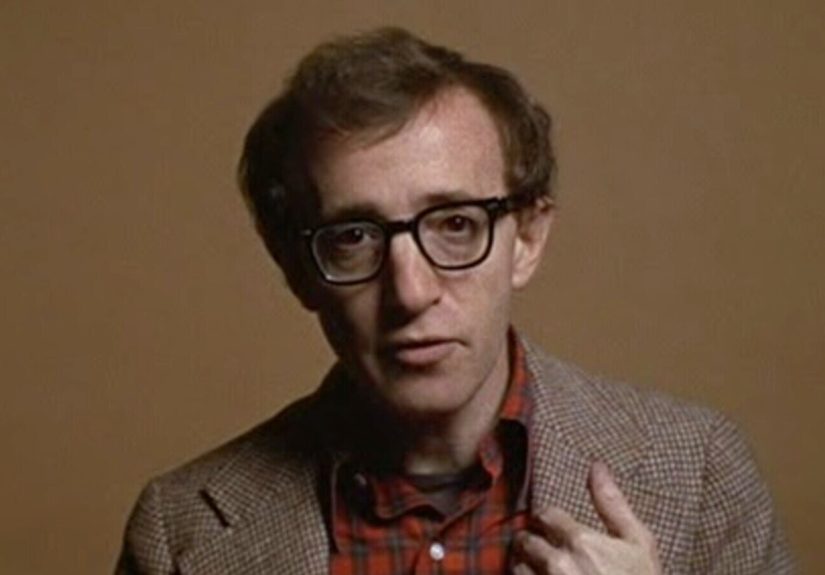
Woody Allen emerged from another corner of the same broad cultural universe. He was a joke writer, stand-up comic, playwright, actor, and eventually one of the defining American filmmakers of the late 20th century. His screen persona was the anxious, overeducated urban male who could talk about Freud, failure, sex, death, and self-loathing in a single breath without spilling his coffee. For audiences, that act was fresh, literate, and irresistibly quotable. Allen helped make neurosis marketable and gave middle-class intellectual insecurity the tempo of stand-up comedy.
At his best, Allen was undeniably influential. Annie Hall, Manhattan, and several later films reshaped the American romantic comedy and the way New York itself was filmed. He turned irony into atmosphere. He made conversation feel like action. He built a brand so durable that for decades “Woody Allen-esque” became a kind of cultural shorthand.
But that brand also came with irritants. Even admirers have long noticed that Allen’s work could feel self-enchanted, mannered, and invested in presenting cleverness as its own moral credential. His films often invited viewers to enjoy the spectacle of intelligence while quietly overlooking the vanity that intelligence was serving. If Dylan’s art often sounded like it wanted to smash the frame, Allen’s often looked content to decorate it beautifully and complain from inside it.
Why Dylan Might Have Loathed Him
1. The battle between rawness and polish
Dylan’s appeal was rooted in abrasion. Even when he was tender, there was gravel in the machinery. Allen’s public image, by contrast, depended on stylized fragility. Dylan could make chaos feel holy. Allen could make self-consciousness feel elegant. Those are very different energies, and artists often dislike in others the qualities that audiences praise most loudly.
From that angle, Dylan’s supposed punch list starts to make emotional sense. He may have seen Allen as too curated, too mannered, too pleased with the performance of intellect. Dylan liked masks, yes, but he liked masks that sweated. Allen’s seemed pressed and dry-cleaned.
2. Competing New York mythologies
Both men are tied to New York, but they represent different versions of it. Dylan’s early myth belongs to Greenwich Village coffeehouses, artistic hunger, and bohemian reinvention. Allen’s myth belongs to Manhattan apartments, therapy talk, bookstores, dinner reservations, and the comic drama of cultivated urban adulthood. One mythology says the city is a place to become dangerous and new. The other says it is a place to become articulate about your damage.
That split may help explain the hostility. Dylan’s New York aspired to transformation. Allen’s often stylized stagnation. Dylan turned motion into identity. Allen turned self-analysis into furniture.
3. The danger of fake-smart art
Dylan has always had a radar for fraudulence, or at least for whatever he personally considered fraudulence on a given Tuesday. His work is too steeped in American vernacular, folk inheritance, blues phrasing, Biblical cadence, and surreal wordplay to respect intelligence that merely performs intelligence. If Allen struck him as someone who wore smartness like a boutonniere, that alone could have been enough to provoke contempt.
And Dylan’s contempt was rarely subtle. He could be hilarious, but his humor often came with teeth. A line about punching Allen in the face is ridiculous, theatrical, and a little cartoonish. Which is exactly why it sounds like Dylan: part menace, part joke, part performance art done with clenched fists.
The Quote Became Bigger Because Woody Allen Became Harder to Defend
Any article about Woody Allen now lives in the shadow of the abuse allegations involving Dylan Farrow, which Allen has repeatedly denied. Over time, the public conversation around Allen changed dramatically. What was once often treated as an uncomfortable celebrity scandal became, for many viewers and artists, a moral dividing line. Actors distanced themselves. Publishers backed away from his memoir before it found another route to release. Documentaries and reported features reopened questions that Hollywood had long managed to sidestep.
That later context gives the old Dylan quote a new charge. A line that may once have sounded like overheated rock-star mischief now gets reread through a darker historical lens. People no longer hear only Bob Dylan versus Woody Allen, artiste versus neurotic auteur. They hear, instead, a strange bit of cultural foreshadowing. They hear a famous musician instinctively recoiling from a man whose reputation would later become inseparable from allegations, denials, and decades of argument.
That does not magically turn the quote into prophecy. It remains secondhand recollection, not sworn testimony. But culture loves retroactive symbolism. Once a public figure’s reputation curdles, old anecdotes are suddenly promoted from oddity to omen. That is one reason this story keeps circulating: it flatters our desire to believe that somebody, somewhere, saw the storm coming.
There Is Also a Comedic Irony Here
Part of the appeal is that the image itself is funny. Bob Dylan threatening to knock off Woody Allen’s glasses sounds like a scene from a movie neither man would ever make correctly. Allen’s comic persona is all nerves and evasions; Dylan’s is all side-eye and mutiny. The mismatch is delicious. It is as if American culture accidentally put a lit match next to a pile of unpaid psychoanalysis bills and waited.
There is also a sly historical loop in the fact that Allen’s work occasionally treated Dylan and Dylan-style seriousness with a degree of mockery. Allen understood that cultural reverence could be punctured, and he often built comedy by puncturing it. Dylan did the same thing, but from a rougher angle. Each man mistrusted piety. The difference is that Dylan’s irreverence usually risked his own image too, while Allen’s often seemed to preserve his.
What the Story Says About Celebrity Memory
Pop culture does not preserve everything equally. It keeps the stories that compress a person’s essence into one usable image. Dylan going electric. Allen in black-and-white Manhattan, hands flapping through an argument. The quote about punching Allen survives because it functions like a pocket biography. In one flash, Dylan becomes the unmanageable truth-teller, and Allen becomes the emblem of something smug enough to invite a smack.
Whether that image is fair to either man is another matter. Dylan is too complex to be reduced to righteous instinct, and Allen’s long career cannot be collapsed into one anecdote or one era. But fairness is rarely what keeps a cultural story alive. Compression does. Symbolism does. A good line survives not because it explains everything, but because it makes everything easier to picture.
The Bigger Lesson: Genius Does Not Cancel Disgust
One reason this topic still interests readers is that it lets us watch celebrity admiration turn into ethical discomfort in real time. For years, both Dylan and Allen occupied the category of untouchable American originals. But untouchable is a temporary title. Every generation revisits its heroes with a different moral vocabulary. The question is no longer just whether someone made great work. It is whether greatness changes what we owe the truth, and whether art can remain beloved after the artist becomes harder to look at directly.
Dylan’s alleged outburst lands because it rejects the polite script. It is not nuanced. It is not diplomatically phrased. It has none of the tasteful hedging that usually coats celebrity commentary. Instead, it gives us disgust in its loudest possible form. Even people who would never defend violence understand the emotional logic of the line. Sometimes a culture saturated in euphemism responds to bluntness like a houseplant discovering rain.
A Longer Reflection on Why This Story Feels So Strangely Familiar
There is also an experiential side to this topic that helps explain why readers keep clicking, sharing, and arguing about it. Most people do not come to a headline like this as blank slates. They arrive carrying years of half-remembered songs, old movie scenes, family opinions, campus arguments, late-night streaming habits, and that peculiar modern burden of learning ugly things about artists whose work once felt woven into ordinary life. The story works because it brings all of that emotional luggage to the carousel at once.
Think about the experience of meeting Bob Dylan for the first time, even if that “meeting” happened through speakers, not in person. For many listeners, Dylan arrives as a shock before he arrives as a legend. The voice is strange. The phrasing is stranger. The confidence is almost rude. He sounds less like someone asking for your approval than someone casually informing you that approval is a provincial concern. That encounter can feel liberating. It can also feel abrasive. But it almost never feels bland. Dylan enters your imagination like a draft through a badly sealed window: inconvenient, undeniable, impossible to ignore once you notice it.
Woody Allen entered people’s lives differently. For decades, viewers often discovered him through recommendation rather than revelation. You were told his films were brilliant, sophisticated, essential. You learned to watch for the one-liners, the romantic melancholy, the curated bookshelves, the cityscapes, the conversational ricochet. For some audiences, that world felt intoxicating. For others, it felt like being trapped at a dinner party with one very funny guest and three hours of rising resentment. Even at peak admiration, Allen’s style could generate both delight and eye-rolls in the same sitting.
That contrast mirrors a familiar real-life experience: the difference between the person who unsettles a room because he is too alive, and the person who controls a room because he knows exactly how to appear interesting in it. Many of us have known both types. One is exhausting but electrifying. The other is polished but curiously airless. Dylan and Allen, as public figures, often seemed to embody those poles. So when the story says Dylan wanted to punch Allen, part of the audience reacts not as historians but as veterans of ordinary social life. They think, Yes, I have also met somebody whose whole vibe made another person want to throw a loaf of bread at a wall.
The story also resonates because it captures the peculiar disappointment of reassessment. Plenty of people once loved Allen’s films without feeling they were making a moral statement. Then the broader context became harder to ignore. That experience is familiar now across music, film, comedy, and literature: the sinking realization that admiration may need revision. In that emotional climate, old anecdotes about disdain become oddly comforting. They suggest that not everybody was hypnotized all the time. Somebody, somewhere, had a bad feeling. Somebody looked past the cultural halo and saw a human being they did not trust or could not stand.
And finally, there is the experience of age in the story. When younger audiences encounter Dylan and Allen today, they do not inherit them in the same order previous generations did. They often learn the controversy first and the canon second. That changes the temperature completely. The headline becomes not just a curious old quote but a miniature map of changing values. It shows how fame ages, how icons get re-sorted, and how the emotional meaning of a story can change long after the room where it was supposedly said has gone dark.
Conclusion
So, was Woody Allen really the person Bob Dylan most wanted to punch? Maybe. Maybe not. The quote survives because it feels spiritually accurate even when its exact context remains part of rock-and-roll folklore. More importantly, it survives because it tells us something true about how culture remembers conflict. Dylan represented motion, abrasion, and instinct. Allen represented cultivated self-awareness, comic intellect, and, later, a reputation shadowed by allegations and fierce public dispute. Put those energies together and sparks were inevitable.
At minimum, the anecdote gives us a perfect little collision of American icons. At maximum, it offers a sharp lesson in how public meaning changes over time. A line that once sounded like a nasty joke now reads like a snapshot of incompatible sensibilities and a culture learning, slowly and messily, how to separate wit from wisdom. If nothing else, it proves that celebrity history is never just about who made the art. It is also about who made everyone in the room tense enough to hide the glassware.